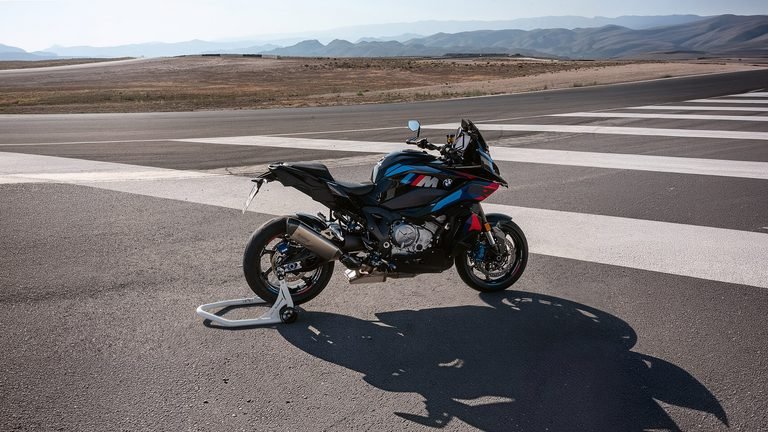
BMW K1600 Grand America Top Speed, 0-60 Time & Specs Review
TL;DR
- BMW caps the K1600 Grand America’s top speed at 100 mph electronically, and a GPS-verified test confirmed 101 mph in the real world.
- No independent publication has run a timed 0-60 test on the Grand America specifically; the widely cited 3.1-second figure is a formula-based estimate, not a track result.
- The 1,649cc inline-six makes 160 hp at 6,750 rpm and 132.7 lb-ft of torque at 5,250 rpm.
- Unladen weight, road-ready and fully fueled, is 809.1 lbs.
- US base MSRP starts near $24,975 for early 2026 production, with dealer-installed packages pushing well past $30,000.
Where the Grand America Sits in BMW’s Touring Lineup

The Grand America is BMW’s bagger-style flagship, built on the same 1,649cc inline-six as the K1600 GT, GTL, and B, but tuned and geared for a different job than any of them.
It’s the lowest, longest, and most cruiser-styled of the four, with a 29.5-inch seat height, floorboards instead of pegs, and hard side cases baked into the bodywork rather than bolted on.
That styling brief comes with a tradeoff most riders don’t expect from a six-cylinder BMW: a hard 100 mph speed limiter. The engine isn’t running out of breath at that point. It’s a deliberate ceiling BMW built into the ECU, and it shapes how this bike should be cross-shopped against faster-looking siblings in the same family.
What’s the Actual Top Speed of the K1600 Grand America?
BMW’s own spec sheet lists maximum speed at 100 mph, full stop, and that’s not a claim pulled from a press release. Rider Magazine independently GPS-verified 101 mph on a 2018 test unit, confirming the limiter does exactly what BMW says it does (Rider Magazine, 2018).
BMW’s stated reasoning is worth understanding rather than dismissing. The company’s press materials describe the limit as protection against the wheel-load and stability effects of loading a bagger with passengers and luggage, calling it part of “The American Way of Riding” (BMW Motorrad, 2026).
Whether or not you buy the full explanation, the effect is straightforward: the bike will not go faster than 100-101 mph no matter what gear you’re in or how hard you’re on the throttle.
For context, that’s slower than plenty of 400cc naked bikes. Cycle World’s own buyer’s guide flagged this directly, noting the Grand America’s stated top speed sits below what smaller, cheaper machines can hit (Cycle World, 2018). If top-end speed matters to you, the unrestricted K1600 GT and GTL share the same engine without the cap.
Where’s the 0-60 Time From, and Can You Trust It?
There’s no GPS-instrumented or magazine-timed 0-60 test of the K1600 Grand America specifically. That’s not a gap in our research; it’s a gap in the record.
Rider Magazine’s tour test explicitly said the outlet didn’t attempt dyno or acceleration testing on the Grand America because of the speed limiter, and they’d already had unreliable dyno results on the closely related K1600B.
The 3.1-second 0-60 figure you’ll see repeated across spec-aggregator sites comes from ProfessCars, a formula-based performance modeling service, not a physical test (ProfessCars, 2024).
That model also projects a quarter-mile in the 11.2-second range. Treat both as reasonable estimates built from the bike’s power-to-weight ratio and gearing, not as measured results.
It’s also worth flagging that some 0-60 figures floating around online, including a frequently cited 2.6-second run, come from the K1600GT, a lighter, unrestricted sibling tested by Cycle World on an earlier model year. That number belongs to a different bike and shouldn’t be attached to the Grand America.
What we can say with confidence: 132.7 lb-ft of torque arriving at just 5,250 rpm means the Grand America pulls hard from low and mid-range revs, which is exactly what you want hauling nearly 1,235 lbs of bike, rider, and gear down a highway on-ramp. It’s just not the kind of pull you’d measure in a stoplight drag race, and BMW never designed it to be.
Full Specs: Engine, Chassis, and Dimensions
| Spec | Figure |
|---|---|
| Engine | 1,649cc liquid-cooled inline-six, DOHC, 4 valves/cylinder |
| Horsepower | 160 hp @ 6,750 rpm |
| Torque | 132.7 lb-ft @ 5,250 rpm |
| Compression ratio | 12.2:1 |
| Transmission | 6-speed, shaft final drive |
| Top speed | 100 mph (electronically limited) |
| Seat height | 29.5 in |
| Wheelbase | 63.7 in |
| Unladen weight (fueled) | 809.1 lbs |
| Fuel capacity | ~7 gal |
| Front suspension | Duolever, 4.5 in travel |
| Rear suspension | Paralever, 5.3 in travel |
| Brakes (front) | Dual 320mm discs, 4-piston calipers |
| ABS | BMW Motorrad Integral ABS Pro |
| US base MSRP | From ~$24,975 (2026) |
Source: BMW Motorrad, 2026; Torquepedia, 2026
How the Engine Delivers Power on the Road

The inline-six is the Grand America’s signature feature, and it changes how the bike feels compared to a V-twin bagger of similar weight. Instead of a lumpy, torque-heavy pull off idle, you get a turbine-smooth surge that builds cleanly from 3,000 rpm and holds strong all the way to its 6,750 rpm power peak.
BMW revised the engine management and added lambda sensors to meet Euro 5 emissions rules, which bumped torque from 129 lb-ft to 132.7 lb-ft at the same 5,250 rpm and let the bike reach peak horsepower 1,000 rpm earlier than the previous generation.
In practice, that means less searching for the right gear on a highway pass. Roll on in top gear from 60 mph and the six just keeps building without a downshift.
The shaft final drive is worth a mention for anyone cross-shopping chain-drive baggers. There’s no chain slack to check, no sprocket wear to track, and no lube schedule tied to weather or mileage the way a chain-and-sprocket setup demands. It’s part of why this engine and drivetrain combination is built for six-figure-mile touring life, not track days.
Weight and Handling: What 809 Pounds Feels Like
At 809.1 lbs unladen and fully fueled, the Grand America is heavy even by full-dress touring standards, and BMW’s own payload rating of 425.5 lbs pushes the fully loaded weight past 1,200 lbs with rider, passenger, and gear.
That mass sits low, though, thanks to the low seat height and the engine’s position in the frame, so parking-lot maneuvers feel more manageable than the spec sheet suggests.
Reverse Assist is standard for a reason. Backing an 800-plus-pound bagger out of a sloped driveway without a reverse motor is a real workout, and BMW clearly built this feature knowing exactly who’s buying this bike.
Dynamic ESA with automatic load compensation also adjusts damping on the fly as you add passenger or luggage weight, which matters more on a bike this heavy than it would on a lighter roadster.
Frequently Asked Questions
What is the top speed of the BMW K1600 Grand America?
BMW electronically limits it to 100 mph, and an independent GPS-verified test measured 101 mph on a production unit. It’s a deliberate design choice tied to the bike’s bagger-style loading capacity, not a limitation of the engine itself.
How fast is the K1600 Grand America from 0-60 mph?
No magazine has published a timed, instrumented 0-60 result for this specific model. The commonly cited 3.1-second figure is a formula-derived estimate from ProfessCars, not a physical test result, so treat it as a reasonable approximation rather than a verified number.
How much horsepower does the K1600 Grand America have?
160 hp at 6,750 rpm, with 132.7 lb-ft of torque arriving at 5,250 rpm. The torque curve is broad, which matters more day-to-day than the peak horsepower number.
How much does the BMW K1600 Grand America weigh?
809.1 lbs unladen, road-ready, and fully fueled, according to BMW’s official spec sheet. Permitted total weight with rider, passenger, and gear tops out at 1,234.6 lbs.
Why is the Grand America’s top speed lower than the K1600 GT?
BMW built the limiter specifically for the Grand America and K1600B, citing stability concerns tied to bagger-style loading and accessory fitment. The K1600 GT and GTL share the same engine but don’t carry the same electronic cap, so they can run meaningfully faster.
What is the seat height on the K1600 Grand America?
29.5 inches, which is low for a full-size touring bike and one of the reasons shorter riders gravitate toward this model over the taller GTL.