
BMW M1000R Top Speed, 0-60 Time & Specs Review
TL;DR
- The BMW M1000R runs 0-60 mph in 3.14 seconds and 0-100 mph in 5.68 seconds in independent instrumented testing.
- BMW claims a 174 mph top speed; the same test recorded a stable 166.7 mph on a shortened runway, so the factory number likely needs a longer strip to confirm.
- Dyno testing put real-world output at 195.85 hp at 13,500 rpm and 83.06 lb-ft at 9,500 rpm, a bit under BMW’s claimed 207 hp.
- The engine is a 999cc inline-four with ShiftCam variable valve timing, shared architecture with the S1000RR superbike.
- 2026 US pricing starts at $22,695 MSRP plus $1,095 destination charge.
Where the M1000R Sits in BMW’s Lineup
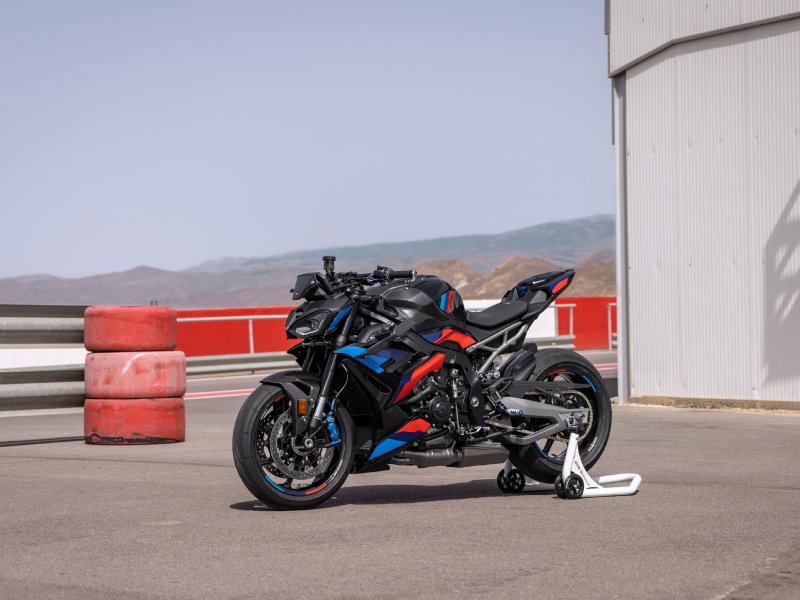
BMW built the M1000R by taking the S1000RR superbike’s engine and chassis DNA and dropping it into a naked streetfighter body. It’s the most track-focused naked bike BMW sells, sitting above the S1000R and wearing the same M badge as the M1000RR superbike. This isn’t a detuned commuter with attitude; it’s a homologation-adjacent machine with wings bolted to the front end for real aerodynamic downforce.
The M1000R shares its 999cc inline-four, much of its electronics suite, and its aggressive geometry with BMW’s superbike range. What makes it different is the upright bar position and the complete absence of a fairing, which means every bit of that power comes through the bars and pegs. It’s a bike built for riders who want superbike thrust without giving up feet-forward comfort on a Sunday backroad blast.
BMW M1000R 0-60 Time and Acceleration
The BMW M1000R hits 60 mph in 3.14 seconds, based on instrumented runway testing by MCN using a GPS-based Datalogger (MCN, 2023). That same test recorded 0-100 mph in 5.68 seconds and 0-140 mph in 9.99 seconds, numbers that put it firmly in superbike territory despite the naked bodywork.
Braking is just as serious. The same test clocked 70-0 mph in 3.37 seconds over 50.73 meters, meaning you can go from a standstill to motorway speed and back to zero in about 7.3 seconds combined. That’s the kind of stopping power you’d expect from twin 300mm front discs and radial 4-piston calipers doing their job on a bike that only weighs 199kg wet.
Launch control, a pit lane limiter, and Hill Start Control Pro all come standard, which helps explain how consistent those numbers are. A shorter secondary sprocket and shortened gearing in the upper gears versus the standard S1000R also help put power down earlier in the rev range, since you’re closer to peak torque more of the time.
BMW M1000R Top Speed: Claimed vs. Tested
BMW’s official claimed top speed for the M1000R is 174 mph (280 km/h). In real-world instrumented testing, though, the bike topped out at 166.7 mph on a shortened runway before the tester ran out of room.
The tester also noted the bike stayed completely stable at that speed, unlike the finless S1000R, which the M’s aero wings appeared to steady out during high-speed runs on the same test day.
That 166.7 mph figure isn’t necessarily the bike’s ceiling. It’s the number recorded on the available strip, and it’s honest to say the full 174 mph claim hasn’t been independently confirmed on a longer runway. If you’re chasing the factory number, know that it will take a longer stretch of tarmac and ideal conditions than most testers get access to.
Engine, Horsepower, and Dyno Numbers
BMW claims 210PS (207 hp) at 13,750 rpm and 113Nm (83 lb-ft) of torque at 11,100 rpm from the M1000R’s 999cc liquid-cooled inline-four.
Independent dyno testing at BSD Performance measured the real curve at 195.85 hp at 13,500 rpm and 83.06 lb-ft at 9,500 rpm, which is a normal gap between crank claims and rear-wheel dyno results once you account for drivetrain loss.
The engine uses BMW’s ShiftCam variable valve timing, the same tech found across the S1000RR and S1000R range, to broaden the power delivery. It’s genuinely usable low down too; the same dyno pull showed the engine passing 75 lb-ft of torque before 6,000 rpm, which is why the M1000R doesn’t feel like a peaky race engine that only wakes up near redline.
Fuel economy came in close to BMW’s claim as well. The factory rates it at 44 mpg, and real-world B-road testing returned 43.4 mpg over a full tank. For a bike making this kind of power, that’s a genuinely usable number for anyone planning to ride it further than the local canyon road.
BMW M1000R Full Specs
| Spec | Figure |
|---|---|
| Engine | 999cc liquid-cooled inline-four, ShiftCam VVT |
| Claimed power | 210PS (207 hp) @ 13,750 rpm |
| Claimed torque | 113Nm (83 lb-ft) @ 11,100 rpm |
| Tested power (dyno) | 195.85 hp @ 13,500 rpm |
| Tested torque (dyno) | 83.06 lb-ft @ 9,500 rpm |
| 0-60 mph (tested) | 3.14 seconds |
| Top speed (claimed) | 174 mph (280 km/h) |
| Top speed (tested) | 166.7 mph |
| Transmission | 6-speed, chain final drive, bidirectional quickshifter |
| Seat height | 830mm (32.7 in) |
| Wheelbase | 1,455mm (57.3 in) |
| Wet weight | 199 kg (194 kg Competition) |
| Fuel capacity | 16.5 liters |
| Front brakes | Twin 300mm discs, 4-piston radial calipers |
| 2026 US MSRP | $22,695 + $1,095 destination |
Source: MCN, 2023; Torquepedia, 2024; Motorcycle.com, 2026
Suspension, Brakes, and Chassis
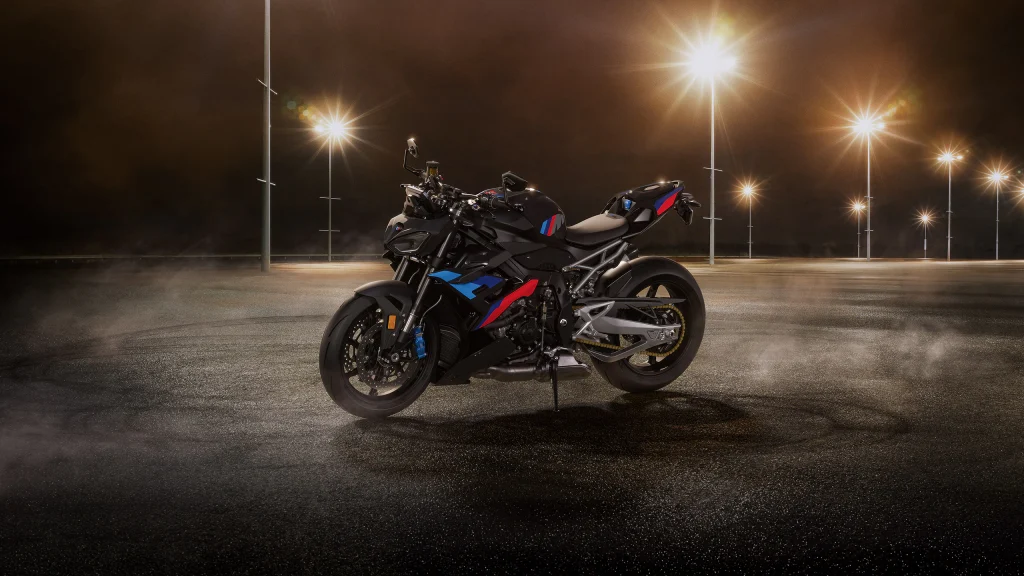
The M1000R runs a 45mm inverted fork and a monoshock, both electronically adjustable through BMW’s Dynamic Damping Control, with 120mm of travel up front and 117mm out back. This is stiff, race-bred hardware tuned for a bike that spends real time on track days, not a soft commuter setup dressed up on a spec sheet.
Braking duty falls to twin 300mm discs up front with radially mounted 4-piston calipers and a 220mm rear disc. Combined with the low wet weight of 199kg, that’s why the 70-0 mph braking number comes in under 3.4 seconds. The Competition package swaps in carbon wheels and drops weight to 194kg, tightening up the bike’s handling further for riders chasing lap times over comfort.
Who the BMW M1000R Is Best For
This is not a first bike, and it’s not really a commuter either, despite having heated grips and cruise control bolted on. The M1000R is built for experienced riders who want superbike-level performance without a fairing, whether that’s track day regulars, former sportbike owners who want a more upright seating position, or riders who simply want the fastest naked bike BMW makes.
If you’re cross-shopping against the standard S1000R, know that you’re paying a real premium for the M badge: more power, better brakes, adjustable suspension, and aero wings that actually do something at speed. It’s a bike that rewards a rider who already knows how to use that kind of power responsibly, not one still building throttle discipline.
Frequently Asked Questions
How fast is the BMW M1000R 0-60?
The BMW M1000R runs 0-60 mph in 3.14 seconds, based on instrumented testing with a GPS Datalogger. That places it in the same acceleration range as many current-generation superbikes, despite the naked bodywork and upright riding position.
What is the top speed of the BMW M1000R?
BMW claims a top speed of 174 mph (280 km/h). The highest independently tested speed on record is 166.7 mph, recorded on a shortened runway where the tester ran out of room before reaching a true top-speed plateau.
How much horsepower does the BMW M1000R have?
BMW claims 210PS (207 hp) at 13,750 rpm. Independent dyno testing measured 195.85 hp at 13,500 rpm at the rear wheel, which is a normal and expected drop from the claimed crank figure once drivetrain losses are factored in.
What is the BMW M1000R’s seat height?
The seat height is 830mm (32.7 inches), which is tall for a naked bike and reflects its superbike-derived ergonomics. Riders under about 5’8″ may want to sit on one before buying, since this isn’t a low, feet-flat commuter setup.
How much does the BMW M1000R cost in 2026?
The 2026 BMW M1000R starts at $22,695 MSRP in the US, plus a $1,095 destination charge. The Competition package adds carbon wheels and other upgrades for additional cost above that base price.
Is the BMW M1000R good for beginners?
No. With 195+ horsepower at the rear wheel, aggressive ergonomics, and a curb weight under 200kg, this bike is built for experienced riders who already understand how to manage that much power. A new rider would be better served starting on something in the 35-70 hp range and working up.


