Ducati DesertX Rally Top Speed, Specs & Review
TL;DR
- No independently verified top speed exists for the DesertX Rally; aggregator estimates put it around 135 mph, but Ducati has never published an official figure.
- The Rally shares its 937cc Testastretta 11° V-twin with the standard DesertX: 110 hp at 9,250 rpm, 92 Nm (68 lb-ft) at 6,500 rpm.
- Seat height is 910mm (35.8 inches), the tallest on any current production motorcycle.
- Starting price is $23,395, roughly $5,400 above the standard DesertX.
- Best fit: tall, experienced off-road riders who’ll actually use the extra suspension travel.
The Bottom Line
The DesertX Rally earns its price tag off-road and asks a lot of you on the showroom floor. If you’re under 5’8″ or mostly riding pavement, the standard DesertX gets you 90% of the bike for $5,400 less. If you’re tall, experienced, and planning real technical terrain, the Rally’s suspension is the real deal, not a badge job.
Every dollar of that premium goes into chassis hardware. The engine, frame, and electronics are lifted straight from the standard DesertX (Ducati, 2024).
Engine and Power: Same Motor, Shorter Gearing
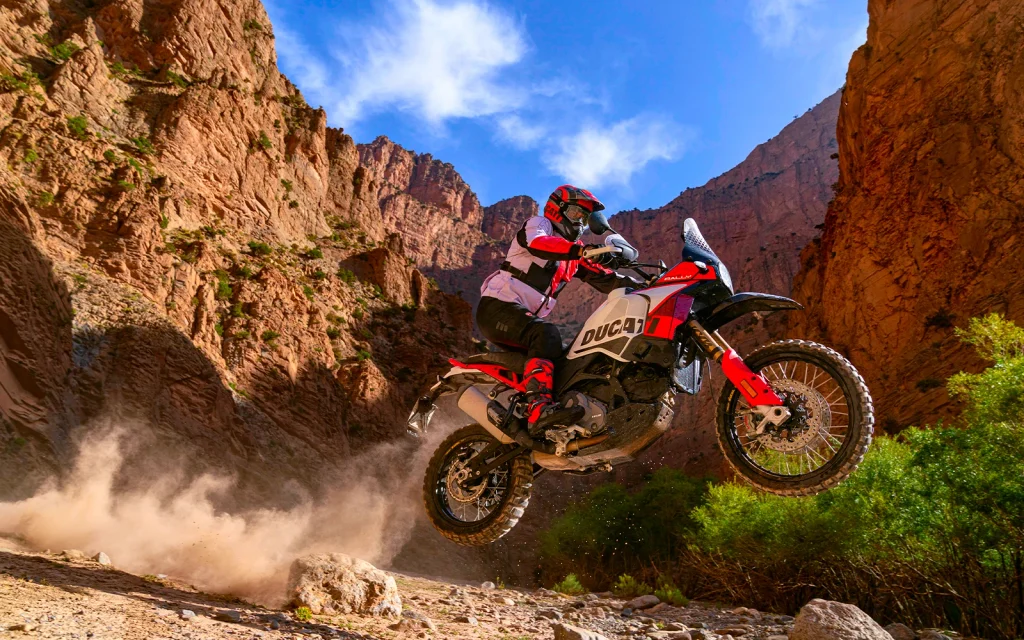
The Testastretta 11° engine is unchanged from the standard DesertX, so peak numbers are identical on paper: 110 hp at 9,250 rpm and 92 Nm of torque at 6,500 rpm from the 937cc L-twin. What Ducati did change is gearing. First and second gear are shortened on the Rally to sharpen low-speed control on technical terrain, which trades a bit of top-end reach for punchier response picking through rocks or ruts.
Six riding modes carry over: Sport, Touring, Urban, Wet, Enduro, and Rally. Enduro caps output at 75 hp with a softer throttle map for loose surfaces. Rally mode holds full power while backing traction control and ABS way off and killing wheelie control entirely, which is the setting that actually justifies the name.
Top Speed: Why There’s No Confirmed Number
No independently verified top speed exists for the DesertX Rally. Third-party spec aggregators cite figures around 135 mph (217 km/h), but that’s a formula-derived estimate, not a factory claim or a timed test result (Motorcyclespecs.com, 2025). Ducati doesn’t publish top speed for the DesertX line, which is standard practice for this brand across its adventure lineup.
Treat any number you see online for this bike as an estimate until a named publication runs an instrumented test. This article will be updated if one surfaces.
Suspension: The Actual Reason to Pay More
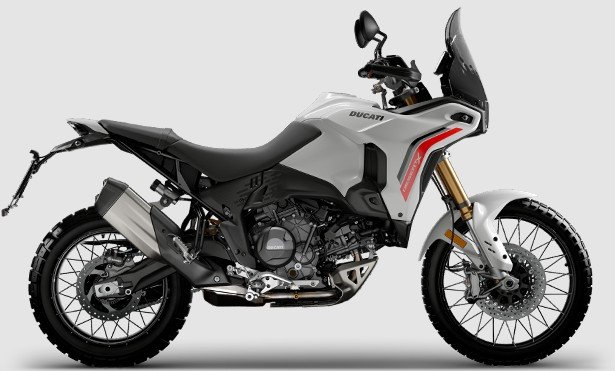
Suspension is the whole argument for the Rally over the standard bike. The front fork jumps to a 48mm KYB closed-cartridge unit with 250mm of travel, up from the standard bike’s 46mm fork and 230mm travel. Ducati calls this closed-cartridge design an industry first on a production motorcycle.
The rear shock gains a remote preload adjuster and more stroke, and ground clearance climbs to 280mm. Think of it like swapping a stock mountain bike fork for a long-travel unit with a dropper post: same frame, same rider position, but a much higher ceiling before the terrain outruns the suspension.
Weight, Seat Height, and Wheels
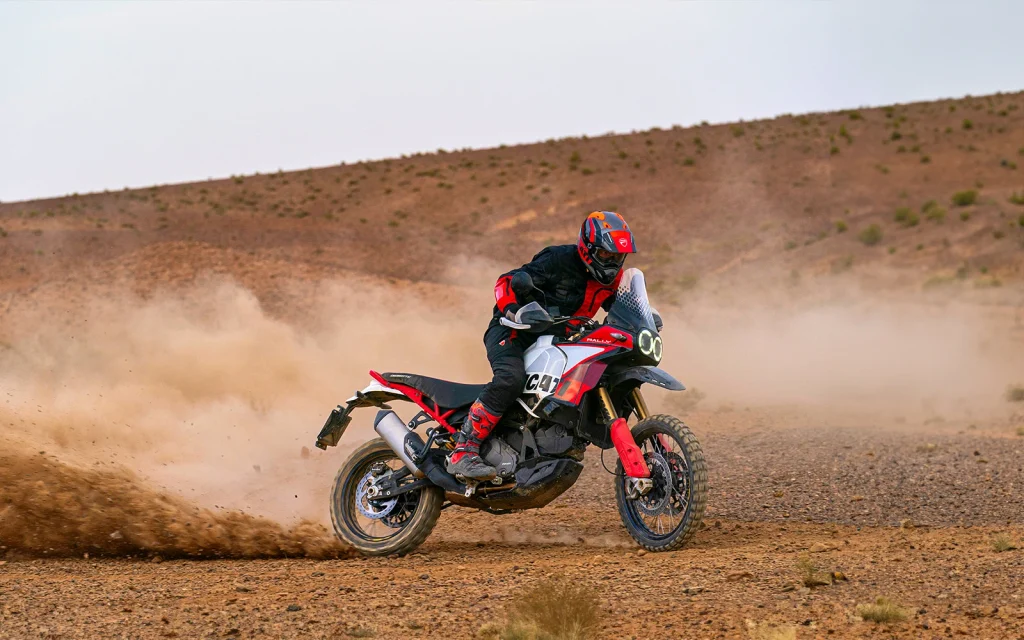
Wet weight without fuel comes in at 211 kg (465 lb), just a kilo over the standard DesertX despite the heavier-duty suspension. Lighter Excel Takasago wheels with carbon steel spokes offset most of the added mass from the bigger fork and shock.
Seat height is the number that’ll make or break this bike for you: 910mm (35.8 inches), the tallest on any current production motorcycle. Riders under 5’8″ have reported needing to reach with one foot planted, and struggling to raise the side stand from the saddle. A lower seat accessory brings it to 34.8 inches, which helps but doesn’t fully solve the reach for shorter riders.
Brakes and Spec Sheet
Braking hardware is unchanged from the standard DesertX: Brembo M50 monobloc radial calipers up front on dual 320mm discs, a Brembo two-piston caliper and 265mm disc at the rear, both under Bosch cornering ABS. That’s sport-bike-grade hardware, not the mid-tier setup you’ll find on cheaper ADV bikes in this class.
| Spec | DesertX Rally |
|---|---|
| Engine | 937cc Testastretta 11°, L-twin, liquid-cooled |
| Power | 110 hp @ 9,250 rpm (claimed) |
| Torque | 92 Nm / 68 lb-ft @ 6,500 rpm (claimed) |
| Top speed | ~135 mph (unverified estimate) |
| Seat height | 910mm / 35.8 in |
| Wet weight (no fuel) | 211 kg / 465 lb |
| Front suspension | KYB 48mm fork, 250mm travel |
| Ground clearance | 280mm / 11 in |
| Fuel capacity | 21 L / 5.5 gal |
| Front brakes | Brembo M50, dual 320mm discs, cornering ABS |
| Starting price (US) | $23,395 |
Source: Ducati official tech specs, 2024.
Pros and Cons
Pros:
- Closed-cartridge KYB suspension is genuinely race-derived hardware
- Brembo M50 brakes and cornering ABS are top-tier for the class
- Rally mode removes the electronic safety net exactly when you want it gone
- 21-liter tank gives real range for multi-day trips
Cons:
- 35.8-inch seat height is a hard limit for shorter riders
- $5,400 premium buys chassis parts, not more power
- Top-heavy at parking-lot speeds given the 465 lb wet weight
- No independently confirmed top speed or acceleration figures yet
Frequently Asked Questions
What is the top speed of the Ducati DesertX Rally?
No independently verified figure exists. Aggregator estimates suggest around 135 mph, but Ducati has not published an official number and no named publication has run a timed test yet.
How much horsepower does the DesertX Rally make?
A claimed 110 hp at 9,250 rpm, identical to the standard DesertX since both share the same 937cc engine.
How much does the Ducati DesertX Rally cost?
US pricing starts at $23,395, about $5,400 above the standard DesertX’s $17,995 starting price.
Is the DesertX Rally too tall for shorter riders?
At 35.8 inches, it’s the tallest seat height on any current production motorcycle. Riders under 5’8″ have reported real difficulty flat-footing it or raising the side stand, even with the lower seat accessory.
What’s different between the DesertX Rally and the standard DesertX?
The engine, frame, and electronics are the same. The Rally adds a 48mm KYB closed-cartridge fork, more suspension travel, lighter wheels, a carbon skid plate, and more ground clearance.