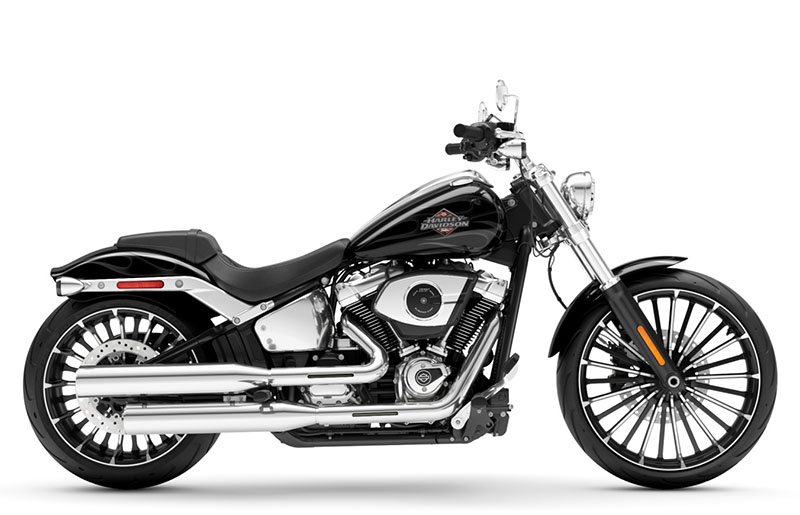
Harley-Davidson Breakout Specs, Top Speed & Review
TL;DR
- The 2025 Harley-Davidson Breakout runs the Milwaukee-Eight 117 Custom V-twin, producing 104 hp and 126 lb-ft of torque
- Harley does not publish an official top speed; independent testing and video evidence point to a real-world ceiling around 110-124 mph.
- The 2025 Breakout hits 0-60 mph in approximately 4.6 seconds
- MSRP starts at $23,099; weight in running order is 681 lbs.
- Built for experienced cruiser riders who want factory chopper looks, serious low-end torque, and modern electronics.
2025 Harley-Davidson Breakout Full Specs
| Spec | Detail |
|---|---|
| Engine | Milwaukee-Eight 117 Custom V-twin |
| Displacement | 117 cu in (1,917 cc) |
| Bore x Stroke | 4.075 in x 4.5 in |
| Horsepower | 104 hp at 4,800 rpm |
| Torque | 126 lb-ft (171 Nm) at 3,000 rpm |
| Cooling | Air- and oil-cooled |
| Fuel System | ESPFI (Electronic Sequential Port Fuel Injection) |
| Transmission | 6-speed with assist and slip clutch |
| Front Suspension | 49mm dual-bending valve forks, straight-rate springs |
| Rear Suspension | Monoshock with hydraulic preload adjustment |
| Front Brake | 300mm single disc, four-piston caliper |
| Front Tire | Michelin Scorcher 11, 130/60B21 |
| Rear Tire | Michelin Scorcher 11, 240/40R18 |
| Rake | 34 degrees |
| Wheelbase | 66.7 in |
| Seat Height (laden) | 25.6 in |
| Ground Clearance | 4.5 in |
| Fuel Tank | 5.0 gal |
| Fuel Economy | 49 MPG combined |
| Weight (running order) | 681 lbs |
| MSRP (2025, base) | $23,099 |
Milwaukee-Eight 117 Custom: Engine Character and Power Delivery
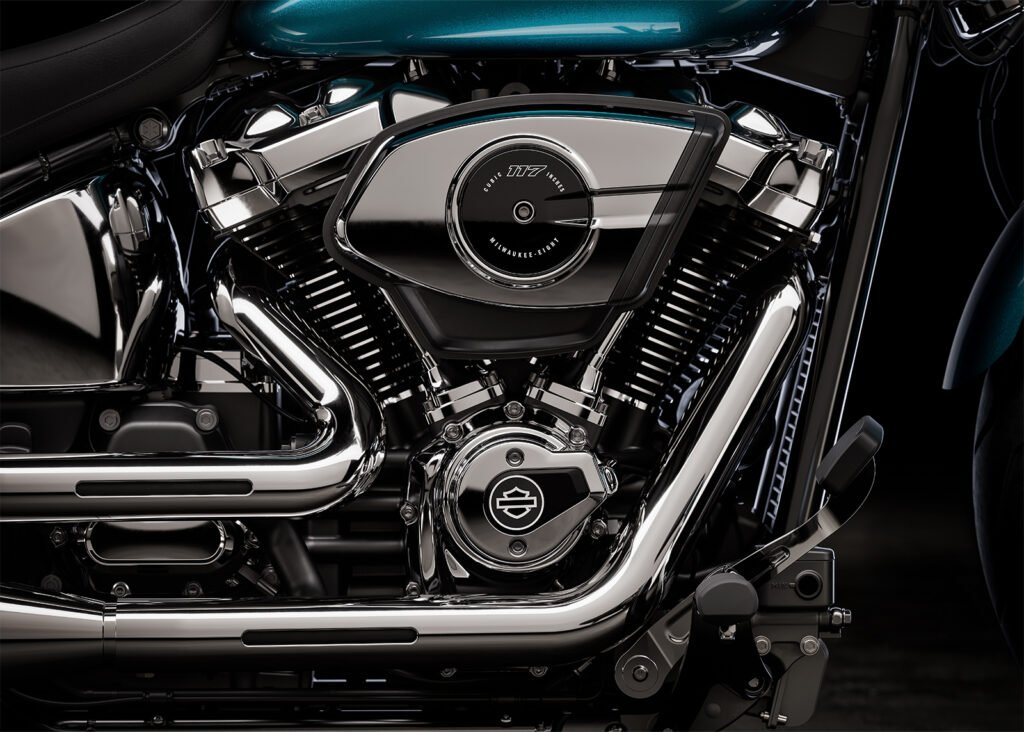
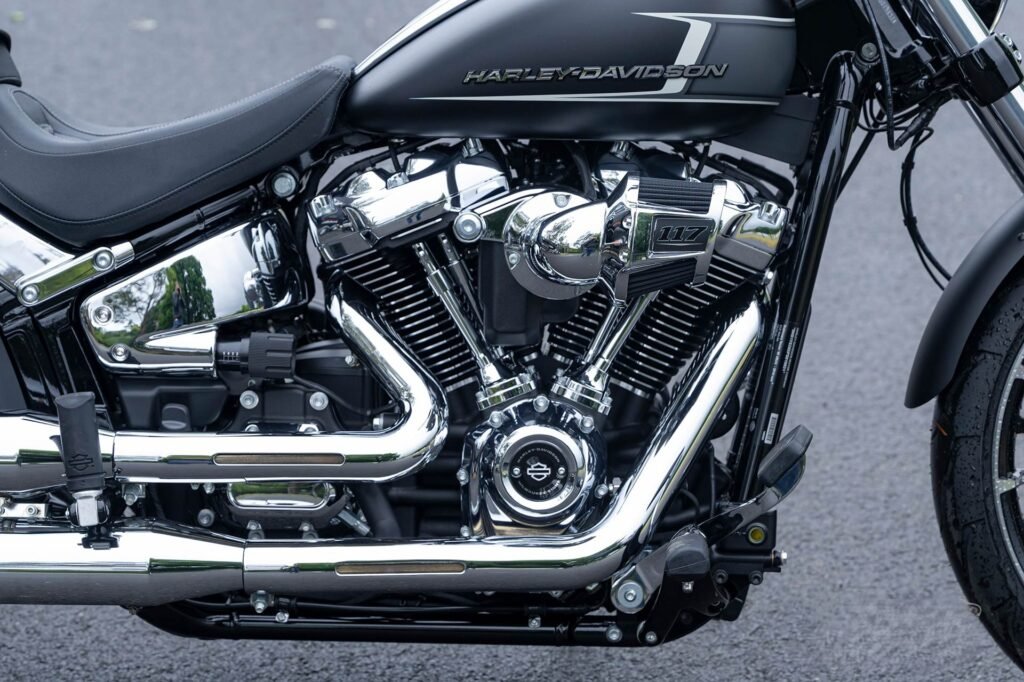
The Breakout’s Milwaukee-Eight 117 Custom is not the same 117 found in the Street Bob or Heritage Classic. Harley tunes each variant differently through intake, exhaust, cam profiles, and ride programming. The Custom tune – shared with the Fat Boy – prioritizes usable torque across the rev range over docility.
For 2025, the numbers are 104 hp and 126 lb-ft of torque (Harley-Davidson, 2025), up from the 2024 Breakout’s 101 hp and 123 lb-ft. The revised intake airbox runs 4.0 liters of volume, about 50 percent more than the previous Heavy Breather unit, shifting the exhaust character toward a lower, heavier rumble.
The 4.075-inch bore with a 4.5-inch stroke is a long-stroke design. Torque peaks at 3,000 rpm and stays wide – exactly right for a cruiser. The air- and oil-cooled setup uses an oil cooler between the frame downtubes for additional heat management.
Top Speed: What the Breakout Actually Does
Harley does not publish a top speed for the Breakout. Available evidence suggests a real-world ceiling between 110 and 124 mph stock. A 2017 video of a previous-generation Breakout showed it reaching 124 mph (SlashGear, 2025). The 2025 model’s stronger Custom tune makes matching that figure plausible.
Aerodynamics and chopper geometry work against high-speed stability: upright riding position, wide chest exposure to wind, 240mm rear tire adding rolling resistance. This is a boulevard and two-lane bike. At 70-80 mph, it’s composed and effortless – the torque surplus makes roll-on passing immediate.
0-60 mph Acceleration and Real-World Performance
The 2025 Breakout reaches 60 mph in approximately 4.6 seconds (TopSpeed, 2025) – respectable for a 681-pound cruiser. Torque is on-tap from idle and the 6-speed gearbox shifts cleanly.
New straight-rate springs for 2025 replaced progressive-rate coils that blew through the soft part of their travel too quickly under hard riding (Ultimate Motorcycling, 2025). The result is more predictable mid-corner feedback and less pitching under braking. Rear wheel travel increased 60 percent without a seat height penalty. Ground clearance is 4.5 inches – a hard ceiling on lean angle.
Chassis, Geometry, and Handling Realities
The second-generation Softail frame carries 34 degrees of rake and a 66.7-inch wheelbase. The 240mm rear tire is planted in straight lines. In corners, it resists turning and requires deliberate countersteering to hold a line. This is geometry doing exactly what it was designed to do.
The 49mm dual-bending valve forks give a composed front end. Under-seat hydraulic preload adjustment for the rear monoshock is easy to use for two-up riding. The Michelin Scorcher 11 tires are predictable and durable. Forward controls and a flat bar shift weight onto the tailbone over longer rides, though the seat is comfortable for most riders (Motorcycle.com, 2025).
Electronics and Rider Aids
The 2025 Breakout carries Harley’s full Rider Safety Enhancements suite: cornering-enhanced ABS, traction control, and drag-torque slip control, all lean-angle aware. Three ride modes – Sport, Road, Rain – adjust throttle response and the safety net. Traction control is switchable; ABS and drag-torque control are mode-dependent. USB-C charging and heated gear connections are standard. The 4-inch analog speedometer with digital readouts is clean and functional.
Strengths and Limitations
Strengths:
- 126 lb-ft of torque at 3,000 rpm delivers immediate pull from nearly any throttle position.
- Factory chopper styling with genuine visual presence – 21-inch front wheel, exposed 240mm rear.
- Cornering-enhanced electronics are a meaningful safety upgrade, not a spec-sheet item.
- 25.6-inch laden seat height is accessible for shorter riders on a big-twin.
- 49 MPG combined is solid for a 117-cubic-inch V-twin.
Limitations:
- 681 lbs demands discipline in parking lots, u-turns, and slow-speed riding.
- 4.5 inches of ground clearance limits lean angle on technical roads.
- The stock solo seat loses lower back support when the pillion pad is removed.
- Single 300mm front disc is adequate for the Breakout’s speed range, but not sport-bike territory.
- At $23,099 to start, accessories push the total well past $25,000.
Who the Breakout Is Built For
The Breakout suits the experienced cruiser rider who wants factory-built chopper aesthetics, modern electronics, and a big-twin that doesn’t require a custom build budget. The 25.6-inch seat height is a genuine advantage for shorter riders locked out of most large-displacement cruisers.
It’s not for new riders – 681 lbs and 126 lb-ft of torque require developed throttle management. It’s not a touring bike either: no wind protection, limited luggage, and a seat that accumulates pressure without accessory upgrades.
Frequently Asked Questions
What engine is in the Harley-Davidson Breakout?
The 2025 Breakout uses the Milwaukee-Eight 117 Custom V-twin, displacing 117 cubic inches (1,917 cc). It produces 104 hp at 4,800 rpm and 126 lb-ft of torque at 3,000 rpm, with air/oil cooling and electronic fuel injection.
How fast does the Harley-Davidson Breakout go?
Harley does not publish an official top speed. Based on independent testing, real-world top speed on a stock bike is in the 110-124 mph range. The 2025 model’s stronger tune makes the upper end achievable.
How quick is the Breakout 0 to 60 mph?
The 2025 Breakout reaches 60 mph in approximately 4.6 seconds (TopSpeed, 2025), which is quick for a 681-pound cruiser.
What does the 2025 Harley-Davidson Breakout weigh?
The 2025 Breakout weighs 681 lbs in running order. That weight demands attention in slow-speed maneuvering.
What is the seat height on the Breakout?
The laden seat height is 25.6 inches – among the lowest in the Harley-Davidson lineup, making it accessible for shorter riders.
Is the Harley-Davidson Breakout good for beginners?
No. The combination of 681 lbs, 126 lb-ft of torque, and chopper geometry requires real riding experience. Beginners should start on a smaller machine.
How much does the 2025 Breakout cost?
The 2025 Breakout starts at $23,099 MSRP. Destination, dealer fees, and accessories typically move the out-the-door total to $25,000 or more.
Key Takeaways
- 104 hp and 126 lb-ft of torque from the Milwaukee-Eight 117 Custom – the strongest factory tune on any production Breakout to date.
- Top speed is 110-124 mph based on available evidence; Harley does not publish official figures.
- 0-60 mph in approximately 4.6 seconds for a 681-pound cruiser.
- New straight-rate springs and cornering-enhanced electronics are real 2025 improvements.
- At $23,099 to start and 681 lbs to manage, this is strictly an experienced rider’s machine.