Honda NC750X Specs, Top Speed & Performance Review
TL;DR
- The Honda NC750X makes 58 hp and 69 Nm (51 lb-ft) of torque from a 745cc parallel-twin engine, making it one of the most fuel-efficient motorcycles in its class.
- Tested top speed is approximately 112-115 mph (180-185 km/h), depending on rider size, load, and gearbox variant (Honda does not publish an official top speed figure).
- The NC750X is available in two configurations: a conventional 6-speed manual and Honda’s Dual Clutch Transmission (DCT), which adds roughly $700 to the MSRP.
- It weighs 218 kg (481 lbs) wet with the DCT and 214 kg (472 lbs) with the manual, and fuel economy typically runs 60-70 mpg in real-world riding (Honda, 2024).
- If you want a low-stress, practical, all-day commuter that won’t punish you at the pump, the NC750X is one of the best arguments for that category on the market.
Honda NC750X Full Specs: Engine, Weight, and Dimensions
The 2024 Honda NC750X is powered by a 745cc liquid-cooled parallel-twin with a 270-degree firing order, 77mm bore, and 80mm stroke. Honda built this engine to prioritize low-end torque over peak power, which is why it pulls cleanly from under 2,000 rpm and doesn’t ask you to work hard in traffic.
| Spec | 2024 Honda NC750X |
|---|---|
| Engine | 745cc liquid-cooled parallel-twin |
| Bore x Stroke | 77mm x 80mm |
| Compression ratio | 10.7:1 |
| Peak power | 58 hp @ 6,750 rpm |
| Peak torque | 69 Nm (51 lb-ft) @ 4,750 rpm |
| Gearbox | 6-speed manual or DCT |
| Wet weight (manual) | 214 kg (472 lbs) |
| Wet weight (DCT) | 218 kg (481 lbs) |
| Seat height | 830 mm (32.7 in) |
| Fuel tank | 14.1 liters (3.7 US gallons) |
| Wheelbase | 1,535 mm (60.4 in) |
| Suspension (front) | 41mm telescopic forks, 150mm travel |
| Suspension (rear) | Pro-Link monoshock, adjustable preload |
| Brakes | 320mm front disc, 240mm rear disc; dual-channel ABS standard |
| MSRP (USA, 2024) | $9,199 (manual) / $9,899 (DCT) |
(Honda USA, 2024)
Honda NC750X Top Speed: What You’ll Actually See in the Real World
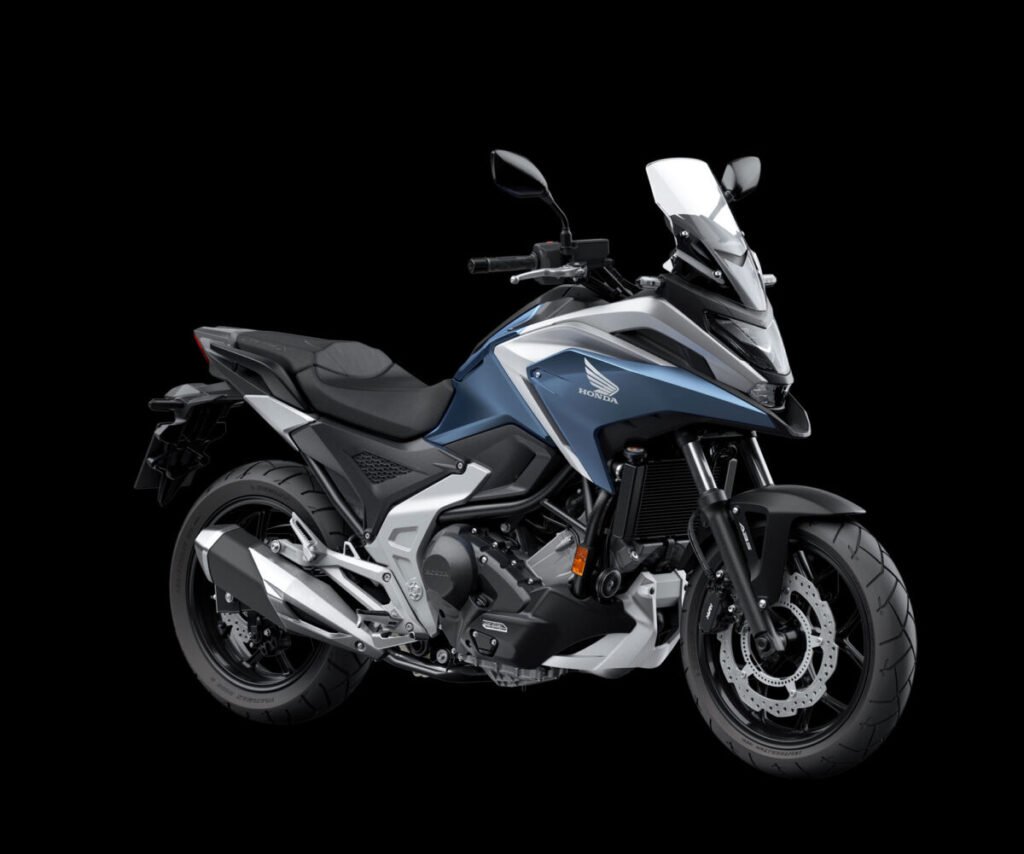
The NC750X has a tested top speed in the range of 112-115 mph (180-185 km/h) under real conditions. Honda doesn’t publish a factory top speed for this bike. That figure comes from independent tests and owner-reported data (Motorcyclist, 2022; RideApart, 2023), and it varies meaningfully based on rider weight, wind, and whether the bike is running the manual or DCT variant.
The DCT model is marginally slower at the top end because of the transmission’s programming priorities: it shifts up early to keep revs low and protect fuel economy, not to find peak power. If you’re chasing the redline, the manual gives you more control over when to shift and lets you hold gears longer.
In practice, the NC750X runs out of legs above 100 mph. It’ll cruise at 80-85 mph all day without complaint, but ask it for a long highway pull past 95 mph and you’ll feel it straining. For US interstate riding, it’s comfortable and has enough in reserve. It’s not a bike you’d take to a track day.
NC750X Acceleration: How Fast Does It Get to 60 mph?
The NC750X reaches 60 mph in approximately 5.5-6.0 seconds from a standing start, based on real-world testing (MCN, 2022; Cycle World, 2023). That’s honest mid-range performance – quicker than most cars off the line, slower than a sport bike.
The engine’s character makes a bigger impression than the numbers do. Peak torque arrives at 4,750 rpm, which means you’re in the meat of the powerband at nearly any road speed below 60 mph. Rolling acceleration from 30-70 mph is where this bike earns its reputation: pin the throttle in third or fourth gear and it responds without hesitation, without drama, without asking you to downshift three times first.
It’s not fast in the sport bike sense. A Kawasaki Ninja 650 or Yamaha MT-07 will run away from it on a clear road. But for the riding the NC750X is actually designed for – city riding, mixed commuting, long-distance touring at legal speeds – the acceleration is genuinely satisfying.
Real-World Performance: How the NC750X Rides Day to Day
The NC750X is an A2 licence-compliant motorcycle in the European Union when restricted to 35 kW (47 hp). In the USA, it’s sold unrestricted at 58 hp and requires a standard Class M licence.
Ergonomics are upright and relaxed. The 830 mm seat height is manageable for riders 5’6″ and taller, and shorter riders can order Honda’s optional low seat (810 mm). The 14.1-liter tank, combined with fuel economy in the 60-70 mpg range (Honda, 2024), gives you a realistic range of 200-240 miles between fills. That’s genuinely useful on a tour.
The 320mm front disc with Nissin calipers and dual-channel ABS is adequate, not exceptional. It’s not Brembo hardware, but it stops the bike straight and predictably. The 41mm forks are adequately damped for road use; they telegraph rough surfaces clearly without beating you up on long rides.
One thing that surprises most new owners: there’s a large storage compartment under the fuel tank cover (the fuel tank is under the rider’s seat), big enough to fit a full-face helmet or a day bag. Honda calls it the “front trunk.” It makes the NC750X genuinely practical in a way that most adventure-tourers aren’t.
NC750X DCT vs Manual: Which One Should You Buy?
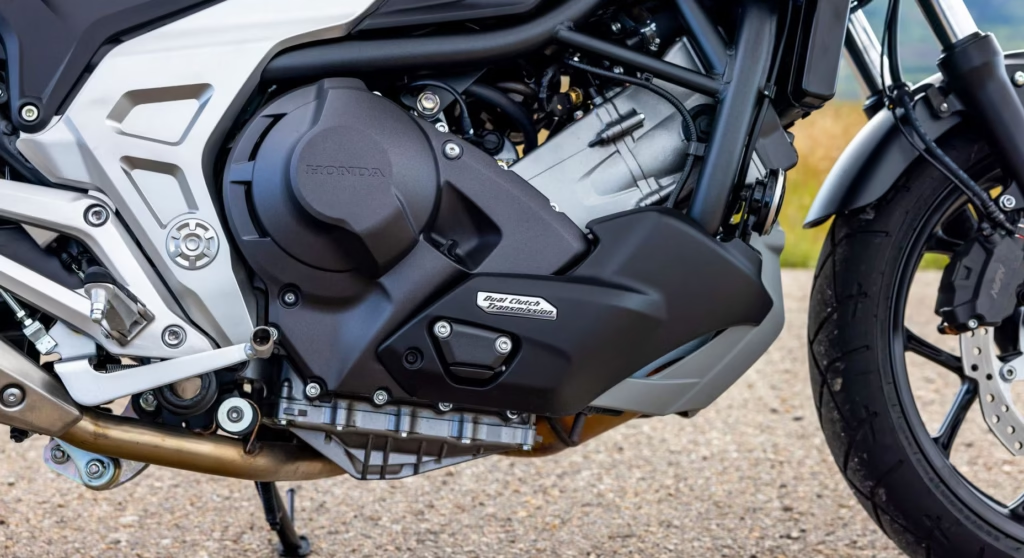
The DCT (Dual Clutch Transmission) is Honda’s automated gearbox that shifts gears on its own using two separate clutch packs and a hydraulic actuator. It’s not a CVT – it has six discrete gears and behaves more like a traditional gearbox than a scooter.
The DCT costs $700 more at MSRP and weighs 4 kg (9 lbs) more than the manual. In return, you get three riding modes (Sport, Standard, Rain), a manual override mode using paddle-style switches, and the ability to ride without touching a clutch lever in traffic.
For commuters and riders with wrist or hand fatigue issues, the DCT is worth the premium. It’s also genuinely good on mountain roads in manual mode. The downside: you lose the direct mechanical feel that experienced riders expect, and the system can occasionally hunt for gears in unfamiliar situations like slow off-camber turns.
The 6-speed manual is lighter, cheaper, and gives you full control. If you’re a confident rider who enjoys working the gearbox, get the manual.
What the NC750X Gets Right and Where It Falls Short
The NC750X does a lot of things well. Fuel economy, ergonomic comfort, storage practicality, and low-stress power delivery are all genuinely good. It’s one of the few bikes that can handle a 250-mile commuter week and a weekend tour without asking you to compromise on either.
Where it falls short: the suspension is tuned soft for comfort rather than precision. Add a pillion and luggage and it compresses noticeably, which softens steering response. Honda sells an adjustable preload shock, but it’s a budget unit compared to the WP or Ohlins hardware you’d find on KTM or BMW alternatives.
The engine also lacks character. It’s smooth, reliable, and efficient, but there’s no exhaust note worth mentioning from stock, and the powerband never excites. If you want a bike that makes you grin on a quiet back road, the NC750X isn’t the first answer. If you want a bike that shows up every morning and gets you where you’re going without drama, it absolutely is.
Frequently Asked Questions About the Honda NC750X
What is the Honda NC750X top speed?
The NC750X reaches approximately 112-115 mph (180-185 km/h) under real-world test conditions. Honda does not publish an official top speed figure. The DCT variant tends to top out a few mph lower than the manual due to its early upshift programming.
How much power does the Honda NC750X make?
The 2024 Honda NC750X produces 58 hp (43 kW) at 6,750 rpm and 69 Nm (51 lb-ft) of torque at 4,750 rpm (Honda USA, 2024). In the EU it can be restricted to 35 kW (47 hp) to comply with A2 licence requirements.
Is the Honda NC750X good for beginners?
Yes. The NC750X is one of the better beginner options in the mid-size adventure-tourer segment. Its low-revving engine is forgiving, the seat height (830mm) is accessible, and the DCT variant removes the clutch from the equation entirely, which lowers the learning curve significantly.
What is the fuel economy of the Honda NC750X?
Real-world fuel economy for the NC750X is typically 60-70 mpg (US) depending on riding style and conditions (Honda, 2024). The 14.1-liter (3.7 US gallon) tank gives a practical range of 200-240 miles per fill.
How does the NC750X compare to the Kawasaki Versys 650?
Both are parallel-twin adventure-tourers in the same price range. The Versys 650 makes more peak power (67 hp vs 58 hp) and has a more sport-forward suspension tune. The NC750X beats it on fuel economy, has the front trunk storage, and offers the DCT option. The Versys is more fun on twisty roads; the NC750X is better for long-distance practicality.
Does the Honda NC750X have ABS?
Yes. Dual-channel ABS is standard on all 2024 NC750X variants in the United States. It cannot be switched off on this model (Honda USA, 2024).
Key Takeaways
- The 2024 Honda NC750X makes 58 hp and 51 lb-ft of torque from a 745cc parallel-twin, with a real-world top speed of 112-115 mph and 0-60 mph in approximately 5.5-6.0 seconds.
- Fuel economy of 60-70 mpg and a usable front trunk make it one of the most practical bikes in its class for commuting and touring.
- The DCT variant adds $700 and 9 lbs but removes the clutch entirely – worth it for commuters and riders with hand fatigue.
- Suspension is tuned for comfort and shows its limits with two-up riding or heavy luggage.
- It’s a bike that excels at doing its job reliably and cheaply, not at setting your pulse racing.