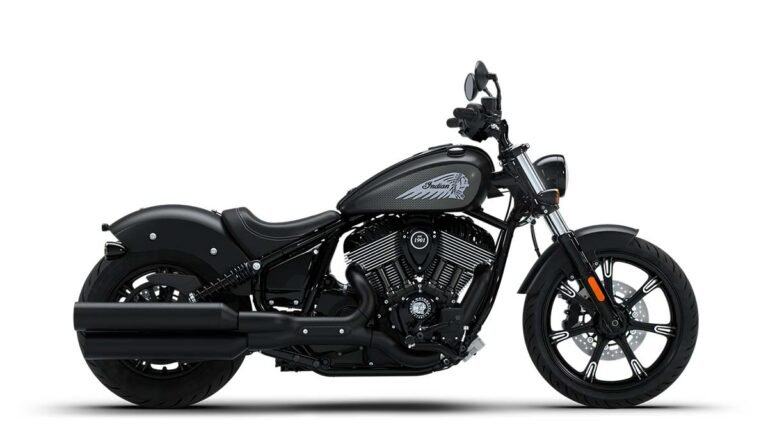
Indian Scout Bobber Top Speed, Specs & Review
TL;DR
- The 2025 Indian Scout Bobber runs a 1250cc liquid-cooled 60° V-twin producing a claimed 105 hp and 82 ft-lb of torque
- Indian does not publish an official top speed; independent estimates place the 1250cc Scout Bobber at approximately 115-124 mph in real-world conditions.
- Wet curb weight is 542 lb with a 25.6-inch seat height – the lowest claimed in its class
- Three trim levels are available: Standard ($12,999), Limited ($13,699), and Limited +Tech ($14,699), all with ABS standard.
- The Scout Bobber suits experienced riders who want blacked-out cruiser style with genuine performance – it’s not a beginner bike.
2025 Indian Scout Bobber Full Specifications
| Specification | Detail |
|---|---|
| Engine | SpeedPlus 1250, 60° V-twin, DOHC |
| Displacement | 76ci / 1250cc |
| Bore x Stroke | 4.094″ x 2.898″ (104mm x 73.6mm) |
| Claimed Horsepower | 105 hp @ 7,250 rpm |
| Claimed Torque | 82 ft-lb @ 6,300 rpm |
| Compression Ratio | 12.5:1 |
| Cooling | Liquid |
| Fueling | EFI, 60mm throttle body |
| Transmission | 6-speed |
| Final Drive | Belt |
| Frame | Steel tube double-cradle |
| Front Suspension | 41mm non-adjustable fork, 4.7″ travel |
| Rear Suspension | Dual shocks, spring-preload adjustable, 2.0″ travel |
| Front Tire | 130/90B16 Pirelli MT60RS |
| Rear Tire | 150/80B16 Pirelli Night Dragon |
| Front Brake | 298mm disc, 2-piston caliper, ABS |
| Rear Brake | 298mm disc, single-piston caliper, ABS |
| Wheelbase | 61.5 in (1,562mm) |
| Rake / Trail | 29.4° / 4.9 in |
| Seat Height | 25.6 in (651mm) |
| Fuel Capacity | 3.4 gal (12.9L) |
| Dry Weight | 522 lb (237kg) |
| Wet/Curb Weight | 542 lb (246kg) |
| MSRP (Standard) | $12,999 |
Sources: Ultimate Motorcycling (2024); Rider Magazine (2024); Indian Motorcycle (2024)
Indian Scout Bobber Top Speed: What the Numbers Actually Say
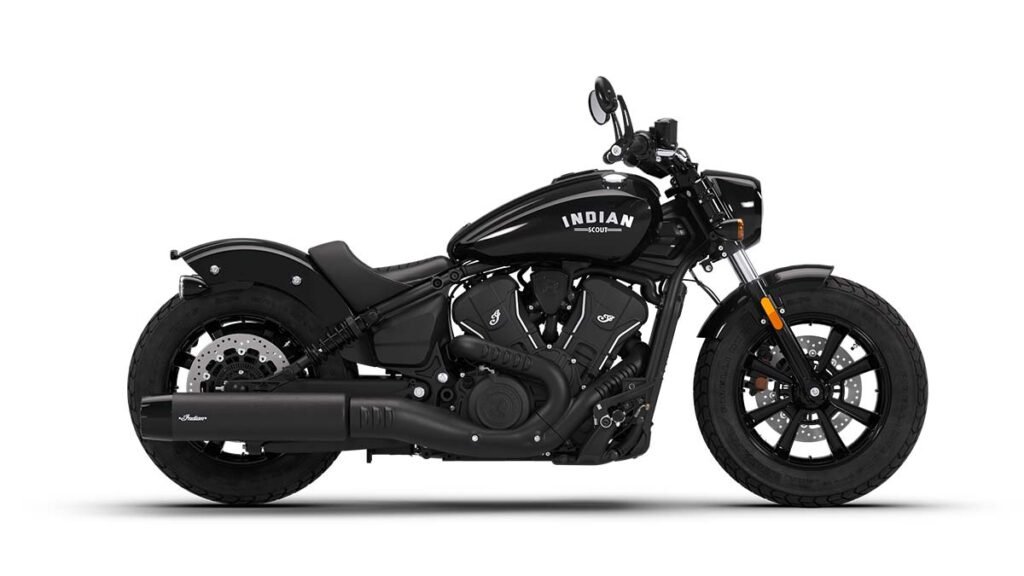
Indian Motorcycle does not publish an official top speed for the Scout Bobber – standard practice for cruiser manufacturers. Based on available data, the 2025 Scout Bobber’s real-world ceiling sits somewhere in the 115-124 mph range.
Two data points are worth knowing. The pre-2025 Scout Bobber – running the older 1133cc aluminum-frame platform with 100 hp – was documented by TopSpeed at a governed 128 mph (TopSpeed, 2023), with rider-reported speeds clustering around 115-120 mph under normal road conditions. The 2025 1250cc SpeedPlus engine adds roughly 5 hp over that predecessor but carries the same upright bobber ergonomics and 16-inch wheels that cap aerodynamic efficiency before the engine runs out of pull. A French moto database (Motoplanete, 2024) lists a modeled top speed of approximately 200 km/h (124 mph) for the 1250cc Scout Bobber on track.
What any Scout Bobber top speed test will tell you: this bike hits its aerodynamic ceiling fast. The wide handlebar, upright torso, and squared-off 16-inch rubber work against top-end velocity. That’s not a flaw – it’s the price of the low bobber stance. Between 40 and 100 mph is where the Scout Bobber feels genuinely rapid, and that covers 99% of real-world riding.
The SpeedPlus 1250 Engine: More Than the Numbers Suggest
The 2025 Scout Bobber gets the SpeedPlus 1250, a 60-degree DOHC V-twin with a 12.5:1 compression ratio and electronic fuel injection through a 60mm throttle body. It’s the same basic architecture across the 2025 Scout family, though the Bobber tune delivers 105 hp rather than the full 111 hp in the 101 Scout variant (Indian Motorcycle, 2024).
The engine is liquid-cooled with a semi-dry sump oiling system – a setup that keeps overall height down and supports the bike’s low, flat profile. Compared to the 1133cc aluminum-framed Scout it replaced, the 1250cc SpeedPlus adds meaningful grunt through the mid-range. Torque peaks at 82 ft-lb at 6,300 rpm and arrives early enough that you’re rarely hunting for a downshift in highway traffic.
The 60-degree V-angle produces a deeper, busier exhaust note than the narrow-angle twins in most Harley-Davidson cruisers. Rider Magazine (2024) noted the engine “sounds deep and authoritative” while lacking “the loping cadence of narrower vee angle motors.” The 6-speed gearbox and slipper-assist clutch are genuine improvements over the previous generation – the clutch pull is light, and the slipper function keeps the rear wheel honest during aggressive downshifts.
Chassis, Suspension, and How It Actually Handles
The 2025 Scout Bobber rides on a new steel tube double-cradle frame – a change from the aluminum construction of the previous generation. Indian made this move specifically to simplify customization, since steel frames accept welded mounts and brackets far more easily than aluminum (Cycle News, 2024).
Suspension is carried over from the previous Scout: 41mm non-adjustable forks up front with 4.7 inches of travel, and spring-preload adjustable dual shocks at the rear with only 2.0 inches of travel. That rear travel figure is no accident – the slammed suspension is what lets the seat sit at 25.6 inches. You feel every sharp edge in the road at the back end. For city riding and smooth highways, it’s fine. Put it on a broken back road for 200 miles and the seat and shocks will remind you that this is a style-first machine.
The Pirelli MT60RS front and Night Dragon rear – both in 16-inch fitments – suit mixed urban/highway use and accept replacement rubber in common sizes without hunting for unusual specs.
Wheelbase is 61.5 inches with a 29.4-degree rake and 4.9 inches of trail. The geometry produces slow, deliberate steering rather than flickable sportbike responses – exactly what you’d expect from a cruiser. The Scout Bobber sits flat in a corner and tracks confidently, but 4.3 inches of ground clearance means the pegs will contact pavement if you try to hustle it through tight switchbacks.
Trim Levels and What You Actually Get
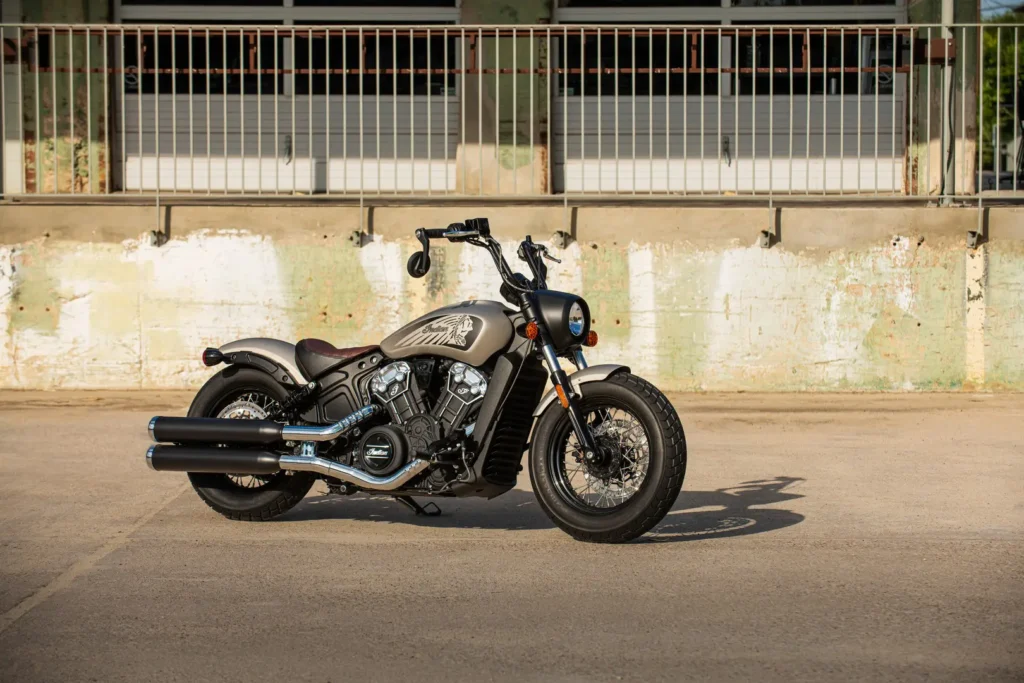
Three configurations exist for the 2025 Scout Bobber, all sharing the same engine, frame, and suspension.
The Standard ($12,999) includes ABS, full LED lighting, a combined analog/digital gauge cluster, and a keyed ignition. It’s the clean starting point if you plan to customize.
The Limited ($13,699) adds ride mode selection, which lets you toggle between Standard, Sport, and Rain power delivery maps. That alone is worth the $700 premium if you ride in varied conditions.
The Limited +Tech ($14,699) builds on the Limited with traction control, cruise control, a USB charge port, and keyless ignition. The Rider Magazine test bike (2024) ran the Limited +Tech configuration, and reviewers found the keyless start to be a genuinely useful daily feature rather than a gimmick.
ABS is standard across all three – that’s the baseline, and it’s non-negotiable for a bike in this weight class.
Strengths and Real Limitations
The Scout Bobber gets several things right. The seat height is legitimately low at 25.6 inches – riders who struggle to flat-foot other mid-size cruisers will find the Bobber far more accessible. The 1250cc engine delivers strong, linear power that suits both city stop-and-go and sustained highway cruising. The new steel frame opens up a wide aftermarket customization path, and Indian’s 100-plus accessory catalog specifically for the 2025 Scout platform means you can personalize it without fabricating anything from scratch.
The honest limitations: rear suspension travel is minimal at 2.0 inches, making the ride firm to choppy on anything but smooth pavement. The 3.4-gallon fuel tank limits range to roughly 130-150 miles between stops depending on pace. The front brake uses a 2-piston caliper on a 298mm disc – it works, but riders stepping off bikes with Brembo radial-mount setups will notice the difference in initial bite. The low, wide handlebar also puts you in an aggressive forward lean that accumulates fatigue on rides over two hours.
Who the Scout Bobber Is Right For
The Scout Bobber works best for riders with at least a season of experience who want a visually aggressive mid-size cruiser for daily commuting, weekend riding, and occasional longer day trips. The 542-pound curb weight and strong torque demand confidence at low speeds – newer riders would be better served starting on something lighter before stepping to this platform.
It’s also a natural choice for the customizer. The new steel frame, broad accessory catalog, and blacked-out-from-the-factory aesthetic give you a clean canvas without needing to source custom parts before you’ve ridden a mile.
Frequently Asked Questions
What is the top speed of the 2025 Indian Scout Bobber?
Indian does not publish an official top speed for the Scout Bobber. Based on independent estimates and modeled performance data for the 1250cc platform, real-world top speed is approximately 115-124 mph (185-200 km/h). The upright riding position and 16-inch wheel aerodynamics limit top-end velocity more than the engine does.
How much horsepower does the 2025 Indian Scout Bobber have?
The 2025 Scout Bobber produces a claimed 105 hp at 7,250 rpm and 82 ft-lb of torque at 6,300 rpm (Indian Motorcycle, 2024). The same SpeedPlus 1250 engine in the 101 Scout variant is rated at 111 hp; the Bobber receives a slightly different power map tuned for cruiser-style power delivery.
What is the difference between the Scout Bobber and the Scout Sixty Bobber?
These are two distinct motorcycles with different engines. The Scout Bobber runs the 1250cc SpeedPlus V-twin (105 hp, 82 ft-lb, 6-speed, $12,999 starting). The Scout Sixty Bobber uses a smaller 999cc SpeedPlus V-twin (85 hp, 65 ft-lb, 5-speed, $9,999 starting) and is lighter at 516 lb shipped weight – generally more accessible for newer or smaller-statured riders. Both share a seat height around 25.6-25.7 inches (Cycle News, 2024).
Is the 2025 Indian Scout Bobber a good beginner motorcycle?
Not ideally. The 542-pound wet weight, strong mid-range torque, and low-slung ergonomics require prior experience to manage confidently in slow-speed maneuvers and city traffic. The Scout Sixty Bobber ($9,999) is more appropriate for newer riders who want the same bobber aesthetic in a lighter, less powerful package.
What tires come stock on the 2025 Indian Scout Bobber?
The Scout Bobber ships on a Pirelli MT60RS front (130/90B16) and a Pirelli Night Dragon rear (150/80B16), both on 16-inch cast aluminum wheels. These are standard cruiser touring compounds – reasonable for mixed streets and highway use, not performance-focused. If you’re riding in wet conditions regularly, the Night Dragon rear compound is worth monitoring more closely than a sportier tire would be.