MV Agusta Motorcycles Years to Avoid
TL;DR
- Avoid early F4s from 1998-2005 – they run a paired-injection Marelli ECU (the 1.6M unit) that is increasingly difficult to source and service, plus fragile plastic fuel-line fittings prone to cracking with age.
- The 2010-2011 F4 and Brutale transition bikes had recurring starting failures tied to a faulty starter switch and relay, with parts so scarce that US buyers waited months for warranty repairs.
- F3 675/800 and Brutale 800 models from 2012-2015 carry the most-documented sprag clutch failures; the original sprag design is too small for the three-cylinder engine’s firing pattern and will eventually leave you stranded.
- The Turismo Veloce from 2015-2017 has a well-documented fuel level sensor failure that can strand you without warning – and the part was frequently out of stock from MV.
- 2019 and newer models are generally the best-supported and most reliable used MV Agustas you can buy today.
Why MV Agusta Has More Trouble Spots Than Most Italian Brands
MV Agusta builds some of the most stunning motorcycles on the planet. They’re also built in extremely low volumes – Wikipedia reports production of 3,650 units for all of 2010 – by a company that has cycled through financial stress, ownership changes, and dealer network collapses repeatedly over the past 25 years (Wikipedia, 2024). That combination of low production volume, exotic componentry, and institutional instability means the “years to avoid” question matters more here than it does for Ducati or even Aprilia.
The problems fall into two categories: model-specific mechanical faults and brand-wide parts/dealer support failures. Both can ruin ownership.
MV Agusta Years to Avoid at a Glance
| Era | Models Affected | Primary Issue | Risk Level |
|---|---|---|---|
| 1998-2005 | F4 750/1000 | Paired-injection 1.6M ECU, fragile fuel fittings | Moderate-High |
| 2010-2011 | F4 1000, Brutale 990R/1090R | Starter switch/relay failures, parts drought | High |
| 2012-2015 | F3 675/800, Brutale 800/Dragster | Undersized sprag clutch, exhaust servo errors | High |
| 2015-2018 | Turismo Veloce, Rivale | Fuel level sensor failures, lambda sensor faults | Moderate |
| 2022-2023 | All models | KTM parts logistics disruption (transitional) | Moderate |
F4 First-Generation Models (1998-2005): ECU and Fuel System Fragility
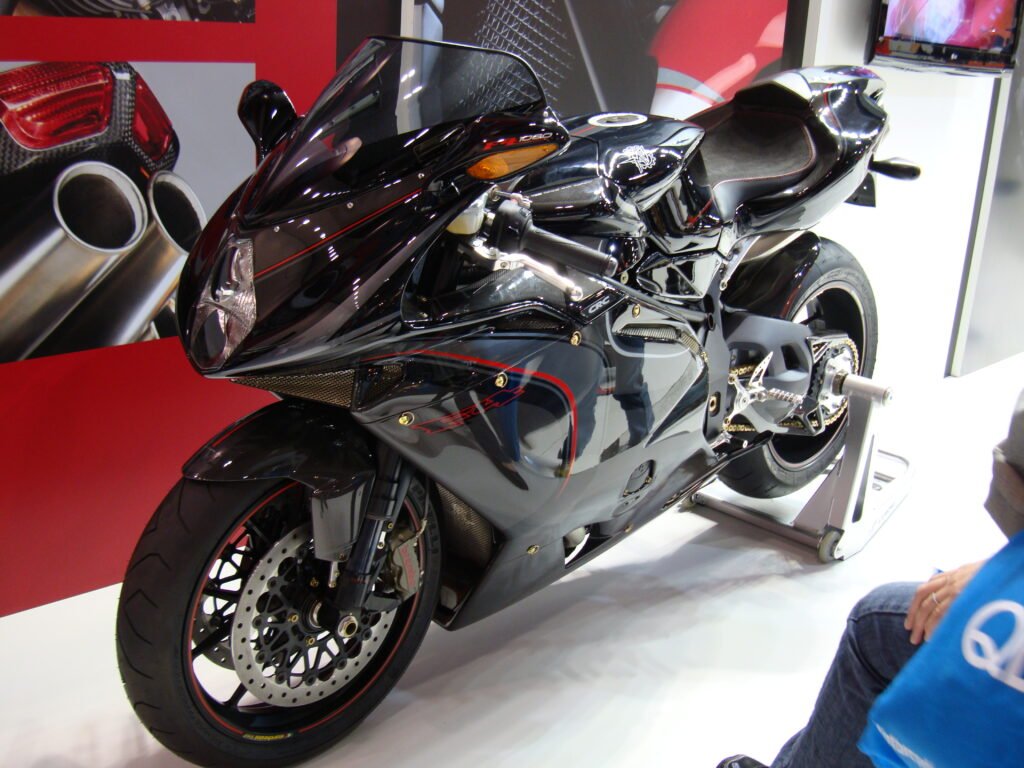
The first-gen F4 750 and 1000 used the Magneti Marelli 1.6M ECU, which fires injectors and spark plugs in pairs rather than sequentially (MVAgusta.net forum, 2021). Later bikes from 2006 onward moved to the 5SM ECU with proper sequential injection. The older ECU requires EPROM chips to remap, and those are increasingly hard to find – meaning any fueling issue on a 1998-2005 F4 can spiral into an expensive dead end.
Beyond the ECU, early F4s are known for fragile plastic quick-disconnect fittings on the fuel lines. These crack and become brittle with age, and an out-of-spec repair can create a fuel leak – expensive to fix and genuinely dangerous if ignored. Forum reports also note hub bearing failures on the rear wheel – the bearings are undersized for the application, and overtightening the pinch bolts collapses the internal clearance and accelerates wear (MVAgusta.net, 2021).
The bikes that survived the first 20 years in good condition can be fine. But buying an early F4 today means taking on a project, not a reliable weekend machine.
2010-2011 F4 and Brutale: Parts Desert During Ownership Transition
The 2010-2011 model year coincided with a brutal stretch for MV Agusta in the US market. Claudio Castiglioni died in August 2011. Harley-Davidson had already exited their distribution agreement. MV’s US support staff was cut to a single phone answerer, and dealers reported parts waits of ten months or more for warranty items (MVAgusta.net forum, ~2011).
The immediate mechanical problem was a faulty starter switch and relay on the 2010 F4. One US dealer reported that all three F4s on his showroom floor had the same starting fault – a confirmed warranty issue with no replacement part in production at the time (MVAgusta.net, 2011). Separately, the 2010 F4 saw multiple reports of radiator leaks from hairline casting defects, overheating in traffic, and odometer seals allowing dust ingestion. None of these are catastrophic on their own. Combined with a parts supply that had essentially collapsed, they made ownership miserable.
If you find a clean 2010 or 2011 MV, verify the starter switch and relay have been replaced with updated parts, and confirm the bike has a service history with an actual MV dealer, not a general shop that guessed its way through the service menu.
2012-2015 F3 and Brutale 800: The Sprag Clutch Era
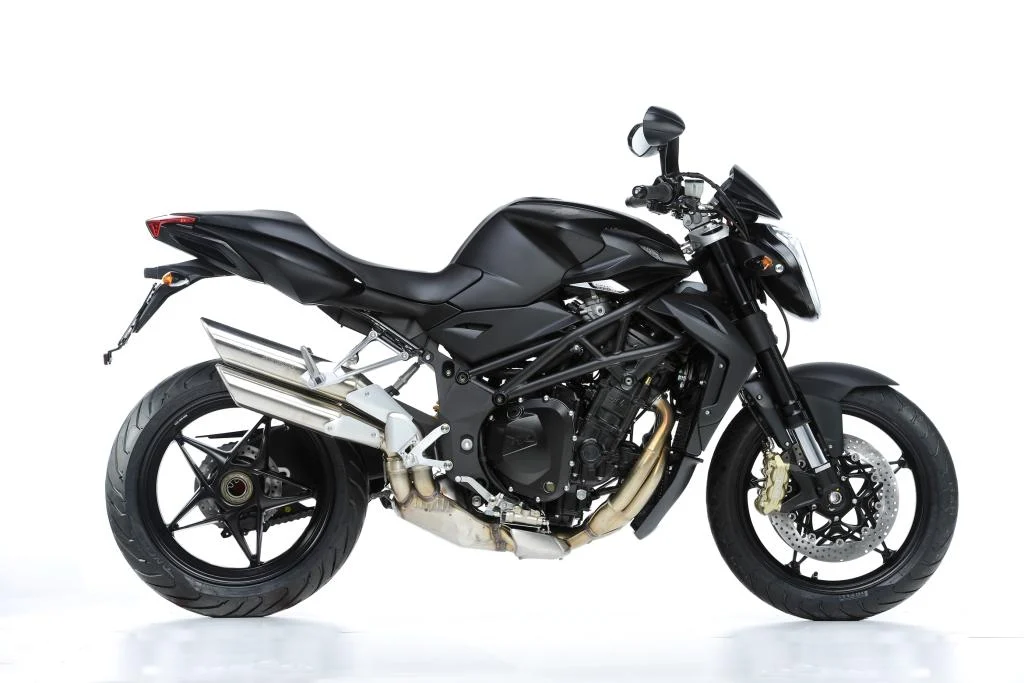
This is the era that defined MV Agusta’s reliability reputation in the used market, and not in a good way. The F3 675 launched in 2012, the F3 800 and Brutale 800 followed, and every three-cylinder MV Agusta produced through at least 2016 used a starter sprag clutch (the one-way bearing that lets the starter motor turn the engine without spinning backwards when the engine fires) that was too small for the job.
The engineering reason is specific: unlike a four-cylinder engine, which tends to stop in the same crankshaft position each time, a triple stops in varying positions – sometimes at top dead center, sometimes past it (MVAgusta.net forum, 2016). That means the sprag occasionally has to engage against compression resistance from the wrong angle, which wears the rollers and the running surface faster. The stock part reportedly had insufficient clearance to accommodate a properly-sized replacement, making a full redesign impractical without a major engine teardown (MVAgusta.net, 2016).
Symptoms start subtly: the bike cranks but won’t fire on the first button press. Owners learn a workaround – pulling the clutch lever in slightly while pressing the starter loads the drivetrain sideways and helps the sprag grip. Eventually the bike won’t start at all.
MV issued revised sprag parts over several iterations, and a firmware update improved the ECU firing order to reduce wear. Confirm the updated design (referenced as ending in -2424 in forum posts) is installed before buying any 2012-2015 F3 or Brutale 800 (MVAgusta.net forum, 2016). Post-2017 bikes have a much better track record on this failure.
On the same generation, the exhaust valve servo – a motorized actuator that controls the variable exhaust valve – is prone to throwing fault codes, usually from a dirty potentiometer inside the servo body. It’s an irritating but usually cheap fix (electrical contact cleaner and a careful hand), but on bikes out of warranty it triggers a check engine light and can confuse diagnosis of other issues (MVAgusta.net forum, various dates).
2015-2018 Turismo Veloce: Fuel Sensor and Lambda Sensor Issues
The Turismo Veloce is one of MV’s best ideas – a sport-touring triple with genuinely good ergonomics and serious performance. The 2015-2017 bikes have two documented electrical faults worth knowing.
The fuel level sensor is a float-type probe inside the tank. The sensor’s PCB (printed circuit board) is potted in resin, and the connection point between the external wiring and the circuit board fails with heat cycling and vibration. When it goes, the dash displays a constant fuel level sensor error and the gauge stops working. MV’s own advice to owners was “don’t try to repair it yourself, go to your dealer” – except the part was frequently listed as unavailable for weeks or months (MVAgusta.net, various dates through 2022). Owners with 2015-2016 Turismo Veloce bikes still deal with this as a common used-market problem today.
Lambda sensor failures are a secondary but recurring complaint across the Turismo lineup. These are the oxygen sensors in the exhaust that manage fuel trim. They fail from contamination and normal heat cycling, and while a replacement sensor is straightforward, it is worth factoring into the purchase price on any pre-2019 TV.
2022-2023 Brand-Wide: The KTM Transition Parts Disruption
This one applies across all MV Agusta models. When MV and KTM entered their partnership in early 2022 and then separated in late 2022, KTM’s Austrian warehouses were handling MV parts logistics. Once the relationship soured, KTM deprioritized MV shipments, and some parts simply stopped moving (MVAgusta.net forum / WebBikeWorld via MV COO statement, 2024). MV’s own COO acknowledged publicly that customers experienced significant parts delays throughout 2023 (MV Agusta COO statement published via WebBikeWorld, 2024). If you are considering a 2022 or 2023 MV Agusta that has an open warranty issue or a deferred service item, confirm the parts are actually in hand before buying.
MV Agusta Years Worth Buying: 2019 and Newer, Post-Revision 2017+
The clearest used-market window for MV Agusta today is 2019 and newer. The sprag clutch issues had been revised through multiple iterations by 2017-2018. The 2019 and 2020 Brutale, F3, Superveloce, and Turismo Veloce models received updated electronics and tighter QC, and forum-reported major issues dropped noticeably by the 2020 model year – a pattern confirmed by experienced owners on MVAgusta.net who noted the serious faults of earlier years appeared to be gone on post-2019 builds (MVAgusta.net, 2021).
If your budget only reaches a 2013-2016 F3 or Brutale 800, that’s workable – these are genuinely excellent motorcycles when the sprag has been replaced with the revised part and the ECU has been reflashed with the latest map. Just confirm both have been done before you hand over money. Get the paperwork.
Frequently Asked Questions About MV Agusta Years to Avoid
What year MV Agusta should I avoid if I can only remember one thing?
Avoid the 2012-2015 F3 675/800 and Brutale 800 unless you can confirm the sprag clutch has been replaced with the revised design and the ECU has been updated. That era has the highest concentration of documented starter failures, and a failed sprag can leave you stranded anywhere with no simple roadside fix.
Are MV Agusta motorcycles reliable at all?
They’re reliable for an exotic Italian superbike, which is a different standard than a Honda CB500 or Yamaha MT-07. MV Agustas need strict service intervals, quality oil, a battery tender when parked, and a dealer who knows the brand. Owners who treat them like a Honda report far more failures than owners who stay on top of the 7,500-mile service schedule.
Is the sprag clutch problem fixed on newer MV Agustas?
Yes, for practical purposes. The revised parts arrived in stages from 2015 onward, and by 2017-2018 the issue was largely resolved through updated sprag assemblies and firmware changes to the ECU firing order. Post-2019 three-cylinder MV Agustas have a much cleaner forum track record on starting failures.
How much does MV Agusta service cost in the US?
The 7,500-mile service is typically $900-$1,300 depending on valve adjustment needs and regional labor rates, based on owner reports from US dealers (MVAgusta.net forum, various). Plan for one valve shim per service on average. That is a real cost of ownership that separates MV from volume brands.
What used MV Agusta is the safest first purchase?
A 2019 or newer Brutale 800 or F3 800 with a documented dealer service history is the safest entry point. Verify the bike has the current ECU software, check the battery health (MV electronics are sensitive to a weak battery), and confirm no open fault codes before purchase.
Key Takeaways
- The three highest-risk eras are 1998-2005 F4 (ECU/fuel fittings), 2010-2011 F4/Brutale (parts drought + starter failures), and 2012-2015 F3/Brutale 800 (sprag clutch design flaw).
- The 2022-2023 era has a brand-specific parts disruption risk unrelated to the bikes themselves.
- A pre-purchase checklist should include: sprag clutch revision confirmation, current ECU map, battery health test, and any open fault codes read by a dealer-grade scanner.
- MV Agusta post-2019 bikes represent the most reliable used-market window in the brand’s recent history.
- Every MV Agusta needs proper maintenance and an engaged owner. If you want to ride without thinking about the machine, buy a Japanese bike.