Suzuki Intruder 1400 Problems: A Buyer’s and Owner’s Guide
TL;DR
- The most common Suzuki Intruder 1400 problems are carburetor sync drift, front-cylinder plug fouling, charging-system failures, and shaft-drive spline wear from skipped grease intervals.
- The VS1400 was built from 1987 to 2004, with an air/oil-cooled 1360cc V-twin rated between 60 hp and 71 hp depending on the model year.
- Pre-1997 bikes make more claimed horsepower (64-71 hp) than 1997-2004 bikes (60 hp), a change tied to emissions tuning rather than a defect.
- Rust on chrome and fuel tank seams, plus dry-rotted fuel lines, are the top issues on bikes that sat unused for long stretches – which describes a lot of used Intruders on the market today.
- Clean used examples typically sell for $2,000 to $4,500 depending on mileage and condition, with well-documented low-mile bikes going higher.
What Are the Most Common Suzuki Intruder 1400 Problems?

The Suzuki Intruder 1400’s biggest recurring issues are carburetor imbalance, front-cylinder spark plug fouling, charging-system faults, and shaft-drive wear from neglected maintenance. None of these are unique to one model year. They show up across the whole 1987-2004 production run, mostly on bikes that sat for long periods or missed routine service.
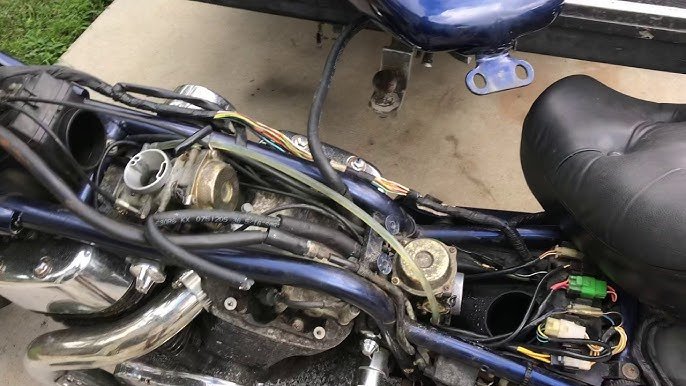
The VS1400 uses a fairly simple, air/oil-cooled 45-degree V-twin with dual Mikuni carburetors. Simple is good for long-term reliability, but it also means the carbs need periodic attention that a lot of owners skip, especially on a bike that spends winters in a garage. Most of what follows is preventable with basic maintenance rather than expensive parts replacement.
Carburetor Sync and Front-Cylinder Fouling
Carburetor imbalance between the front and rear cylinders is the number one complaint on the VS1400, and it usually shows up as rough idle, backfiring, or a fouled front spark plug while the rear plug looks fine. Riders on Intruder forums consistently report this exact symptom pattern, especially after a bike sits for a season (MotorcycleForum, 2011).
The fix is a carb sync using vacuum gauges, plus a check of the float levels and idle mixture screws. If the bike backfires or runs rough specifically after refueling, check the fuel-air mixture and float height first before replacing electrical parts. A fouled front plug with a clean rear plug is a carburetor problem 9 times out of 10, not an ignition problem.
Charging System and Stator Failures
A weak or dead stator, rectifier/regulator, or ignition coil will cause hard starting, dimming lights, and eventually a bike that won’t hold a charge at all. This is an aging-electronics issue that gets more common as these bikes cross the 20- and 30-year mark, since stator windings and rectifier diodes degrade with heat cycles over time.
Test charging output at idle and at 3,000 rpm with a multimeter before assuming the battery is the culprit. A healthy VS1400 charging system should show a rising voltage as rpm increases; flat or dropping voltage points to the stator or rectifier, not the battery.
Fuel System Varnish and Petcock Blockages
A carbureted bike that’s been stored with old gas in the tank develops varnish inside the float bowls and jets, and the vacuum-operated petcock can gum up or fail to shut off fuel flow. This is the single biggest issue on Intruders bought after long-term storage, which is common given how many of these bikes are now 20-plus years old.
Drain and clean the tank, replace the fuel lines if they’re cracked or hardened, and rebuild the petcock diaphragm if the bike leaks fuel with the engine off. A fuel stabilizer during any off-season storage prevents most of this from happening in the first place.
If a seller mentions the bike “just needs the carbs cleaned,” treat that as a real repair job, not a minor fix. Pulling both carbs off a V-twin, soaking the bodies, and reinstalling with fresh gaskets is a multi-hour job even for someone who’s done it before. Budget accordingly when negotiating price on a bike that’s been sitting.
Shaft Drive Spline Wear
The VS1400 uses a low-maintenance shaft final drive instead of a chain, which cuts down on regular upkeep but doesn’t eliminate it. The rear drive splines need periodic grease, and owners who assume “shaft drive means no maintenance” can end up with dry, worn splines that cause a clunk or lurch on acceleration.
Suzuki’s service interval calls for greasing the drive shaft splines at regular mileage intervals; check your specific model year’s manual for the exact figure. A dry spline doesn’t fail overnight, but the wear is progressive and expensive to fix once it’s bad enough to replace the shaft assembly.
Cosmetic Rust and Chrome Pitting
Chrome pitting on the exhaust, fork tubes, and other bright metal is extremely common on Intruders that lived somewhere humid or saw road salt, and it’s mostly a cosmetic issue rather than a mechanical one. That said, rust on fuel tank seams can eventually lead to pinhole leaks, and rusted fork tubes will chew up fork seals.
Check fork tubes for pitting before buying, since that’s a $150-plus repair if the seals start leaking. Surface rust on chrome is a negotiating point on price, not a reason to walk away from an otherwise solid bike.
Suzuki Intruder 1400 Specs by Generation
| Spec | 1987-1994 | 1997-2004 |
|---|---|---|
| Engine | 1,360cc air/oil-cooled 45-degree V-twin, SOHC | Same |
| Claimed horsepower | 64-71 hp | 60 hp |
| Peak torque | 112-115 Nm (83-85 lb-ft) | 105 Nm (77 lb-ft) |
| Transmission | 5-speed, shaft drive | 5-speed, shaft drive |
| Dry weight | 242-243 kg (533-535 lbs) | 242 kg (533 lbs) |
| Seat height | 720-735mm (28.3-28.9 in) | 735mm (28.9 in) |
| Fuel capacity | 13 liters (3.4 gal) | 13 liters (3.4 gal) |
Source: Suzuki Motor Company factory specifications, archived via suzukicycles.org.
The horsepower drop after 1996 isn’t a mechanical defect. It reflects a factory retune, likely for emissions compliance, and doesn’t change which problems show up or how often.
Are There Suzuki Intruder 1400 Years to Avoid?
There’s no single VS1400 model year with a documented pattern of factory defects or a recall tied to it. The problems that show up on this bike track with age, storage history, and maintenance neglect rather than a specific bad production year.
That said, a few practical notes matter when comparing years:
- 1987-1988 models are now pushing 38+ years old, so expect more wear on rubber components, wiring insulation, and fuel lines regardless of mileage.
- 1992 introduced the 5-speed gearbox in some markets, replacing the earlier 4-speed; confirm which transmission a pre-1992 bike has before assuming parts interchange with later years.
- 1997 and later bikes got the retuned, lower-output engine; if you want the stronger low-rpm pull of the earlier bikes, look at 1987-1996 examples specifically.
- 2005 and later technically isn’t a VS1400 at all – Suzuki renamed it the Boulevard S83, though it’s mechanically the same 1360cc platform (Suzuki Intruder, Wikipedia, 2025).
The real filter for a used VS1400 isn’t the model year on the title. It’s how long the bike sat, whether the fuel system was drained for storage, and whether the previous owner kept up with fluid changes and spline grease.
What Should You Check Before Buying a Used Suzuki Intruder 1400?
Before handing over money, start the bike cold and listen for how it idles once warm; a rough or lopsided idle points straight at the carb sync issue covered above. Pull both spark plugs and compare their color; a black front plug next to a tan rear plug confirms the classic VS1400 fouling pattern.
Check the fork tubes for pitting, squeeze the fuel lines to feel for cracking or hardness, and ask when the fuel petcock was last serviced. Have the seller start the bike from cold if at all possible, since hot starts hide problems that only show up after the bike has sat overnight.
Ask for maintenance records showing the shaft drive spline grease interval was followed. A seller who can produce receipts for carb cleaning, fluid changes, and spline service is worth paying a premium over one who can’t, even if the second bike looks cleaner in photos.
Take the bike for a real test ride if the seller allows it, not just a quick spin around the block. Roll on the throttle hard from a stop in first gear and feel for a clunk or lurch through the shaft drive, then ride at highway speed for a few minutes to see if the charging light or gauges act up once the engine’s fully warm. Problems that don’t show up cold often show up after 15 or 20 minutes of running.
Frequently Asked Questions About Suzuki Intruder 1400 Problems
What year Suzuki Intruder 1400 is the most reliable?
There’s no single most-reliable year, since the VS1400 platform stayed mechanically similar across its 1987-2004 run. A bike’s condition depends far more on storage history and maintenance records than on its model year.
Why does my Suzuki Intruder 1400 backfire after filling the tank?
This points to a carburetor fuel-air mixture imbalance, often paired with a fouled front cylinder spark plug. Check the float levels and run a carb sync before replacing any electrical components.
How much horsepower does a Suzuki Intruder 1400 make?
Claimed output ranges from 60 hp on 1997-2004 models to as much as 71 hp on 1987-1996 models, per factory specifications archived on suzukicycles.org. The difference comes from a factory retune, not a mechanical problem.
Is the Suzuki Intruder 1400 chain drive or shaft drive?
The VS1400 uses shaft final drive across every model year of production. It needs less frequent maintenance than a chain, but the drive splines still require periodic grease to avoid wear.
What’s a fair price for a used Suzuki Intruder 1400 in 2026?
Current listings show most used VS1400s selling between $2,000 and $4,500 depending on mileage and condition, with exceptionally clean, low-mile bikes commanding more. Price and maintenance records matter more here than model year alone.