Triumph Speed 400 Top Speed, Specs & Review
TL;DR
- Independently timed testing puts the Speed 400’s top speed at 98 mph, with claimed and indicated-speedometer figures reaching as high as 105 mph.
- The 398cc single makes 39.5 hp at 8,000 rpm and 27.7 lb-ft of torque at 6,500 rpm.
- 0-60 mph comes in around 5.5-6 seconds depending on rider weight and conditions.
- US MSRP for 2026 is $5,495, with wet weight at 375 lbs and a 31.1-inch seat height.
- Dual-channel ABS and switchable traction control come standard at this price point.
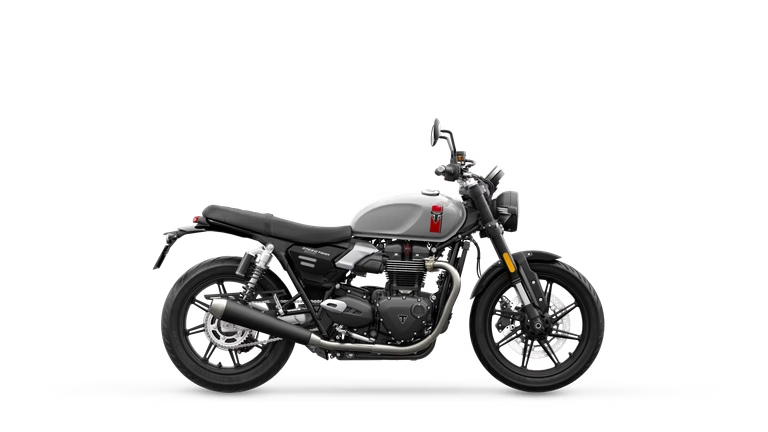
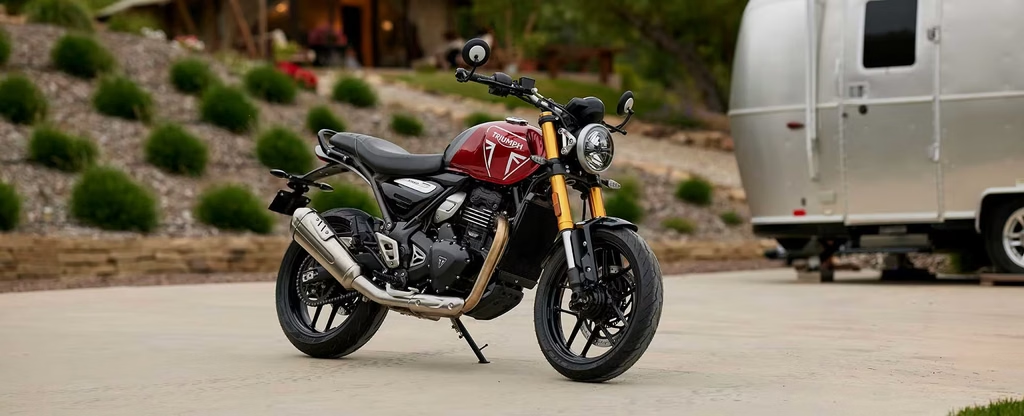
The Triumph Speed 400 is a 398cc single-cylinder roadster built for riders who want real Triumph styling without a big-bike price tag. It’s aimed at commuters and new riders who need a bike that’s easy to handle at low speed but still has enough midrange punch to keep up with highway traffic.
How Fast Is the Triumph Speed 400’s Top Speed?

Top speed lands in the 98-105 mph range, and the spread comes down to how it’s measured and who’s riding it. CycleNews test rider Rennie Scaysbrook clocked 98 mph on a GPS-verified run, while lighter riders at Triumph’s Spanish press launch reported hitting 105 mph (CycleNews, 2024).
Speedometer readings tend to run optimistic, the way they do on most production bikes. Several owner-recorded YouTube runs show an indicated 160-170 km/h (99-105 mph) on the dash, while GPS units on the same runs read closer to 94-99 mph.
No instrumented top-speed test from MotoStatz currently exists for this model, so the CycleNews figure is the most rigorous number available and the one this article treats as the reliable floor.
Don’t plan your commute around that ceiling. Most owners settle into a 70-85 mph cruising range on the highway, which is where the 398cc single is happiest and where vibration stays manageable through the bars and pegs.
Wind protection is minimal since the Speed 400 wears only a small bikini fairing around the headlight, so rider size and riding position affect top speed more than they would on a fully faired sportbike.
A taller rider sitting upright is pushing noticeably more air than someone tucked down over the tank, which is a big part of why the same bike posts different numbers depending on who’s aboard.
Gearing is tall enough in sixth that the engine isn’t screaming at its ceiling; it’s more that the single-cylinder motor simply runs out of usable power against the wind resistance at that speed.
What Engine Powers the Triumph Speed 400?
The Speed 400 runs a 398cc, liquid-cooled single with DOHC and four valves, built by Triumph in partnership with Bajaj under the TR-series name. It makes 39.5 hp at 8,000 rpm and 27.7 lb-ft (37.6 Nm) of torque at 6,500 rpm, with a 12.0:1 compression ratio that wants regular pump gas.
Power delivery leans heavily on the midrange rather than a screaming top end, which is typical for a big thumper. That’s why the bike feels stronger rolling on from 40 to 60 mph in top gear than it does chasing redline in first or second. Ride-by-wire throttle and fuel injection keep low-speed fueling smoother than you’d get out of an older carbureted 400.
How Quick Is the Speed 400 from 0-60?
Triumph’s own claim puts 0-60 km/h at 2.8 seconds and 0-100 km/h at 7 seconds; converted and adjusted for US-style 0-60 mph testing, that lands the Speed 400 in roughly the 5.5-6 second range depending on rider weight and launch technique. That’s brisk for a beginner-oriented single, though it’s not chasing sportbike numbers.
Where that torque curve actually matters is passing power on a two-lane road. You don’t need to downshift twice and wring the throttle to get past a slow-moving truck. Roll-on from 40 mph in top gear is where this engine does its best work, not top-end pulls.
What Does the Speed 400 Cost to Own and Maintain?
Triumph backs the Speed 400 with a 10,000-mile service interval, which is long for a single-cylinder bike in this class and means fewer trips to the dealer than a lot of budget-friendly commuters require. The 2-year unlimited-mileage warranty adds some peace of mind for a first-time owner who isn’t ready to wrench on their own bike yet.
Routine upkeep is straightforward: chain lube and tension checks, periodic valve clearance inspections given the DOHC four-valve head, and standard oil and filter changes on Triumph’s recommended schedule.
None of that is unusual for a single, and parts availability through Triumph’s US dealer network is solid since the Speed 400 shares its TR-series engine architecture with the Scrambler 400 X.
Triumph Speed 400 Full Specs
| Spec | Triumph Speed 400 |
|---|---|
| Engine | 398cc liquid-cooled single, DOHC, 4-valve |
| Horsepower | 39.5 hp @ 8,000 rpm |
| Torque | 27.7 lb-ft (37.6 Nm) @ 6,500 rpm |
| Top speed | 98-105 mph |
| 0-60 mph | ~5.5-6 sec (estimated from Triumph’s 0-100 km/h claim) |
| Transmission | 6-speed manual, chain final drive |
| Wet weight | 375 lbs |
| Seat height | 31.1 in |
| Fuel capacity | 3.4 gal |
| Front suspension | Inverted fork, non-adjustable |
| Front brake | ByBre, 300mm disc, dual-channel ABS |
| Tires | Metzeler Sportec M9RR |
| MSRP (2026) | $5,495 |
Source: Motorcycle.com official spec listing, 2026.
Frequently Asked Questions
What is the top speed of the Triumph Speed 400?
It tops out around 98-105 mph, with the low end of that range coming from a GPS-verified test and the high end from claimed and speedometer-indicated figures.
How much horsepower does the Triumph Speed 400 have?
The US-spec 2026 model makes 39.5 hp at 8,000 rpm and 27.7 lb-ft of torque at 6,500 rpm.
How fast does the Speed 400 go from 0-60 mph?
Roughly 5.5 to 6 seconds, based on Triumph’s manufacturer-claimed 0-100 km/h time of 7 seconds converted to US units. No independently timed 0-60 test currently exists for this model.
How much does the Triumph Speed 400 cost?
US MSRP for 2026 is $5,495. Dealer pricing and regional fees will push the out-the-door number higher.
Is the Triumph Speed 400 good on the highway?
Yes for normal cruising. Most riders settle into a 70-85 mph range; running near its 98-105 mph ceiling for extended periods isn’t what this engine is built for.
What is the seat height on the Triumph Speed 400?
31.1 inches, low enough that most riders over about 5’4″ can get both feet flat at a stop.
This article will be updated once an instrumented 0-60 test or a MotoStatz top-speed figure becomes available for the current US-spec model.