
Harley-Davidson Spark Plug Gap Chart by Engine (2026)
TL;DR
- Milwaukee-Eight engines (2017-2026) run a spark plug gap of 0.031″-0.035″ (0.8-0.9mm), tighter than the older Twin Cam spec.
- Twin Cam engines (1999-2017) use a wider gap: 0.038″-0.043″ (0.97-1.09mm).
- Evolution Big Twin and Sportster Evo engines also use the 0.038″-0.043″ range.
- Gap specs vary slightly by source, so confirm against your bike’s specific model-year service manual before you set the gap.
- A gap that’s too narrow chokes the spark; too wide and it can misfire or foul, especially on high-mileage plugs.
Why Harley Spark Plug Gaps Changed Between Engine Families
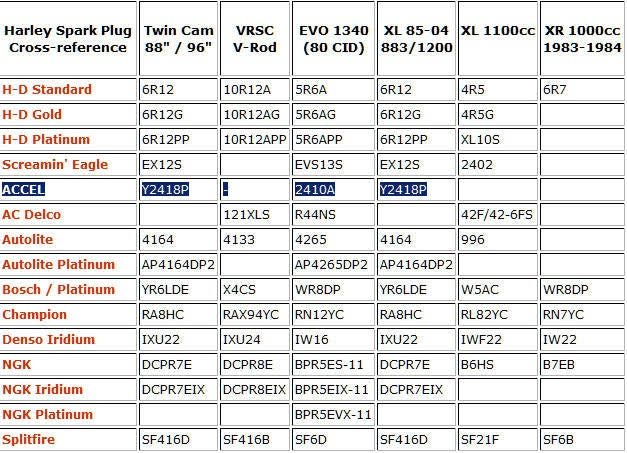
credit: https://www.harley-davidsonforums.com/
Harley didn’t pick these numbers at random. The gap is set to match how each engine’s ignition system reads combustion, and that changed when the Milwaukee-Eight replaced the Twin Cam in 2017.
Twin Cam engines don’t have a knock sensor. Instead, the ECM watches voltage feedback across the spark gap at around 50,000 volts to figure out ignition timing. That indirect knock-sensing setup needs a wider gap, 0.038″ to 0.043″, to generate a strong enough signal for the ECM to read accurately.
Milwaukee-Eight engines added NOx sensors and a more capable ECM, so the ignition system is less dependent on gap-driven voltage feedback. That let Harley tighten the factory gap to 0.031″-0.035″ without hurting how the engine reads combustion.
Spark Plug Gap Chart by Engine Family
Here’s the gap spec for every Harley engine currently on the road, organized by family and years. Torque and thread specs are included since you’ll need both when you pull the plugs.
| Engine Family | Years | Gap (inches) | Gap (mm) | Torque (ft-lbs) |
|---|---|---|---|---|
| Milwaukee-Eight (107/114/117/121) | 2017-2026 | 0.031″-0.035″ | 0.8-0.9mm | 12-18 |
| Twin Cam 88/96/103/110 | 1999-2017 | 0.038″-0.043″ | 0.97-1.09mm | 12-18 |
| Evolution Big Twin | 1984-1999 | 0.038″-0.043″ | 0.97-1.09mm | 12-18 |
| Sportster Evolution (883/1200) | 1986-2022 | 0.038″-0.043″ | 0.97-1.09mm | 12-18 |
| Revolution Max (Pan America, Sportster S) | 2021-2026 | Verify against service manual | Verify against service manual | Verify against service manual |
A quick note on the Milwaukee-Eight numbers: sources don’t agree perfectly here. Two independent references land on 0.031″-0.035″, and a maintenance manual citation puts it slightly narrower at 0.0325″-0.035″.
Some parts retailers list a fixed 0.031″ factory pre-gap for replacement plugs rather than a tolerance range. If your plug box or dealer paperwork gives you a different number than what’s here, go with the printed service manual for your specific model year. That document is the actual authority, not a chart like this one.
Revolution Max engines (Pan America, Sportster S) use a different plug family entirely and aren’t well documented in public spec sheets yet. Don’t guess on these. Pull your owner’s manual or call a dealer parts counter before you touch the gap.
How to Check and Set Your Spark Plug Gap
credit: https://hotbike.com/
Start by identifying your engine, since the whole job hinges on using the right number from the chart above. Check your VIN or owner’s manual if you’re not sure whether you’ve got a Twin Cam or a Milwaukee-Eight.
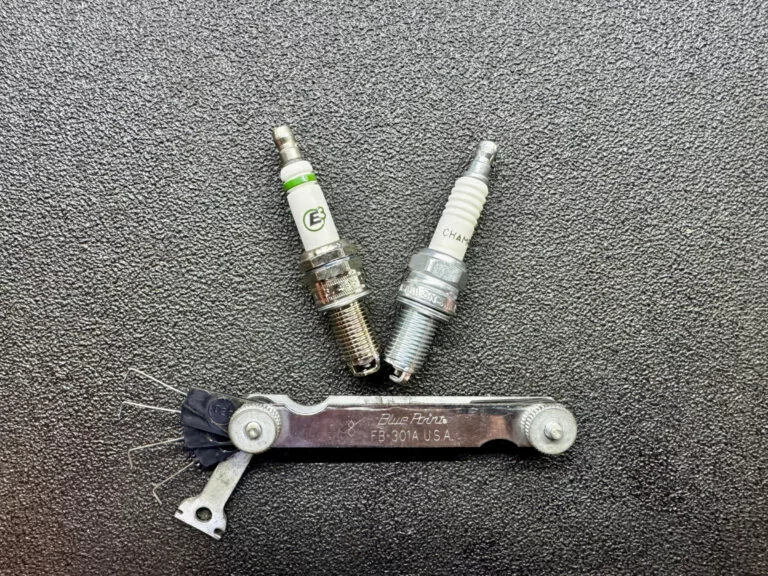
Use a wire-style gap gauge, not a flat feeler gauge, for anything with a rounded or tapered electrode. A flat gauge gives you a false reading on those plug designs because it doesn’t sit flush against the curve.
Never assume a new plug is pre-gapped correctly out of the box. Check it anyway. Manufacturing tolerances slip, and boxes get mixed up at the parts counter more often than anyone likes to admit.
If you’re running iridium or platinum-tip plugs, be careful with the gap tool. The center electrode on these is a fraction of the size of a standard copper plug, and bending it to adjust gap can crack the tip or damage the fine wire electrode.
Some manufacturers tell you not to adjust gap on these at all since they ship pre-set. Check your plug’s packaging before you go at it with a gauge.
Once the gap is set, torque the plug to 12-18 ft-lbs across every current engine family. Overtightening can crush the gasket seat or crack the ceramic insulator; undertightening risks a compression leak that shows up as a hard-to-diagnose miss at idle.
What Happens If the Gap Is Wrong
A gap that’s too narrow is like trying to light a campfire with a spark that barely jumps the kindling. There’s not enough space for the spark to fully ignite the air-fuel mixture, so you get weak combustion, rough idle, and lost fuel economy.
A gap that’s too wide asks the ignition coil to push voltage further than it’s built for. On a worn coil or aging plug wire, that extra distance can cause the spark to skip the gap entirely, which shows up as a miss under load or hard starting in cold weather.
On Twin Cam engines specifically, a gap that drifts out of spec throws off the ECM’s voltage-feedback timing calculation, since that system relies on a consistent gap to read combustion accurately.
That’s part of why the spec window matters more in practice on these engines than it does on Milwaukee-Eight models. Milwaukee-Eight engines are more forgiving of small gap drift thanks to the NOx sensor setup, but “more forgiving” doesn’t mean “ignore it.”
Frequently Asked Questions
What is the spark plug gap for a Milwaukee-Eight engine?
Milwaukee-Eight engines (2017-2026, covering the 107, 114, 117, and 121 displacements) use a gap of 0.031″-0.035″ (0.8-0.9mm). Confirm against your specific model-year service manual, since sources differ slightly on the exact upper limit.
What is the spark plug gap for a Twin Cam engine?
Twin Cam engines built from 1999 through 2017 use a wider gap of 0.038″-0.043″ (0.97-1.09mm). This applies across the Twin Cam 88, 96, 103, and 110 displacements.
Do Sportster models use the same gap as Big Twins?
Sportster Evolution engines (883 and 1200, built 1986-2022) use the same 0.038″-0.043″ gap as the Evolution and Twin Cam Big Twins. The 2021+ Sportster S runs the Revolution Max engine, which uses a different plug spec that isn’t reliably documented yet, so check your owner’s manual for that model.
Can I use a flat feeler gauge to check spark plug gap?
You can on a plug with a flat ground electrode, but most modern Harley plugs use a tapered or grooved electrode design where a flat gauge won’t sit correctly. A wire-style gap gauge gives a more accurate reading on those designs and is worth the few dollars it costs.
Why do iridium spark plugs say not to adjust the gap?
Iridium and platinum electrodes are far thinner than standard copper ones, and bending them to adjust gap can crack the tip or snap the fine wire. Many manufacturers pre-set the gap at the factory for these plugs and specifically warn against adjusting them. Check the plug’s packaging before assuming you need to gap it yourself.