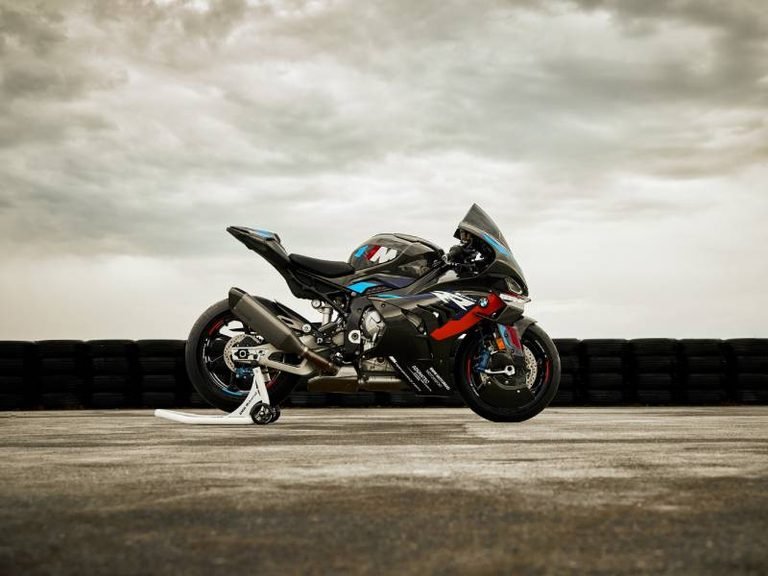
BMW M1000XR Top Speed, 0-60 Time & Specs Review
TL;DR
- The 2025 BMW M1000XR has a manufacturer-claimed top speed of over 170 mph, built around a 999cc inline-four making 201 horsepower.
- No independent GPS-instrumented 0-60 test exists yet; the widely cited 3.2-second figure is a formula-derived estimate, not a timed run.
- Curb weight is 492 pounds ready to ride, with a 5.3-gallon tank and 33.5-inch seat height.
- Base MSRP starts at $25,475, climbing past $30,000 with the M Competition Package and other options.
- It’s built for a rider who wants superbike urgency with a more upright seating position, not a bike that splits the difference between track and cross-country comfort.
How Fast Does the BMW M1000XR Actually Go?
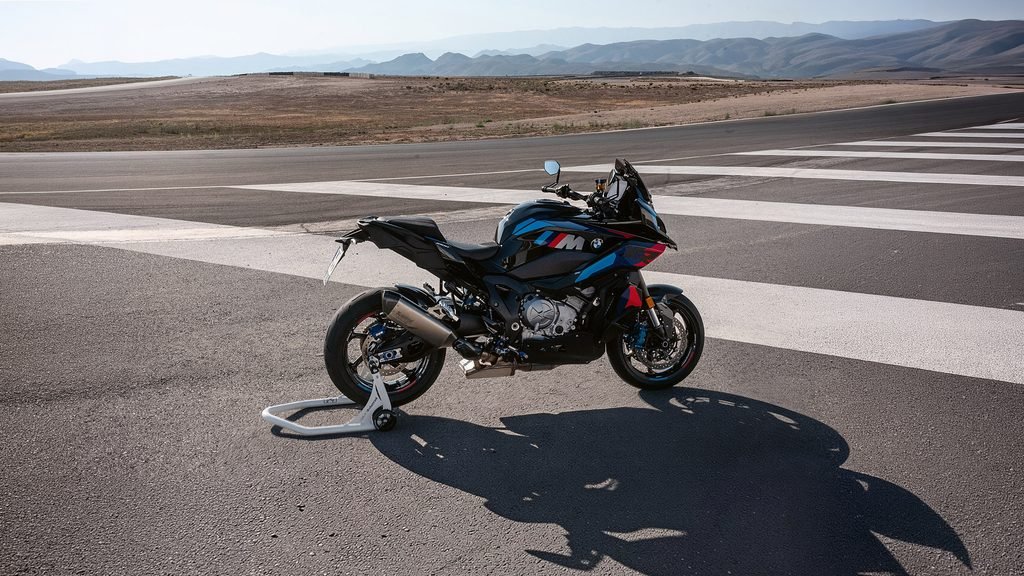
BMW claims a top speed north of 170 mph for the M1000XR, and that number tracks with what the engine is capable of on paper. The bike shares its 999cc inline-four with the S1000RR superbike platform, tuned here for 201 horsepower at 12,750 rpm and 83 lb-ft of torque at 11,000 rpm.
That’s not a detuned touring engine wearing a sport-bike badge. It’s a genuine literbike motor stuffed into a chassis with a taller windscreen and a more upright bar position.
Riders testing the bike in real-world conditions have reported hitting 130 mph without much drama and pulling hard well past that before backing off, which lines up with a machine that’s still building power all the way to a 14,600-rpm redline zone (Ultimate Motorcycling, 2025).
Keep in mind that “over 170 mph” is BMW’s own claimed figure, not an independently verified test result. Aerodynamics, rider position, fuel load, and elevation all shift a real-world number up or down a few mph either way.
What’s the M1000XR’s 0-60 Time?
There’s no published GPS-instrumented or major-outlet timed test of the M1000XR’s 0-60 time as of this writing. The 3.2-second figure you’ll see repeated across spec-aggregator sites is a formula-derived estimate built from the bike’s power-to-weight ratio, not a stopwatch run on pavement.
That distinction matters. A calculated estimate can be close, but it doesn’t account for wheelie control cutting power, tire spin off the line, or a real rider’s launch technique, all of which move a naked literbike-powered machine’s actual number around. For comparison, BMW’s own S1000R naked, which uses a related but less powerful engine, has been independently tested at 3.05 seconds to 60 mph (MotorcycleNews, 2022). Given the M1000XR carries roughly 55 more pounds than a stripped-down naked and a more upright riding position that isn’t optimized for a drag launch, a 0-60 time in the low-to-mid three-second range is a reasonable expectation, but treat any specific figure as an estimate until someone straps a Dragy to the bike.
BMW M1000XR Full Specs
| Spec | Detail |
|---|---|
| Engine | 999cc inline-four, DOHC, ShiftCam variable valve timing |
| Max power | 201 hp @ 12,750 rpm |
| Max torque | 83 lb-ft @ 11,000 rpm |
| Top speed | Over 170 mph (claimed) |
| 0-60 mph | ~3.2 sec (estimated, not independently tested) |
| Transmission | 6-speed, quickshifter standard |
| Curb weight | 492 lbs (wet, ready to ride) |
| Seat height | 33.5 in |
| Wheelbase | 60.9 in |
| Fuel capacity | 5.3 gal |
| Front suspension | Electronically adjustable 45mm inverted fork, 5.4 in travel |
| Rear suspension | Electronically adjustable monoshock, 5.4 in travel |
| Front brakes | Dual 320mm discs, M 4-piston radial calipers |
| MSRP | From $25,475 |
Source: BMW Motorrad specifications via Ultimate Motorcycling, 2025.
What Makes the Engine Pull So Hard Up Top?
The M1000XR’s power comes from ShiftCam technology, BMW’s system for switching intake cam profiles depending on rpm, which is what lets this engine feel tractable at low speed and still scream to redline.
Below roughly 9,000 rpm you get a mellower cam profile for smoother throttle response in traffic; above that, the more aggressive profile takes over and the bike wakes up hard.
That’s why the acceleration doesn’t feel linear. Ride it gently around town and it’s civilized, almost calm for a 201-hp bike. Get into Dynamic or Race mode and hold the throttle open past 10,000 rpm, and the last third of the tach is where this engine does its real work, right up to the 14,600-rpm zone where peak power lives.
The chassis backs that up with M-spec Nissin brakes and a linked ABS Pro system with Brake Slide Assist, so the stopping power roughly matches the acceleration. A liter-class engine with a naked bike’s brakes would be a mismatch; BMW didn’t make that mistake here.
How Much Does the M1000XR Weigh, and Does It Matter?
At 492 pounds wet, the M1000XR is heavier than a stripped superbike but lighter than most true touring machines, and that weight sits in a spot that keeps handling sharp. BMW shaved weight with carbon bodywork, a carbon chain guard, and forged aluminum wheels, with the optional M Carbon wheel package cutting another seven pounds of unsprung mass.
Unsprung weight matters more than static curb weight for how a bike actually feels turning in. Lighter wheels mean less rotating mass for the suspension to control, which is part of why reviewers describe the M1000XR’s cornering as closer to a sportbike’s than a sport-tourer’s despite the taller stance and touring-oriented ergonomics.
Who Should Actually Buy This Bike?
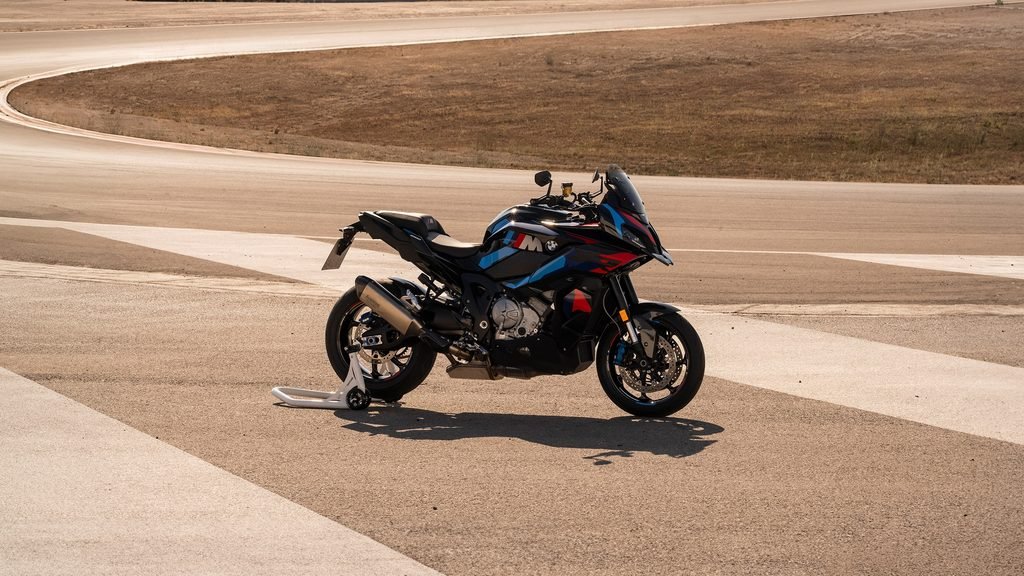
The M1000XR fits a rider who wants superbike-grade acceleration and brakes but isn’t willing to live with a full crouch every time they ride. If your riding is a mix of backroad blasts and a couple hours in the saddle at a time, rather than all-day interstate touring or dedicated track days, this is the bike built for that window.
It’s not the right pick if you want a dedicated long-haul tourer. The seat pitches you forward more than a typical adventure-touring bike, and even with the windscreen up, wind protection at highway speed leaves something to be desired for multi-hour stints. It’s also not a track-day special; the M1000RR superbike exists for that job and does it better.
Frequently Asked Questions
What is the top speed of the BMW M1000XR?
BMW claims a top speed of over 170 mph for the M1000XR, based on its 999cc, 201-horsepower inline-four engine. That’s a manufacturer figure, not an independently verified test result, so real-world numbers will vary with conditions and rider position.
How fast does the M1000XR go from 0-60 mph?
No independently timed test has been published yet. The commonly cited 3.2-second figure is a formula-derived estimate based on power-to-weight ratio, not a GPS or stopwatch-verified run, so treat it as a ballpark rather than a confirmed number.
How much horsepower does the BMW M1000XR have?
The M1000XR makes 201 horsepower at 12,750 rpm and 83 lb-ft of torque at 11,000 rpm from its 999cc inline-four engine, which is derived from the S1000RR superbike platform.
How much does the BMW M1000XR cost?
Base MSRP starts at $25,475. Adding the M Competition Package, carbon wheels, or other factory options pushes real-world dealer pricing past $30,000 on many listings.
What is the BMW M1000XR’s curb weight?
The M1000XR weighs 492 pounds wet, meaning fully fueled and ready to ride with its 5.3-gallon tank filled. Optional carbon wheels shave about seven pounds of unsprung weight off that figure.