Suzuki GSX-R1000R Top Speed, Specs & Review
TL;DR
- The last instrumented top speed test of the GSX-R1000R recorded 189 mph, but that was the 2017 bike. No independent test of the updated 2026-2027 model exists yet.
- The same earlier-generation test ran 0-60 mph in 3.06 seconds.
- The current bike is listed at 195 hp, weighs 448 lb wet, and has a 32.5 in seat height.
- 2027 dealer listings show a $16,399 MSRP plus $750 destination.
- It suits track-day and experienced street riders. It is a poor fit for beginners and long-distance touring.
The Suzuki GSX-R1000R is a 999.8 cc inline-four superbike built for the track first and the street second. It is quick, stable, and loaded with rider aids. Its tank is small and its riding position is aggressive. Here’s what is verified, what isn’t, and who should buy one.
How Fast Is the Suzuki GSX-R1000R? Top Speed and 0-60 Time
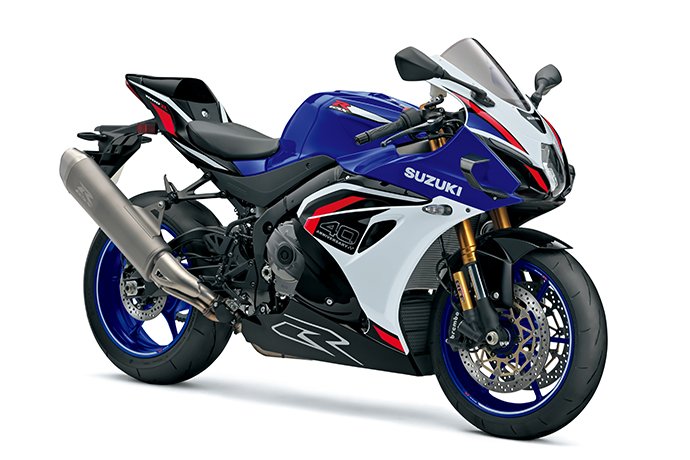
The best-documented top speed for the GSX-R1000R is 189 mph, recorded on the 2017 model, with a 0-60 mph time of 3.06 seconds (MotoStatz, 2017). No instrumented test of the updated 2026-2027 bike has been published, so treat those numbers as the earlier generation’s results.
Why not just guess a new figure? Because top speed depends on gearing, rider tuck, altitude, and air temperature, and a guess isn’t data. Suzuki changed the engine, exhaust, and electronics for 2026, so the new bike could land close to the old numbers or slightly above. Nobody has measured it yet.
One safety point: speeds like these belong on a closed course. On a public road, a liter bike hits triple digits in a blink, and you’ve got little room to recover from a mistake. This article will be updated when a named-publication or GPS-tested figure for the 2026+ bike appears.
GSX-R1000R Specs: Engine, Weight, Seat Height, and Price
The 2026-2027 GSX-R1000R is a liquid-cooled 999.8 cc inline-four with a 32.5 in seat height and a 448 lb wet weight. Here are the full numbers in one place.
| Spec | Detail |
|---|---|
| Engine | 999.8 cc liquid-cooled DOHC inline-four, 16 valves |
| Bore x stroke | 76 x 55.1 mm |
| Compression ratio | 13.8:1 |
| Power | 195 hp at 13,200 rpm (listed) |
| Torque | 81 lb-ft (110 Nm) at 11,000 rpm |
| Transmission | 6-speed, chain drive |
| Front suspension | Showa BFF upside-down fork |
| Rear suspension | Showa monoshock (BFRC-lite) |
| Front brakes | Brembo 4-piston radial calipers, dual 320 mm discs |
| Rear brake | 220 mm disc, Brembo 2-piston caliper |
| Wet weight | 448 lb (203 kg) |
| Seat height | 32.5 in (825 mm) |
| Wheelbase | 55.9 in (1,420 mm) |
| Fuel capacity | 4.2 gal (16 L) |
| MSRP | $16,399 plus $750 destination (2027 dealer listings) |
Source: Suzuki USA, Cycle News, 1000PS, and US dealer listings, checked October 2026. Confirm final figures with your dealer.
How Much Horsepower Does the 2026-2027 GSX-R1000R Make?
The updated GSX-R1000R is listed at 195 hp at 13,200 rpm and 81 lb-ft of torque at 11,000 rpm (1000PS, 2026). Those are third-party database figures. The Suzuki USA pages reviewed don’t publish a horsepower claim, so check the number before quoting it.
The 2026 engine isn’t a carryover. Suzuki revised the crankshaft, crankcases, pistons, and connecting rods and raised the compression ratio, while keeping the MotoGP-derived variable valve timing (Suzuki UK, 2025). Dealer material also mentions new eight-hole fuel injectors in place of the old ten-hole design.
Think of the variable valve timing as a gearbox for the valves: it changes how the engine breathes at low rpm versus near the 13,200 rpm power peak. The result is a motor that pulls from midrange and keeps going.
What Chassis, Brakes, and Electronics Does the GSX-R1000R Have?
The GSX-R1000R pairs a gold-anodized Showa Balance Free Front fork and Showa shock with Brembo front calipers and a Bosch inertial measurement unit, or IMU (Suzuki USA, 2026). The IMU is a small sensor box that works like an inner ear. It tells the ECU how far the bike is leaned and how fast it’s pitching.
That data feeds Smart TLR Control, which bundles traction control, a lift limiter, and roll torque control. It also drives cornering ABS and a front-brake adjustment that reduces rear-wheel lift under hard braking.
You also get a bi-directional quickshifter, launch control, and a slipper-style clutch. The swingarm pivot is adjustable for racing. Leave it in the standard position for street riding.
Is the Suzuki GSX-R1000R Worth Buying? Pros, Cons, and Who It Fits
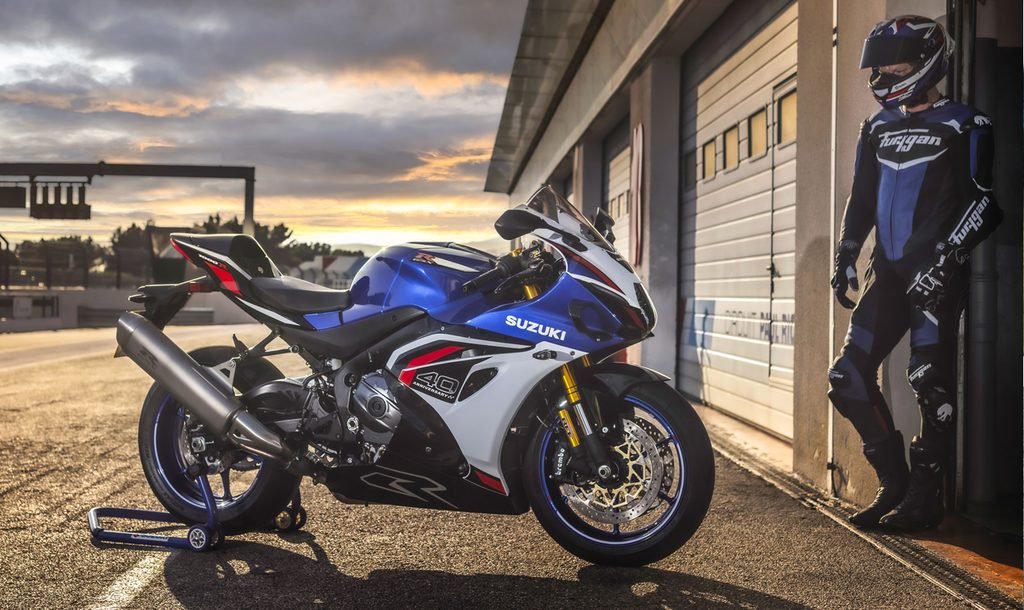
The GSX-R1000R is worth buying for track-day riders and experienced street riders who want Showa BFF suspension and Brembo brakes at about $16,400. It’s the wrong bike for beginners, commuters, and anyone planning long days in the saddle.
The pros are clear. The chassis hardware is race-grade, the electronics are current, and the price sits well under many European superbikes. A used 2017-2022 example is also an option if the budget is tight.
Now the drawbacks, because every bike has them. At 448 lb wet, it’s no featherweight. The 4.2 gal tank means frequent fuel stops, and the riding position is hard on wrists and knees in traffic. Independent 2026+ performance data is also missing.
Best for: track-day riders, experienced sport riders, and GSX-R fans. Not for: first-time owners, touring riders, or daily commuters.
Suzuki GSX-R1000R FAQ
What is the top speed of the Suzuki GSX-R1000R?
The only instrumented figure found is 189 mph on the 2017 model. The 2026-2027 bike has no independent test yet, so its top speed is unverified. Gearing and rider position change the result.
How fast is the GSX-R1000R from 0-60 mph?
The 2017 model ran 0-60 mph in 3.06 seconds in testing. That’s earlier-generation data. The updated bike’s time hasn’t been independently measured, and tires, launch control, and surface all affect it.
How much does a new GSX-R1000R cost?
Dealer listings for the 2027 model show $16,399 MSRP plus $750 destination. Dealer documentation fees and taxes come on top. Prices vary by dealer and region, so confirm before you budget.
Is the GSX-R1000R good for beginners?
No. At 195 hp, it is far more power than a new rider can use safely, and the aggressive position is tiring. A smaller sportbike is a better first step, and the GSX-R can wait.
Does the GSX-R1000R have traction control and cornering ABS?
Yes. It uses a Bosch IMU to run Smart TLR Control (traction control, lift limiter, and roll torque control) along with lean-sensitive ABS. It also has a bi-directional quickshifter and launch control.