BMW F750GS Top Speed, Specs & Review
TL;DR
- The BMW F750GS is a 853cc parallel-twin adventure bike producing 77 hp at 7,500 rpm and 61 lb-ft of torque at 6,000 rpm (BMW Motorrad, 2018).
- Top speed is approximately 118 mph (190 km/h); 0-60 mph takes roughly 3.8 seconds per ProfessCars estimation.
- Wet weight is 224 kg (493 lbs) with a 32.1-inch standard seat height — low enough for shorter riders to flat-foot with confidence.
- The 2023 model launched at $9,995 USD; the F750GS ran as a current US model from 2018 through 2023.
- It’s a pavement-first adventure bike — smooth, comfortable, and well-equipped electronically — but the suspension and wheels limit serious dirt work.
BMW F750GS Full Spec Table
| Specification | Detail |
|---|---|
| Engine | 853cc parallel-twin, DOHC, 8-valve, liquid-cooled |
| Bore x Stroke | 84 mm x 77 mm |
| Compression Ratio | 12.7:1 |
| Power | 77 hp (57 kW) @ 7,500 rpm |
| Torque | 83 Nm (61 lb-ft) @ 6,000 rpm |
| Transmission | 6-speed manual, chain final drive |
| Frame | Steel bridge frame, engine as stressed member |
| Front Suspension | 41 mm telescopic fork, 151 mm travel |
| Rear Suspension | Aluminum swingarm, monoshock, adjustable preload, 177 mm travel |
| Front Brake | Dual 305 mm floating discs, 2-piston calipers |
| Rear Brake | Single 265 mm disc |
| ABS | Standard (ABS Pro / cornering ABS) |
| Front Tire | 110/80 R19 |
| Rear Tire | 150/70 R17 |
| Wheelbase | 1,559 mm (61.4 in) |
| Seat Height | 815 mm (32.1 in) standard; 770 mm low option; 830 mm rally option |
| Wet Weight | 224 kg (493 lbs) |
| Fuel Capacity | 15 L (4.0 US gal) |
| MSRP (2023, US) | $9,995 USD (WebBikeWorld, 2023) |
BMW F750GS Top Speed and Acceleration
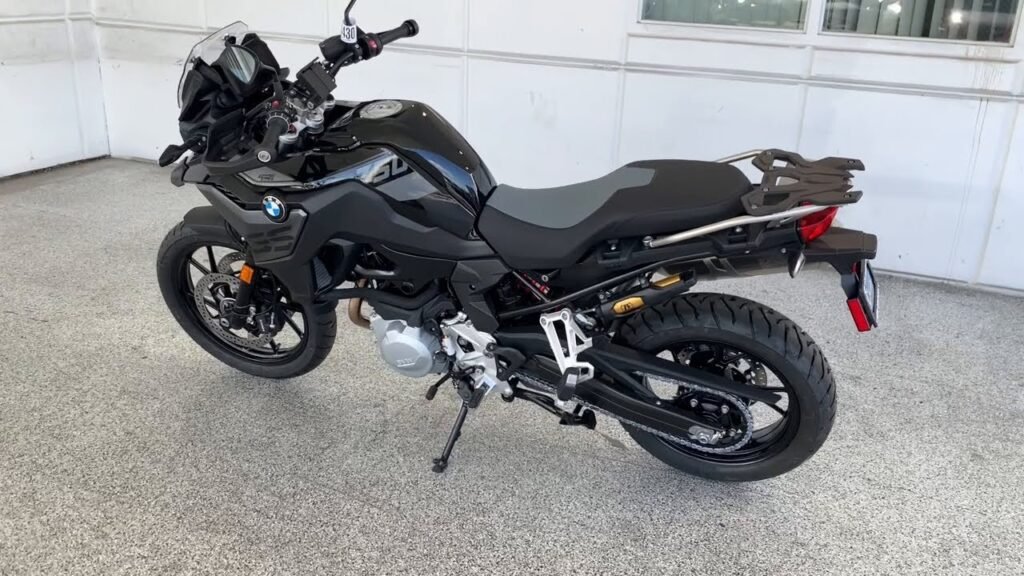
The BMW F750GS reaches approximately 118 mph (190 km/h) in independent testing (UltimateSpecs, 2023). BMW Motorrad does not publish an official top speed figure. ProfessCars estimates 0-60 mph in 3.8 seconds, 0-100 km/h in 4.1 seconds, and the quarter mile in 12.7 seconds.
Those numbers reflect a bike tuned for midrange pull, not peak punch. The 853cc twin delivers torque early and smoothly — good for twisty A-roads, long interstate slabs, and new riders who don’t want an aggressive throttle response. The engine shares its architecture with the F850GS but runs lower compression and a softer tune, giving up 17 hp in exchange for a calmer, more linear character.
Engine and Chassis: 853cc Parallel-Twin in Practice
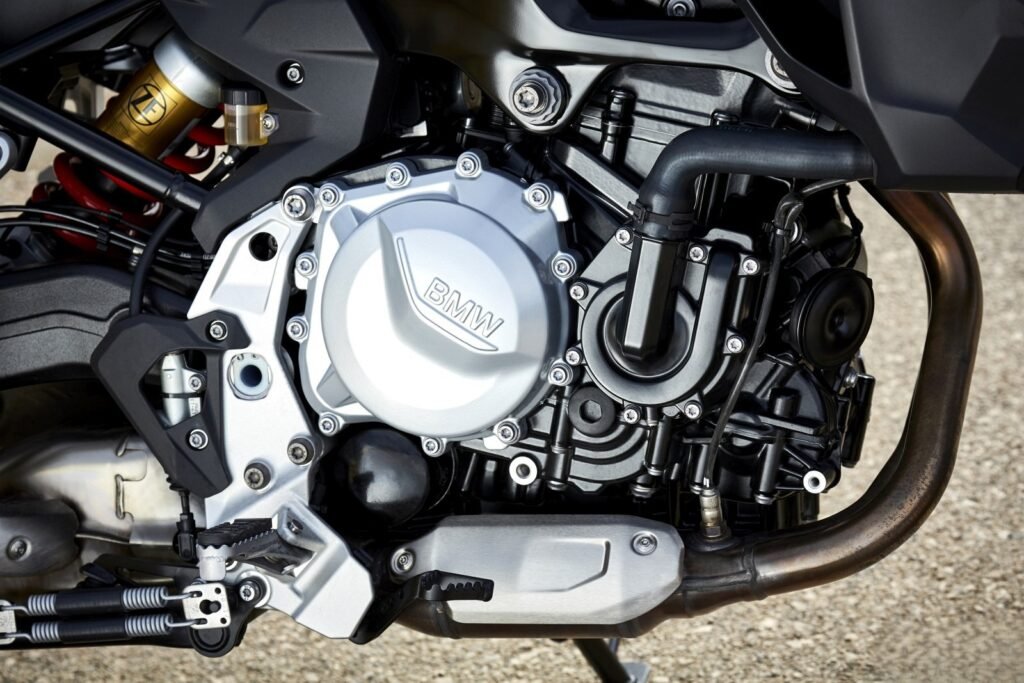
The F750GS uses a 90-degree crankshaft journal offset and a 270/450-degree firing interval. That asymmetric pulse gives it a sound and feel closer to a V-twin than a conventional parallel-twin — it has character. Power is strongest between 4,000 and 7,000 rpm. Below 3,000 rpm in a tall gear there’s noticeable lug, but a downshift corrects that immediately.
Dry sump lubrication keeps the engine compact and the center of gravity low. The steel bridge frame uses the motor as a stressed member — no front tube wrapping around the engine — which saves weight and stiffens the chassis. At 224 kg wet, the F750GS isn’t light, but the low CoG makes it handle better than the number suggests.
Suspension travel is modest: 151 mm front, 177 mm rear. The 41mm conventional fork and cast aluminum wheels tell you what BMW intended. This is a roads machine that happens to wear GS badges. Gravel fire roads are fine; anything rougher and you’ll feel the suspension run out of ideas quickly.
Electronics and Features
Standard equipment is strong for the class. ABS Pro (cornering ABS), Dynamic Traction Control, and LED lighting are all fitted from the factory. The 6.5-inch color TFT display with Bluetooth connectivity is clear and usable at speed. Road and Rain ride modes are included as standard.
The optional Connectivity package adds Ride Modes Pro with Dynamic and Enduro modes. Dynamic ESA (electronic suspension adjustment) is worth adding if you plan to carry a passenger or luggage regularly. Gear Shift Assist Pro is a genuine quality-of-life upgrade — it works both up and down and is smooth enough that you’ll use it on every ride.
Strengths and Limitations
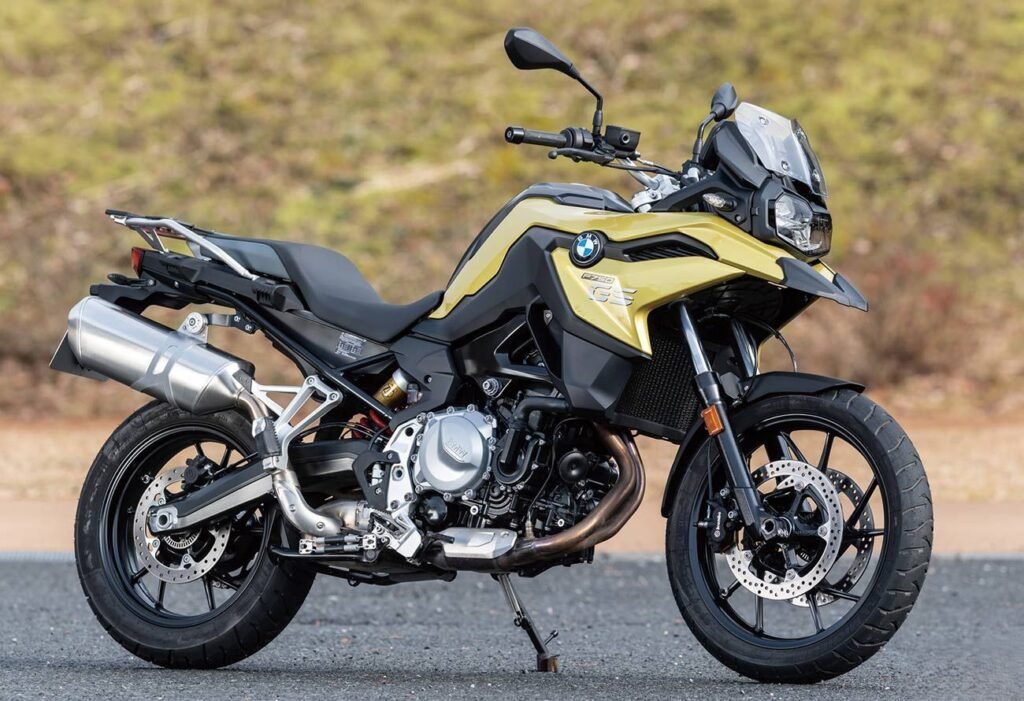
The seat height is the headline spec. At 815 mm standard — and 770 mm with the low seat option — this is one of the most accessible adventure bikes for shorter riders. The ergonomics, adjustable windscreen, and cushioned seat hold up well on multi-hour rides. Fuel economy sits around 57 mpg, giving roughly 180-190 miles of range before reserve.
The limitations are real. The conventional 41mm fork is the primary chassis compromise — the F850GS runs an inverted unit with more travel for good reason. At 224 kg, pick-ups in a parking lot tip-over require effort. The 15-liter fuel tank is adequate but not generous for serious long-distance touring.
Who the BMW F750GS Is Built For
The F750GS fits riders who prioritize pavement comfort, accessible ergonomics, and premium electronics over off-road capability. It’s the right choice for:
- Returning riders who want confidence-inspiring reach to the ground on a premium platform
- New riders moving up from 300-400cc machines who want a bike with room to grow
- Commuters who want real electronics and GS reliability without the weight of an R1250GS
- Touring riders doing 200-400 mile days on a mix of paved and occasionally unpaved roads
Riders focused on dirt, tall tourers who want maximum suspension travel, or anyone planning regular gravel work should look at the F850GS or its replacement.
The F750GS ran through the 2023 model year in the US before BMW transitioned the parallel-twin GS lineup to the F900GS for 2024 (BMW MOA, 2023). Used 2019-2023 examples are widely available between $7,000 and $11,000 depending on year, mileage, and options (MotoHunt, 2025).
Frequently Asked Questions About the BMW F750GS
What is the top speed of the BMW F750GS?
The BMW F750GS reaches approximately 118 mph (190 km/h) in independent testing (UltimateSpecs, 2023). BMW Motorrad does not publish an official figure. Real-world results will vary with rider weight, wind, and altitude.
How fast is the BMW F750GS from 0-60?
The F750GS covers 0-60 mph in approximately 3.8 seconds and the quarter mile in 12.7 seconds (ProfessCars, 2023). These are model-based estimations, not manufacturer-published data.
Does the BMW F750GS use the same engine as the F850GS?
Yes. Both bikes share the same 853cc parallel-twin with 84mm bore and 77mm stroke. The F750GS produces 77 hp versus 94 hp in the F850GS — the difference comes from software calibration and intake/exhaust tuning, not mechanical changes (BMW Motorrad, 2018).
What is the seat height on the BMW F750GS?
Standard seat height is 815 mm (32.1 inches). A low seat option brings it to 770 mm (30.3 inches). The rally seat raises it to 830 mm. The 770 mm configuration is among the lowest seat heights available in the adventure touring class.
Is the BMW F750GS still in production?
The F750GS ran through the 2023 model year in the US. BMW replaced the parallel-twin GS lineup with the F900GS for 2024, which uses a 895cc engine and a revised chassis (BMW MOA, 2023).
Is the BMW F750GS a good beginner bike?
It’s suitable for an experienced beginner or a rider returning after a break. The low seat height, smooth power delivery, and cornering ABS reduce the margin for error. The 224 kg wet weight is on the heavier side for a first motorcycle, so first-time riders should factor in the pickup learning curve.
Key Takeaways
- The BMW F750GS makes 77 hp and 61 lb-ft from an 853cc parallel-twin shared with the F850GS, tuned for smoothness over peak power.
- Top speed is approximately 118 mph; 0-60 mph runs around 3.8 seconds.
- The 32.1-inch standard seat height — with a 30.3-inch low option — makes it one of the most accessible ADV bikes for shorter riders.
- Standard electronics include cornering ABS, traction control, and a 6.5-inch TFT display; optional packages add quickshifter, electronic suspension, and four ride modes.
- The F750GS is a pavement-first machine — suspension travel and cast wheels are not suited to serious off-road riding.
- Last sold new in the US as a 2023 model at $9,995; used examples range from $7,000 to $11,000.