Indian Motorcycles: History, Manufacturer & Ownership
TL;DR
- Indian Motorcycle was founded in 1901 by George M. Hendee and Oscar Hedstrom in Springfield, Massachusetts, making it America’s first motorcycle company.
- The original company hit peak production of 32,000 bikes in 1913 before going bankrupt in 1953.
- Between 1953 and 2011, the Indian name changed hands repeatedly and was applied to rebadged imports with no connection to the original manufacturer.
- Polaris Industries acquired Indian in 2011, relaunched it with all-new bikes in 2013, and achieved Indian’s first profitable year in 2024.
- As of early 2026, Carolwood LP – a Los Angeles-based private equity firm – holds a majority stake in Indian Motorcycle, which now operates as a standalone company.
Who Founded Indian Motorcycle and When

Indian Motorcycle was founded in 1901 by George M. Hendee and Carl Oscar Hedstrom in Springfield, Massachusetts. Hendee ran the Hendee Manufacturing Company, which he had incorporated in 1898 as a bicycle producer. Hedstrom was a Swedish-born engineer who had already made a name for himself building racing bicycles in Connecticut.
The two men connected through the bicycle racing circuit. Hendee wanted motorized pacers for bicycle races; Hedstrom could build them. The first Indian prototype was completed on May 25, 1901, at the Worcester Cycle Manufacturing Company in Middletown, Connecticut, with its first public demonstration held in Springfield on June 1, 1901 (Wikipedia, 2024).
That first machine used a 1.75 bhp single-cylinder engine with chain drive, which was an innovation over the belt-driven bikes of the era. Sales started in 1902. By 1903, Hedstrom had already set a world motorcycle speed record of 56 mph on a run between New York City and Springfield (Indian Motorcycle, 2024). The company changed its name from Hendee Manufacturing to The Indian Motocycle Company – note the missing “r,” a quirk of how the word was spelled when it was first used with the Indian name – in 1923 (Indian Motorcycle, 2024).
Hedstrom resigned in 1913 after a dispute with the board over stock practices. Hendee followed him out the door in 1916.
Indian’s Golden Era: Peak Production and Racing Legacy
Indian’s early decades were defined by production growth and racing success. Annual production topped 500 units by 1904, climbed steadily, and peaked at 32,000 motorcycles in 1913 – making Indian the largest motorcycle manufacturer in the world at that point (Wikipedia, 2024).
The company scored major wins on the track. Indian’s factory team swept the first three places at the 1911 Isle of Man Tourist Trophy. In 1909, Indian won the first motorcycle race held at Indianapolis Motor Speedway. Ed Kretz took the inaugural Daytona 200 in 1937 on an Indian Sport Scout.
| Model | Production Years | Notes |
|---|---|---|
| Indian Single | 1901-1920s | First production model; chain drive, single cylinder |
| Indian Scout | 1920-1946 | Lightweight V-twin; still a template for the modern Scout |
| Indian Chief | 1922-1953 | Flagship cruiser; the last model standing when Indian closed |
| Indian Ace | 1927-1928 | Four-cylinder acquired via Ace Motor Corporation purchase |
| Indian Four | 1928-1942 | Smooth inline-four; one of the most refined prewar American motorcycles |
Two models defined the brand for riders and collectors. The Scout, introduced in 1920, was a lighter V-twin that handled well and sold in volume. The Chief, launched in 1922, was the heavy flagship with the skirted fenders that became Indian’s most recognizable visual signature. Both survived right up until the company collapsed in 1953.
Indian also introduced the electric starter in 1914 – decades before it was common on motorcycles – and put a V-twin into production by 1907, the first American manufacturer to do so (rideamotorcycle.com, 2025).
The 1920 Scout deserves a longer look because its reputation has outlasted nearly everything else from that era. It was lighter and faster than the Chief, preferred by women riders and flat-track racers alike, and in 1967 Burt Munro rode his heavily modified 1920 Indian Scout Streamliner to an official land speed record of 184.087 mph at the Bonneville Salt Flats – a record that still stands in its class (Indian Motorcycle, 2024). That bike was already 47 years old when Munro set the record.
Why Indian Motorcycle Went Bankrupt in 1953
Indian closed its doors in 1953 for a combination of reasons that compounded across two decades. World War II was a turning point the company never fully recovered from. Indian sold most of its Powerplus model output to the US military in 1917 and 1918, which starved its dealer network. The company contributed heavily to the war effort again in the early 1940s, producing military-spec Chiefs and Scouts, but post-war demand didn’t rebuild fast enough.
Harley-Davidson came out of World War II in stronger shape and captured the consumer market more effectively. Meanwhile, British bikes from Triumph, BSA, and Norton were arriving in the US with modern overhead-valve engines, lighter frames, and competitive pricing. Indian’s big flathead V-twins were heavy and increasingly outdated by comparison.
Ralph B. Rogers took over Indian in 1945 with a plan to pivot toward lighter, British-style motorcycles. He introduced the Arrow and Scout 249, both single-cylinder lightweights, in 1949. The strategy split the company’s engineering resources without fixing the core financial problems and alienated the loyal Chief riders who were Indian’s base. Rogers brought back a revised Chief in 1950 with a 1,300cc engine and telescopic forks, but by then the financial damage was done. Rogers resigned in 1950. His successor, British businessman John Brockhouse, couldn’t reverse the slide. In 1953, the Indian Motorcycle Manufacturing Company ceased production of all models (Indian Motorcycle, 2024). The final Chief rolled off the Springfield line and the factory went quiet.
The Lost Decades: Indian’s Ownership History from 1953 to 2011
What followed 1953 is one of the stranger stories in American brand history. The Indian name stayed alive – but barely, and not in any form the founders would have recognized.
Brockhouse Engineering acquired the Indian brand name in 1955 and used it to sell rebadged Royal Enfields through the Indian Sales Corporation. The machines had nothing to do with Springfield. The brand passed to the Associated Motorcycle Company in 1960, and Floyd Clymer picked up the trademark in 1963 and put it on imported minibikes and two-strokes.
The Indian name changed hands repeatedly through the 1970s and 80s. A serious revival attempt came in 1998, when the Indian Motorcycle Company of America established a manufacturing facility in Gilroy, California. They built bikes based on loosely updated versions of the old Chief design, but the company ran into financial trouble and declared bankruptcy in September 2003.
Stellican Limited, a London-based private equity firm, acquired the brand in 2006 and set up production in Kings Mountain, North Carolina. They built Indian Chief motorcycles in limited numbers focused on exclusivity, not volume. Production stayed small. Stellican sold to Polaris Industries in April 2011 (Indian Motorcycle, 2024).
The scorecard from 1953 to 2011: one iconic American brand, multiple owners, zero sustained success.
Who Owns Indian Motorcycle Now
As of early 2026, Carolwood LP holds a majority stake in Indian Motorcycle, which now operates as an independent company.
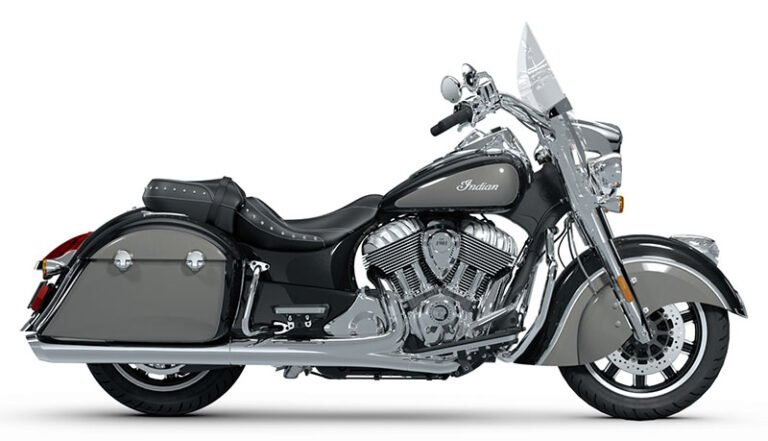
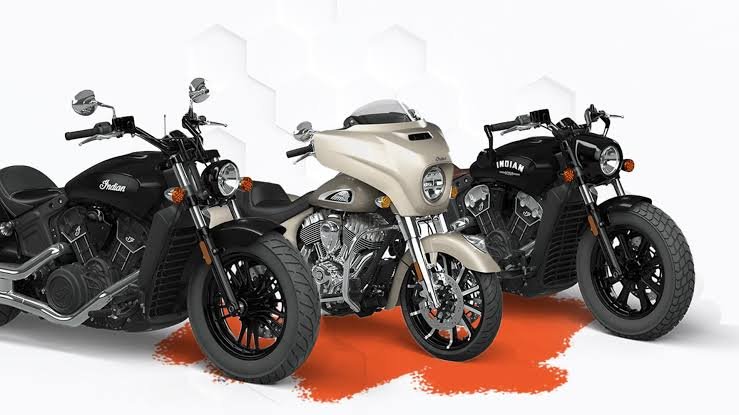
Polaris Industries acquired Indian in April 2011 and moved production to Spirit Lake, Iowa. Polaris rebuilt the brand from scratch. In March 2013, they unveiled the Thunder Stroke 111 – a 1,820cc V-twin with a triple-cam design – alongside three all-new Indian motorcycles. It was Indian’s first genuinely new engine in 70 years (EagleLights, 2025). The 2013 relaunch put Indian on the map as a real Harley-Davidson competitor rather than a heritage curiosity.
Polaris also discontinued its Victory Motorcycle brand in 2017 to focus entirely on Indian. The strategy worked. By 2024, Indian achieved its first profitable year since the 2011 acquisition (RideApart, 2026).
On October 13, 2025, Polaris announced it would sell a majority stake in Indian to Carolwood LP, a private equity firm founded in 2014 and based in Los Angeles. The transaction closed in February 2026 (Wikipedia, 2024; RevZilla, 2025). Polaris retained a small equity position. Mike Kennedy – a former executive at Harley-Davidson, Vance & Hines, and RumbleOn – was named CEO of the newly independent Indian Motorcycle.
Indian is still manufactured at Spirit Lake, Iowa, with engines built in Osceola, Wisconsin.
| Era | Owner | Years | Status |
|---|---|---|---|
| Original company | Hendee Manufacturing / Indian Motocycle Co. | 1901-1953 | Bankrupt 1953 |
| Brockhouse era | Brockhouse Engineering | 1955-1960 | Sold rebadged imports |
| Gilroy revival | Indian Motorcycle Company of America | 1998-2003 | Bankrupt 2003 |
| Kings Mountain era | Stellican Limited | 2006-2011 | Limited production |
| Polaris era | Polaris Industries / Polaris Inc. | 2011-2026 | Full relaunch; first profit 2024 |
| Current | Carolwood LP (majority) | 2026-present | Independent company |
Frequently Asked Questions About Indian Motorcycle
When was Indian Motorcycle founded?
Indian Motorcycle was founded in 1901. The first prototype was completed on May 25, 1901, in Middletown, Connecticut, by co-founder Oscar Hedstrom, with the first public demonstration held in Springfield, Massachusetts, on June 1, 1901 (Wikipedia, 2024). The company started selling motorcycles to the public in 1902.
Who founded Indian Motorcycle?
George M. Hendee and Carl Oscar Hedstrom co-founded Indian Motorcycle. Hendee was a former bicycle racer and businessman from Massachusetts who ran the Hendee Manufacturing Company. Hedstrom was a Swedish-born engineer who designed the first Indian prototype and served as the company’s chief engineer until 1913.
Who makes Indian Motorcycles today?
Indian Motorcycles are made by the independently operating Indian Motorcycle company, majority-owned by Carolwood LP as of February 2026. The bikes are manufactured at a facility in Spirit Lake, Iowa, with engines produced in Osceola, Wisconsin. The company was previously owned by Polaris Industries from 2011 to early 2026.
Is Indian Motorcycle older than Harley-Davidson?
Yes. Indian Motorcycle was founded in 1901; Harley-Davidson was founded in 1903. That two-year gap is why Indian claims the title of America’s first motorcycle company (RevZilla, 2025). Both brands have been direct competitors for over 120 years.
What happened to Indian Motorcycle in 1953?
The Indian Motorcycle Manufacturing Company ceased all production in 1953 after a long decline caused by post-war competition from Harley-Davidson and British brands, outdated engine designs, and failed attempts to pivot to lighter motorcycles under president Ralph B. Rogers. The factory in Springfield, Massachusetts, closed permanently. Brockhouse Engineering later acquired the brand name and used it to sell imported Royal Enfields with no connection to the original company.