BMW F900R Top Speed, Specs & Review
TL;DR
- The 2025 BMW F900R runs a 895cc parallel-twin making 105 hp and 68.6 lb-ft of torque, with a top speed around 124-134 mph per independent testing.
- 0-60 mph is approximately 3.2 seconds per third-party estimates; BMW publishes no official figure.
- MSRP starts at $8,995 in the US – one of the most competitive price points in BMW’s naked lineup.
- The 2025 refresh adds fully adjustable inverted forks, standard DTC, ABS Pro, and 6.6 lbs. of weight savings.
- Best for intermediate to experienced riders wanting a daily-capable naked bike with real electronics under $9,000.
2025 BMW F900R Full Specifications
| Spec | Detail |
|---|---|
| Engine | 895cc liquid-cooled parallel-twin, DOHC, 4 valves/cyl |
| Bore x Stroke | 86 mm x 77 mm |
| Power | 105 hp (77 kW) @ 8,500 rpm |
| Torque | 68.6 lb-ft (93 Nm) @ 6,500 rpm |
| Transmission | 6-speed, chain final drive |
| Frame | Steel bridge frame, engine as stressed member |
| Front Suspension | 43mm inverted fork, fully adjustable, 5.3 in travel |
| Rear Suspension | Aluminum swingarm, adjustable monoshock, 5.6 in travel |
| Front Brakes | Dual 320mm floating discs, Brembo radial 4-piston calipers |
| Rear Brake | Single 265mm disc |
| Tires | 120/70 ZR17 front / 180/55 ZR17 rear |
| Wheels | 17-inch cast aluminum (from S 1000 R) |
| Seat Height | 32.3 in (820mm) standard; 29.9 in low option available |
| Curb Weight | 459 lbs. (208 kg) |
| Fuel Capacity | 3.7 gal (14 L) |
| Electronics | DTC, ABS Pro, DBC, MSR drag torque control, TFT display |
| Riding Modes | Rain, Road, Dynamic (all standard 2025) |
| MSRP (USA) | From $8,995 (2025) |
(BMW Motorrad USA press release, November 2024)
BMW F900R Top Speed and Acceleration
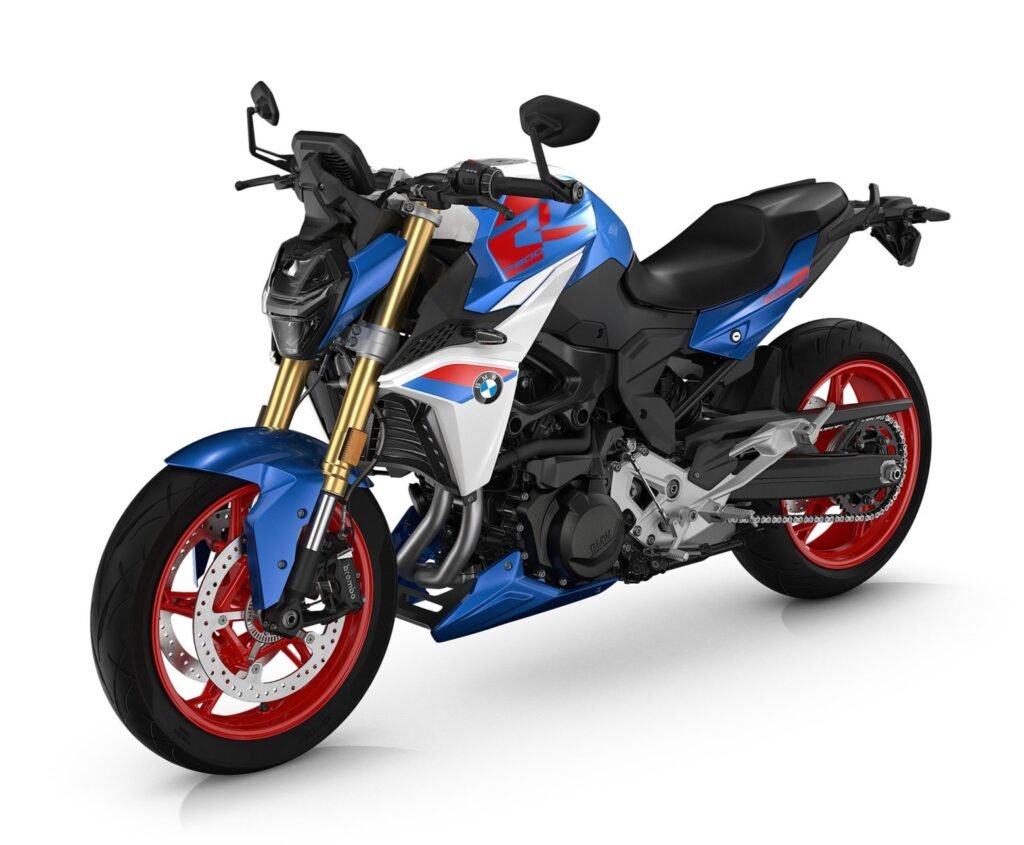
The BMW F900R reaches a top speed in the 124-134 mph range. BMW Motorrad does not publish an official figure; 124 mph appears consistently across independent sources and aligns with the engine’s output and weight. The 134 mph upper figure likely reflects optimal-condition testing with a full tuck.
BMW also does not release official 0-60 data. ProfessCars estimates 0-60 mph at approximately 3.2 seconds and the quarter mile at around 11.5 seconds for the 2025 model (ProfessCars, 2025). These are performance model calculations, not timed strip results.
On the road, the engine pulls hard from 4,000 rpm and builds cleanly through 8,500 rpm. Cycle News describes the torque curve as “pretty consistent” – no dramatic hit at any point, steady pull across the range. Fifth and sixth gears run tall enough that 60 mph sits below 5,000 rpm, making highway cruising genuinely relaxed.
Engine and Powertrain
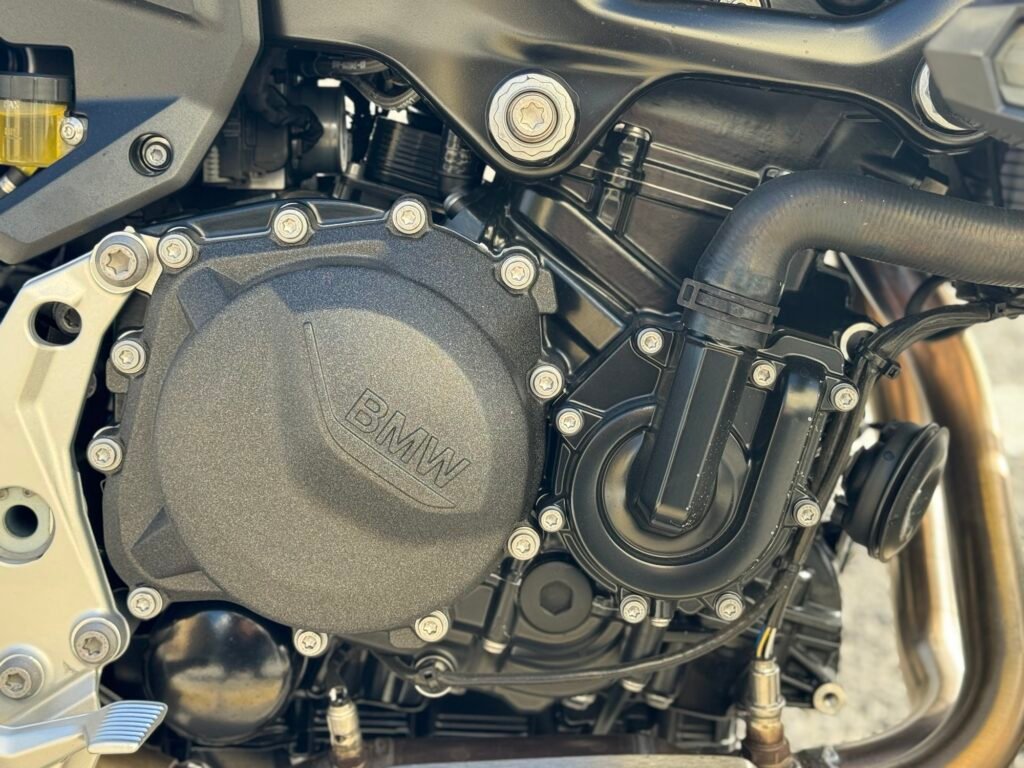
The F900R’s parallel-twin fires at a 270/450-degree interval – an uneven firing order that produces a more characterful exhaust note than a balanced 360-degree setup. At cold start there’s a low, slightly lumpy thrum that settles into a confident burble at cruise. Add the optional Akrapovic sport exhaust and the note sharpens considerably.
Power delivery is linear throughout the range. Mid-range torque from around 5,000-7,000 rpm is where this engine lives best. You’re not hunting for a powerband in canyon sweepers – roll on throttle and go.
The 2025 update brings Euro 5+ compliance, a retuned Dynamic mode with sharper throttle response, and MSR Engine Drag Torque Control as standard alongside the anti-hopping clutch. Hard downshifts mid-corner now feel composed rather than dramatic.
Chassis, Suspension, and Handling
The new 43mm inverted fork for 2025 is the biggest chassis upgrade. Full adjustability – rebound, compression, and spring preload – used to require the optional electronic suspension package. At 5.3 inches of travel, it’s road-tuned: direct and confidence-inspiring.
The wheels sourced from the S 1000 R cut 3.9 lbs. of rotational mass versus the prior castings. The suspension reacts faster to surface changes and the bike tracks broken pavement more cleanly.
Brembo radial 4-piston calipers grip dual 320mm floating discs up front. ABS Pro – BMW’s lean-angle-aware ABS – is standard in 2025. Unlike conventional ABS, it allows hard braking mid-corner without snapping the bike upright. It’s a significant real-world safety gain.
At 459 lbs., the F900R’s weight and stability-oriented geometry mean it doesn’t snap into corners like some lighter competitors. Ultimate Motorcycling’s 2025 review notes riders can overcompensate on tighter turns. On flowing roads at normal pace, it’s a non-issue.
Strengths
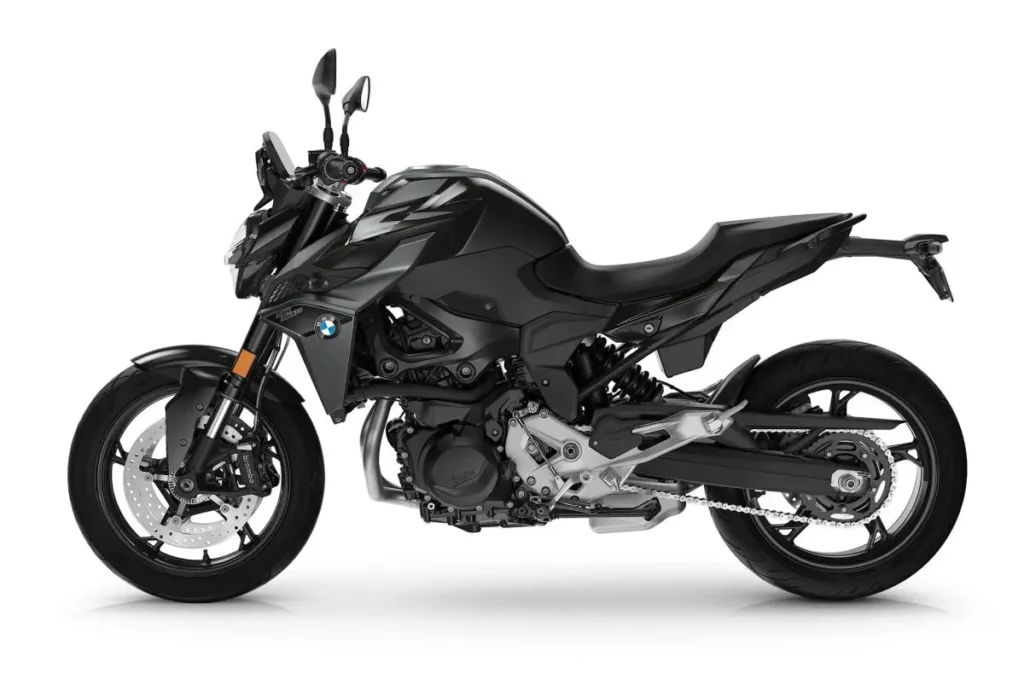
At $8,995, the value is hard to argue with. Fully adjustable USD fork, lean-angle ABS, DTC, engine drag control, TFT dash with Bluetooth connectivity, and a 3-year/36,000-mile warranty. The spec sheet at this price is genuinely competitive in the naked middleweight class.
Ergonomics suit a wide range of riders. The 32.3-inch standard seat height works for most, the 29.9-inch low option helps shorter inseams, and the 2025 rework of the handlebar and footpeg triangle produces a more sport-forward position without going full-tuck. Commuting weekdays and canyon runs on weekends is exactly what this bike is built for.
Limitations
The gearbox is the most consistent complaint. Shift action is noticeably stiffer than class rivals, and false neutrals appear during aggressive riding without the optional quickshifter – which costs extra on a $9,000 bike.
BMW’s options list is long. Dynamic mode, the quickshifter, Headlight Pro, and heated grips all add cost. A well-equipped example can push past $10,500.
At the top of the rev range, the twin runs rougher than some competitors – workmanlike rather than exciting. The stock Maxxis Supermaxx Sport tires have a stability-biased profile that delays turn-in versus Michelin or Pirelli alternatives; many owners swap them within a season.
Who Should Buy the BMW F900R
The F900R suits intermediate to experienced riders wanting a single bike for daily use and spirited weekends, with BMW quality and electronics at a mid-range price. It’s a sensible step-up for riders upgrading from smaller displacement.
Complete beginners will find 105 hp and 459 lbs. demanding. Touring-focused riders will find the 3.7-gallon tank limiting and will miss the wind protection of the F900XR variant.
Frequently Asked Questions About the BMW F900R
What is the BMW F900R top speed?
The BMW F900R top speed is approximately 124-134 mph based on independent sources. BMW Motorrad does not publish an official figure. The 124 mph mark is most consistently reported and aligns with the 895cc engine’s output and the bike’s curb weight.
How fast is the BMW F900R 0 to 60?
BMW does not publish official 0-60 data. ProfessCars estimates approximately 3.2 seconds 0-60 mph and an 11.5-second quarter mile for the 2025 model (ProfessCars, 2025). These are calculated estimates, not timed strip results.
What engine is in the BMW F900R?
The F900R uses an 895cc liquid-cooled DOHC parallel-twin with a 270/450-degree firing interval, producing 105 hp at 8,500 rpm and 68.6 lb-ft of torque. The same platform is shared with the F900XR and F900GS. The 2025 version meets Euro 5+ emissions standards (BMW Motorrad USA, 2024).
How much does the 2025 BMW F900R cost?
The 2025 BMW F900R starts at $8,995 MSRP in the US, excluding the $995 destination fee, tax, title, and registration (Cycle News, 2024). Color upgrades add $235-$695. The quickshifter, Dynamic riding mode, and heated grips add further cost.
What is the seat height on the BMW F900R?
Standard seat height is 32.3 inches (820mm). A low suspension option drops it to 29.9 inches (760mm) and a Sport seat option raises it to 33.9 inches (860mm), giving the F900R more seat height range than most naked bikes at this price.
Is the BMW F900R good for beginners?
The F900R is not an ideal first motorcycle. The power and weight combination rewards riders who already have solid throttle and braking discipline. DTC and ABS Pro provide meaningful electronic safety assistance, but the bike still demands respect. Riders with one to two seasons on a 400-650cc machine will transition without much difficulty.
Key Takeaways
- The 2025 BMW F900R produces 105 hp from a 895cc parallel-twin and reaches approximately 124-134 mph.
- BMW publishes no official 0-60 figure; third-party estimates place it at roughly 3.2 seconds.
- The 2025 update delivers fully adjustable inverted forks, standard DTC and ABS Pro, and 6.6 lbs. of weight savings.
- At $8,995 base MSRP, the spec-to-price ratio is strong for the class.
- The stiffer gearbox and long optional-features list are the most consistent criticisms.
- Best for intermediate and experienced riders wanting a daily-capable, canyon-ready naked bike with BMW quality.