BMW S1000XR Top Speed, Specs & Review
TL;DR
- The BMW S1000XR is a sport-touring motorcycle powered by a 999cc inline-four producing 170 hp and 84 lb-ft of torque.
- The 2024 model gained 5 hp over its predecessor and added Headlight Pro and Keyless Ride as standard equipment.
- Top speed is estimated at around 155 mph; BMW does not publish an official figure.
- 0–60 mph is estimated at approximately 2.8 seconds based on independent performance modeling, though BMW has not released a tested figure.
- The 2026 model starts at $17,995 MSRP in the US; fully loaded with the optional Dynamic Package it can exceed $20,000.
BMW S1000XR Full Specifications
The BMW S1000XR runs a 999cc liquid-cooled DOHC inline-four that shares its architecture with the S1000RR superbike, detuned for broader torque delivery rather than peak power. The 2024 generation brought output to 170 hp with flow-optimized intake channels while torque holds at 84 lb-ft.
| Specification | Detail |
|---|---|
| Engine | 999cc liquid-cooled DOHC inline-four |
| Bore x Stroke | 80 mm × 49.7 mm |
| Compression Ratio | 12.0:1 |
| Power | 170 hp (BMW Motorrad, 2024) |
| Torque | 84 lb-ft (BMW Motorrad, 2024) |
| Transmission | 6-speed, chain final drive |
| Front Suspension | 46 mm inverted fork, 5.4 in travel |
| Rear Suspension | Aluminum swingarm, adjustable monoshock |
| Front Brakes | Dual 320 mm discs, Brembo 4-piston radial calipers |
| Rear Brake | Single 220 mm disc, single-piston caliper |
| Front Tire | 120/70-17 |
| Rear Tire | 190/55-17 |
| Wheelbase | 60.6 in (1,540 mm) |
| Seat Height | 33.5 in (850 mm) standard; lowering option to 31.1 in |
| Curb Weight | 500 lb (227 kg) |
| Fuel Capacity | 5.3 gal (20 L) |
| MSRP (2026, US) | $17,995 base |
Steering head angle is 64.8 degrees with 4.64-inch castor — numbers that put the XR closer to a sport bike than an adventure tourer, and that translate directly into the planted, precise steering owners consistently report (Rideapart, 2023).
BMW S1000XR Top Speed: What the Data Shows
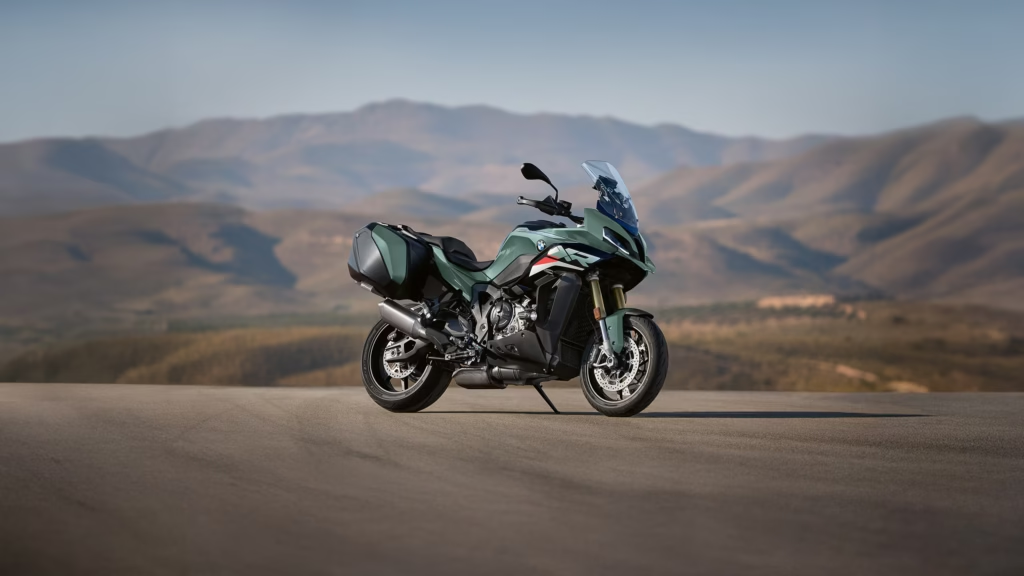
The BMW S1000XR top speed is estimated at approximately 155 mph, with some independent sources citing up to 170 mph (274 km/h) as a theoretical maximum (Wikipedia, 2024). BMW does not publish an official figure.
The real-world ceiling is lower than either number suggests. The XR’s upright seating position creates substantially more aerodynamic drag than a full-tuck sportbike. The engine is willing, but the geometry is not built for autobahn sprinting. No electronic speed limiter is documented for the S1000XR in the same way one applies to some other BMW models. Expect high-130s to mid-140s mph in practical conditions without a long flat road and a tailwind.
BMW S1000XR Acceleration: 0–60 and Quarter Mile
BMW does not publish 0–60 mph or quarter-mile figures for the S1000XR. Independent performance modeling estimates 0–60 mph at approximately 2.8 seconds and a quarter-mile time around 10.4 seconds for the current 170 hp specification (ProfessCars, 2024). These are calculated estimates, not tested figures.
A 170 hp bike at 500 lb has the math on its side for sub-3-second sprints, but the tall riding position and road-biased geometry mean consistent launches require more skill than a dedicated sportbike. What the XR does especially well is mid-range pull — roll-on thrust from 60 to 100 mph in fourth gear is the kind of effortless that gets expensive on a clear stretch of highway.
Engine, Chassis, and Electronics
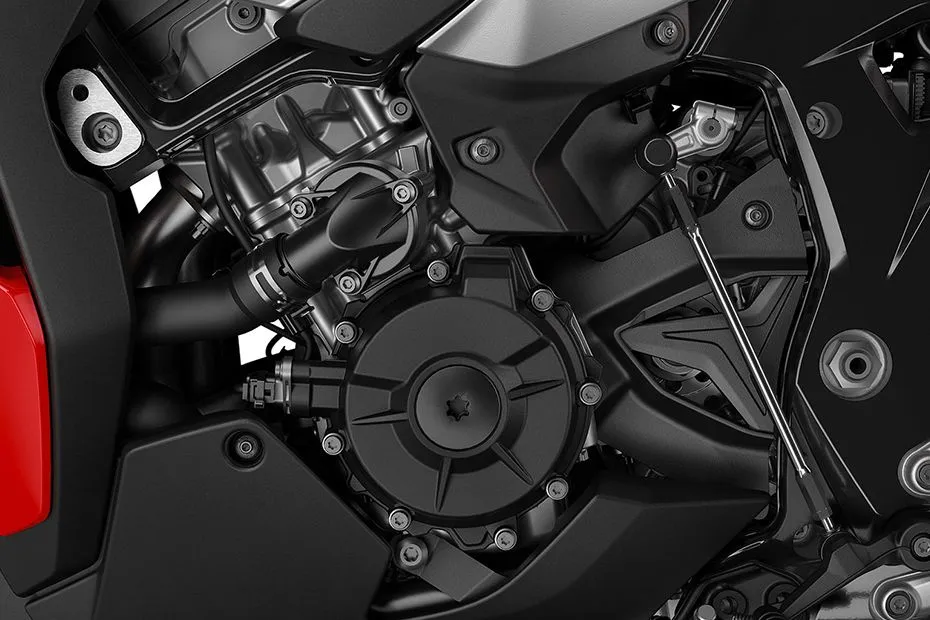
The S1000XR uses the RR’s inline-four without ShiftCam variable valve timing. That’s a deliberate trade-off: the XR’s tune pushes torque lower in the rev range at the cost of the RR’s screaming top-end. For a bike that lives between city exits and mountain passes rather than racetracks, that’s the right call.
Standard DDC (Dynamic Damping Control) semi-active suspension adjusts damping in real time based on road input, load, and selected riding mode (Rider Magazine, 2023). The system links to four standard riding modes — Rain, Road, Dynamic, and Race — each adjusting throttle mapping, traction control, and suspension behavior together.
Brakes are a genuine strength. The dual 320 mm front discs with Brembo four-piston radial calipers deliver precise, powerful feel. ABS Pro (cornering ABS) is standard; it’s lean-angle-aware and adjusts the intervention threshold accordingly. Hill-hold control, TFT display with Bluetooth, and Keyless Ride all come standard (BMW Motorrad, 2024).
Strengths and Limitations
The XR handles luggage better than most comparable sport-touring bikes. Load it with hard cases and a top box, and steering precision doesn’t degrade meaningfully — a genuinely unusual trait. The redesigned 2024 seat added 10mm of height and more usable width, which improves all-day highway comfort.
The limitations are honest. Five hundred pounds with a 33.5-inch seat is a real challenge for shorter riders; even with the lowering kit at 31.1 inches, low-speed maneuvering demands confidence. Fuel economy runs 40–45 mpg, meaning roughly 200–225 miles per tank before the reserve light appears — not long-haul touring territory without planned fuel stops. And a properly equipped XR with the Dynamic Package — which unlocks full DDC adjustability, Race Pro modes, launch control, and related features — clears $20,000 easily.
Who Should Buy the BMW S1000XR
The XR is for experienced riders who want sportbike performance without the sportbike tax on comfort. If the riding week includes interstate miles, mountain sweepers, and the occasional loaded weekend trip, the XR handles all of it. It’s not a beginner motorcycle — 170 hp on a tall, heavy bike punishes inattention even with the electronics engaged.
The price is the honest barrier. At $17,995 base, it competes with purpose-built options in both the sport and touring categories. The value case for the XR is that it does both genuinely well, not just adequately.
Frequently Asked Questions About the BMW S1000XR
What is the top speed of the BMW S1000XR?
BMW does not publish an official top speed for the S1000XR. Independent estimates range from approximately 155 mph to 170 mph depending on conditions and methodology. Real-world highway speeds are lower due to the upright riding position and resulting aerodynamic drag at high speed.
How fast does the BMW S1000XR reach 60 mph?
BMW has not released an official 0–60 mph figure. Performance modeling estimates approximately 2.8 seconds for the current 170 hp specification (ProfessCars, 2024). This is a calculated estimate, not a verified tested time.
What engine does the BMW S1000XR use?
The S1000XR uses a 999cc liquid-cooled DOHC inline-four shared with the S1000RR, but without ShiftCam variable valve timing. It’s tuned for mid-range torque rather than peak-RPM power, producing 170 hp and 84 lb-ft as of the 2024 update.
How much does the BMW S1000XR cost in the US?
The 2026 BMW S1000XR starts at $17,995 MSRP. With the optional Dynamic Package — which adds full DDC adjustability, additional riding modes, launch control, and related features — the price can exceed $20,000 (BMW Motorrad, 2025).
What riding modes does the BMW S1000XR have?
The S1000XR comes standard with four riding modes: Rain, Road, Dynamic, and Race. Each adjusts throttle response, traction control, and DDC suspension damping as a linked package. Additional Race Pro modes are available through the optional Dynamic Package.
Does the BMW S1000XR have a speed limiter?
No documented electronic speed limiter applies to the S1000XR. The practical top speed ceiling comes from aerodynamic drag at the bike’s upright riding position, not an electronic cut.
Is the BMW S1000XR suitable for tall riders?
Yes. The standard 33.5-inch seat height and wide handlebar give tall riders generous room. Seat-to-peg distance is spacious, and there’s real room to move around on longer days. Riders who prefer more knee bend can look at the optional higher footpeg kit.
Key Takeaways
- The BMW S1000XR produces 170 hp and 84 lb-ft from a 999cc inline-four shared with the S1000RR, tuned for mid-range torque.
- Top speed is approximately 155 mph in real-world conditions; BMW publishes no official figure.
- 0–60 mph is estimated at approximately 2.8 seconds per independent modeling — not a BMW-confirmed tested time.
- Curb weight is 500 lb with a 33.5-inch standard seat height; the factory lowering kit drops it to 31.1 inches.
- Standard equipment includes DDC semi-active suspension, Brembo brakes, cornering ABS, four riding modes, TFT display, and Keyless Ride.
- The 2026 US MSRP starts at $17,995; a fully loaded bike with the Dynamic Package exceeds $20,000.
- Best suited to experienced riders who want genuine sport performance and real-world touring capability in a single motorcycle.