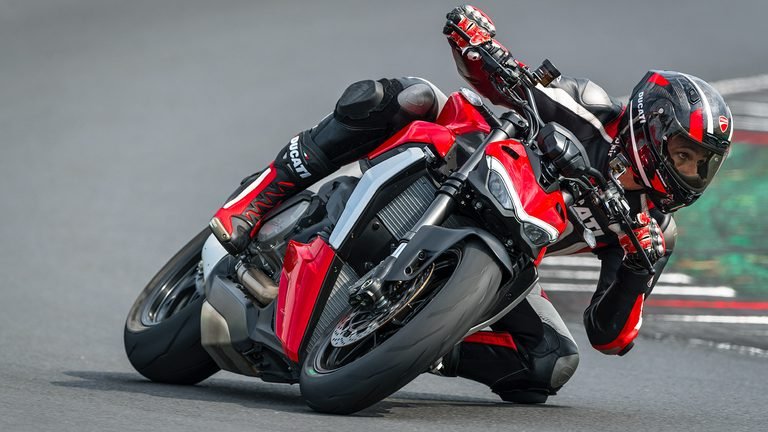
Ducati Monster + Top Speed, Specs & Review
TL;DR
- The 2026 Ducati Monster is a full fifth-generation redesign, swapping the old 937cc Testastretta V-twin for a new 890cc V2 engine
- Claimed output is 110 hp at 9,000 rpm and 67 lb-ft of torque at 7,250 rpm
- One European spec database lists a track-calculated top speed of roughly 136.7 mph (220 km/h), but Ducati has not published an official factory top-speed figure
- US pricing for the Monster+ runs $13,995 to $14,195 depending on color, and Ducati has not confirmed a standalone base Monster for the US market
- Wet weight (no fuel) is 386 lb, down 8.8 lb from the outgoing 937cc-generation Monster
What Is the 2026 Ducati Monster?

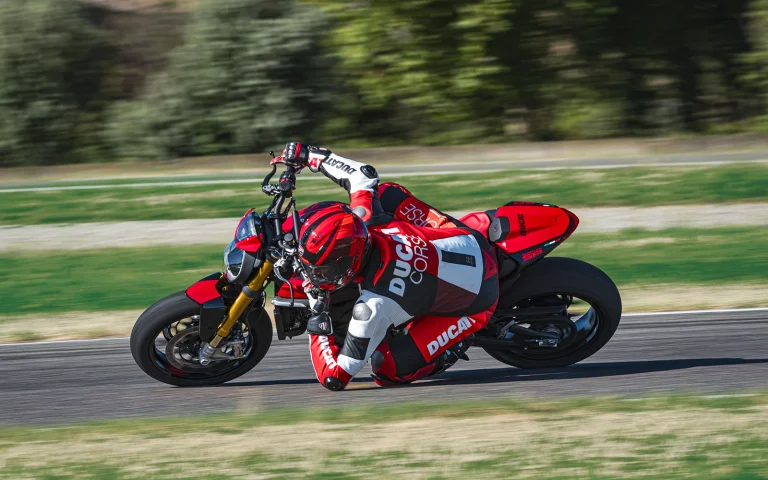
The 2026 Monster is the fifth full generation of Ducati’s naked roadster, and it’s the biggest change the model has seen since it dropped its trellis frame in 2021. For the first time in the Monster’s 30-plus-year history, the engine ditches Ducati’s signature desmodromic valve system for conventional spring-actuated valves.
The new engine is simply called “V2.” It’s an 890cc, 90-degree V-twin already used in the Panigale V2, Streetfighter V2, and Multistrada V2, and it replaces the old 937cc Testastretta 11°. Ducati tuned it specifically for the Monster, with a claimed 110 hp at 9,000 rpm and 67 lb-ft of torque at 7,250 rpm (Ducati, 2025).
The lineup for 2026 is the Monster and Monster+, with the “+” adding a flyscreen and a passenger seat cowl. Ducati’s own site lists both as available, though at least one outlet reported the US market getting only the Monster+. If you’re shopping in the States, confirm current lineup availability with your local dealer before you assume the base model is on the floor.
How Fast Is the New Ducati Monster? Top Speed Explained
Ducati has not published an official top speed for the 2026 Monster, and neither Cycle News, Visordown, nor Motorcycle.com list one in their first-ride coverage. The only figure available comes from a spec database, which lists a track-calculated top speed of roughly 220 km/h (136.7 mph) (Motoplanete, 2026).
Treat that number as an estimate, not a factory claim. It’s the kind of figure calculated from gearing and power output rather than measured on a closed course, and it should be read as a ballpark rather than a guarantee.
For context, that puts it in the same neighborhood as rivals like the Yamaha MT-09, which also tops out in the mid-130s mph range depending on gearing and rider position.
What matters more for how the bike actually rides: 70 percent of peak torque is available below 3,000 rpm, and 80 percent is on tap between 4,000 and 10,000 rpm. That’s a wide, flat torque curve, which means the Monster pulls hard from low revs instead of needing to be wound out to feel quick. On a naked bike you ride in real traffic, that matters more day to day than a top speed number you’ll rarely use.
2026 Ducati Monster Full Specs
| Spec | 2026 Ducati Monster+ |
|---|---|
| Engine | 890cc V2, 90-degree, liquid-cooled, 4 valves/cylinder, spring-actuated (IVT) |
| Claimed power | 110 hp @ 9,000 rpm |
| Claimed torque | 67 lb-ft @ 7,250 rpm |
| Weight (wet, no fuel) | 386 lb (175 kg) |
| Seat height | 32.1 in standard (815 mm); 31.3 in with low seat (795 mm) |
| Front suspension | 43mm Showa USD fork, preload-adjustable only |
| Rear suspension | Showa monoshock, adjustable |
| Front brakes | Brembo M4.32 radial calipers, dual 320mm discs |
| Tires | Pirelli Diablo Rosso IV, 120/70-17 front, 180/55-17 rear |
| Valve service interval | 28,000 miles (45,000 km) |
| US MSRP | $13,995-$14,195 (Monster+, color-dependent) |
That valve service interval is worth pausing on. The old Testastretta needed a desmo valve check every 18,000 miles. The new V2 stretches that to 28,000 miles, which is a real cost and downtime saving over the life of the bike.
Ducati Monster Review: What It’s Actually Like to Ride
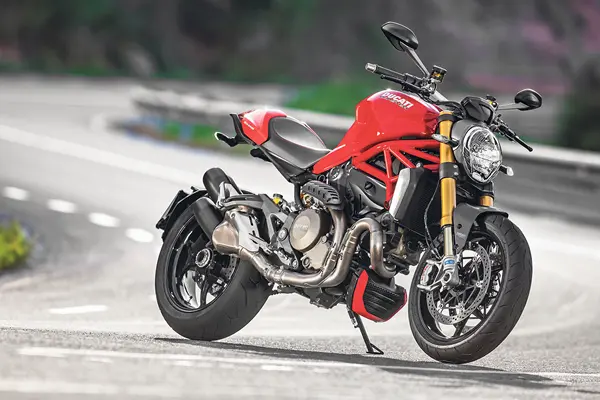
First-ride reviews from Spain in early 2026, most of them conducted in heavy rain, are consistent on a few points. The chassis feels balanced and composed even in poor conditions, and testers repeatedly called the V2 engine the standout part of the package.
In Urban riding mode, fueling from a closed throttle is smooth and predictable, a contrast to the low-rpm lumpiness some riders associated with the old Desmo engine. That matters for stop-and-go city riding, which is exactly where a lot of Monster buyers actually use the bike.
The suspension is the one area drawing consistent criticism. The front Showa fork has zero adjustment, and the rear shock is limited to preload only. On a nearly $14,000 motorcycle, riders expecting full adjustability, the way you’d get on a Yamaha MT-09 SP or a Triumph Street Triple, will be disappointed.
Ducati also fits the lower-spec Brembo M4.32 calipers rather than the sharper M50 units found on the Streetfighter V2 (Cycle News, 2026).
About the Monster SP: What We Could and Couldn’t Confirm
If you’ve seen “2026 Ducati Monster SP” listings at US dealers, here’s what’s actually going on. Those listings carry the previous-generation 937cc Testastretta spec sheet, and at least one dealer page explicitly labels it “specification from 2025 model.” Ducati’s own 2026 lineup announcement lists only the Monster and Monster+ for the fifth generation, with no SP variant mentioned.
In plain terms: dealers appear to be selling remaining old-generation SP inventory alongside the new V2-powered Monster and Monster+. If you’re specifically shopping for an SP with the Öhlins suspension and Termignoni exhaust, confirm with the dealer whether you’re looking at old-generation stock or a genuinely new SP variant, since we could not verify a current-generation SP model from Ducati’s own announcements.
2026 Ducati Monster vs. the Competition
| Model | Engine | Claimed Power | US MSRP |
|---|---|---|---|
| Ducati Monster+ | 890cc V2 | 110 hp | $13,995-$14,195 |
| Yamaha MT-09 | 890cc inline-3 | 117 hp | $10,899 |
| Triumph Trident 800 | 798cc inline-3 | 90 hp | $9,995 |
The Monster+ costs roughly 10 to 20 percent more than both direct rivals (Men’s Journal, 2026). Some of that premium buys you Ducati styling and brand cachet. Some of it is a harder sell given the MT-09 makes more claimed power and offers fully adjustable suspension for thousands less.
Who Should Buy the 2026 Ducati Monster?
Best for: Riders who already know they want a Ducati and value the low seat height, light weight, and easygoing power delivery over outright spec-sheet numbers. The low seat height (as low as 31.3 in) and predictable fueling make it genuinely approachable for a rider stepping up from a smaller bike, not just a track-day toy.
Think twice if: You want fully adjustable suspension at this price point, or you’re cross-shopping strictly on horsepower and dollar-per-hp value. The MT-09 beats it on both counts.
Frequently Asked Questions
What is the top speed of the 2026 Ducati Monster?
Ducati has not published an official top speed. One spec database lists an estimated 136.7 mph (220 km/h), but that figure is calculated rather than a verified factory claim.
How much horsepower does the 2026 Ducati Monster have?
Ducati claims 110 hp at 9,000 rpm and 67 lb-ft of torque at 7,250 rpm from the new 890cc V2 engine.
Is the 2026 Ducati Monster the same engine as before?
No. The 2026 model replaces the old 937cc Testastretta desmodromic V-twin with a new 890cc V2 that uses conventional spring-actuated valves, the first time in the Monster’s history it hasn’t used Ducati’s desmo valvetrain.
What’s the difference between the Ducati Monster and Monster+?
The Monster+ adds a small flyscreen and a passenger seat cowl over the base Monster. Both share the same engine, chassis, and electronics.
Is there a 2026 Ducati Monster SP?
We could not confirm a current-generation SP variant from Ducati’s own 2026 announcement. Dealer listings using the “SP” name currently appear to carry previous-generation (937cc) specifications, so verify directly with a dealer before assuming spec details.
How does the Monster compare to the Yamaha MT-09?
The MT-09 makes more claimed power (117 hp vs. 110 hp) and offers fully adjustable suspension, all for roughly $3,000 to $4,000 less than the Monster+.