Ducati Panigale V2 S Top Speed, Specs & Review
TL;DR
- The Ducati Panigale V2 S runs an all-new 890cc 90-degree V-twin making 120 hp at 10,750 rpm and 69 lb-ft at 8,250 rpm.
- Ducati publishes no official top speed or 0-60 figure, and no independent GPS-verified test has been published yet. Calculated estimates land around 157 mph and 3.2 seconds to 60 mph.
- At 388 lb without fuel, this is the lightest Panigale Ducati has built, about 38 lb under the old 955cc V2.
- The S adds Öhlins NIX30 suspension, Brembo M50 calipers, a lithium battery, launch control and a pit limiter over the base bike.
- MSRP is $19,995 for 2026, up from the $18,995 launch price in 2025.
The Ducati Panigale V2 S is the first middleweight Panigale designed from scratch instead of sleeved down from a superbike, and the first Ducati V-twin sportbike without desmodromic valves. Peak power dropped 35 hp compared to the outgoing 955cc bike. Ride it back to back with that old machine and you’ll understand why almost nobody misses those horses.
Ducati Panigale V2 S Specs at a Glance
| Spec | Ducati Panigale V2 S |
|---|---|
| Engine | 890cc liquid-cooled 90-degree V-twin, 8 valves, intake variable valve timing |
| Bore x stroke | 96 mm x 61.5 mm |
| Horsepower | 120 hp @ 10,750 rpm |
| Torque | 69 lb-ft (93.3 Nm) @ 8,250 rpm |
| Redline | 11,000 rpm |
| Transmission | 6-speed, Ducati Quick Shift up/down 2.0, slipper clutch |
| Weight | 388 lb without fuel, roughly 407 lb ready to ride |
| Seat height | 32.9 in (837 mm) |
| Fuel capacity | 4.0 gal (15 L) |
| Front suspension | 43 mm Öhlins NIX30 fork, fully adjustable |
| Rear suspension | Öhlins monoshock, fully adjustable |
| Front brakes | Dual 320 mm discs, Brembo M50 monobloc calipers, cornering ABS |
| Tires | 120/70-17 front, 190/55-17 rear |
| Electronics | 6-axis IMU, traction control, wheelie control, engine brake control, launch control, pit limiter, 5-inch TFT |
| MSRP (2026) | $19,995 |
Source: Ducati US spec sheet and Motorcycle.com model specs, 2026.
How Fast Is the Ducati Panigale V2 S?

Expect roughly 155 to 160 mph. Ducati does not publish a top speed for the Panigale V2 S, and no independent GPS-verified test run has been published for the 890cc generation yet.
The most specific number available is a formula-derived estimate of 252 km/h, or 157 mph, with 0-60 mph in 3.2 seconds (AccelerationTimes, 2026). That figure is calculated from power, weight and gearing rather than measured on a track, so treat it as a ballpark.
For context, the heavier 955cc Superquadro V2 it replaced, with 35 more horsepower, hit 174 mph and 3.09 seconds to 60 mph in instrumented testing (MotoStatz, 2021). The new bike gives up genuine top-end speed. What it gains is drive everywhere else, because Ducati says 70% of peak torque is available from 3,000 rpm and 80% from 4,000 rpm to the 11,000 rpm redline.
Practical translation: on a real road, the V2 S feels quicker than the old bike below 8,000 rpm and slower above it. Very few riders spend time above it.
What the 890cc V2 Engine Is Like to Ride
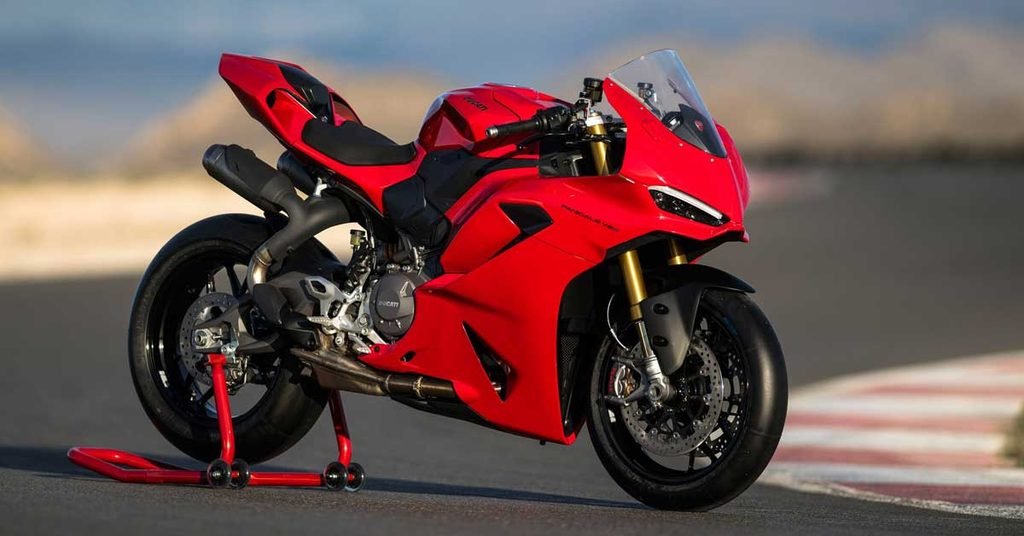
The new V2 engine is torquier, quieter and easier to use than the Superquadro it replaced. It weighs 120 lb, making it Ducati’s lightest twin ever built (Cycle World, 2025), and it’s rotated 20 degrees back in the chassis to shift weight distribution. Intake variable valve timing does the work that displacement used to.
Here’s the trade-off. The old 955 had a violent surge around 7,000 rpm and a mechanical clatter that told everyone within a block what you were riding. The 890 is smoother and noticeably less theatrical. Riders who bought Ducatis for the drama will notice what’s missing. Riders who actually commute or do track days on the thing will notice they’re faster out of corners.
Dropping desmo for spring-actuated valves with finger followers has one concrete benefit: the valve clearance check interval doubles to 30,000 km, roughly 18,600 miles.
What the S Package Buys You Over the Base V2
Three thousand dollars of suspension, brakes and electronics. The S runs a 43 mm Öhlins NIX30 fork and Öhlins shock where the base bike uses Marzocchi and KYB units. Both are fully adjustable, but the Öhlins holds its damping better under repeat hard braking, which matters if you do track days and matters less if you don’t.
| Feature | Base V2 | V2 S |
|---|---|---|
| Fork | 43 mm Marzocchi | 43 mm Öhlins NIX30 |
| Shock | KYB | Öhlins |
| Battery | Lead-acid | Lithium-ion |
| Launch control and pit limiter | Accessory | Standard |
| Seat configuration | Two-up | Single seat |
| Weight (no fuel) | 395 lb | 388 lb |
The lithium battery and single-seat tail account for the 7 lb difference. Ducati’s racing accessory package, with the full fairing kit and race exhaust, takes output to 126 hp and cuts another 10 lb.
Seat Height, Ergonomics and Daily Riding
At 32.9 inches, the seat is tall but the bike is narrow, so most riders around 5’8″ will get the balls of both feet down. Ducati moved the clip-ons above the triple clamp on this generation, which takes meaningful weight off your wrists in traffic compared to the old bike.
It’s still a sportbike. Your knees are folded, the fairing traps engine heat at a stoplight in August, and the 4-gallon tank means you’re planning fuel stops around 120 to 140 miles if you’re riding briskly.
The S comes as a single-seater in the US, with a passenger kit sold separately. If two-up riding is part of your plan, the base V2 ships ready for it and saves you three grand.
Who Should Buy the Panigale V2 S
Buy it if you want Ducati chassis quality and a genuine superbike feel without 200 horsepower you’ll never use. It’s a strong fit for the intermediate rider stepping up from a 650, the track-day regular who wants a bike that flatters rather than punishes, and anyone who values corner speed over straight-line bragging rights.
Skip it if you want the loudest, angriest Ducati twin. The 890 lost some character with the desmo valvetrain, and honest reviewers say so.
The other real drawbacks: a $19,995 price tag on a bike making 120 hp, single-seat-only configuration, no cruise control as standard, and limited fuel range. None of those are deal-breakers. All of them are worth knowing before you sign.
Frequently Asked Questions
What is the top speed of the Ducati Panigale V2 S?
Ducati publishes no official figure. Calculated estimates put it near 157 mph, and real-world results should land in the 150 to 160 mph range. No independent GPS-verified test has been published for the 890cc generation.
How fast does the Panigale V2 S go from 0 to 60 mph?
No instrumented test exists yet. Formula-based estimates put it at about 3.2 seconds. Given the weight and torque curve, anything in the 3.0 to 3.5 second range is plausible once someone straps a GPS box to one.
Is the Panigale V2 S good for a beginner rider?
Not as a first bike. It’s friendlier than the old 955, but 120 hp, a 32.9-inch seat and committed ergonomics are a lot to learn on. It’s a reasonable second or third bike after a year or two on something like a 400 or 650.
Why did Ducati drop the desmodromic valves?
At 120 hp and an 11,000 rpm redline, spring-actuated valves handle the job without desmo complexity. The practical payoff is a valve clearance interval of 30,000 km instead of 15,000 km, which cuts service costs over the life of the bike.
How much does the Panigale V2 S cost?
MSRP is $19,995 for the 2026 model year, up from $18,995 at launch in 2025. The base Panigale V2 is $16,995. Add destination, tax and dealer fees on top of those numbers.
Is the V2 S worth $3,000 more than the base Panigale V2?
If you ride track days, yes. The Öhlins suspension and standard launch control earn their money on a circuit. For street riding only, the base bike’s Marzocchi and KYB setup is genuinely good, and you keep the passenger seat.