Africa Twin DCT Top Speed, 0-60 & Specs Review
TL;DR
- The 2026 Africa Twin DCT starts at $15,999 MSRP ($16,774 with destination) and runs the same 1084cc parallel-twin as the 2024-2025 models.
- Owner-logged GPS testing has landed 0-60 mph between 3.6 and 4.3 seconds depending on rider weight and conditions; no independently verified top speed figure exists for this generation.
- Honda doesn’t publish a US horsepower figure, but the European-market rating is 100.5 hp at 7,500 rpm and 82.6 lb-ft at 5,500 rpm, unchanged since the 2024 engine update.
- Curb weight is 535 lbs with a 5.0-gallon tank, and the DCT adds no weight penalty worth worrying about over the manual version.
- Best for riders who want adventure-touring versatility without babysitting a clutch lever in technical terrain, less ideal if you want the lightest, most off-road-focused bike in the class.
The Bottom Line on the Africa Twin DCT
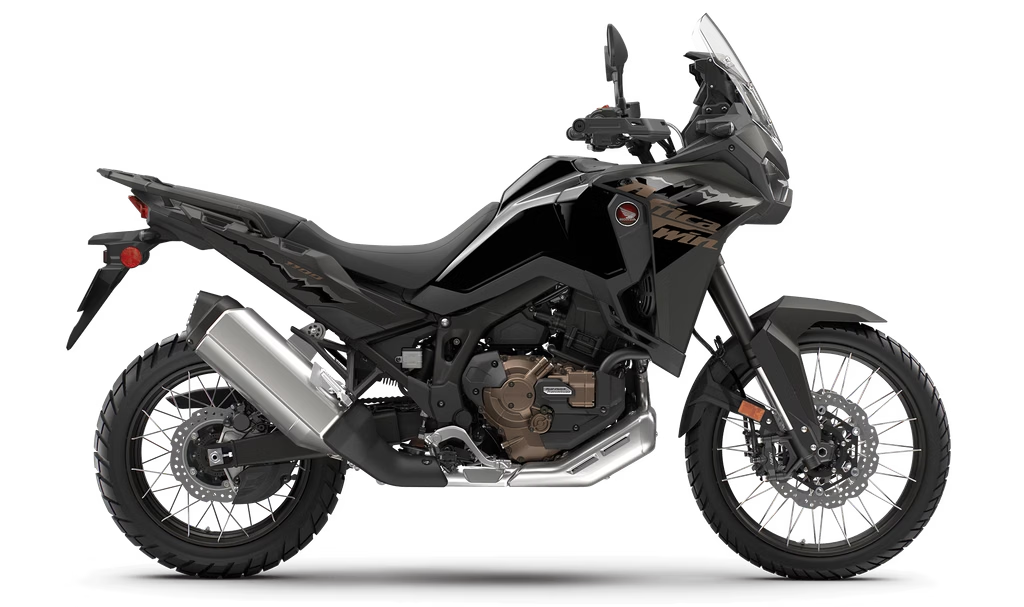
If you want a big adventure bike that shifts gears for you and still holds its own on a fire road, the Africa Twin DCT is one of the safest bets in the segment. It’s not the quickest thing on two wheels, and it’s not the lightest ADV you can buy, but the combination of a genuinely useful automatic transmission, proven 1084cc engine, and Honda reliability makes it an easy recommendation for touring riders and commuters who dabble in dirt.
Where it falls short: sport-focused adventure riders chasing outright speed or the lowest curb weight will find sharper tools elsewhere, and the standard 5.0-gallon tank limits range compared to the Adventure Sports ES variant.
Africa Twin DCT Specs at a Glance
| Spec | 2026 Africa Twin DCT |
|---|---|
| Engine | 1084cc liquid-cooled parallel-twin, Unicam SOHC, 4 valves/cylinder |
| Transmission | 6-speed automatic Dual-Clutch Transmission (DCT) |
| Horsepower | ~100.5 hp @ 7,500 rpm (Euro-market rating) |
| Torque | ~82.6 lb-ft @ 5,500 rpm (Euro-market rating) |
| Top speed | Not independently verified for this generation |
| 0-60 mph | ~3.6-4.3 sec (owner-logged GPS testing) |
| Curb weight | 535 lbs, wet, full tank |
| Seat height | 34.3 in standard / 33.5 in low position |
| Fuel capacity | 5.0 gallons |
| Front/rear suspension travel | 9.1 in / 8.7 in |
| MSRP | $15,999 base / $16,774 with destination |
Source: Honda Powersports (2026)
How Fast Is the Africa Twin DCT in the Real World?
Honda doesn’t publish a factory top speed or 0-60 figure for the US market, so the numbers here come from owner-logged testing rather than a manufacturer claim. Owner-logged GPS runs using Dragy units put 0-60 mph in the 3.6 to 4.0 second range on the DCT version in Sport mode, with variance driven mainly by rider weight and ambient temperature (Africa Twin Forum, 2021).
One owner’s back-to-back comparison found a prior-generation DCT model consistently ran 3.6 to 3.85 seconds at around 260 lbs of combined rider and gear weight, while a heavier load on a hot day pushed that closer to 4.3 seconds. The engine and gearing haven’t changed since that generation, so these figures are a reasonable proxy for the current model, though not a direct instrumented test of the 2026 bike.
There’s no verified top speed figure for this generation of Africa Twin DCT. Older-generation road tests reported quarter-mile times in the 12.1 to 12.9 second range (Motorbikecatalog, 2021), which tracks with the bike’s roughly 100-hp output and adventure-touring aerodynamics.
You’re not getting sportbike terminal velocity out of an upright riding position and a tall windscreen, but it’s genuinely quick for a 535-pound bike built to also handle a rutted fire road.
A formula-derived estimate from ProfessCars pegs 0-60 at 3.6 seconds and the quarter mile at 12.1 seconds for the DCT model, which lines up closely with the GPS-logged owner data above. That’s a useful cross-check, but it’s a calculated estimate rather than an instrumented test, so treat it as supporting evidence, not a verified figure.
What’s Actually Under the Tank
The 2026 Africa Twin DCT carries the same 1084cc parallel-twin that Honda revised for 2024, and nothing about the powerplant has changed since. That update bumped compression from 10.1:1 to 10.5:1, opened up the intake ports, and moved peak torque down from 6,250 rpm to 5,500 rpm, which is the part that actually matters on a trail. You get real pulling power in the low-to-mid range instead of having to rev it out to make progress over rocks and ruts (RevZilla, 2024).
Honda has never published a US-spec horsepower number for this engine. The commonly cited figure is 100.5 hp at 7,500 rpm and 82.6 lb-ft of torque at 5,500 rpm, both from Honda’s European homologation data.
US and European versions share the same engine internals, so there’s no technical reason to expect a different number stateside, but it’s worth stating plainly that Honda hasn’t confirmed this figure for the US market.
The 270-degree crank is the other piece that shapes how this engine feels. It mimics the firing order of a 90-degree V-twin, which gives the Africa Twin a lumpy, tractable power delivery that’s easier to modulate when the rear tire is hunting for traction on loose dirt.
Is the DCT Worth It Over the Manual?
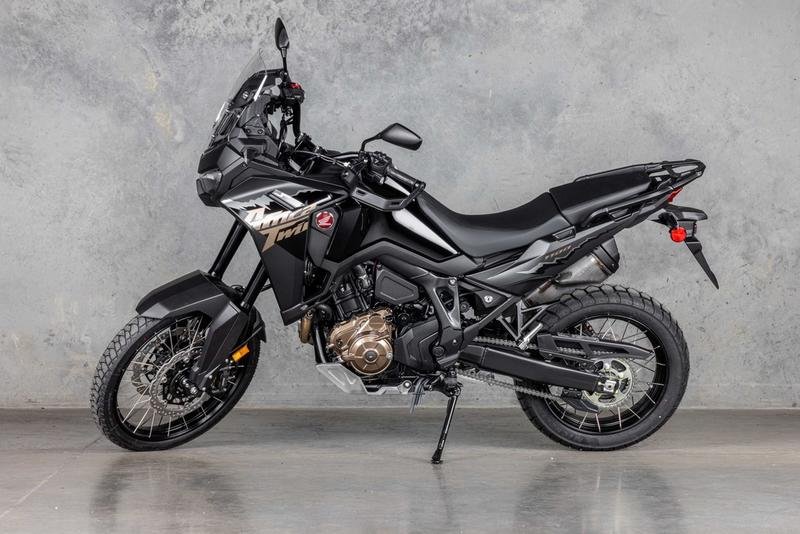
For most riders splitting time between highway miles and technical trails, yes. The DCT isn’t a novelty here: it’s a steel-gear automatic that you can run fully automatic or shift yourself with paddle shifters mounted on the left bar, and Honda’s updated shift logic for 2026 smooths out low-speed clutch engagement even further (Honda Powersports, 2026).
That matters more than it sounds on an adventure bike, where you’re constantly modulating clutch feel in slow, technical sections, standing on the pegs, and trying not to stall a 535-pound motorcycle on a rocky incline.
The tradeoff is feel. Some riders, especially ones coming from years on a manual dirt bike, never fully warm up to letting the bike pick gears in aggressive off-road riding. If you’re one of them, the standard manual Africa Twin starts at $15,199, a modest $800 less than the DCT.
Where the Africa Twin DCT Comes Up Short
No bike is perfect, and the honest drawbacks here are worth naming before you buy. The standard model’s 5.0-gallon tank is on the small side for a bike marketed around long-distance adventure touring; if you’re planning multi-day rides through fuel-scarce terrain, you’ll want the Adventure Sports ES DCT and its 6.6-gallon tank, which adds about $2,600 to the price.
Curb weight at 535 lbs is also not class-leading. Riders who prioritize a lighter, more flickable off-road machine, or who plan on genuinely technical single-track rather than fire roads and gravel, will feel that weight in tight, low-speed maneuvering.
And while the DCT is well-executed, it does add complexity and cost over a standard manual clutch, which matters if you’re the type who’d rather wrench on something simple.
Who Should Actually Buy This Bike
The Africa Twin DCT fits riders who want one motorcycle that handles a daily commute, a weekend gravel loop, and a two-week highway tour without feeling out of place in any of those roles. It’s also a strong pick for riders managing hand or wrist fatigue who still want real off-road capability, since the DCT removes clutch-lever fatigue from the equation entirely.
It’s a weaker fit if your priority is the lightest possible adventure bike for technical single-track, or if you specifically want to develop clutch control skills off-road. In either of those cases, look at the manual Africa Twin or a lighter competitor in the middleweight ADV class instead.
Frequently Asked Questions
What is the top speed of the Honda Africa Twin DCT?
Independent estimates put the Africa Twin DCT’s top speed around 130 to 137 mph, based on its roughly 100-hp engine and adventure-touring aerodynamics. Honda has not published an official top speed figure for the US market.
How fast does the Africa Twin DCT go from 0-60?
GPS-logged owner testing shows 0-60 mph times in the 3.6 to 4.0 second range in Sport mode, with results varying based on rider weight and temperature. A formula-derived estimate independently landed at 3.6 seconds, close to the observed range.
How much horsepower does the 2026 Africa Twin DCT have?
The commonly cited figure is 100.5 hp at 7,500 rpm, based on Honda’s European homologation data, since Honda does not publish a US-specific horsepower rating. Torque is rated at 82.6 lb-ft at 5,500 rpm.
How much does the Africa Twin DCT cost?
Base MSRP for the 2026 Africa Twin DCT is $15,999, or $16,774 with the $775 destination charge included. The Adventure Sports ES DCT trim starts at $18,599 base for riders who want a larger fuel tank and electronic suspension.
Is the Africa Twin DCT good for off-road riding?
Yes, though the standard model’s 21-inch front wheel and long-travel suspension make it more off-road capable than the road-biased Adventure Sports ES variant. At 535 lbs, it’s heavier than a dedicated dirt bike, but the DCT’s off-road-tuned shift logic and selectable ABS modes make technical terrain manageable for intermediate riders.
What’s the difference between the Africa Twin and Africa Twin DCT?
The only mechanical difference is the transmission: the standard Africa Twin uses a conventional manual clutch and six-speed gearbox, while the DCT version replaces that with Honda’s automatic dual-clutch transmission, operable in full-auto or manual paddle-shift mode. The DCT costs $800 more at MSRP.