Honda Africa Twin Adventure Sports: Specs & Performance
TL;DR
- No independently verified top speed or 0-60 time exists for the current 1,084cc Africa Twin Adventure Sports ES; treat any specific number you see online as unsourced.
- The 2026 model makes a claimed 101 hp at 7,500 rpm and 83 lb-ft of torque at 5,500 rpm from its 1,084cc parallel twin.
- A dyno test of the same-generation engine measured 92.0 rear-wheel horsepower, a realistic real-world number after drivetrain loss.
- Base MSRP starts at $17,799 for the manual and climbs to $18,599 for the DCT version.
- Curb weight is 535 lbs wet, and the 6.6-gallon tank is the whole reason this trim exists over the standard Africa Twin.
What Are the Africa Twin Adventure Sports’ Top Speed and 0-60 Time?
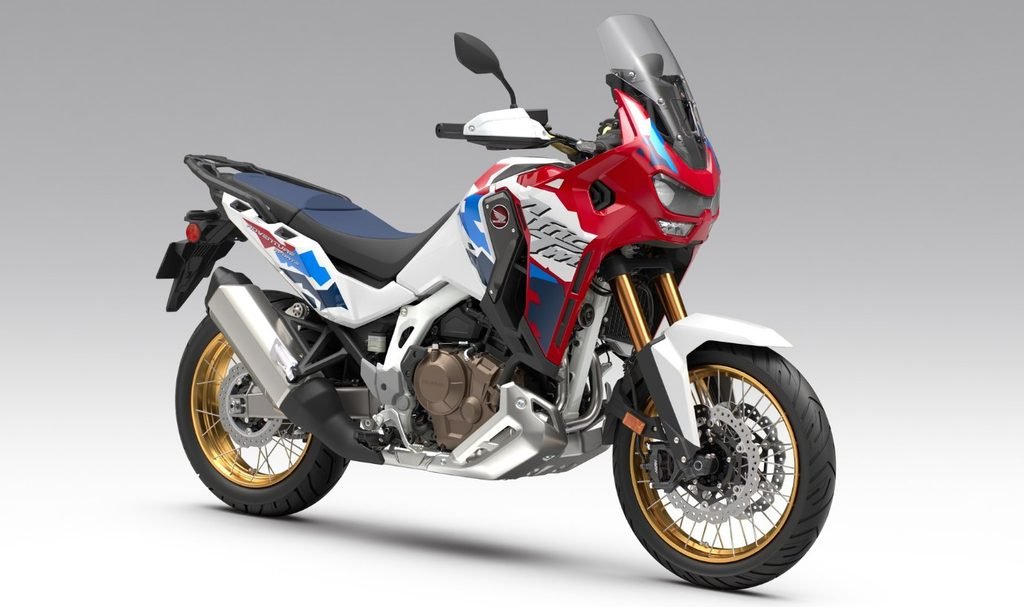
There isn’t a credible answer to give you here, and that’s worth being upfront about. No major test publication I could verify has run a GPS-instrumented top speed or 0-60 pull on the current 1,084cc Africa Twin Adventure Sports ES.
You’ll find numbers floating around forums and aggregator sites (137 mph, 3.8 seconds to 60, that kind of thing) but when I traced them back, the citations didn’t hold up. One widely copied “Cycle World, 2022” figure doesn’t match anything Cycle World has actually published on this bike.
What I can tell you: this is a 535-lb wet-weight ADV bike with 101 claimed horsepower, wearing a big fairing and an upright seating position that isn’t built for chasing a top-speed number. Based on the class it competes in (BMW R 1300 GS, KTM 1290 Super Adventure), a realistic ballpark is somewhere in the 130-140 mph range, but that’s an estimate, not a measured figure, and I’d rather tell you that plainly than make up a decimal point.
What’s Under the Hood?
The Adventure Sports ES runs the same 1,084cc liquid-cooled parallel twin as the standard Africa Twin: a Unicam SOHC design with four valves per cylinder, a 270-degree crank, and a 10.5:1 compression ratio (Honda Powersports, 2026). Fueling comes from Programmed Fuel-Injection through a 46mm throttle body.
Claimed output is 101 hp at 7,500 rpm and 83 lb-ft of torque at 5,500 rpm. A dyno test of the same-generation engine by Rider Magazine put rear-wheel numbers at 92.0 hp and 69.5 lb-ft (Rider Magazine, 2020), which lines up with the roughly 8-10% drivetrain loss you’d expect from crank to rear wheel on a chain-driven bike like this. The torque curve is flat and usable low down, which matters more on loose gravel than a peak number ever will.
Service intervals are generous for a bike this capable off-road: oil changes are due every 8,000 miles, the major valve-clearance check isn’t until 16,000 miles, and spark plugs stretch out to 32,000 miles (Maintenance Schedule, 2023). That’s a wide gap between wrench time, which matters if you’re putting real miles on this thing instead of polishing it in the garage.
How Does the Adventure Sports ES Differ From the Standard Africa Twin?
The Adventure Sports ES trades some off-road capability for touring range and wind protection. It runs a 19-inch front wheel instead of the standard bike’s 21-incher, shorter suspension travel (8.3 in front / 7.9 in rear versus 9.0/8.6), and a bigger 6.6-gallon tank against the standard bike’s 5.0 gallons.
That combination lowers the seat height and center of gravity, which pays off on pavement and long highway stretches. The trade is reduced ground clearance and a front wheel that’s less at home eating rocks and ruts than the standard model’s 21-inch setup. If your riding is 80% road and 20% fire road, the Adventure Sports ES is the right call.
Is the Showa EERA Suspension Worth It?
Yes, if you ride varied terrain and don’t want to stop and turn a dial every time conditions change. Showa’s Electronically Equipped Ride Adjustment (EERA) automatically adjusts damping front and rear based on load and riding style, with four electronic preload settings adjustable from a handlebar switch.
The fork is a 45mm inverted unit with 8.3 inches of travel, paired with a Pro-Link rear shock offering 7.9 inches. It’s not going to out-plush a dedicated dirt bike, but for a bike that’s carrying luggage and a passenger down a chewed-up forest road one day and cruising the interstate the next, adjusting on the fly beats wrenching on preload collars at a gas station.
What Does the Africa Twin Adventure Sports Cost in 2026?
Base MSRP for the 2026 Adventure Sports ES is $17,799 with the six-speed manual, or $18,599 for the DCT automatic version. Add Honda’s $775 destination charge and you’re looking at $18,574 or $19,374 out the door before tax, title, and any dealer fees.
That’s roughly $2,600 more than the standard Africa Twin’s $15,199 base price. You’re paying for the bigger tank, the electronic suspension, the reshaped touring seat, and the more aerodynamic fairing. If range anxiety and wind fatigue aren’t concerns for how you ride, the standard model saves real money.
What Tires Come Stock, and Should You Change Them?
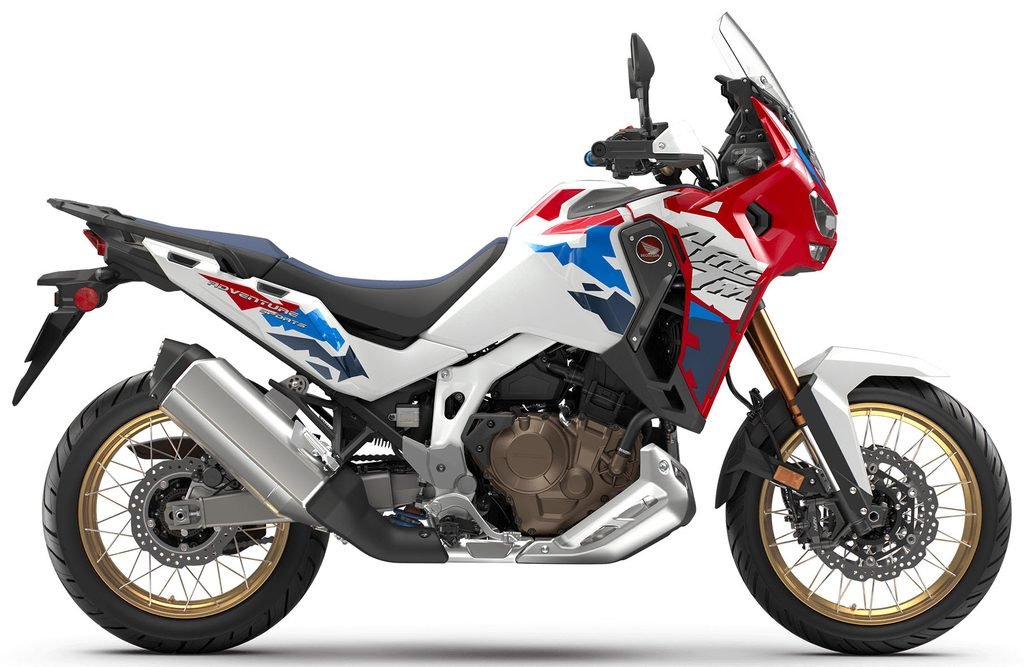
The Adventure Sports ES ships on Bridgestone Battlax Adventure A41 rubber, a 90/10 street-to-dirt tire that suits the 19-inch front wheel and the bike’s touring lean. It’s a reasonable factory choice: decent wet grip, predictable manners at speed, and enough tread life to get you through a season of mixed commuting and weekend rides.
If you’re planning serious gravel or forest-road mileage, most owners swap to a more aggressive 50/50 tire like the Michelin Anakee Wild or Metzeler Karoo 4 once the stockers wear down. Just know that a more aggressive tread pattern costs you some high-speed stability and adds noise on the highway. Match the tire to how you actually ride, not to how you picture yourself riding.
Honda Africa Twin Adventure Sports ES: 2026 Spec Table
| Spec | Detail |
|---|---|
| Engine | 1,084cc liquid-cooled parallel twin, Unicam SOHC |
| Horsepower (claimed) | 101 hp @ 7,500 rpm |
| Torque (claimed) | 83 lb-ft @ 5,500 rpm |
| Transmission | 6-speed manual or 6-speed DCT |
| Front suspension | 45mm Showa EERA inverted fork, 8.3 in. travel |
| Rear suspension | Pro-Link Showa shock, EERA, 7.9 in. travel |
| Front/rear wheel | 19-inch / 18-inch, wire-spoke |
| Front brakes | Dual 310mm discs, 4-piston radial calipers, ABS |
| Seat height | 33.7 in. standard / 32.9 in. low |
| Curb weight | 535 lbs (wet) |
| Fuel capacity | 6.6 gallons |
| Base MSRP | $17,799 (manual) / $18,599 (DCT) |
Source: Honda Powersports, 2026
Frequently Asked Questions
What is the top speed of the Honda Africa Twin Adventure Sports?
No credible, independently verified top speed test exists for the current 1,084cc model. Numbers you’ll see cited online (often around 137 mph) trace back to sources that don’t hold up on inspection. Treat any specific figure with skepticism until a named publication actually GPS-tests one.
How fast does the Africa Twin Adventure Sports go 0-60?
There’s no verified independent 0-60 time either. Given its 101 claimed horsepower and 535-lb wet weight, a low-to-mid 4-second run is plausible, but that’s an estimate based on power-to-weight, not a measured result.
How much horsepower does the 2026 Africa Twin Adventure Sports make?
Honda claims 101 hp at 7,500 rpm at the crank. Dyno-tested rear-wheel output on the same-generation engine came in at 92.0 hp, which is a normal gap once you account for drivetrain loss.
What’s the difference between the DCT and manual versions?
The manual uses a conventional six-speed gearbox with a handlebar clutch lever and is slightly lighter. The DCT is a six-speed automatic dual-clutch transmission that shifts on its own or lets you paddle-shift manually, and it costs $800 more.
Is the Africa Twin Adventure Sports good for off-roading?
It’s more road-biased than the standard Africa Twin. The 19-inch front wheel, shorter suspension travel, and touring-focused ergonomics favor pavement and light gravel over technical trail riding. If serious off-road use is the priority, the standard Africa Twin’s 21-inch front wheel and longer travel suspension are the better tool.