Triumph Motorcycles: History, Manufacturer & Ownership
TL;DR
- Triumph Motorcycles traces its origins to 1902, when German immigrant Siegfried Bettmann produced the first Triumph motorcycle in Coventry, England.
- The original company collapsed in 1983; John Bloor purchased the name and manufacturing rights from the liquidator for £150,000.
- Triumph Motorcycles Ltd. is 100% privately owned through Bloor Holdings Ltd., with John Bloor’s son Nick serving as CEO since 2011.
- Production happens across six factories: two in Hinckley, England, and facilities in Thailand and Brazil; budget models like the Speed 400 are built by Bajaj Auto in Pune, India .
- Triumph is the largest UK-owned motorcycle manufacturer and the world’s second-oldest continuous-production motorcycle brand.
Where Triumph Motorcycles Started: Coventry, 1902
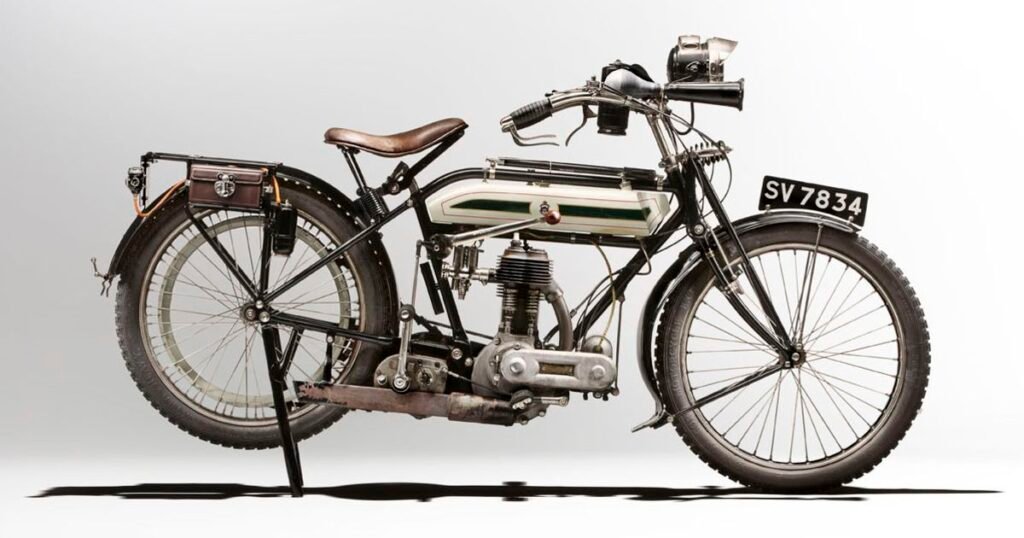
Triumph Motorcycles began in Coventry, England in 1902, when Siegfried Bettmann and his business partner Mauritz Schulte bolted a 2.2-horsepower Belgian Minerva engine onto a reinforced bicycle frame and called it a motorcycle (Triumph Engineering Wikipedia, 2024). That first bike topped out at around 40 mph – not exactly a threat to the land speed record, but it was the starting line for what would become one of the most recognizable names in motorcycling.
Bettmann had emigrated from Nuremberg, Germany to London in 1884 and set up an import-export agency selling bicycles. By 1886, he’d renamed the business the Triumph Cycle Company, and by 1889 the company was manufacturing its own bicycles out of a Coventry factory. The jump to motorcycles was a natural next step as the internal combustion engine became viable for two-wheeled transport.
By 1905, Triumph was building its own engines rather than sourcing them from Belgium, starting with a 363cc single-cylinder four-stroke. Annual production hit 1,000 units by 1907. Triumph won its first Isle of Man TT that same year, with Jack Marshall averaging 40 mph over the course – a real measure of performance for the era (Car and Classic, 2023).
During World War I, the company supplied more than 30,000 “Trusty Triumph” Model H motorcycles to Allied forces (Triumph Engineering Wikipedia, 2024). That wartime reputation for reliability did more for the brand than any advertising campaign could have.
The Speed Twin and the Golden Era: 1937 to the 1960s
The single most important motorcycle Triumph ever built arrived in 1937: the 498cc Speed Twin, designed by Edward Turner. Turner had been brought in by new owner Jack Sangster in 1936 after Triumph’s motorcycle division was split from its struggling car business and acquired separately (Triumph Engineering Wikipedia, 2024). His assignment was to make Triumph competitive again.
The Speed Twin produced 28 horsepower at 6,000 rpm from its parallel-twin engine and could hit 90 mph (Grokipedia, 2026). More important than the numbers was what it established: the parallel-twin configuration became the template for nearly every British motorcycle that followed, and Triumph’s own twin architecture remained the foundation of its lineup through the early 1980s.
From that engine came decades of iconic models. The 650cc Thunderbird arrived in 1950 and appeared in the 1953 film The Wild One with Marlon Brando, handing Triumph an enormous cultural moment in its most important export market – the United States. The T120 Bonneville launched in 1959, named after the Bonneville Salt Flats where Triumph had set land speed records. By the mid-1960s, Triumph was shipping more than 600 motorcycles per week to the US market alone (Ultimate Motorcycling, 2023).
Steve McQueen rode a Triumph in The Great Escape. Evel Knievel used a Triumph for his Caesar’s Palace jump in 1967. The brand’s cultural footprint in America was enormous during this period.
The Decline and Fall: 1970s to 1983
The British motorcycle industry’s collapse in the 1970s is a familiar story, but Triumph’s version has some specific details worth understanding. Japanese manufacturers – Honda, Yamaha, Kawasaki, and Suzuki – entered the market with more reliable, more technologically advanced machines at competitive prices. Triumph and its British counterparts were slow to respond, still building designs rooted in 1950s and 1960s engineering while Honda was shipping the CB750 Four.
After a series of ownership changes through Norton Villiers Triumph (NVT), Triumph’s manufacturing was consolidated at a worker-owned cooperative in Meriden, Warwickshire in the mid-1970s. NVT sold the Triumph name to the co-op in 1977 and then went bankrupt itself. The Meriden Co-op was chronically underfunded and produced only the aging Bonneville T140 twin. Despite a £1 million government order for 2,000 motorcycles to stabilize the operation, the co-op accumulated more than £10 million in debt (Company-Histories.com, 2024). The government eventually waived those debts and the co-op converted to a worker-owned limited company, but neither move was enough. By October 1983, it ran out of money and went into liquidation.
At that point, the original Triumph Engineering Co. Ltd. ceased to exist. What happened next is where the current company’s story begins.
Who Owns Triumph Motorcycles Today
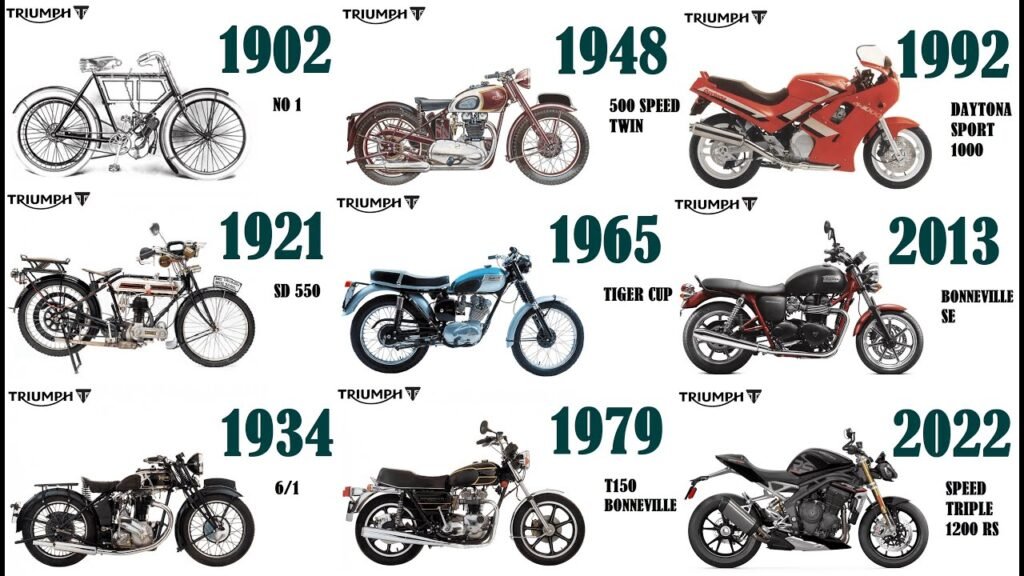
Triumph Motorcycles Ltd. is 100% privately owned by John Bloor through his parent company, Bloor Holdings Ltd. (Triumph Motorcycles official FAQ, 2024). There are no outside investors, no stock exchange listing, no private equity involvement. Bloor Holdings also operates one of the UK’s largest housebuilding businesses.
In 1983, Bloor – then a 40-year-old property developer – purchased the Triumph brand name and manufacturing rights from the official receiver for £150,000 (Motorcycle News, 2013). By most accounts, Harley-Davidson and the Italian company Cagiva were also interested; Bloor moved faster and paid less.
He didn’t rush a relaunch. Instead, Bloor quietly licensed the right to produce the old Bonneville T140 to Les Harris of Racing Spares in Devon, which kept Triumph motorcycles in production on a limited basis through 1988. That licensing deal preserved the claim of unbroken Triumph production since 1902. Meanwhile, Bloor’s team toured Japanese factories – specifically to study how Honda, Yamaha, and Kawasaki had built modern, efficient manufacturing operations – and adopted computer-controlled machinery that Meriden never had.
The team spent the better part of a decade developing new models in secret. By 1987 they had completed a working engine. The new factory in Hinckley was ready by 1990.
The new Triumph Motorcycles Ltd. debuted six models at the September 1990 Cologne Motorcycle Show. The company built a new factory in Hinckley, Leicestershire – a 10-acre site far more modern than the old Meriden plant – and produced its first motorcycles for the 1991 model year. Bloor invested between £70 million and £100 million in Triumph before the company first broke even in 2000 (Company-Histories.com, 2024).
Nick Bloor, John’s son, became CEO in 2011. The Sunday Times Rich List estimated John Bloor’s personal wealth at £1.025 billion as of 2024, with Triumph’s success a significant contributor (Visordown, 2024).
Where Triumph Motorcycles Are Made
Triumph operates six production facilities across multiple countries, with the engineering and design headquarters remaining in Hinckley, England.
| Location | Facility Function |
|---|---|
| Hinckley, England (Factory 1) | Main assembly, engineering, R&D |
| Hinckley, England (Factory 2) | Additional assembly capacity |
| Chonburi, Thailand (Factory 1) | Components, sub-assembly (est. 2002) |
| Chonburi, Thailand (Factory 2) | Paint facility and assembly (est. 2006) |
| Chonburi, Thailand (Factory 3) | Die-casting, machining (est. 2007) |
| Manaus, Brazil | Regional assembly |
The Thailand operation, Triumph Motorcycles (Thailand) Limited, is 100% UK-owned and employs approximately 1,000 workers (Triumph Motorcycles, 2024). The Thai factories handle a large share of component manufacturing and assembly for the global lineup.
There’s one notable exception: the Speed 400 and Scrambler 400 – Triumph’s most affordable models, built under a partnership with Indian manufacturer Bajaj Auto – are produced at Bajaj’s plant in Pune, India (SlashGear, 2025). Triumph and Bajaj announced this partnership in 2017, with Bajaj also holding a stake in KTM and Husqvarna. The collaboration gives Triumph a cost-effective path into high-volume developing markets while keeping the brand’s premium models on UK and Thai lines.
In 2017, Triumph reported a 22% revenue increase to £498.5 million and pre-tax profits of £24.7 million. More than 85% of the company’s motorcycles are sold in overseas markets.
Frequently Asked Questions About Triumph Motorcycles
Who founded Triumph Motorcycles?
Triumph was founded by Siegfried Bettmann, a German immigrant who established the Triumph Cycle Company in Coventry, England in 1886 and produced the first Triumph motorcycle in 1902. Bettmann ran the company alongside business partner Mauritz Schulte during its early decades.
Who owns Triumph Motorcycles now?
Triumph Motorcycles Ltd. is 100% privately owned by John Bloor through Bloor Holdings Ltd. His son Nick Bloor has served as CEO since 2011. There are no outside shareholders or stock market listings.
When was Triumph Motorcycles founded?
The original Triumph Cycle Company dates to 1886 as a bicycle business, with motorcycle production beginning in 1902. The current company, Triumph Motorcycles Ltd., was established in 1983 when John Bloor purchased the brand from liquidators, with the first new models launching in 1990-1991.
Where are Triumph motorcycles manufactured?
Most Triumph motorcycles are built across two factories in Hinckley, England and three factories in Chonburi, Thailand, with an additional facility in Manaus, Brazil. The Speed 400 and Scrambler 400 are manufactured at Bajaj Auto’s plant in Pune, India under a separate production agreement.
Is Triumph a British company?
Yes. Triumph Motorcycles Ltd. is headquartered in Hinckley, Leicestershire, England and is 100% UK-owned through Bloor Holdings Ltd. It is the largest British-owned motorcycle manufacturer currently in operation.
How much did John Bloor pay for Triumph?
John Bloor purchased the Triumph brand name and manufacturing rights from the official receiver in 1983 for £150,000. He subsequently invested between £70 million and £100 million building the new company before it turned its first profit in 2000.