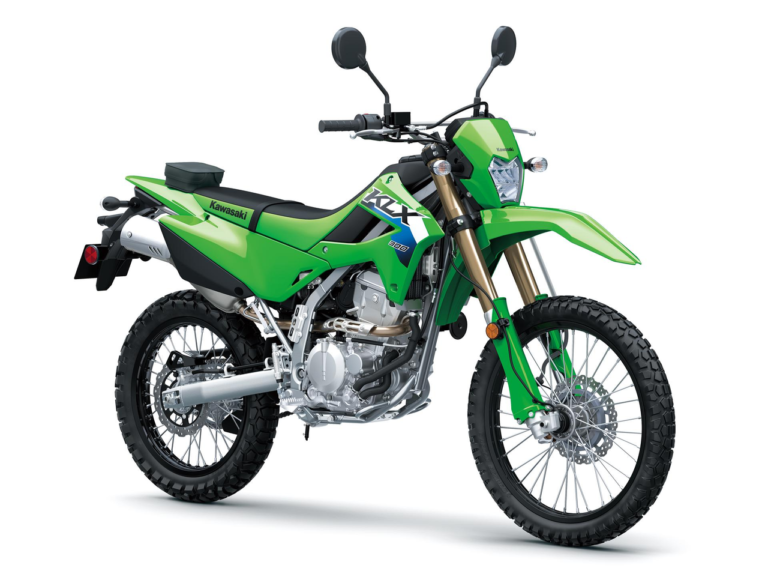
Kawasaki KLX230 S Top Speed, 0-60 Time & Specs Review
TL;DR
- The Kawasaki KLX230 S tops out around 73-78 mph depending on rider weight and terrain, based on independent test rides rather than a factory-published figure.
- It runs a 233cc air-cooled single making 17 hp at 8,000 rpm and 13.0 lb-ft of torque at 6,400 rpm.
- 0-60 mph isn’t a metric Kawasaki tests or publishes for this bike; owner-run tests on the standard KLX230 land around 10 seconds, and the S should be close to that.
- Seat height drops to 33.3 inches on the S, 1.5 inches lower than the standard KLX230, aimed at shorter and newer riders.
- MSRP starts at $5,199 for the non-ABS model and $5,499 with ABS.
What’s the Kawasaki KLX230 S’s Top Speed?
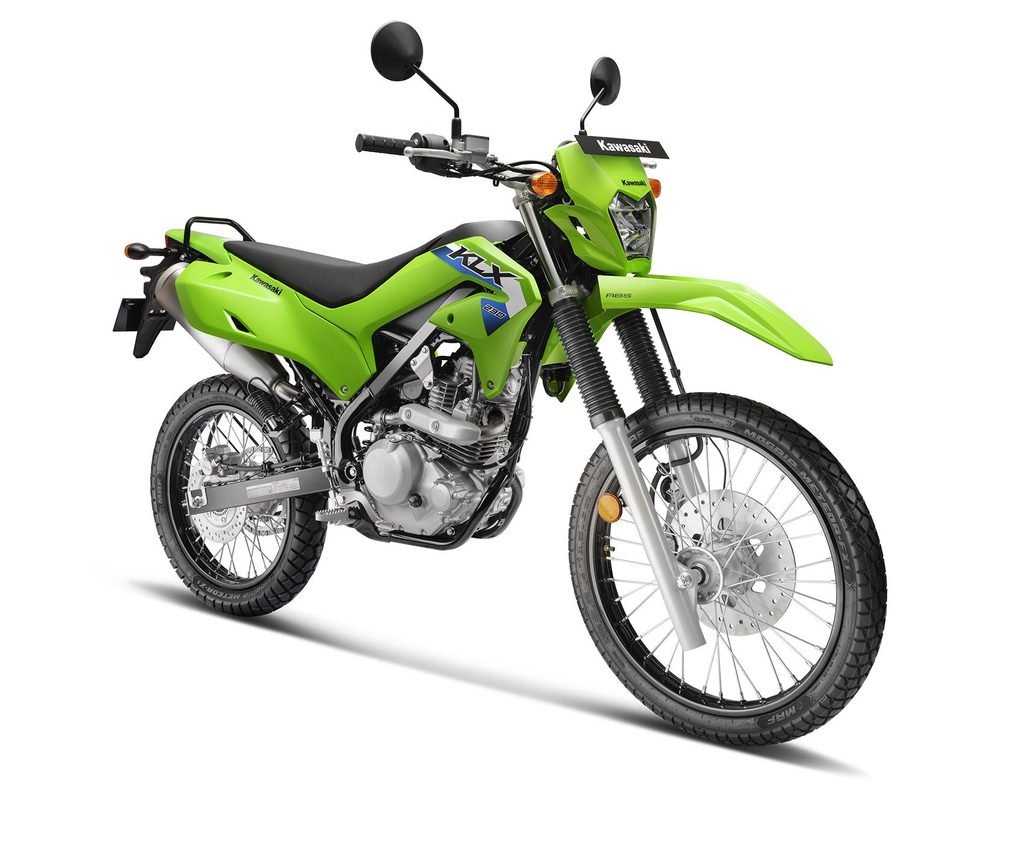
The KLX230 S tops out somewhere between 73 and 78 mph, and the spread comes down to who’s testing it and how. Kawasaki doesn’t publish an official top speed for this bike, so every number out there comes from a real rider on a real road.
Adventure Motorcycle Magazine clocked their KLX230 S test unit at about 73 mph during a first ride review, noting the engine didn’t feel stressed getting there but was happier cruising closer to 50 mph (ADVMoto, 2023). A separate KLX 230 comparison writeup puts the S variant closer to 78 mph, crediting its taller street gearing compared to the closed-course KLX230R, which tops out around 60 mph (Motocross Hideout, 2026).
That gap makes sense once you look at the drivetrain. The S and the standard KLX230 share the same 233cc engine and six-speed gearbox, but the S is set up with gearing that favors highway on-ramps and secondary roads over technical trail crawling.
A 15-tooth front sprocket swap is a common mod riders use to nudge cruising speed even higher, though that trades away some of the low-end punch that makes this bike easy to loft over roots and ruts.
Here’s the practical takeaway: don’t buy this bike expecting to keep up with highway traffic doing 75 mph everywhere. It’ll get there, eventually, and it’ll hold 55-60 mph all day without feeling like it’s about to shake apart. That’s the sweet spot this engine was tuned for.
How Fast Is the KLX230 S from 0-60 mph?
There’s no factory 0-60 figure for the KLX230 S, and no major publication has run an instrumented 0-60 test on this specific variant either. The most-cited number floating around comes from owner-recorded YouTube runs on the standard KLX230, which land at just over 10 seconds (TopSpeed, 2023).
Treat that number as a rough estimate, not a lab result. A 233cc single making 17 hp and pushing close to 290 lbs curb weight isn’t going to win any stoplight drag races, and the S shares the same powertrain and nearly identical weight as the standard model, so a similar 0-60 window is a reasonable assumption.
What the estimate does confirm is that the power delivery off the line is snappy for a small-displacement single, even if outright top-end pull isn’t the point of this engine.
If you want a verified 0-60 number before you buy, that’s a gap in the public data right now. Nobody’s put a stopwatch on the S variant specifically with proper test gear, so anything you read (including the estimate above) should be treated as a ballpark, not a spec sheet entry.
What Engine Does the KLX230 S Run, and How Much Power Does It Make?
The KLX230 S runs a 233cc air-cooled, SOHC single-cylinder four-stroke, the same engine block found across Kawasaki’s KLX230 dual-sport and off-road lineup. It’s fuel-injected through a 32mm Keihin throttle body and produces 17 hp at 8,000 rpm and 13.0 lb-ft of torque at 6,400 rpm (Kawasaki, 2026).
That power figure is measured to the ISO 4106 standard, which Kawasaki notes can read higher than SAE-rated horsepower used for cars, so don’t cross-shop that number directly against automotive specs. Compression sits at 9.4:1, which is low enough to run comfortably on regular pump gas without pinging, even at altitude.
Power routes through a six-speed transmission to a sealed chain final drive. The gearbox has close-enough ratios for trail work in the lower gears while still leaving enough top-end reach for highway on-ramps, which is the whole reason the S exists as a separate model from the closed-course KLX230R.
What Makes the KLX230 S Different from the Standard KLX230?
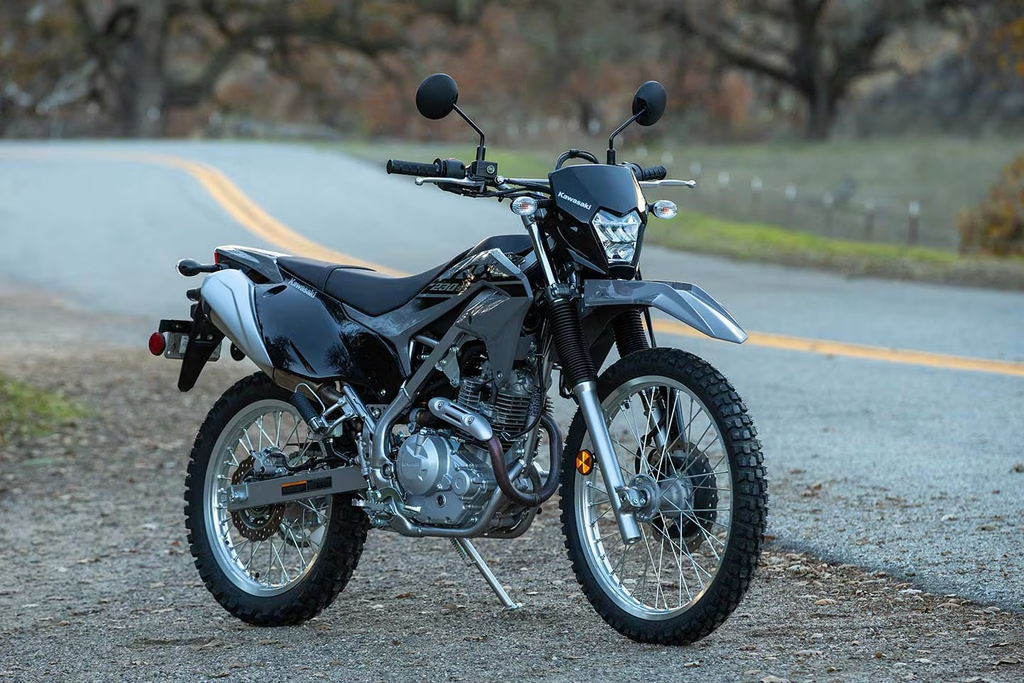
The main difference is seat height: the S drops to 33.3 inches, 1.5 inches lower than the standard KLX230’s 34.8 inches. Kawasaki achieves that through revised suspension settings rather than a smaller frame, which also slightly reduces ground clearance and shortens the wheelbase compared to the standard bike.
Everything else, the engine, chassis, brakes, and bodywork, carries over unchanged. It’s the full-spec KLX230 with its stance dialed in for shorter riders or anyone who wants more confidence getting both feet flat at a stop.
If you’re 5’6″ or under, or you’re a newer rider who wants a lower center of gravity while you build skill and confidence, the S variant is worth the extra look before you commit to the standard model. Taller riders won’t gain anything from the lower seat height and may find the reduced ground clearance a minor tradeoff on rockier trails.
KLX230 S Full Specs
| Spec | KLX230 S (Non-ABS) | KLX230 S (ABS) |
|---|---|---|
| Engine | 233cc air-cooled SOHC single | 233cc air-cooled SOHC single |
| Horsepower | 17 hp @ 8,000 rpm | 17 hp @ 8,000 rpm |
| Torque | 13.0 lb-ft @ 6,400 rpm | 13.0 lb-ft @ 6,400 rpm |
| Transmission | 6-speed, chain final drive | 6-speed, chain final drive |
| Seat Height | 33.3 in | 33.3 in |
| Curb Weight | 291.1 lb | 293.3 lb |
| Fuel Capacity | 2.0 gal | 2.0 gal |
| Front Brake | 240mm petal disc, dual-piston caliper | 265mm petal disc, dual-piston caliper, ABS |
| Rear Brake | 220mm petal disc, single-piston caliper | 220mm petal disc, single-piston caliper, ABS |
| Wheelbase | 53.7 in | 53.7 in |
| MSRP | $5,199 | $5,499 |
Destination charge of $435 is additional and not included in MSRP.
Is the KLX230 S Good on the Highway?
It’s usable on the highway in short stretches, but it’s not built for sustained interstate speeds. At 55-60 mph the bike settles in fine; push past that and wind blast plus engine buzz make longer hauls tiring.
Plan your routes around secondary roads and state highways where speeds top out in the 55-65 mph range, and this bike is genuinely fun to ride. Save the interstate slabs for getting between trailheads when there’s no better option, and keep those stretches short.
Frequently Asked Questions
What is the top speed of the Kawasaki KLX230 S?
Independent test rides put the KLX230 S’s top speed between 73 and 78 mph, depending on rider weight, wind conditions, and whether the stock gearing has been swapped. Kawasaki doesn’t publish an official top speed figure for this model.
How fast does the KLX230 S go from 0-60 mph?
There’s no official or independently instrumented 0-60 test for the KLX230 S specifically. Owner-recorded runs on the standard KLX230, which shares the same engine and nearly identical weight, suggest a 0-60 time of just over 10 seconds, though that figure should be treated as a rough estimate.
How much horsepower does the KLX230 S have?
The KLX230 S makes 17 hp at 8,000 rpm and 13.0 lb-ft of torque at 6,400 rpm from its 233cc air-cooled single-cylinder engine.
What is the difference between the KLX230 S and the KLX230R S?
The KLX230 S is a street-legal dual-sport with a headlight, turn signals, mirrors, and license plate mount, while the KLX230R S is a closed-course off-road model with no lighting or plate provisions. They share a similar engine platform but are set up for different use cases and can’t both be ridden on public roads.
Does the KLX230 S have ABS?
ABS is optional on the KLX230 S and adds $300 to the MSRP, bringing the price to $5,499 versus $5,199 for the non-ABS version. The ABS model also gets a larger 265mm front brake disc instead of the 240mm disc on the non-ABS bike.
Is the KLX230 S good for beginners?
Yes, the lower 33.3-inch seat height and mellow 17 hp output make the KLX230 S a solid pick for new riders or anyone who wants more confidence putting both feet down. The gentle power delivery and light curb weight around 291 lbs also make it forgiving to learn on, both on pavement and light trails.