Kawasaki Ninja 1100SX Top Speed, 0-60 & Specs
TL;DR
- Kawasaki claims a top speed around 155 mph for the Ninja 1100SX, and independent testing clocked an actual 157.75 mph on a stripped-down long-term test bike.
- The 1,099cc inline-four makes 134 hp at 9,000 rpm and 83.2 lb-ft of torque at 7,600 rpm, measured to the ISO 4106 standard.
- No independent publication has yet run an instrumented 0-60 mph test on the 1100SX itself, so any number you see for this specific bike is an estimate, not a verified figure.
- Curb weight sits at roughly 516-518 pounds depending on trim, with a 32.3-inch seat height.
- Base ABS pricing starts at $13,699, with the SE trim (Brembo brakes, Ohlins shock) at $15,399 for 2025.
Kawasaki Ninja 1100SX Specs at a Glance
| Spec | Ninja 1100SX ABS | Ninja 1100SX SE ABS |
|---|---|---|
| Engine | 1,099cc liquid-cooled inline-four | Same |
| Horsepower | 134 hp @ 9,000 rpm | 134 hp @ 9,000 rpm |
| Torque | 83.2 lb-ft @ 7,600 rpm | 83.2 lb-ft @ 7,600 rpm |
| Claimed top speed | ~155 mph | ~155 mph |
| Transmission | 6-speed, assist/slipper clutch | Same, with up/down quickshifter |
| Curb weight | ~518 lb | ~516 lb |
| Seat height | 32.3 in | 32.3 in |
| Front suspension | 41mm Showa fork | 41mm Showa fork |
| Rear suspension | Horizontal monoshock | Ohlins S46 adjustable shock |
| Front brakes | Dual disc, 4-piston | Brembo M4.32, steel-braided lines |
| Fuel capacity | 5.0 gal | 5.0 gal |
| 2025 MSRP | $13,699 | $15,399 |
How Fast Does the Kawasaki Ninja 1100SX Actually Go?
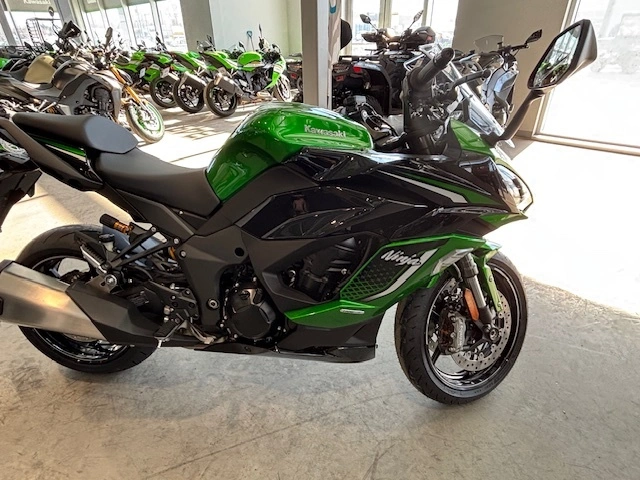
Kawasaki doesn’t publish an official top speed figure in its US spec sheets, but the claimed number circulating among reviewers sits around 155 mph (250 km/h), consistent with the outgoing Ninja 1000SX. That number lines up with what owners are actually seeing on the road.
The most credible real-world data comes from Motorcycle News’ long-term test of a 2025 Ninja 1100SX SE. Their bike showed an indicated 166 mph on the dash, which the testers corrected to an actual 157.75 mph once you strip out speedometer error, and that was measured without the panniers fitted (Motorcycle News, 2025).
That’s a genuinely quick number for a sport-touring bike carrying a full fairing, saddlebag mounts, and a passenger seat.
Context matters here. The 1100SX isn’t chasing ZX-10R numbers, and it doesn’t need to. Kawasaki lengthened the stroke on this engine specifically to build a fatter midrange for real-world overtakes and highway pulls, not to chase a higher terminal velocity. If outright top speed is your only metric, a Ninja ZX-14R or Suzuki Hayabusa will beat it. If you want strong, usable speed with the comfort to actually enjoy getting there, the 1100SX delivers.
What’s the Ninja 1100SX’s 0-60 Time?
Here’s the honest answer: nobody has published an instrumented 0-60 mph test for the Ninja 1100SX yet. Cycle World, Motorcycle.com, and Motorcyclist have all ridden it extensively, but none of their published reviews include a timed acceleration run for this specific model.
What we can tell you is that the outgoing Ninja 1000SX, which shares the same basic architecture and a similar power-to-weight ratio, ran 0-60 mph in the high 2-second to low 3-second range in independent testing (MotoStatz, 2022).
The 1100SX makes slightly less peak horsepower than the 1000SX but more low-end torque, so expect similar real-world punch off the line, likely in a comparable window, though we can’t give you a verified number for the 1100SX specifically until someone straps a timing box to one.
If a hard-verified 0-60 figure matters to your buying decision, treat any number floating around online for this bike as an estimate until an instrumented test is published, and check back as new reviews come out.
Engine and Power Delivery: Where the 1100SX Actually Shines
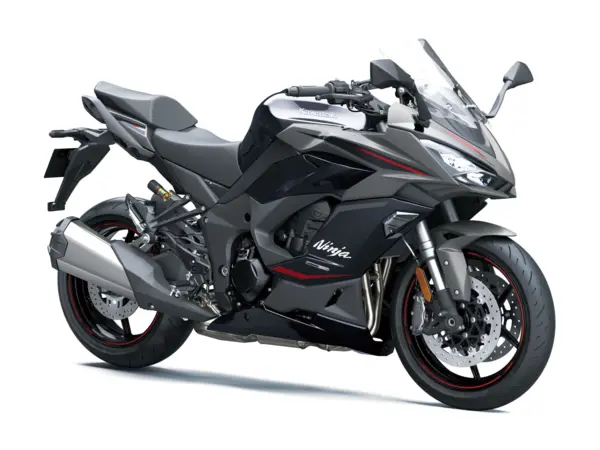
The 1100SX’s engine is built for the midrange, not the top of the tach. Kawasaki grew the engine from 1,043cc to 1,099cc by stretching the stroke 3.3mm while keeping the same 77mm bore, paired with lower-lift cams and narrower intake ports.
That combination trades a handful of peak horsepower for a noticeably stronger pull between 4,200 and 7,600 rpm, which is where most street riding actually happens. Independent dyno testing on a 2025 SE model measured 124.6 rear-wheel horsepower at 9,200 rpm and 77.4 lb-ft of torque at 7,600 rpm, versus Kawasaki’s claimed crank figures of 134 hp and 83.2 lb-ft (Kawasaki, 2025).
In practice, this means you’re not constantly hunting for the redline to feel the bike move. Roll on the throttle exiting a corner or merging onto the highway, and the 1100SX just goes, without needing a downshift first. That’s a deliberate engineering choice, not a compromise.
Handling, Weight, and Comfort on Real Roads
At roughly 516-518 pounds curb weight, the 1100SX isn’t a lightweight, but it doesn’t ride like a heavyweight either. Reviewers consistently note it feels lighter on its feet than the spec sheet suggests (Cycle News, 2025).
The 32.3-inch seat height and raised handlebar position, both inherited from the Ninja 1000 lineage, put your knees and wrists in a far more forgiving position than a full sportbike. That’s the whole point of the sport-touring format: you get a fairing, real cornering ability, and a windscreen, without your wrists going numb after 40 minutes.
Braking is handled by dual 300mm front discs and a 260mm rear disc on the base model, with the SE trim upgrading to Brembo M4.32 calipers and steel-braided lines for sharper initial bite. Suspension travel is 119mm up front and 142mm at the rear, adequate for backroad work but not designed for track days.
Trims and Pricing: Base ABS vs. SE ABS
The standard Ninja 1100SX ABS starts at $13,699 for 2025 and comes with a 41mm Showa fork, a standard horizontal monoshock, and a conventional dual-disc front brake setup.
Step up to the SE ABS at $15,399 and you get an Ohlins S46 fully adjustable rear shock, Brembo M4.32 front calipers, heated grips, a two-way quickshifter, and an exclusive color scheme. For 2026, Kawasaki bumped SE pricing to $15,799 with a new Metallic Deep Blue colorway, and mechanically nothing else changed.
If you’re mostly commuting and doing occasional weekend rides, the base ABS covers the fundamentals without the premium suspension cost. If you’re touring regularly or riding two-up with luggage, the SE’s adjustable Ohlins shock is worth the difference in ride quality alone.
Frequently Asked Questions
What is the top speed of the Kawasaki Ninja 1100SX?
Kawasaki doesn’t publish an official figure, but the claimed top speed is around 155 mph. A Motorcycle News long-term test bike hit an actual 157.75 mph once corrected for speedometer error.
How fast is the Ninja 1100SX from 0-60 mph?
There’s no independently verified 0-60 time published for the 1100SX yet. The predecessor Ninja 1000SX ran 0-60 mph in the high 2-second to low 3-second range, and the 1100SX’s power-to-weight is similar, but that’s not a substitute for a real test on this specific model.
How much horsepower does the Ninja 1100SX make?
Kawasaki claims 134 hp at 9,000 rpm and 83.2 lb-ft of torque at 7,600 rpm, measured to ISO 4106. Dyno testing shows around 124.6 rear-wheel horsepower, which is normal drivetrain loss from the claimed crank figure.
What’s the difference between the base 1100SX and the SE trim?
The SE adds an Ohlins S46 adjustable rear shock, Brembo M4.32 front brake calipers with steel-braided lines, heated grips, and a two-way quickshifter. Engine output is identical between both trims.
How much does the Kawasaki Ninja 1100SX weigh?
Curb weight is approximately 516 pounds for the SE and 518 pounds for the base ABS model, including a full tank of fuel.