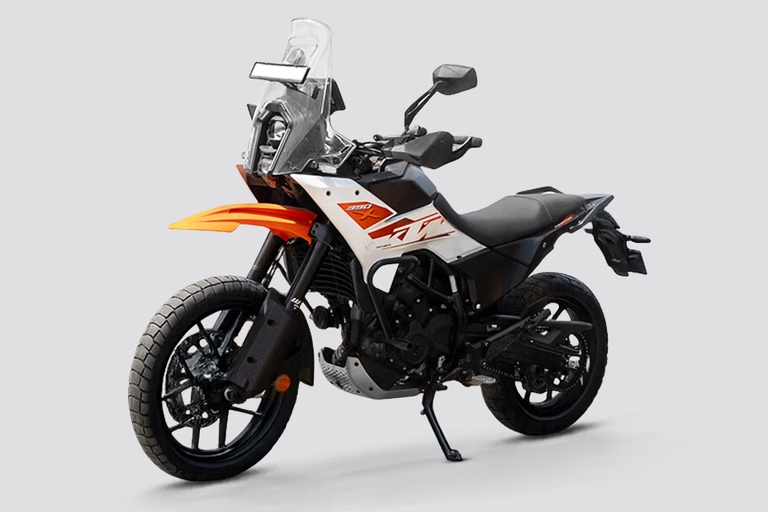
KTM 1390 Super Adventure S EVO Top Speed, 0-60 Time & Specs Review
TL;DR
- The 2027 KTM 1390 Super Adventure S EVO makes 173 hp at 9,500 rpm and 107 lb-ft of torque at 8,000 rpm from a new 1,350cc LC8 V-twin.
- No independently instrumented 0-60 mph or top speed test has been published yet. Based on the outgoing model’s formula-derived 3.1-second 0-60 time and this bike’s improved power-to-weight ratio, expect somewhere around 2.9 to 3.1 seconds once real testing happens.
- US pricing starts at $22,699 before the $800 freight charge and any options.
- Wet weight comes in at 547 lb, and it’s the first Super Adventure sold in the US with KTM’s new Automated Manual Transmission (AMT) as standard equipment.
- This is a road-biased, tech-loaded adventure-tourer built for highway miles and canyon roads, not a dirt bike with saddlebags.
What’s the KTM 1390 Super Adventure S EVO’s Top Speed and 0-60 Time?
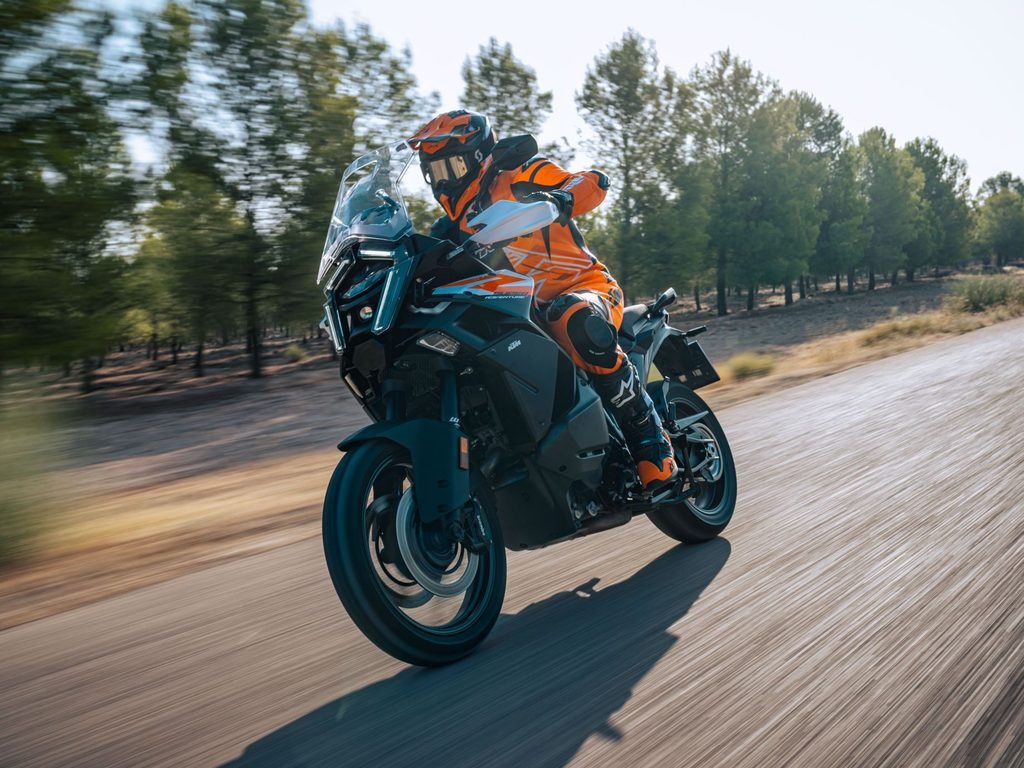
Here’s the honest answer: nobody’s published an instrumented top speed or 0-60 number for this bike yet. It’s a brand-new 2027 model that only started reaching journalists on international press launches in late 2025 and early 2026, and outlets like MotoStatz and Cycle World haven’t run their GPS or dyno tests on a US-spec unit yet.
What we can do is estimate, and we’ll be upfront that it’s an estimate. The bike it replaces, the 1290 Super Adventure S, ran a formula-derived 0-60 mph time of 3.1 seconds and a calculated top speed of 155 mph, weighing about 529 lb wet with 160 hp on tap (AccelerationTimes, 2026). That works out to a power-to-weight ratio of roughly 3.3 lb per horsepower.
The 1390 S EVO makes 173 hp but weighs more too, at 547 lb wet. Run the same math and you get about 3.16 lb per horsepower, a slight improvement over the outgoing bike. If that ratio holds up in the real world, a 0-60 time in the 2.9 to 3.1 second range is a reasonable calculated estimate.
Top speed likely lands somewhere in the 150 to 160 mph range, limited more by the upright adventure-bike riding position and windscreen than by raw horsepower. Treat both figures as educated math, not lab results, until someone straps a GPS unit to one.
What Engine Is in the 2027 KTM 1390 Super Adventure S EVO?
The 1390 S EVO runs a new 1,350cc LC8 V-twin, KTM’s biggest Super Adventure engine yet and a bump up from the outgoing 1,301cc unit. It produces 173 hp at 9,500 rpm and 107 lb-ft of torque at 8,000 rpm.
The bore grew from 108mm to 110mm, and KTM added something called Camshift technology: two different cam profiles that physically shift sideways depending on rpm (KTM, 2026).
At lower revs, the intake cams run shorter valve timing for smoother, more controllable power. Above a certain rpm threshold, they shift over to longer valve openings and higher lift for a stronger top-end pull. It’s KTM’s take on variable valve timing, and it’s meant to widen the usable powerband without sacrificing low-end manners.
One practical upside: valve clearance checks are now only required every 60,000 km (about 37,000 miles), a long interval for a big V-twin and a real cost saver over the life of ownership.
What Makes the AMT Transmission Different From a Regular Gearbox?
The AMT is an Automated Manual Transmission with a centrifugal clutch and a shifting servo in the gearbox, and it’s standard equipment on every US-spec 1390 S EVO. There’s no clutch lever at the bar.
Riders choose between full-automatic shifting or a manual mode using paddle-style triggers, and the system handles the clutch work either way. It’s not a CVT or a torque-converter automatic like you’d find on a scooter; it’s still a conventional 6-speed gearbox, just with the clutch actuation automated.
KTM says the goal is easier low-speed control in traffic and off-camber terrain, while keeping the option to shift like a normal sportbike when the road opens up.
This is a genuinely new layout for a mainstream adventure bike at this price point, and it’s worth test-riding before you buy if you’ve never ridden a clutchless motorcycle. The learning curve is short, but it changes how you brake and roll into corners compared to a standard manual clutch.
How Does the Chassis and Suspension Handle Real Roads?
The frame is a chromium-molybdenum steel trellis design, and KTM reworked it for this generation to add stiffness, which should translate to more predictable handling at speed and under braking. Wheelbase sits at 1,558mm (61.3 inches), with a 65.3-degree steering head angle.
Suspension is WP’s latest semi-active setup (SAT), with 220mm of travel front and rear. It’s fully electronic, adjusting damping on the fly based on road surface and rider input, with four preset modes: Comfort, Street, Sport, and Rain. An optional Suspension Pro package adds more manual tuning range for riders who want to dial in specifics rather than trust the algorithm.
Braking comes from dual 320mm front discs with radially mounted 4-piston Brembo calipers, plus a single 267mm rear disc with a 2-piston Brembo caliper. KTM upgraded the front master cylinder and pads on this generation specifically to sharpen initial bite, a common complaint on the outgoing 1290.
Is the KTM 1390 Super Adventure S EVO Worth $22,699?
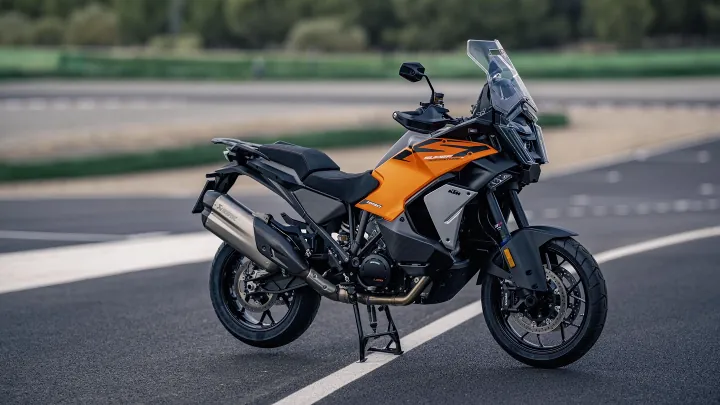
At $22,699 before the $800 freight charge, the 1390 S EVO sits close to its direct competitors rather than blowing past them. The BMW R1300GS starts around $18,900 to $19,500 depending on trim, and the Ducati Multistrada V4S starts near $24,000 to $25,000 in the US, so KTM’s pricing lands in the middle of that pack (manufacturer MSRPs, 2026).
What you get for that money is a genuinely loaded standard spec: Front Radar-based adaptive cruise control, cornering ABS, traction control, a tire pressure monitoring system, keyless ignition with anti-relay-attack protection, semi-active suspension, and the AMT transmission, all included rather than sold as add-on packages. The only factory option most buyers will want is the $899 Tech Pack, which adds expanded ride modes, extra suspension settings, and hill-hold control.
Whether it’s “worth it” depends on what you’re cross-shopping. Against a base-model adventure bike with none of this tech, it’s a lot of money. Against a similarly equipped GS or Multistrada, it’s competitively priced for what’s included.
KTM 1390 Super Adventure S EVO Specs
| Spec | Detail |
|---|---|
| Engine | 1,350cc LC8 V-twin, 75-degree, liquid-cooled |
| Horsepower | 173 hp @ 9,500 rpm |
| Torque | 107 lb-ft (145 Nm) @ 8,000 rpm |
| Transmission | 6-speed with AMT (Automated Manual Transmission) |
| Weight (wet) | 547 lb |
| Seat height | 33.3 / 34.1 in (847/867mm), adjustable |
| Fuel capacity | 6.08 US gal (23 L) |
| Front suspension | WP SAT semi-active, 48mm USD fork, 8.66 in travel |
| Front brakes | Dual 320mm discs, radial 4-piston Brembo calipers |
| MSRP (US) | $22,699 + $800 freight |
| Source: KTM (2026); RevZilla (2026) |
Frequently Asked Questions
Does the KTM 1390 Super Adventure S EVO have a manual transmission option?
No. In the US, the 1390 Super Adventure S EVO comes exclusively with the AMT (Automated Manual Transmission), which has no clutch lever. Riders can still shift manually using triggers at the handlebar; the system just automates clutch actuation rather than requiring a lever.
What is the difference between the 1390 Super Adventure S EVO and the 1390 Super Adventure R?
The S EVO is the road-biased model, with 19-inch front and 17-inch rear cast wheels, a lower seat, and the AMT transmission as standard. The R is the off-road-oriented sibling, built around spoked wheels, more suspension travel, and a taller stance for mixed-surface and dirt-heavy riding.
How much horsepower does the 2027 KTM 1390 Super Adventure S EVO make?
It makes 173 hp at 9,500 rpm and 107 lb-ft of torque at 8,000 rpm, according to KTM’s published specifications for the 1,350cc LC8 V-twin engine.
Has anyone tested the KTM 1390 Super Adventure S EVO’s real-world 0-60 time?
Not yet, as of this writing. No GPS-instrumented or dyno-verified acceleration test has been published. Estimates in this article are calculated from the outgoing 1290 Super Adventure S’s tested numbers and this bike’s power-to-weight ratio, not from an actual run.
How often does the 1390 Super Adventure S EVO need valve clearance checks?
KTM specifies valve clearance checks every 60,000 km, or roughly 37,000 miles, thanks to the new Camshift valvetrain design. That’s a notably longer interval than most large-displacement V-twins.