KTM EXC 300 Top Speed, Specs & Review
TL;DR
- The KTM 300 EXC runs a 293cc fuel-injected two-stroke single putting out approximately 48–50 hp at the rear wheel, based on Dirt Rider dyno testing of the closely related 300 SX platform
- Top speed is approximately 85–90 mph on open ground; KTM does not publish an official figure for this off-road model.
- Dry weight is 104.4 kg (230 lb) for the 2026 model, with a 37.9-inch (963 mm) seat height .
- The 2026 EXC line carries over the same 25CrMo4 chromoly steel frame and WP XACT 48mm USD fork with revised damping settings from the 2025 update.
- At roughly $10,000–$11,500 MSRP (US dealer pricing, 2025–2026), the 300 EXC is one of the most capable purpose-built enduro bikes available at that price.
KTM EXC 300 Full Specs (2025–2026)
The core architecture of the 2025 and 2026 KTM 300 EXC is unchanged: same 293cc engine, same frame, same geometry. The 2026 model trimmed dry weight by 0.2 kg (104.4 vs 104.6 kg) and received refined suspension settings.
| Specification | 2025 KTM 300 EXC | 2026 KTM 300 EXC |
|---|---|---|
| Engine | 293cc 2-stroke single | 293cc 2-stroke single |
| Bore x Stroke | 72 x 72 mm | 72 x 72 mm |
| Fuel System | Keihin EFI, 39mm throttle body | Keihin EFI, 39mm throttle body |
| Ignition | Vitesco Technologies EMS | Vitesco Technologies EMS |
| Transmission | 6-speed, wet clutch | 6-speed, wet clutch |
| Clutch | Brembo hydraulic, DDS multi-disc | Brembo hydraulic, DDS multi-disc |
| Frame | 25CrMo4 chromoly steel | 25CrMo4 chromoly steel |
| Front Suspension | WP XACT USD 48mm | WP XACT USD 48mm |
| Rear Suspension | WP XPLOR PDS shock | WP XPLOR PDS shock |
| Suspension Travel (F/R) | 300 mm / 310 mm | 300 mm / 310 mm |
| Dry Weight | 104.6 kg (230.6 lb) | 104.4 kg (230.2 lb) |
| Seat Height | 963 mm (37.9 in) | 963 mm (37.9 in) |
| Ground Clearance | 347 mm (13.7 in) | 347 mm (13.7 in) |
| Wheelbase | 1,489 mm (58.6 in) | 1,489 mm (58.6 in) |
| Fuel Tank | 9 liters (2.4 gal) | 9 liters (2.4 gal) |
| Front Brake | 260mm disc, Brembo | 260mm disc, Brembo |
| Rear Brake | 220mm disc | 220mm disc |
| Wheels | 21-inch front / 18-inch rear | 21-inch front / 18-inch rear |
| Chain | 520 X-Ring | 520 X-Ring |
Sources: KTM official technical specifications (KTM.com, 2025 & 2026); finn.no dealer listing with factory spec sheet (2025).
KTM EXC 300 Top Speed: What to Actually Expect
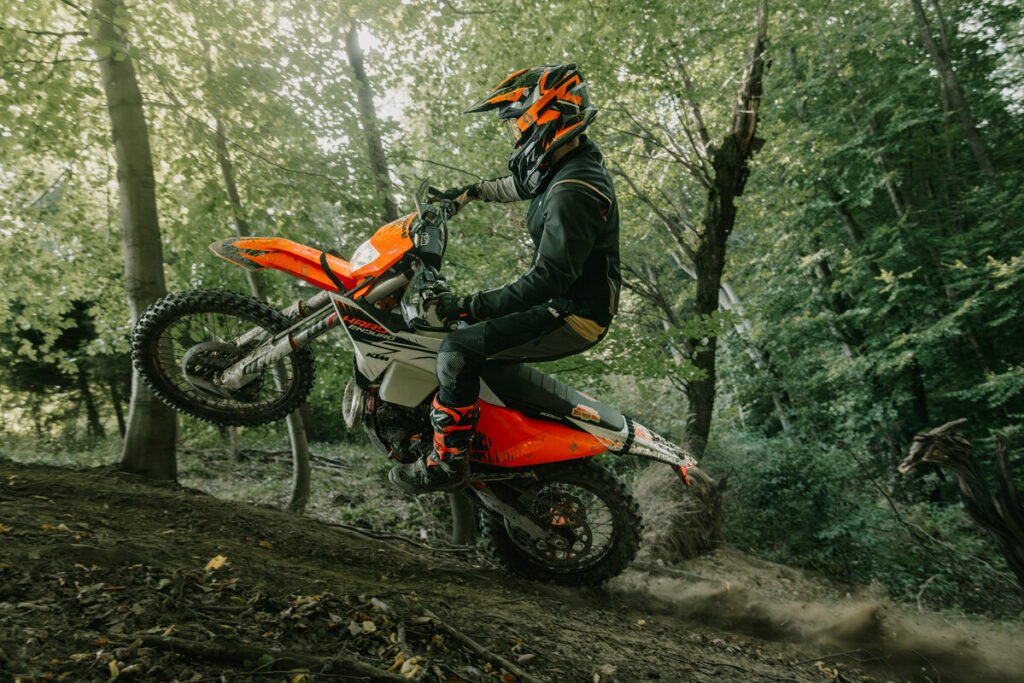
The KTM 300 EXC top speed is approximately 85–90 mph on flat, open ground with a stock gearing setup. KTM does not publish an official top speed for any EXC model — this is standard practice for dedicated off-road machines, since top speed varies with gearing, rider weight, altitude, and terrain.
The 85–90 mph figure is consistent with what’s reported across independent sources including motorcyclespecs.com and Wikipedia’s KTM 300 model summary, as well as forum accounts from riders who have supermoto-converted or ridden the EXC on paved roads. That said, treat any single source’s number as an approximation rather than a tested figure.
What matters more for the EXC’s intended use is that the power arrives hard and fast. The throttle body injection (TBI) system, which replaced the earlier TPI (transfer port injection) system starting in the 2024 model year, produces more direct throttle response and better overrev. You don’t ride this bike hunting top speed. You ride it because it makes 104 lbs feel like 80 when you’re threading roots.
Does Gearing Affect Top Speed on the KTM 300 EXC?
Yes, meaningfully. The stock 14:45 sprocket ratio (14-tooth front, 45-tooth rear, per KTM spec sheet) is set up for off-road terrain — tight trails, rocky climbs, technical descents. Going to a 15-tooth front sprocket will raise top speed noticeably and smooth out highway cruising if you’re riding to trailheads. Drop to a 13-tooth front and you trade top-end for more pop in the lower gears, which most hard enduro riders prefer for technical terrain.
Horsepower and Torque: What the EXC 300 Actually Makes
KTM does not publish horsepower or torque figures for the 300 EXC. The closest independently tested data comes from Dirt Rider’s dyno work on the 2025 KTM 300 SX, which uses the same 293cc TBI engine architecture. On a Dynojet 250i dynamometer, the 300 SX produced 49.1 hp and 32.3 lb-ft of torque at the rear wheel (Dirt Rider, 2024).
The EXC’s power valve mapping and exhaust characteristics differ from the SX — the enduro model is tuned with more low-to-mid torque rather than peak top-end — so real-world rear-wheel output is likely in the 46–49 hp range depending on map selection.
Two engine maps are available via the handlebar-mounted switch: one soft map for slick or low-traction conditions, one more aggressive map for hard-pack. It’s a simple but genuinely useful system in the field.
How the WP Suspension Performs On Trail
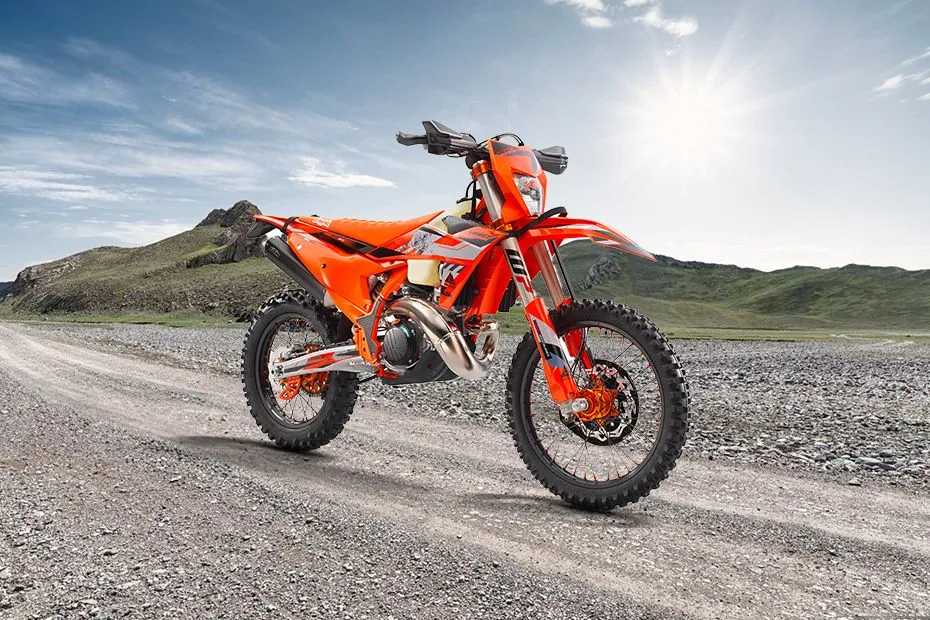
The 300 EXC’s suspension package — a 48mm WP XACT USD fork up front and a WP XPLOR PDS shock at the rear — is trail-ready without modifications. The 2025 update brought new damping settings and lighter springs on the fork, and the 2026 model continues with the same revised setup.
PDS (Progressive Damping System) means the rear shock works directly on the swingarm without a linkage. It’s simpler to maintain and the anti-squat behavior is well-matched to climbing steep, off-camber terrain. The trade-off is that the suspension can feel firmer on fast, choppy hardpack compared to a linked rear end.
Front suspension travel is 300mm; rear is 310mm. That’s a lot of travel for an enduro machine, and it shows on square-edged hits. The fork doesn’t bottom out at speed on typical trail terrain. It does get busy if you push it on high-speed motocross-style jumps, but that’s not what the EXC is built for.
Hand-adjustable clickers on both ends mean you can dial compression and rebound settings trailside without tools. For a rider in the 170–185 lb range, the stock spring rates are usable. Heavier riders above 190 lbs should plan on a spring swap.
Fuel Injection on a Two-Stroke: How the TBI System Works
The 300 EXC uses Keihin throttle body injection (TBI), introduced across KTM’s two-stroke EXC and XC line starting in 2024. TBI injects fuel into the throttle body upstream of the reed valves, similar to how a four-stroke is fueled — which makes cold starts reliable and eliminates the lean bog that older carbureted two-strokes could suffer at altitude.
It also means no pre-mixing oil into the fuel. The EXC uses a separate oil injection system, which is one less thing to get wrong mid-trip. Riders who prefer premix can still run it, but the stock system works well.
The earlier TPI (transfer port injection) system, used on 2018–2023 models, injected directly into the transfer ports and was more sensitive to temperature and air density. TBI is more conventional, which makes mapping, tuning, and diagnostics simpler.
KTM EXC 300 Honest Pros and Cons
Strengths:
The power-to-weight ratio at 104 lbs dry is difficult to match in the enduro segment. The electric start, a standard feature since 2018, means a stalled motor mid-steep-climb doesn’t turn into an ordeal. The Brembo hydraulic clutch makes a genuine difference in long-descent endurance — your hand doesn’t give out. Six-speed gearing covers everything from rock crawling to fire road blasts.
Maintenance intervals are more generous than the earlier carb models. The TBI system holds tune well across temperature swings, and the electronic power valve means you’re not chasing mid-season jetting changes.
Real drawbacks:
The 37.9-inch seat height is a genuine barrier for shorter riders. You can shave 10–15mm with an aftermarket seat foam swap, but you’re still on a tall bike. The 9-liter tank works out to roughly 60–70 miles per tank in hard enduro conditions — plan fuel stops accordingly on longer routes.
The WP XPLOR PDS rear shock, while proven and durable, is a love-it-or-hate-it item. Riders coming from linked rear ends sometimes find the initial stroke firm. It settles with miles, but spring rate and damping matching takes more tuning time than on a linked setup.
Street legality in the US requires significant work depending on your state. The EXC comes with lights and a horn from the factory, which satisfies many states, but title, registration, and DOT tire requirements vary. Check your state’s OHV/dual sport regulations before assuming it’s road-legal out of the box.
Who Should Buy the KTM 300 EXC
The 300 EXC is for experienced off-road riders who are past the beginner stage and ready for a bike that rewards aggression and skill. It’s not a learner machine. The power valve modulates delivery well enough that it’s not a violent hit, but 48+ horsepower in a 230-lb package will get in front of you fast if you’re not paying attention.
It’s a strong choice for competitive enduro and hard enduro riders who race in the Enduro E3 class or participate in events like the GNCC, ISDE, or local NHHA rounds. It’s equally good for serious trail riders who want a race-spec machine without the $16,000+ price of factory-build alternatives.
If you’re a weekend woods rider who just wants something light and fun, the 300 EXC might be more bike than you need. A 250 EXC or a 250 TPI would serve most casual trail riders better, with a more forgiving power band.
Frequently Asked Questions About the KTM EXC 300
What is the KTM EXC 300 top speed?
The KTM 300 EXC reaches approximately 85–90 mph on flat ground with stock gearing. KTM does not publish an official top speed for this off-road model. The figure varies with sprocket ratio, rider weight, and terrain. Fitting a 15-tooth front sprocket in place of the stock 14-tooth raises top-end speed and helps at highway speeds.
How much horsepower does the KTM 300 EXC make?
KTM does not publish power figures for the 300 EXC. Based on Dirt Rider’s Dynojet testing of the 300 SX — which shares the same 293cc TBI engine architecture — peak rear-wheel output is approximately 49.1 hp and 32.3 lb-ft of torque (Dirt Rider, 2024). The EXC’s enduro-oriented power valve mapping likely produces slightly less peak power with more low-to-mid torque.
What is the dry weight of the 2026 KTM 300 EXC?
The 2026 KTM 300 EXC weighs 104.4 kg (230.2 lb) dry, without fuel. The 2025 model weighed 104.6 kg (KTM, 2026). Both figures are without the 9-liter fuel load — add roughly 14 lbs for a full tank of 91 octane.
Is the KTM 300 EXC street legal in the US?
The 300 EXC comes from the factory with headlight, taillight, and horn. Many US states require additional steps for street registration, including DOT-approved tires, mirrors, speedometer, and turn signals. Requirements vary significantly by state. California, for example, has stricter emissions and equipment requirements that can make registration complicated. Check your state’s DMV or OHV regulations before buying with road-legal intent.
What fuel does the KTM 300 EXC require?
The KTM 300 EXC TBI uses standard pump gasoline (91 octane recommended) via the separate oil injection system — no pre-mixing required. If you prefer to run premix, you can disable the oil injection and run a 40:1 or 50:1 mix with a quality two-stroke oil like Motorex 2T or Motul 800 2T.
What is the seat height on the KTM 300 EXC?
Seat height is 963 mm (37.9 inches) on both the 2025 and 2026 models. This is on the tall side and requires at least a 30-inch inseam to touch the ground flat-footed on one side. Riders under 5’8″ may want to budget for a shaved seat foam or lowering links, though lowering the suspension affects ground clearance and suspension geometry.
Key Takeaways
- KTM 300 EXC top speed is approximately 85–90 mph; no official figure is published for off-road models.
- Horsepower is approximately 46–49 hp at the rear wheel based on dyno data from the closely related 300 SX (Dirt Rider, 2024).
- 2026 dry weight is 104.4 kg (230.2 lb), with 963 mm (37.9 in) seat height (KTM, 2026).
- TBI fuel injection replaced TPI starting in the 2024 model year; it’s more reliable, easier to tune, and doesn’t require altitude-specific jetting changes.
- Stock suspension is trail-ready but needs spring-rate matching for riders over 190 lbs.
- The 300 EXC is a genuine race-spec enduro machine best suited to experienced off-road riders; it’s not a beginner bike.