Ducati Motorcycles Years to Avoid
TL;DR
- The first-generation Panigale V4 (2018-2019) had five separate NHTSA recalls in a single year — timing chain, oil cooler, and rear brake pad failures among them.
- Multistrada 1200 models from 2010 to 2014 were recalled for a faulty throttle control affecting 5,962 units.
- Early Testastretta superbikes — specifically 2003-2004 999s — are the most fragile to buy used today due to known electrical system aging and deferred Desmo service.
- Ducati’s mid-2000s to 2012 era bikes are generally solid if service records are clean; the pattern is first-year launches carry the highest risk.
- Any used Ducati without a documented Desmo valve service history is a pass, regardless of year.
Which Ducati Years and Models Have the Worst Track Record
The short answer: any Ducati from the first model year of a new platform. Ducati has a pattern of launching bikes before all the engineering gremlins are sorted. The 2018 Panigale V4 racked up five recalls in twelve months. The 2010 Multistrada 1200 shipped with a throttle that could stick open. The 2003 999 had coil packs that hated cold weather and electrical connectors that corroded within two ownership cycles.
This doesn’t make Ducati a bad brand — it makes first-year launch bikes a bad bet on the used market, especially when the previous owner may have skipped recall service and deferred the Desmo. Here’s a model-by-model breakdown.
Ducati Model Years to Avoid at a Glance
| Model | Years to Avoid | Primary Issue |
|---|---|---|
| Panigale V4 / V4 S / V4 SP | 2018-2019 | Five NHTSA recalls: timing chain, oil cooler, rear brake pads |
| Multistrada 1200 | 2010-2014 | Throttle cable recall (5,962 units), sidestand sensor, fuel gauge |
| 999 / 749 | 2003-2004 | Early coil packs, electrical connector corrosion, coolant hose deformation |
| 1098 | 2007-2008 | Stalling at idle, stator failure, coil pack sensitivity |
| Scrambler 1100 | 2018-2021 | Exhaust valve cable fire risk recall (1,072 units) |
| Monster 696 / 796 | Any with unknown service history | Deferred Desmo service — belt and valve damage |
2003-2004 Ducati 999 and 749: Early Testastretta Superbikes
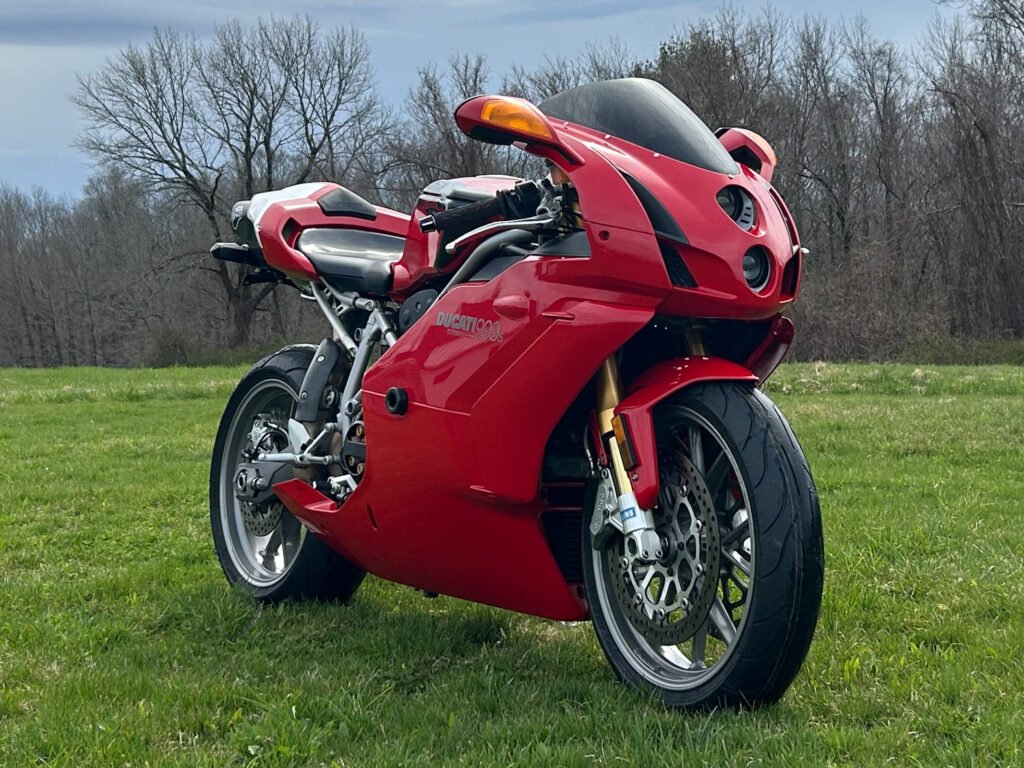
These two model years are the ones to approach most carefully on the used market today, not because they were catastrophically unreliable when new, but because of how they age.
The 2003 999 used an early-generation coil pack that required a near-exact voltage threshold to fire reliably. Cold weather was a recurring problem — multiple owners on Ducati.ms reported difficulty starting below 60°F because the combination of a cold battery losing current and a cold engine demanding more of it dropped below the coil’s 11.8-volt threshold (Ducati.ms forum, 2010). Ducati revised the coil design in later model years; the 2006 749R, for example, handled low voltage far better.
The coolant hoses on 2005 999s are also known to deform over time, and the side-mount fuel pump in early examples failed on a confirmed bad batch — at least one owner documented oil pump failure at the first service interval (MCN reviews, 2005).
The 2004 999R is a specific model-year exception: its deep-sump engine, revised swingarm, and updated body shared more DNA with the improved 2005-2006 machines than with the base 2003 999. If you’re set on the 999 platform, a 2005 or 2006 example in documented condition is the stronger bet.
What makes a 2003-2004 999 a real gamble in 2026 is age compounding the existing weak points. Electrical connectors corrode. The regulator/rectifier on early liquid-cooled Ducatis runs hot and can fail without warning — a problem common across the brand in the pre-2010 era (Engine Patrol, 2024). The wiring harness on neglected examples is a question mark.
Safe 999 years: 2005-2006 (deep-sump engine, revised chassis)
2007-2008 Ducati 1098: First-Year Testastretta Launch Bugs
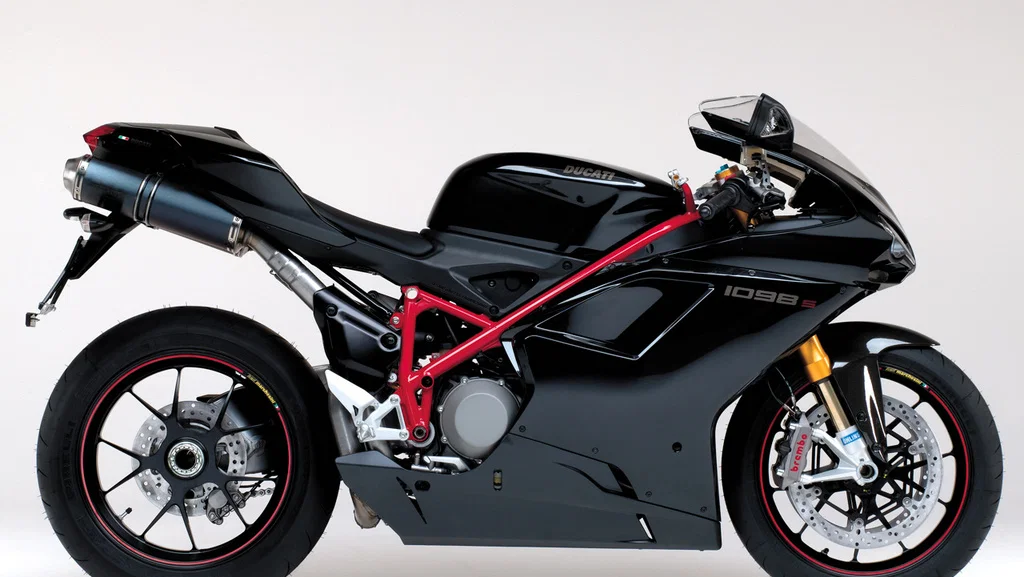
The 1098 is one of the most beautiful superbikes Ducati ever made. The 2007 and 2008 model years carry early-platform problems that owners have documented in detail.
The stalling issue was the most widely reported. Multiple 2007 1098 owners posted within 600 miles of ownership about stalling at intersections — sometimes dangerously so in traffic (Ducati.ms, 2007). The cause traced to a combination of factors: the bike ran lean at idle, the early TPS (throttle position sensor) setting drifted, and the side-stand switch on some units was faulty. Many owners resolved it by resetting the TPS; others needed ECU replacement.
The 2009-2010 1198 added a separate stator problem: the idle gear pin could wallow out its bore under hard-start stress, eventually destroying the sprag clutch. Ducati redesigned the pin and stator housing for the 2011 model year (Ducati.org forum, 2014). The 2010 1198 is the specific year where this issue concentrates.
Safe 1098/1198 years: 2009 1098 (coil issues largely sorted), 2011-2012 1198 (revised idle gear pin design)
2010-2014 Ducati Multistrada 1200: Throttle, Fuel, and Sidestand Failures
The first-generation Multistrada 1200 was a genuinely exciting bike when it launched in 2010 — four riding modes, electronic suspension, a real 150 horsepower from the Testastretta 11°. It was also the subject of one of Ducati’s largest US recalls.
According to the NHTSA, 5,962 Multistrada 1200 units from 2010 to 2014 were recalled because the inner sleeve of the opening throttle cable could disengage from the throttle body, preventing the throttle from closing (NHTSA, 2014 — Campaign No. 14V-315). A stuck-open throttle at highway speeds is not a minor inconvenience.
Two additional failures hit the 2010-2013 generation. The sidestand sensor on some units failed to detect whether the stand was extended, and the fuel tank sensor on certain bikes gave riders a false “full” reading — leaving some stranded despite the gauge saying otherwise (Engine Patrol, 2024). The 2015-2016 generation added a different sidestand bolt problem: the pivot bolt was undersized at 15mm rather than the correct 17mm, which could allow the stand-sensor circuit to disengage (Motor and Wheels, 2023).
Verify all recalls are completed via NHTSA’s VIN lookup before handing over money on any first-gen Multistrada.
Safe Multistrada years: 2017-2018 (S model with Skyhook suspension sorted, recalls addressed)
2018-2019 Ducati Panigale V4: Five Recalls in the First Year
The Panigale V4 was a technical achievement — a Desmosedici-derived 1103cc V4 in a street package. The 2018 launch bikes were also recalled five times before the model year was done.
Ducati recalled 1,502 units of the 2018-2019 Panigale V4, V4 S, and V4 SP for a timing chain tensioner that could loosen under track conditions, allowing oil to leak onto the rear tire (NHTSA Campaign 18V-854, 2018). Separately, 1,663 units were recalled because the oil cooler output port could crack under extreme conditions — same result, oil on the rear tire (NHTSA Campaign 18V-834, 2018). Brembo’s rear brake pads on certain 2018 units failed heat treatment during manufacturing, meaning the friction material could detach from the backing plate (NHTSA Campaign 18V-480, 2018).
A 2018-2019 V4 that has completed all recall work is a different machine from one that hasn’t. But buying a first-year V4 without verifying recall completion via the NHTSA VIN tool is a risk not worth taking.
The 2020+ Panigale V4 is a more settled machine. Ducati issued a separate rear axle recall in 2025 affecting 10,182 V4 and Streetfighter V4 units across multiple years — but the density of issues that hit the 2018 launch year hasn’t repeated.
Safe Panigale V4 years: 2020-2022 (first-year platform issues sorted)
2018-2021 Ducati Scrambler 1100: Electrical Fire Risk
This one is short but important. Ducati recalled 1,072 units of the 2018-2021 Scrambler 1100 because the exhaust valve cable could contact the main positive battery wire and cause an electrical short-circuit — a fire risk (NHTSA Campaign 20V-781, 2021). The fix was a new cable guide and self-locking cable tie, installed free of charge by dealers.
If you’re looking at a Scrambler 1100 from this window, run the VIN through NHTSA before buying. The fix is straightforward and was handled under recall, but there are neglected examples on the used market that never made it to a dealer.
What to Look for When Buying Any Used Ducati
Skipped Desmo service is the single biggest red flag across all Ducati models, regardless of year. The desmodromic valve system requires periodic inspection and adjustment; Ducati recommends the interval every 7,500 to 15,000 miles depending on the model. A full Desmo service at a dealership costs $1,150 to $1,700; independent Ducati specialists typically charge $800 to $1,200 (Ducati NYC, 2024). On models with rubber cam belts — the 996, 998, 748, 916, older Monsters — Ducati requires belt replacement every five years regardless of mileage.
Beyond the Desmo, look for corroded electrical connectors on anything pre-2010, warped front brake rotors (a known weakness on early Multistradas), and verify all open NHTSA recalls using the VIN. The regulator/rectifier runs hot on older air-cooled models; an upgraded unit is cheap insurance on a Monster or older Supersport.
A clean, documented service history on a “worse year” Ducati beats a mystery-history bike from a theoretically “good year” every time.
Frequently Asked Questions About Ducati Years to Avoid
What is the most problematic Ducati model year overall?
The 2018 Panigale V4 accumulated more confirmed NHTSA safety recalls in its first year than any other Ducati in recent history — five separate campaigns covering the timing chain tensioner, oil cooler port, and rear brake pads. All 2018-2019 V4 buyers should verify recall completion before purchase.
Are older Ducatis like the 916 and 748 reliable to own today?
They can be, but they demand a thorough pre-purchase inspection. The 748 and 916 era bikes use rubber cam belts that must be replaced every two years or 10,000 miles. Belts age even if the bike isn’t ridden, and a snapped belt means engine rebuild territory. Find a bike with fresh belts, documented valve history, and a functional regulator/rectifier.
Do all Ducatis require expensive Desmo valve service?
Yes. Every Ducati with a desmodromic valve system requires periodic inspection at 7,500 to 15,000 miles depending on the model. Dealer cost runs $1,150 to $1,700; a good independent Ducati specialist is typically $800 to $1,200. The cost is non-negotiable — skipped service can lead to valve damage and engine failure.
Which Ducati model is the most reliable for everyday use?
The Ducati Monster 937 (2021 onward) and the Multistrada V4 (2021 onward) are consistently rated as the most ownership-friendly modern Ducatis. Both use the liquid-cooled Testastretta engine with longer service intervals than older desmo designs, and both benefited from lessons learned in earlier platforms.
How do I check if a used Ducati has open recalls?
Go to nhtsa.gov, enter the 17-digit VIN, and the database returns any open or completed recalls for that specific unit. Ducati North America customer service (1-888-391-5446) can also confirm recall status by VIN. Never skip this step on any used Ducati purchase.
Sources: NHTSA safety recall database (campaigns 14V-315, 18V-480, 18V-834, 18V-854, 20V-460, 20V-781); Engine Patrol, 2024; Motor and Wheels, 2023; Ducati NYC service cost guide, 2024; MCN Ducati 999 owner reviews, 2005; Ducati.ms and Ducati.org owner forums.