Royal Enfield Motorcycles: History, Manufacturer & Ownership
TL;DR
- Royal Enfield is owned by Eicher Motors Limited, an Indian publicly traded company headquartered in New Delhi, which acquired the brand in 1994.
- The brand was founded in 1901 in Redditch, England, by The Enfield Cycle Company, making it the world’s oldest motorcycle brand in continuous production.
- All Royal Enfield motorcycles are manufactured in Chennai, Tamil Nadu, India; core engineering and design work happens at a UK Technology Centre in Leicestershire, England.
- Royal Enfield sold over 1 million motorcycles in fiscal year 2024-2025, a milestone that took Harley-Davidson decades longer to reach in comparable markets.
- The current lineup spans 350cc retro cruisers, the liquid-cooled 450cc Himalayan adventure bike, 650cc parallel-twin street and touring models, and the upcoming Flying Flea electric series launching in 2026.
Brand Fast Facts
| Detail | Information |
|---|---|
| Founded | 1901, Redditch, England |
| Current owner | Eicher Motors Limited (NSE: EICHERMOT) |
| Acquired by Eicher | 1994 |
| Headquarters | Chennai, Tamil Nadu, India |
| Design/engineering center | Bruntingthorpe, Leicestershire, UK |
| Engine range | 349cc to 648cc (plus electric) |
| Countries sold | 50+ |
| Annual sales (FY2024-25) | 1.09 million units |
Where Royal Enfield Actually Started: England, 1901
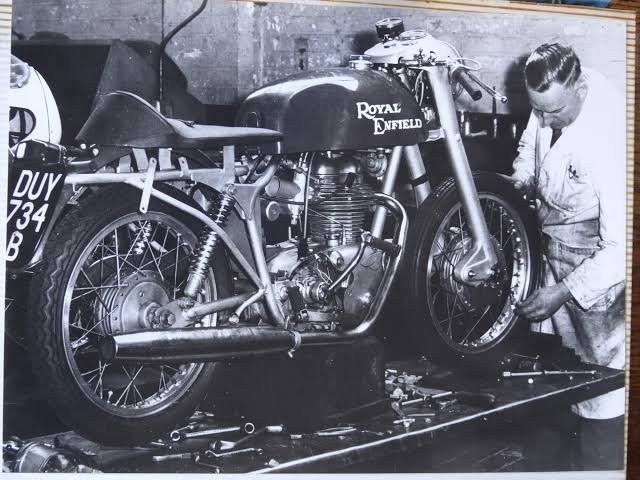
Royal Enfield was born out of an arms-manufacturing contract, not a garage daydream. In the 1890s, a small British company called the Enfield Manufacturing Company Ltd. won a contract supplying precision parts to the Royal Small Arms Factory in Enfield, Middlesex. That royal connection gave them the name, and the tagline “Made Like A Gun” followed shortly after. Their bicycles were renamed Royal Enfields, and in 1901 they built their first motorised vehicle: a quadricycle powered by a 1.5 hp De Dion engine.
Motorcycles followed soon after. By 1932, Royal Enfield had launched the Bullet, a 350cc four-stroke that would go on to become the longest-running motorcycle design in production history. The company also supplied motorcycles to the British Army during both World Wars, cementing a reputation for durability that riders still invoke today.
By the 1960s, though, the UK operation was struggling. Japanese manufacturers arrived with machines that were cheaper, more reliable, and faster. The Redditch factory closed in 1967. By 1970, UK production had stopped entirely. The Enfield Cycle Company went defunct in 1971. The marque could have died right there.
It didn’t – because India had other plans.
How the Bullet Moved to India and Outlived Its British Parent
The Indian chapter of Royal Enfield’s story starts with a military contract. After independence in 1947, the Indian government needed motorcycles rugged enough to patrol mountain borders. In 1952, they chose the Royal Enfield Bullet. An order for 800 units of the 350cc model followed in 1954 (Royal Enfield official history, royalenfield.com).
In 1955, The Enfield Cycle Company partnered with Madras Motors to form Enfield India, with a purpose-built factory near Madras (now Chennai). Bikes initially arrived in kit form and were assembled locally. By 1962, all components were made in India. The tooling was transferred from England to Chennai, which meant that when the UK company folded in 1971, India kept building.
Enfield India exported bikes back to the UK starting in 1977 – the student had outlived the teacher. The Bullet 350 rolled through decades with relatively minor mechanical changes, which is either a sign of how good the original design was or an indictment of the pace of development, depending on who you ask in a shop parking lot.
The result: the Royal Enfield Bullet holds the record for the longest-running motorcycle design in continuous production since 1948. That’s a claim no other manufacturer on earth can make for a single model.
Who Owns Royal Enfield Today: Eicher Motors and the Turnaround
Royal Enfield is a wholly owned subsidiary of Eicher Motors Limited, a publicly traded Indian company listed on the National Stock Exchange of India (NSE: EICHERMOT). Eicher’s roots go back to 1948 as an agricultural tractor company; it had nothing to do with motorcycles until 1990, when it acquired a 26% stake in Enfield India Ltd. By 1993, that stake had grown to a majority holding, and in 1994 the company was renamed Royal Enfield Motors Limited (Eicher Motors corporate history, eichermotors.com, 2024).
The early years under Eicher were rocky. Sales sat around 2,000 units per month against a production capacity of 6,000. Reliability issues were well documented among owners. In 2000, Eicher’s then-CEO Vikram Lal decided to shut the brand down. His son, Siddhartha Lal, asked for two years to turn it around. He got them.
Siddhartha Lal moved to Chennai, cut costs, pushed through product improvements, and made a decision that reshaped the company: in 2006, he narrowed Eicher’s entire focus to motorcycles and trucks, dropping everything else. That concentration let Royal Enfield stop chasing mediocrity across a broad portfolio and start doing a few things well. The AVL-developed unit construction engine (UCE), introduced in 2008-2009, replaced the old cast-iron motor that had been Royal Enfield’s biggest reliability liability. The Classic 350 and Classic 500 built on that improved foundation and sold steadily to riders who wanted the look and thump of a vintage British single without the vintage British reliability problems.
In 2015, Royal Enfield acquired Harris Performance Products, a UK chassis engineering firm, and opened its Technology Centre at Bruntingthorpe Proving Ground in Leicestershire. That UK engineering base now handles everything from clay design through prototype validation. It’s why today’s Royal Enfields feel like they were actually developed with a proving ground in the loop rather than just iterated in a factory.
A UK trademark dispute in 1999 raised questions about whether Eicher had the right to use the Royal Enfield name in Britain. The UK Intellectual Property Office ruled it had no objection to Eicher’s use of the trademark. The brand is fully Indian-owned and operated, with no active claim from any British entity.
Current Royal Enfield Lineup and Where Bikes Are Built
Every Royal Enfield motorcycle is manufactured in Chennai, Tamil Nadu, at two production facilities. The Oragadam plant, opened in 2013, was the catalyst for the volume growth that followed. A third facility is under development in the Tirupati district of Andhra Pradesh, announced in May 2026, which will add 900,000 units of annual capacity to the current 1.46 million (Royal Enfield press release, May 2026).
The current range covers several distinct segments:
350cc retro lineup: Classic 350, Bullet 350, Hunter 350, Meteor 350, and Goan Classic 350 power the volume numbers. These air-cooled J-series engines produce around 20 horsepower and are the bread-and-butter of the brand, accounting for roughly 86% of total sales in FY2024-25 (Autocar Professional, 2025).
450cc adventure segment: The Himalayan 450, launched late 2023, uses a liquid-cooled 452cc Sherpa engine – the first liquid-cooled motor in Royal Enfield history. The Guerrilla 450 roadster shares the same platform with road-biased geometry and a smaller tank.
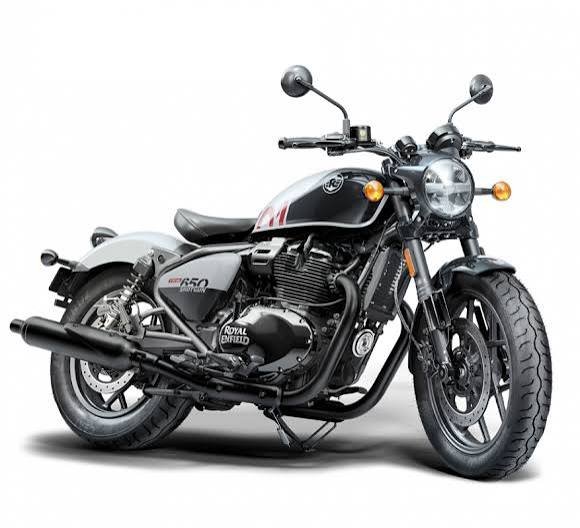
650cc parallel-twin range: The Interceptor 650, Continental GT 650, Super Meteor 650, Shotgun 650, and Bear 650 all share a 648cc air-cooled twin producing around 46 horsepower. These are the bikes that cracked the US market more seriously, with the Interceptor repeatedly winning praise from US publications for value-per-dollar performance.
Electric (2026): The Flying Flea C6 and S6 are set to launch globally in 2026, with Europe as the debut market. The project was developed in collaboration with Qualcomm.
The Sales Numbers That Show How Far Royal Enfield Has Come
Royal Enfield sold 1.09 million motorcycles in fiscal year 2024-2025, the first time the brand crossed one million units in a single year (Royal Enfield official press release, April 2025). For context, in 2012 – one year before the Oragadam plant opened – global Royal Enfield sales were around 113,000 units. That’s roughly a 10x increase in 13 years.
The brand surpassed Harley-Davidson in global unit sales back in 2015 and hasn’t looked back. International exports grew 37% in FY2024-25, and in the US specifically, sales climbed 11.6% in 2024 (RideApart, 2025). Thailand is now Royal Enfield’s largest market outside India.
The 350cc models dominate volume, but the 650cc twins are doing the credibility work in the US and European markets where riders expect a more finished product. The Himalayan 450 won RideApart’s 2024 Editor’s Choice Award, which would have seemed like a strange prediction back when the brand was nearly shut down in 2000.
Frequently Asked Questions About Royal Enfield
Who owns Royal Enfield motorcycles?
Royal Enfield is owned by Eicher Motors Limited, an Indian publicly traded company headquartered in New Delhi. Eicher acquired the brand in 1994 after buying a controlling stake in Enfield India Ltd. starting in 1990. It operates as a wholly owned subsidiary of Eicher Motors, with all strategic decisions made by Eicher’s leadership in India.
Where are Royal Enfield motorcycles made?
All Royal Enfield motorcycles are manufactured in Chennai, Tamil Nadu, India. The company operates two plants there, with a third facility under development in Andhra Pradesh. Engineering and design work is done at Royal Enfield’s UK Technology Centre in Bruntingthorpe, Leicestershire, England.
Is Royal Enfield a British or Indian brand?
Royal Enfield was founded in England in 1901, but it has been an Indian company since 1994 when Eicher Motors acquired it. The original British parent, The Enfield Cycle Company, stopped production in 1970 and went defunct in 1971. Today’s Royal Enfield has no British ownership – it is fully Indian-owned and operated.
What is the oldest Royal Enfield model still in production?
The Bullet is the oldest Royal Enfield nameplate still in production, with the design dating to 1932 and continuous production from 1948. The current Bullet 350, relaunched in 2023, uses a modern J-series engine in a frame that retains the classic single-cylinder layout. No other manufacturer in the world can claim an unbroken production run of a single model over that span.
How did Royal Enfield almost go out of business?
By 2000, Royal Enfield was in serious trouble: sales were roughly 2,000 units per month against capacity for 6,000, and the bikes had persistent reliability issues that alienated buyers. Eicher’s CEO at the time decided to close the brand. His son, Siddhartha Lal, argued for a chance to fix it and was appointed CEO. His turnaround included cost-cutting, the new UCE engine platform in 2008-2009, and a strategic narrowing of Eicher’s focus to just motorcycles and trucks.