Triumph Tiger 900 Alpine Edition Top Speed, Specs & Review
TL;DR
- The 2026 Triumph Tiger 900 Alpine Edition starts at $17,495 and is built on the Tiger 900 GT Pro, adding an Akrapovic silencer, engine protection bars, and Alpine-exclusive paint.
- The 888cc T-Plane triple makes 106.5 hp at 9,500 rpm and 66.4 lb-ft at 6,850 rpm, unchanged from the GT Pro it’s based on.
- No independently instrumented top speed test exists yet for this specific trim; the broader Tiger 900 platform has been estimated around 124-125 mph, and that figure is a formula-derived estimate, not a lab-verified number.
- Wet weight is 222 kg (489 lb), and seat height adjusts between 820mm and 840mm (32.3-33.1 in).
- Heated grips are standard, but heated seats are not, they’re an accessory add-on, which is worth knowing before you assume this bike is fully loaded for cold-weather touring.
What’s New on the Tiger 900 Alpine Edition
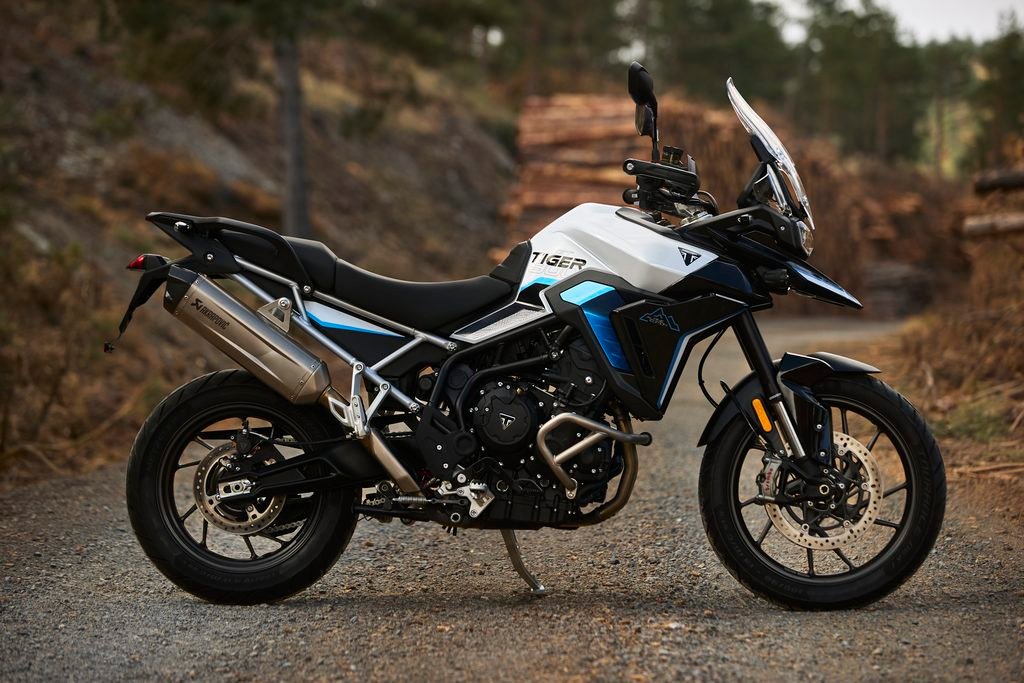
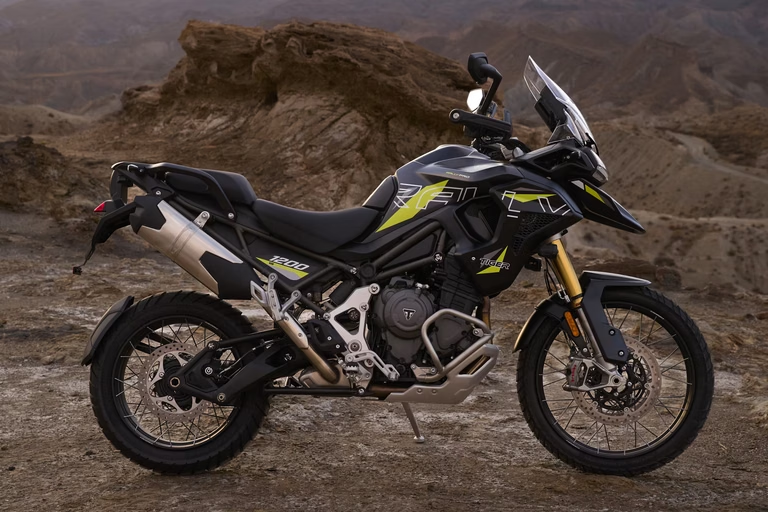
Triumph starts with the GT Pro and adds three things: a factory Akrapovic silencer (a first for a Triumph adventure bike), engine protection bars, and the Snowdonia White and Sapphire Black paint scheme with Aegean Blue accents (Triumph Motorcycles, 2026). The Alpine badge is about style and sound, not extra horsepower or a longer service interval.
Triumph builds the Alpine Edition in limited numbers alongside the Tiger 900 Desert Edition, which gets fuel tank protection bars instead of the crash bars found here. Both special editions launched together as part of the same 2026 model-year update, aimed at riders who want a more finished-looking bike straight from the dealership rather than adding accessories piecemeal after purchase.
That Akrapovic unit uses a titanium outer sleeve with a carbon fiber end cap, so it’s lighter than the stock GT Pro can and gives the triple a sharper exhaust note. If you’ve ridden a Tiger 900 before, the riding experience underneath the Alpine’s paint job will feel familiar. This is a dress-up and equipment package, not a new engine tune.
One trade worth knowing before you order: to fit the crash bars and Akrapovic without pushing the price too high, Triumph dropped heated seats from the standard kit list, even though the GT Pro that it’s based on typically includes that feature in some markets. Heated grips stay standard. If you tour in shoulder-season cold, budget for the heated seat accessory separately.
Triumph Tiger 900 Alpine Edition Specs
| Spec | Detail |
|---|---|
| Engine | 888cc liquid-cooled inline-3, 12-valve DOHC, T-Plane firing order |
| Horsepower | 106.5 hp @ 9,500 rpm |
| Torque | 66.4 lb-ft (90 Nm) @ 6,850 rpm |
| Transmission | 6-speed, chain final drive, slip and assist clutch |
| Front suspension | Marzocchi 45mm inverted fork, 180mm travel, manually adjustable |
| Rear suspension | Marzocchi shock, 170mm travel, electronically adjustable |
| Front brakes | Dual 320mm discs, Brembo Stylema 4-piston monobloc calipers |
| Rear brake | Single 255mm disc, single-piston caliper |
| Wheels/tires | 19-in front, 17-in rear cast aluminum, Metzeler Tourance Next |
| Seat height | 820-840mm (32.3-33.1 in), adjustable |
| Wet weight | 222 kg (489 lb) |
| Fuel capacity | 5.2 gallons |
| MSRP | $17,495 |
Source: Triumph Motorcycles USA, 2026
How Fast Is the Tiger 900 Alpine Edition?
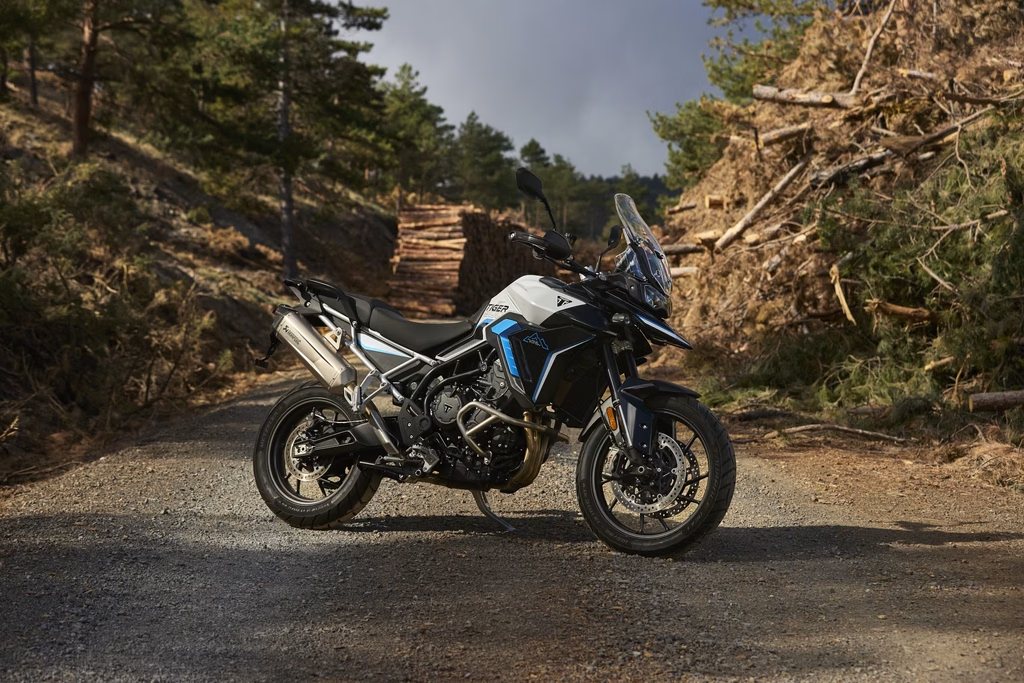
There’s no independently verified top speed test for the Alpine Edition specifically, and that’s normal for a special edition that just reached dealers. The Alpine shares its engine, gearing, and aerodynamics with the Tiger 900 GT Pro, so real-world top speed should land close to that bike’s number once someone runs it with a GPS.
For the broader Tiger 900 GT platform, one formula-derived estimate puts top speed around 124-125 mph (TopSpeed.com, 2022), with 0-60 mph estimated in the mid-to-high 3-second range.
Treat that as a ballpark, not a lab result. No instrumented GPS test (the kind MotoStatz runs) or timed test from a named publication like Cycle World or MCN has been published for this exact trim as of this writing. This article will be updated once that data exists.
What you can bank on: the 888cc T-Plane triple pulls cleanly from low rpm thanks to its 1-3-2 firing order, which mimics a twin down low before smoothing into triple character higher in the rev range. That’s more useful on a mountain road than a headline top-speed number anyway.
Owners on Tiger 900 forums commonly describe sixth gear as tall enough to leave rpm in reserve at typical US highway speeds, though that’s rider-reported, not an instrumented figure.
If you’re cross-shopping this against a liter-class adventure bike expecting drag-strip numbers, that’s the wrong comparison. The Tiger’s strength is midrange torque you can use in a corner, not a speedometer number you’ll rarely touch on public roads.
Suspension, Brakes, and Handling
Marzocchi handles both ends, with a 45mm inverted fork up front that you adjust manually for rebound and compression, and an electronically adjustable rear shock you can set for solo riding, two-up, or a fully loaded touring weight at the push of a button.
That’s genuinely useful if you’re swapping between commuting and a loaded trip without popping the seat to reach a preload collar.
Braking comes from Brembo Stylema monobloc calipers biting dual 320mm front discs, backed by Optimized Cornering ABS that factors in lean angle. This is the same setup you’ll find on plenty of bikes costing several thousand dollars more, and it’s one of the strongest arguments for the Alpine’s price tag.
At 222 kg wet, the Tiger isn’t the lightest middleweight ADV bike out there, but the mass sits low and centralized, so it doesn’t feel top-heavy at parking-lot speeds. Seat height adjusts down to 820mm, which helps shorter riders get a foot down flat.
Is the Tiger 900 Alpine Edition Worth the Money?
At $17,495, the Alpine Edition sits close to a comparably equipped GT Pro, with the difference covering the Akrapovic exhaust, crash bars, and exclusive paint. I don’t have a verified GT Pro MSRP to calculate the exact premium, so treat any dollar gap you see quoted elsewhere with caution unless it cites Triumph directly.
If you were going to buy an aftermarket exhaust anyway, the Alpine Edition math tends to work in your favor since a full Akrapovic system alone is often a significant expense on its own.
Where it gets less clear-cut is the heated seat omission. If cold-weather comfort matters more to you than exhaust sound, the standard GT Pro with heated seats included might suit you better, and you could add an aftermarket slip-on later for less than the Alpine premium. This is a bike built around sound and style first, comfort second.
Frequently Asked Questions
What is the top speed of the Triumph Tiger 900 Alpine Edition?
No instrumented test has been published for this specific trim yet. The related Tiger 900 GT platform has an unverified estimate of roughly 124-125 mph, but treat that as a rough figure until a timed test exists.
How much horsepower does the Tiger 900 Alpine Edition have?
It makes 106.5 hp at 9,500 rpm and 66.4 lb-ft of torque at 6,850 rpm from its 888cc triple, identical to the GT Pro it’s based on.
Does the Tiger 900 Alpine Edition have heated seats?
No, heated seats are not standard. Heated grips come standard, but heated seats are an accessory you add separately.
What’s the difference between the Tiger 900 Alpine Edition and the GT Pro?
The Alpine Edition adds a factory Akrapovic silencer, engine protection bars, and exclusive Snowdonia White/Sapphire Black/Aegean Blue paint on top of the GT Pro’s equipment. Engine output and chassis are unchanged.
How much does the Triumph Tiger 900 Alpine Edition cost?
MSRP starts at $17,495 before dealer fees, taxes, and any accessories like the heated seat option.