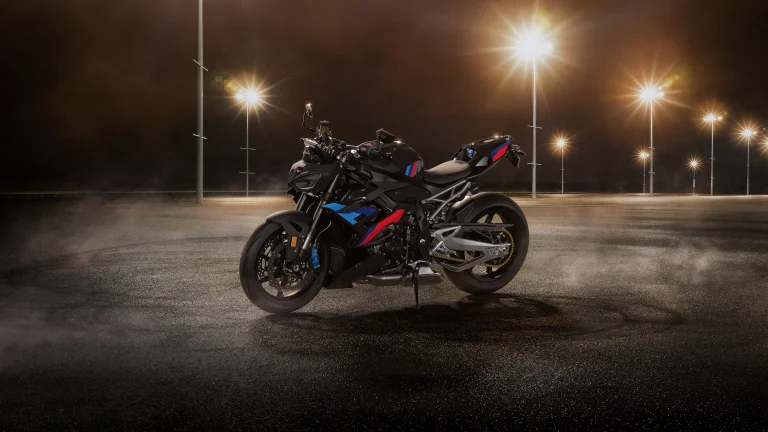
BMW M1000RR Top Speed, 0-60 Time & Specs Review
TL;DR
- The BMW M1000RR has a manufacturer-claimed top speed of 189 mph, driven by a 205-hp ShiftCam inline-four.
- No independent GPS-instrumented 0-60 mph test currently exists for the M1000RR; a formula-derived estimate puts it at 2.8 seconds.
- Dry weight is 403.4 lbs with a 34.0-inch seat height, making this a track-focused bike that demands a confident rider.
- U.S. pricing starts at $35,395 MSRP before dealer fees, tax, and registration.
- The M1000RR is BMW’s WSBK homologation special, built for lap times first and street comfort a distant second.
Where the M1000RR Sits in BMW’s Lineup
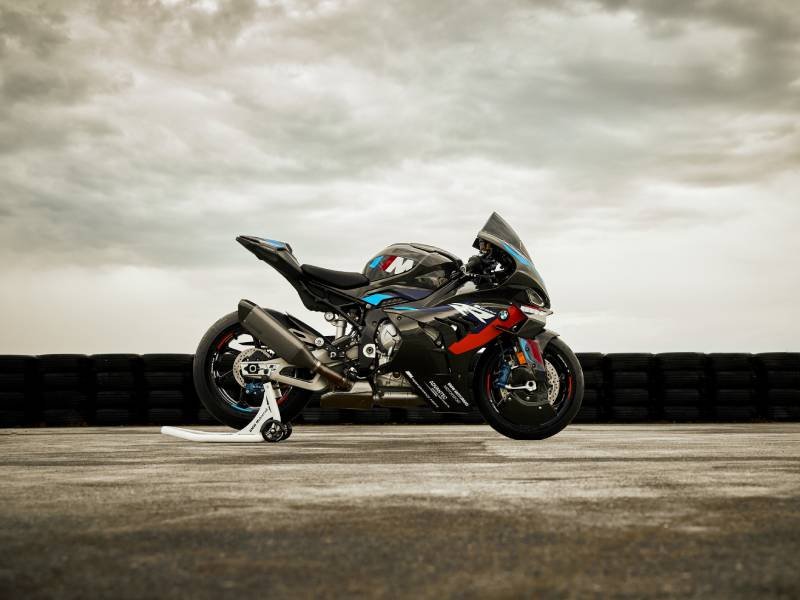
This isn’t a detuned S1000RR with a badge swap. The M1000RR shares its 999cc ShiftCam engine architecture with the S1000RR, but BMW built it from the ground up as a homologation special for World Superbike racing. That means carbon winglets that actually generate meaningful downforce, a shorter-throw M throttle, and electronics tuned for lap times rather than commuting comfort.
If the S1000RR is BMW’s superbike for the street, the M1000RR is the one built to win championships first and get ridden home second. You feel that difference the moment you sit on it: the ergonomics are aggressive, the seat is unforgiving, and the whole bike is calibrated around track days, not Sunday cruises.
How Fast Does the BMW M1000RR Go?
The M1000RR’s official top speed is 189 mph, a figure BMW attributes to the 205-hp ShiftCam engine combined with the bike’s new aerodynamic winglets and trim panels (Cross Country Cycle, 2026).
That’s the U.S.-spec number; European-market bikes run a higher state of tune, with output as high as 218 hp depending on configuration, which can push top speed figures reported on European sources even further.
Getting there isn’t just about horsepower. The M Winglets Evolution 3.0 generate up to 33% more downforce than the previous generation, worth roughly 66 lbs at speed.
That downforce keeps the front wheel planted at high lean angles and reduces the bike’s tendency to wheelie under hard acceleration, which matters more for lap times than for outright top speed.
Keep in mind that 189 mph is a manufacturer claim, not an independently verified figure from a closed-course GPS test. Real-world top speed depends on gearing, rider weight, wind conditions, and whether you’re brave enough to hold it wide open in top gear.
What’s the M1000RR’s 0-60 mph Time?
Here’s where I have to be straight with you: there’s no independently verified, GPS-instrumented 0-60 mph test for the M1000RR from a source I’d stake my reputation on. That’s not unusual for a low-volume, race-homologated superbike like this one. It doesn’t get the same magazine test-track treatment as a mainstream model.
What I can point you to is a formula-derived estimate from ProfessCars, which puts the M1000RR at 2.8 seconds to 60 mph and a 9.8-second quarter mile (Motorbikecatalog, 2026).
Formula-derived estimates use published weight, power, torque curve, and gearing to model acceleration; they’re a reasonable stand-in when no instrumented test exists, but they’re not the same thing as a rider actually launching the bike on a Dragy or VBOX at a drag strip.
For context, the standard S1000RR (which shares this engine family) has run a verified 0-60 mph in 3.1 seconds on GPS-based testing. Given the M1000RR’s similar power-to-weight ratio and shorter final gearing, a time in the high-2-second to low-3-second range is realistic, but treat any specific number you see online, including mine, as an estimate until someone straps a proper data logger to the bike.
Engine, Power, and What Makes the ShiftCam Different
The M1000RR runs a 999cc liquid-cooled inline-four making 205 hp at 13,000 rpm and 83 lb-ft of torque at 11,100 rpm in U.S. trim. It uses BMW’s ShiftCam variable valve timing system, which physically shifts the intake camshaft between two cam profiles depending on rpm and throttle position.
Below roughly 9,000 rpm, the engine runs a mild cam profile for smoother low-end delivery and better fuel economy. Above that, it shifts to an aggressive profile that opens the valves further and longer, unlocking the top-end power that gets you to 205 hp. It’s the same basic trick as Honda’s VTEC, just applied to a liter-class superbike engine instead of a Civic.
For 2026, BMW enlarged the throttle bodies, revised the combustion chamber, and switched to full-shaft titanium valves to help the engine breathe better and rev cleaner toward its 15,100-rpm redline. The exhaust system was also reworked with a larger oval cross-section to match the increased airflow.
Weight, Seat Height, and Ergonomics
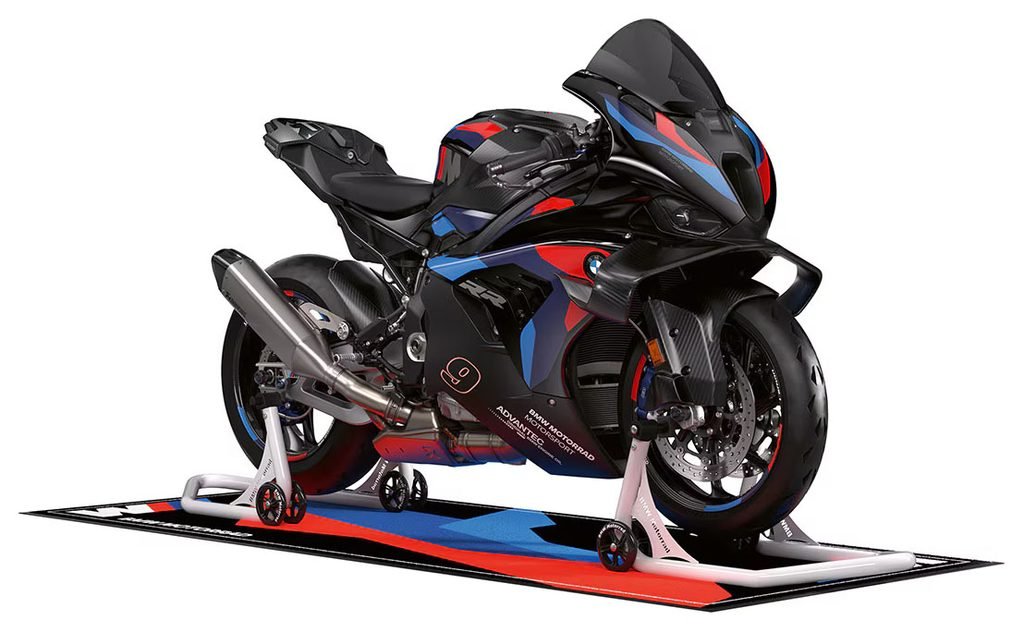
At 403.4 lbs dry, the M1000RR is light for a liter-class superbike, but that number doesn’t include fuel, oil, or coolant. Add those in and you’re looking at a fully-fueled weight closer to the low 430s, which is still competitive for the class.
The 34.0-inch seat height is tall by any standard, and combined with clip-on bars and rearset footpegs, this is not a bike built for stop-and-go traffic or long highway slabs. Shorter riders should sit on one before buying; the reach to the ground and the forward-canted riding position take some getting used to if you’re coming from a naked bike or a standard.
| Spec | BMW M1000RR (2026) |
|---|---|
| Engine | 999cc liquid-cooled inline-four, ShiftCam |
| Power | 205 hp @ 13,000 rpm (US spec) |
| Torque | 83 lb-ft @ 11,100 rpm |
| Top speed | 189 mph (claimed) |
| 0-60 mph | ~2.8 sec (formula estimate, unverified) |
| Dry weight | 403.4 lbs |
| Seat height | 34.0 in |
| Fuel capacity | 4.3 gal |
| Brakes (front) | M Twin disc, 320mm, 4-piston fixed caliper |
| Wheelbase | 57.4 in |
| MSRP (US) | Starting at $35,395 |
Source: Cross Country Cycle (2026), BMW Motorrad dealer specification sheet
Brakes, Suspension, and Chassis Hardware
The M1000RR runs dual 320mm front discs squeezed by BMW’s own M-branded 4-piston fixed calipers, backed by BMW Motorrad Race ABS with a Pro mode that adjusts intervention based on riding mode. In Race and Race Pro modes 1 through 3, ABS Pro switches off entirely, letting experienced track riders trail-brake without electronic interference.
Suspension is a 45mm upside-down fork up front with full adjustability for preload, compression, and rebound, paired with an aluminum swingarm and a Full Floater Pro rear shock. Suspension travel is 4.7 inches front and 4.6 inches rear, tighter than a street-focused sportbike, which reflects the bike’s track-day priorities over pothole absorption.
The frame itself is a bridge-type aluminum design with the engine as a stressed member, and BMW says the upcoming M Motorsport third-generation frame revision brings improved flex characteristics and reduced weight for even sharper feedback at the limit.
Frequently Asked Questions
What is the top speed of the BMW M1000RR?
BMW’s official claimed top speed for the M1000RR is 189 mph, achieved through its 205-hp ShiftCam engine and updated aerodynamic package. This is a manufacturer figure rather than an independently verified test result.
How fast is the M1000RR from 0-60 mph?
There’s no verified GPS-instrumented 0-60 mph test currently available for the M1000RR. A formula-derived estimate from ProfessCars puts it at 2.8 seconds, but treat that as an estimate rather than a confirmed figure until instrumented testing data becomes available.
How much does the BMW M1000RR weigh?
The M1000RR has a claimed dry weight of 403.4 lbs. Fully fueled with oil and coolant, expect a wet weight in the low 430-lb range, which is still light for a liter-class superbike.
What is the seat height on the M1000RR?
Seat height is 34.0 inches, tall for the superbike class and something shorter riders should test in person before buying, especially combined with the bike’s aggressive clip-on riding position.
How much does the 2026 BMW M1000RR cost?
U.S. pricing starts at $35,395 MSRP, not including dealer fees, tax, title, or registration. Optional packages like M Carbon wheels and the M Track package add to that base price.
Is the M1000RR street legal?
Yes. Despite being built as a WSBK homologation special, the M1000RR is fully street legal in the U.S. and most global markets, though its riding position and suspension setup are optimized for track use over daily commuting.