Can-Am Motorcycles: History, Manufacturer & Ownership
TL;DR
- Can-Am is a Canadian brand owned by BRP (Bombardier Recreational Products), and its current on-road lineup is three-wheelers, not traditional two-wheeled motorcycles.
- The brand started in 1972 building dirt bikes for motocross and enduro racing, then stopped motorcycle production entirely in 1987.
- BRP revived the name in 2007 for the Spyder three-wheeler, later adding the Ryker (2019) and Canyon (2025) lines, plus the electric Pulse and Origin two-wheelers in 2024.
- 2026 pricing runs from about $9,699 for a base Ryker to over $33,999 for a loaded Spyder RT Sea-to-Sky.
- Most US states require a motorcycle endorsement to ride a Spyder or Ryker on public roads, even though they have three wheels.
What Can-Am Actually Sells Today
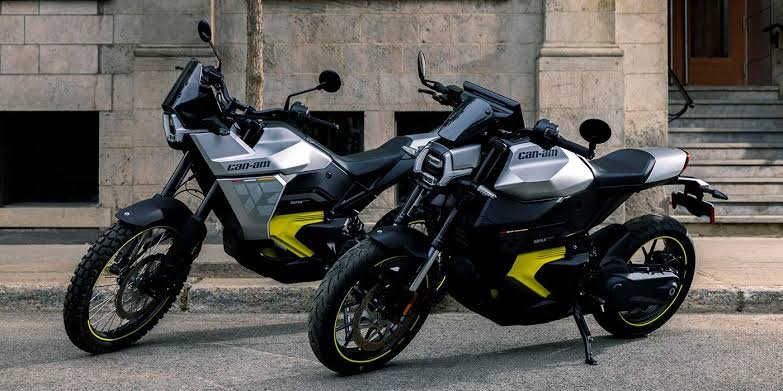
If you’re shopping for a “Can-Am motorcycle” expecting something that leans into corners like a Harley or a Honda, stop and reset your expectations. The current on-road lineup is almost entirely three-wheelers: the Ryker, the Spyder, and the newer Canyon. Two wheels touch the ground on the Pulse and Origin electric models, but everything else in Can-Am’s on-road catalog has three.
That’s not a knock on the bikes. The Spyder platform has sold well for almost two decades and has a loyal following among riders who want stability without giving up open-air riding. Some owners come from two-wheeled bikes and switch over after a knee injury, a balance concern, or simply wanting something different for long-distance touring. Others have never ridden a traditional motorcycle at all and start on a Ryker specifically because it doesn’t require the same low-speed balance skills.
But if your search brought you here looking for a two-wheeled cruiser or sportbike wearing the Can-Am badge, the closest thing currently in production is the Pulse (naked commuter) or Origin (adventure-styled), and both are electric-only, with no gas-powered two-wheeled Can-Am currently in production.
Where the Can-Am Name Came From
Can-Am traces back to Bombardier, the Quebec company Joseph-Armand Bombardier founded in 1942 to build snowmobiles (BRP, Wikipedia 2026). Three decades later, in 1972, Bombardier launched Can-Am as a motocross and enduro brand, pairing in-house frame design with Rotax engines, another Bombardier subsidiary. Engineers Gary Robison, Bob Fisher, and Camille Picard worked alongside former 500cc motocross world champion Jeff Smith to design a race-ready platform built around a single frame that could accept engines of different displacements, from 125cc up to 800cc (Wikipedia, 2026).
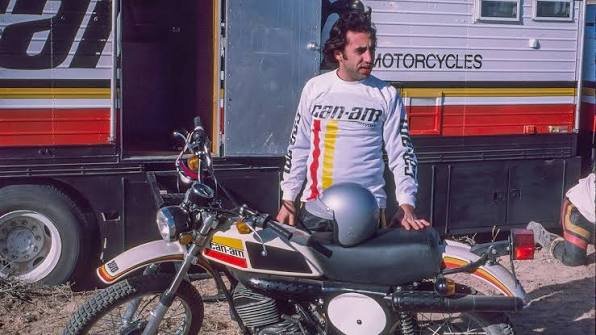
The early bikes won races almost immediately. Riders on Can-Am machines swept the AMA 250cc motocross national championship in 1974 with Gary Jones, and the brand built a reputation for punchy, high-revving two-strokes with rotary-valve induction, an unusual engineering choice for the era (Wikipedia, 2026). Skip Olson also finished second in the 1976 AMA Enduro national championship on a Can-Am, cementing the brand’s off-road racing credibility.
That momentum didn’t survive the decade. The 1973 oil crisis hurt recreational vehicle sales across the board, and Bombardier shifted its investment toward transit and aircraft manufacturing instead of keeping pace with rapid Japanese motocross development through the late 1970s and early 1980s.
By 1983, Bombardier had licensed the Can-Am name to Armstrong-CCM in England to keep the bikes in production without Bombardier’s direct involvement in day-to-day development. 1987 was the final model year. For the next two decades, there were no Can-Am-branded motorcycles of any kind.
How the Brand Came Back as a Three-Wheeler Maker
BRP revived Can-Am in 2006, first for a line of ATVs, and then in 2007 for the Spyder, a three-wheeled roadster with two wheels up front and one in back. The first production Spyder was delivered to Jay Leno, and the platform expanded steadily: the RT touring version in 2009, the ST in 2012, and the F3 in 2014.
In 2019, BRP added the Ryker as a lighter, cheaper entry point into the three-wheel lineup, and in 2025 introduced the Canyon, an adventure-oriented three-wheeler built for gravel and unpaved roads. Then, in a genuine surprise for long-time Can-Am watchers, BRP announced two electric two-wheeled motorcycles in March 2022: the Pulse (naked commuter) and Origin (adventure bike), which reached production in 2024 for the 2025 model year (Wikipedia, 2026). That marked the first two-wheeled Can-Am motorcycles since 1987, 35 years after the brand left the category.
What’s in the 2026 Lineup and What It Costs
Here’s the current on-road catalog, with approximate 2026 US MSRP before destination and setup fees.
| Model | Wheels | Engine | Approx. 2026 MSRP |
|---|---|---|---|
| Ryker (600) | 3 | Rotax 600 ACE, 2-cyl | $9,699+ |
| Ryker Rally | 3 | Rotax 900 ACE, 3-cyl | $14,999 |
| Spyder F3-S | 3 | Rotax 1330 ACE, 3-cyl | $22,299+ |
| Spyder F3 Limited | 3 | Rotax 1330 ACE, 3-cyl | $28,099+ |
| Spyder RT | 3 | Rotax 1330 ACE, 3-cyl | $26,799+ |
| Spyder RT Sea-to-Sky | 3 | Rotax 1330 ACE, 3-cyl | $33,999 |
| Canyon XT | 3 | Rotax 1330 ACE, 3-cyl | $29,999 |
| Origin | 2 (electric) | Rotax E-Power | ~$11,499 |
| Pulse | 2 (electric) | Rotax E-Power | ~$10,999 |
Prices vary by dealer, color package, and accessories (Central Florida PowerSports, 2026; Motorcycle.com, 2026; Rider Magazine, 2025). Treat these as starting points for budgeting, not a quote.
Do You Need a Motorcycle License for a Spyder or Ryker?
Yes, in most states. Even though the Spyder and Ryker have three wheels and no clutch to manage on base models, they’re legally classified as motorcycles in the majority of US states, which means you’ll need a standard motorcycle endorsement (M-class) on your license. A handful of states issue a separate three-wheel or “autocycle” endorsement instead, and a few allow operation on a regular driver’s license. Check with your state DMV before you buy, since the classification affects licensing, insurance, and in some cases helmet law.
What Ownership Actually Costs Beyond the Sticker Price
The purchase price is just the start. Spyder and Ryker models use a Rotax engine paired with either a belt final drive (Ryker) or a driveshaft (Spyder), which cuts down on the chain maintenance a two-wheeled rider is used to but doesn’t eliminate service costs. Expect regular oil and filter changes on the intervals BRP specifies for your model, plus coolant service since every current gas-powered Spyder and Ryker engine is liquid-cooled.
Brake pads and tires wear differently than on a two-wheeled bike. These are heavier vehicles carrying more weight per wheel, and you’re maintaining three tires instead of two, plus a front differential and CVT belt on the Ryker that a traditional motorcycle simply doesn’t have. None of this is expensive to check, but it adds line items to a service bill that a Honda or Yamaha owner wouldn’t see.
Insurance is worth budgeting for separately, since three-wheelers are sometimes underwritten more like a motorcycle and sometimes more like a light trike depending on the carrier, and rates vary by state and rider history. Because the drivetrain, electronics, and stability-control systems are more complex than a basic cruiser, independent shops that service Spyders and Rykers are far less common than general motorcycle shops. Factor in dealer labor rates, or travel time to a BRP-authorized shop, for anything beyond basic maintenance like tire changes and fluid swaps.
Who a Can-Am Three-Wheeler Actually Makes Sense For
The Ryker suits new riders or anyone nervous about balancing a traditional bike at a stop light, since it can’t tip over at rest the way a two-wheeler can. Its lower seat height and simplified controls also make it a common recommendation for riders returning to the road after time away, or for riders whose knees or hips make a standard motorcycle uncomfortable.
The Spyder RT and Canyon target touring riders who want storage and wind protection without giving up open-air riding, and both carry enough cargo capacity for real road trips rather than weekend errands. The F3 leans toward riders who want a muscular, cruiser-style stance with three-wheel stability and don’t mind trading some of that touring comfort for a sportier look and riding position.
None of these are a substitute for a traditional motorcycle if what you actually want is the lean-and-balance feel of two wheels. For that, look at the Pulse or Origin if you’re set on staying within the Can-Am brand, or shop another manufacturer’s two-wheeled lineup entirely.
Frequently Asked Questions
Does Can-Am still make traditional two-wheeled motorcycles?
Yes, but only two current models: the electric Pulse and Origin, both launched for the 2025 model year. Everything else in Can-Am’s on-road lineup, including the Spyder, Ryker, and Canyon, has three wheels.
When did Can-Am stop making motorcycles the first time?
1987 was the final model year of the original Can-Am motocross and enduro line. Bombardier had licensed production to Armstrong-CCM in England in 1983, and the arrangement ended a few years later, leaving Can-Am out of the motorcycle business for nearly two decades.
Who owns Can-Am now?
Can-Am is a brand of BRP (Bombardier Recreational Products), a company that was spun off from Bombardier Inc. in 2003 and is now owned by a group including Bain Capital and the Bombardier family (BRP, Wikipedia 2026).
Is a Can-Am Spyder or Ryker legally a motorcycle?
In most US states, yes. Even with three wheels, the Spyder and Ryker are classified as motorcycles for licensing purposes, so you’ll typically need a motorcycle endorsement to ride one on public roads. A few states have separate three-wheel or autocycle classifications, so check your state’s DMV rules before buying.
What’s the cheapest way into Can-Am ownership?
The base Ryker with the smaller Rotax 600 ACE engine starts around $9,699 for 2026, making it the most affordable entry point into the current lineup (Central Florida PowerSports, 2026).