CFMOTO Motorcycles Years to Avoid
TL;DR
- Avoid CFMOTO motorcycles built before 2016 – ECU failures, fuel pump relay faults, and internal tank rust are the most commonly reported problems on early production units.
- The 2016–2017 model years are borderline: better than earlier bikes, but still carry wiring harness and high-beam switch vulnerabilities that were only resolved on later builds.
- CFMoto’s joint venture with KTM formalized in 2017 and became operational at scale by 2018–2019, and that production shift marks the clearest quality dividing line in the brand’s history.
- 2018 and newer CFMoto motorcycles are generally reliable, though minor oil filter seepage and scattered sensor faults still appear across all models.
- If you’re buying used, 2020 and newer is the sweet spot: post-KTM-JV production, Bosch fuel injection, stainless brake lines, and a more mature electrical architecture.
Why the Model Year Question Actually Matters for CFMoto
CFMoto isn’t Honda or Yamaha. The brand doesn’t have four decades of incremental refinement in North American markets behind it. It’s a Chinese manufacturer founded in 1989 that entered the US market in the early 2000s, and its quality has changed significantly across different production eras – more so than most brands at this price point.
That makes the model year question more important for CFMoto than it is for most motorcycles. Buying a used 2013 CFMoto 650NK is a different ownership experience than buying a 2021 650NK, even though both bikes share the same basic platform. The gap in build quality, electrical architecture, and parts support is wide enough to matter.
Here’s how the brand breaks down by era, and which years are worth skipping.
CFMOTO Model Year Reliability by Era
| Era | Model Years | Risk Level | Primary Issues |
|---|---|---|---|
| Early production | 2012–2015 | High | ECU failure, fuel pump relay faults, internal tank rust, no-spark electrical cascades |
| Transition period | 2016–2017 | Moderate | High-beam switch water ingress, instrument cluster errors, parasitic battery drain |
| Post-KTM JV launch | 2018–2019 | Low–Moderate | First-year production variability, minor sensor faults, oil filter seepage |
| Current production | 2020–present | Low | Oil filter seepage on 450SS, sporadic EFI fault codes, parts availability delays |
Pre-2016 CFMoto Motorcycles: The Years to Avoid
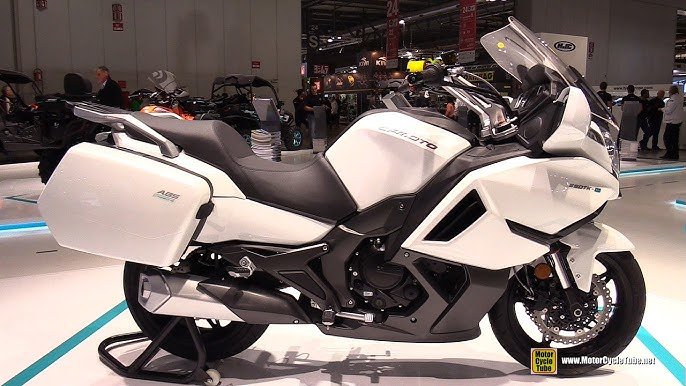
Skip anything built before 2016 unless you’re confident in your diagnostic skills. The 2012–2015 model years, particularly the 650NK and 650MT, drew a consistent pattern of problems in owner forums and technical threads that goes beyond normal break-in quirks.
The most serious recurring issue was ECU failure. A 2013 650NK owner on ProductReview.com.au documented a bike with fewer than 9,500 km that suffered a dead neutral light, no speedometer, and misfiring – all traced to a failed ECU confirmed by swapping a unit from another bike. The repair ran roughly $800 AUD out of warranty. Other 2013–2014 owners on the same forum reported identical symptoms, which points to a batch-level problem rather than random bad luck.
Fuel pump relay failures were common enough that troubleshooting guides specifically flag 2014 and 2015 models for relay and wiring harness connector faults (JustAnswer Motorcycle, 2024). When the pump doesn’t prime at key-on, it’s rarely the pump itself – it’s the relay, a corroded connector, or a harness that wasn’t sealed adequately from the factory.
Pre-2016 650TR models also surfaced reports of throttle position sensor failures and, on some builds, internal fuel tank rust. The TPS fault shows up as an injector warning light under hard acceleration, which looks like a fueling issue until you rule everything else out.
The underlying engine – a parallel-twin built using tooling sold to CFMoto by Kawasaki from its first-generation ER6N program – is mechanically solid. The problems on early bikes weren’t in the bottom end. They were in the electronics, the wiring, and the ancillary components that CFMoto sourced and assembled before its quality controls matured.
2016–2017: Better, But Still Watchful Years
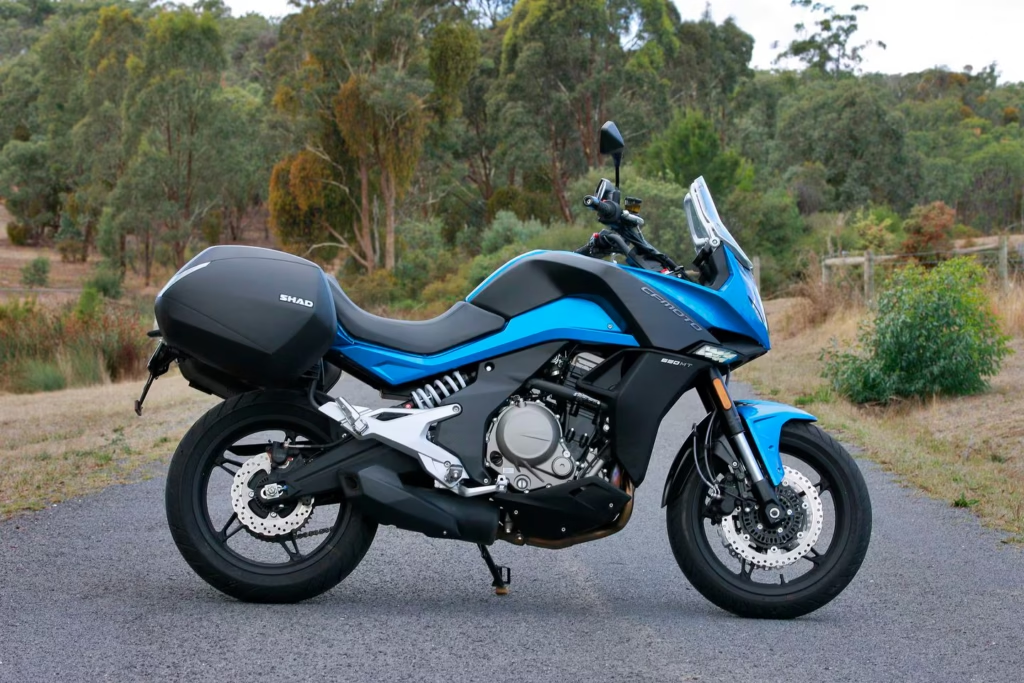
The 2016 and 2017 model years improved meaningfully over earlier builds, but they didn’t completely clear the electrical issues. The most documented problem on these bikes is water ingress into the left-handlebar high-beam pass switch, which causes the high beam to lock on in heavy rain. A forum user on Whirlpool with a 2015 NKs reported this was corrected on 2016 and newer models in some markets – but not uniformly, and not without a hardware fix (swapping in the ER6N handlebar control unit resolves it cleanly).
Instrument clusters on 2016–2017 bikes were improved but still occasionally flagged false error codes. Owners on ProductReview.com.au describe EFI warning lights appearing without a traceable root cause, requiring dealer diagnostic tools to clear. It’s more an annoyance than a failure mode, but it’s not the kind of thing you want chasing you down the highway.
Parasitic battery drain was another reported nuisance on 2016–2017 bikes. A small constant draw from the ECU and instrument electronics is normal on EFI motorcycles, but some owners saw drain rates high enough to kill a battery after a week of non-use. A quality smart charger like a CTEK or Battery Tender connected during storage periods mostly solves this, but the fact that it’s necessary at all says something about the electrical spec.
One legitimate positive from this era: if you find a well-maintained 2016 or 2017 650NK or 650MT at the right price, the engine itself is proven and parts for the Kawasaki-derived drivetrain are findable if you know what you’re cross-referencing.
2018–2019: The KTM Partnership Takes Effect
CFMoto and KTM formalized their joint venture in March 2018, and the new production facility in Hangzhou began scaling output under the partnership’s quality protocols (Cycle News, 2018). The bikes built from 2018 onward show a clear improvement in assembly consistency, connector quality, and materials across the range.
That said, 2018 and 2019 were still early years for the new production ramp. Some first-year variability shows in owner reports. The 650NK received Bosch fuel injection and better wiring harness routing, but scattered sensor fault codes – particularly oxygen sensor errors P0130 and P0136 – continued to appear on bikes that hadn’t been ridden in extended periods. These are usually storage-related, not a defect in the bike itself, but they’re worth knowing about when evaluating a used unit.
Overall, 2018 and 2019 are acceptable years to buy. Just give any used example a thorough pre-purchase inspection: check for previous ECU pulls or sensor replacements, confirm the oil filter shows no signs of seepage at the base, and verify the cooling fan activates at temperature.
2020 and Newer: What to Expect from Current-Production CFMoto
The 2020 and newer bikes – including the 650NK Gen 2, 450SS, 700CL-X, and 800MT – represent CFMoto’s strongest production quality to date. The partnership with KTM was fully operational, and models like the 800MT run a KTM-derived 799cc parallel-twin that carries serious engineering credibility.
The most documented ongoing issue across the current lineup is oil filter seepage on the 450SS. Multiple owners on Reddit’s r/CFMoto report a factory oil filter that doesn’t seal reliably under heat cycling. Swapping in a K&N filter resolves it permanently (Jalopnik, 2025). It’s a five-minute fix, but it’s the kind of thing that should never leave the factory in the first place.
Minor electrical fault codes – particularly sporadic EFI alerts on bikes with extended storage periods – still appear across the range. These almost always clear once the bike is ridden and the battery is fully charged. They’re not structural faults.
The bigger practical concern on any CFMoto, regardless of year, is parts availability. CFMoto’s US dealer network is thin compared to the Japanese brands. If your nearest authorized dealer is 200 miles away, a warranty repair or parts wait becomes a real logistics problem (SlashGear, 2025). Factor that into your decision before you buy.
What to Check Before Buying Any Used CFMoto
Before signing anything on a used CFMoto, run through this list:
- Battery and charging voltage: With the engine running at 3,000 RPM, the charging voltage should read between 13.8V and 14.5V. Anything outside that range points to a stator or regulator-rectifier fault.
- ECU fault codes: Ask the seller to connect a diagnostic tool or have a dealer pull codes before purchase. Pre-2018 bikes especially should be checked for stored faults.
- Oil filter area: Look underneath the engine at the oil filter base. Any staining or wet residue means the filter is seeping and needs replacement.
- Cooling fan: Let the bike idle until the temperature climbs. The cooling fan should activate before any warning light comes on. A fan that doesn’t spin points to a faulty temperature sensor or fan relay – cheap to fix, but good leverage on price.
- Fuel pump prime: Turn the ignition key to “on” without cranking. You should hear the fuel pump prime for one to two seconds. Silence means a relay or pump issue.
- Service history: CFMoto oil change intervals are 3,000–5,000 miles depending on model. A bike without any service records is a gamble regardless of year.
Frequently Asked Questions About CFMOTO Reliability by Year
What year CFMoto motorcycles should I avoid?
Avoid any CFMoto motorcycle built before 2016. The 2012–2015 models, particularly the 650NK and 650MT, have the most documented problems: ECU failures, fuel pump relay faults, throttle position sensor failures, and in some cases internal fuel tank rust. These aren’t minor quirks – they’re failure modes that can leave you stranded. The 2016–2017 years are an improvement, but still carry residual electrical issues that make 2018 and newer the safer choice.
Are 2018 and newer CFMoto motorcycles reliable?
Yes, generally. The 2018 model year coincides with CFMoto’s KTM joint venture going into full production, which brought meaningfully better quality control, improved connector spec, and Bosch fuel injection across the range. Owner reports from 2018 onward are far more positive than earlier years, with most complaints limited to minor oil filter seepage and occasional sensor fault codes rather than chronic electrical failures.
What are the most common problems on the CFMoto 450SS?
The most commonly reported issue on the 450SS is oil filter seepage at the base of the filter (r/CFMoto, 2024). The factory-spec filter doesn’t always seat reliably through heat cycling. Replacing it with a K&N filter solves the problem. Beyond that, the 450SS has a strong owner satisfaction record – many owners report thousands of miles without any mechanical issues.
Is a used CFMoto 650NK worth buying?
It depends entirely on the year. A 2013–2015 650NK is a risky buy unless the price reflects the electrical history and you have the skills to troubleshoot ECU and fuel system faults. A 2018 or newer 650NK is a different proposition: the Kawasaki-derived engine is proven and durable, and post-KTM production quality has addressed most of the chronic issues. Get the service records, pull fault codes before purchase, and check the oil filter area.
How does the CFMoto dealer network affect ownership?
This is the part that doesn’t show up in spec sheets. CFMoto’s US dealer network is significantly smaller than Honda, Yamaha, or Kawasaki. Parts orders can take weeks. If you need a specific sensor or harness component under warranty, you may be waiting for it to ship internationally. Riders in major metro areas with a nearby authorized dealer have a much easier ownership experience than rural buyers. Check cfmotousa.com for the nearest dealer before you commit.