Triumph Motorcycles Years to Avoid
TL;DR
- Avoid the 2001-2006 Bonneville if you want a carbureted bike without chronic oil seepage and crankcase breathing issues on the earliest units.
- The 2006-2009 Daytona 675, Street Triple, and Street Triple R are subject to a confirmed NHTSA recall (Campaign ID 12V445000) for regulator/rectifier overheating in 10,366 units — verify any used example has had the Shindengen swap done.
- Early-production 2011-2012 Tiger 800 and 800XC carried a documented ECU software fault that caused engine stalling during deceleration; affected bikes needed a dealer flash.
- The 2019-2020 Speed Twin has two recalls on record: a coolant leak and a gear shift lever linkage separation fault.
- For the most reliable used Triumph, target post-2018 Bonneville T100 or Street Twin, or a post-2013 Tiger 800 with documented service history.
Which Triumph Years Have the Most Documented Problems?
The short answer: first-model-year bikes, early-EFI transitions, and any model in the 2006-2012 window that hasn’t had its electrical charging system inspected. Triumph isn’t a particularly unreliable brand — the triples and the parallel twins both have long-mileage track records — but certain model years landed with specific, repeatable faults that owners and dealers dealt with in volume.
The table below maps the highest-risk model year windows by platform, based on NHTSA recall data and owner-reported issues from TriumphRat.net and similar forums.
| Platform | Years to Be Cautious About | Primary Issue |
|---|---|---|
| Bonneville (790cc carb) | 2001-2006 | Early crankcase breathing faults, oil seepage |
| Daytona 675 / Street Triple | 2006-2009 | Regulator/rectifier overheating recall (10,366 units) |
| Tiger 800 / 800XC | 2011-2012 | ECU stall-on-deceleration recall; centrestand spring failure |
| Bonneville T120 | 2016-2019 | Gearshift selector failure (downshift loss) |
| Speed Twin | 2019-2020 | Coolant leak recall + gear shift linkage separation recall |
Bonneville 2001-2006: The 790cc Carb Era Has Known Quirks
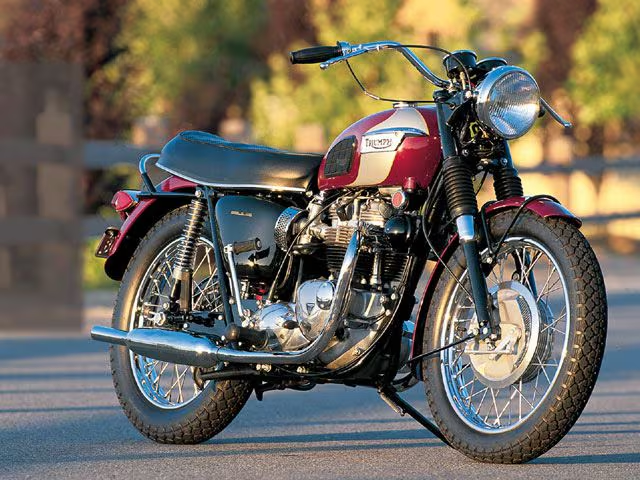
The original modern Bonneville is a genuinely charming motorcycle, but the earliest units — especially anything built from 2001 through early 2002 — came with a few issues that are worth knowing before you hand over cash.
The first-year bikes had a clutch chatter fault that prompted a recall, along with crankcase breather problems that Triumph addressed in later production runs. Oil weeping around the cylinder head and primary cover is also more common on the 790cc motor than on the 865cc engine that arrived in 2007 (or late 2006 on some T100 models). The crankcase boss on early units was lighter than it needed to be; later runs strengthened it.
That 790cc-to-865cc jump also matters because it brought a redesigned primary cover and breather system. If you need a replacement primary cover on a 790cc bike, sourcing options are thinner than on the far more common 865cc platform. It’s not a dealbreaker, but on a carbureted vintage-style twin, you want the better-resourced engine.
The practical advice: skip the 2001-2002 units unless you know the clutch and crankcase recalls were completed. The 2006-2007 790cc or early 865cc carb bikes are generally considered the sweet spot of the carbureted generation — the crankcase issues were corrected and the bike hadn’t yet picked up some of the later cost-cutting detail changes (plastic badges, electronic clock).
Daytona 675 and Street Triple 2006-2009: Verify the Regulator/Rectifier Before You Buy
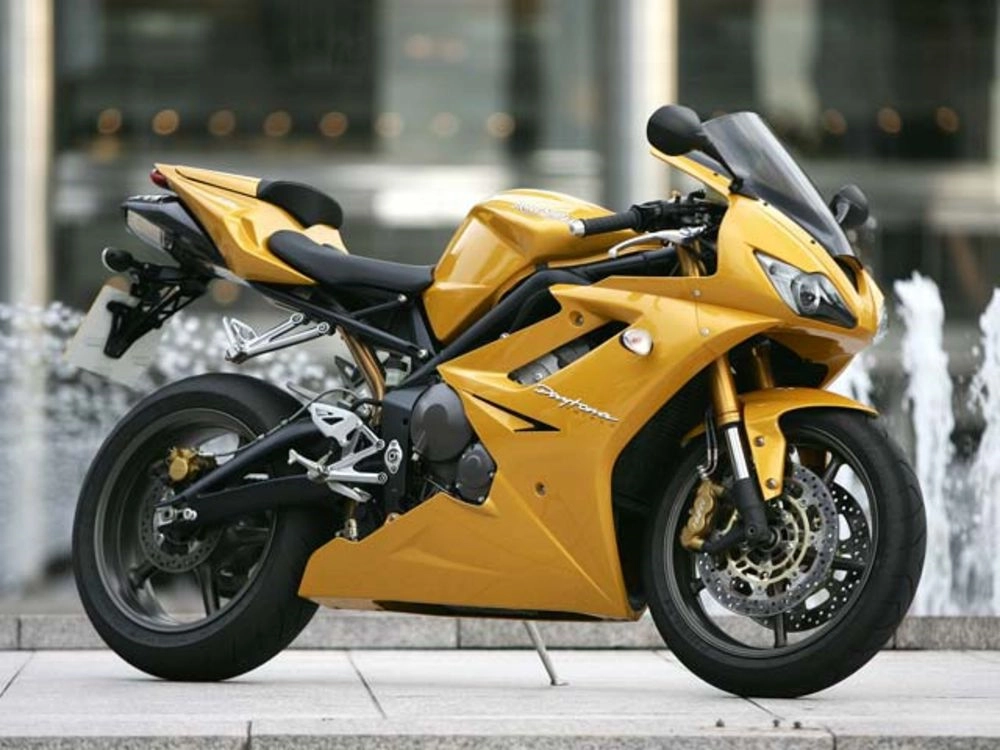
This is the biggest and most clearly documented Triumph reliability story of the modern era. Triumph recalled 10,366 units of the 2006-2009 Daytona 675, Street Triple, and Street Triple R for a faulty Kokusan regulator/rectifier that would overheat, kill the charging system, and eventually strand the rider (NHTSA Campaign ID 12V445000, Motorcycle.com, 2012).
The factory Kokusan unit ran too hot. Once it overheated, it stopped converting the stator’s alternating current into usable DC power, the battery drained, and the bike stalled — sometimes in traffic. Triumph’s fix was to replace every Kokusan unit with a Shindengen MOSFET-based regulator/rectifier, which handles heat far better. The recall repair was done free of charge at dealerships.
The problem for used buyers is that this recall dragged on for years, and not every eligible bike made it to the dealer. Symptoms to look for on any unrepaired example include dimming or flickering headlights, power dips under load, a battery that won’t hold a full charge, and high beams that stop working normally. If you’re eyeing a 2006-2009 Street Triple or Daytona 675, pull the VIN and run it through safercar.gov before agreeing on a price — if the recall is open, that’s a negotiating point or a reason to walk.
The Street Triple itself is an excellent motorcycle. Post-2009 examples with the Shindengen unit are far less likely to strand you; any pre-2010 bike just needs a documented rectifier swap before you trust it on a long run.
Tiger 800 and 800XC 2011-2012: Software Bugs and a Centrestand Spring That Liked to Quit
The Tiger 800 was Triumph’s answer to the adventure-touring market and became one of its most popular modern models. First-year production — September 2010 through June 2011 — ran into an ECU software fault that caused the 800cc triple to stall unexpectedly during deceleration. Triumph recalled 1,485 US units (NHTSA Campaign ID 11V434000) and had dealers flash updated engine management software to the ECU. The fix was straightforward, but an unfixed first-year Tiger 800 will occasionally cut out when you roll off the throttle in traffic, which is exactly where you don’t want to be surprised.
The same early-production window also generated a centrestand spring recall. The optional centrestand’s return spring had a failure rate high enough that Triumph replaced them and added tougher rubber feet to the stand to prevent swingarm contact. A separate recall also covered the 2012-2013 Tiger 800 (and several other models) for turn signal stems prone to fracturing due to a manufacturing defect.
By 2013-2014 the major early-production issues were resolved, and the Tiger 800 platform settled into a reputation as one of the more dependable adventure middleweights on the used market. The engine — a 799cc inline triple — is genuinely long-lived when the chain, valve clearances (12,000-mile intervals), and coolant are kept in order.
T120 and Speed Twin 2016-2020: Gearbox and Shifter Problems on the Water-Cooled Bonneville
When Triumph relaunched the Bonneville family with water-cooled, high-water-mark parallel twins in 2016, it was a significant engineering step up. The new motors made more power, ran cleaner, and added modern features like traction control and ride-by-wire. But the early production run brought real-world problems.
The T120 developed a documented gearshift selector fault — specifically, the downshift function would intermittently fail, leaving the rider stuck in a higher gear. Multiple TriumphRat.net members reported the issue recurring across replacement cycles, with some 2020 T120 owners logging the fault at under 2,000 miles. Triumph issued a technical service document covering the shifter mechanism components. Forum reports suggest the 2022-onward production run has been more consistent.
The 2019-2020 Speed Twin carries two formal recalls: one for a coolant leak, and a second (NHTSA Campaign ID 20V014000, Triumph recall SRAN 569) for a gear shift lever linkage that could separate from its ball joint due to a contaminated thread locking compound used at the factory. Lose that connection and you lose the ability to shift gears at all. The fix — dealers applied a new thread locking compound at no charge — is simple, but any 2019-2020 Speed Twin that hasn’t had its VIN checked should be treated as unrepaired until verified.
Which Triumph Years Are the Safest to Buy Used?
The most reliable used Triumphs by platform are the bikes that had enough production time for Triumph to sort the early issues and for owners to log serious mileage without drama.
- Bonneville T100 and Street Twin (2018 onward): Improved gasket materials, stable EFI mapping, and post-recall electrical systems. These routinely cross 50,000 miles without major mechanical work (CarInterior/Alibaba Buying Guides, 2026).
- Tiger 800 (2013-2018): Post-recall ECU, settled suspension setup, and the proven 799cc triple. Any example with documented valve service history is a solid buy.
- Street Triple (2010 onward): Once the Shindengen rectifier was standard fitment, the charging system issues went away. The 675 triple is one of the best motorcycle engines made in the last 20 years for rideability and longevity.
- Tiger 900 (2019 onward): No major recall history through 2024 and strong owner satisfaction in the adventure category.
Frequently Asked Questions About Triumph Motorcycles Years to Avoid
What are the Triumph years to avoid if I want a used bike under $6,000?
In the under-$6,000 used range, the biggest risks are 2006-2009 Street Triples and Daytona 675s with unverified recall status. Any of those bikes with an unswapped Kokusan regulator/rectifier can strand you without warning. Also avoid 2001-2002 Bonnevilles if you’re not prepared to check the clutch and crankcase recall history. For that budget, a 2013-2015 Tiger 800 or a 2010-2013 Street Triple with documented service history is a smarter pick.
Is the Triumph Bonneville T120 reliable?
The T120 is generally well-regarded for engine longevity, but the 2016-2019 models have a documented gearshift selector problem — the downshift can fail intermittently and recur even after repair. The 2020 and later models saw improvements to the shifter mechanism. If you’re buying a 2016-2019 T120, ask specifically about the gear selector history and whether any warranty work was done on the shifter components.
Does the 2019-2020 Speed Twin have serious problems?
Two recalls, yes. The first was a coolant leak, the second a gear shift lever linkage separation (NHTSA 20V014000). Both are simple dealer fixes done free of charge, but neither has automatic verification — you need to check the VIN. A 2021 or later Speed Twin received the Marzocchi USD fork upgrade, Brembo front brakes, and doesn’t carry either of those recall issues.
Which Triumph triple-cylinder engine years are most reliable?
The Triumph 675 triple (2006-2015) and 765 triple (2017 onward) are both long-lived engines with documented high-mileage reliability — multiple forum members report 50,000 to 70,000 miles on lightly modified bikes. The main caveat on the 675 triple in 2006-2009 trim is the regulator/rectifier recall; the engine itself isn’t the problem. Post-recall examples are among the most dependable sport naked motorcycles in their class.
What should I check before buying any used Triumph?
Run the VIN at safercar.gov to check for open recalls before anything else. Then inspect the regulator/rectifier fitment on any 2006-2009 675-platform bike (the Shindengen unit faces rearward with side-exit connectors; the old Kokusan unit faces inward). On a Bonneville-family bike, check for oil weeping around the cylinder head and primary cover. Ask for proof of valve clearance service — Triumph’s spec is every 12,000 miles and skipping it is the most common deferred maintenance on used examples.
Data sourced from NHTSA recall records, TriumphRat.net owner forums, Motorcycle.com (2011, 2012), Asphalt & Rubber (2012, 2020), and Bennetts BikeSocial used buying guides. Verify any open recall at safercar.gov using your specific VIN before purchase.