KTM Motorcycles Years to Avoid
TL;DR
- Avoid 2019–2021 KTM 790 Duke and 790/890 Adventure models — documented camshaft wear issues from insufficient oiling have cost owners thousands in repairs.
- The 2013–2016 first-generation 390 Duke had gearbox failures, oil leaks, electrical gremlins, and throttle response problems that KTM fixed in the 2017 redesign.
- KTM’s 2015–2018 1290 Super Duke R and Super Duke GT were subject to a brake master cylinder piston recall affecting safety-critical hardware.
- The 2024–2025 390 Duke and 390 Adventure models were recalled for an ECU software defect causing engine stalling at low RPM (NHTSA campaign 25V825, covering 6,546 units).
- KTM entered bankruptcy protection in November 2024 — parts availability for older models remains a real concern for used buyers.
Why Model Year Matters More on a KTM Than Most Bikes
KTM’s reliability record is uneven across generations. The Austrian brand builds genuinely exciting motorcycles, and it won the Dakar Rally 18 consecutive years from 2001 through 2018 (KTM, 2020). But the production bikes that land in US dealer lots carry a different kind of track record — one that varies sharply by model year and generation.
Used KTM buyers who skip the homework often end up paying for camshafts, wiring harnesses, or gearboxes that failed predictably on specific year ranges. The guide below covers the worst offenders, the defects involved, and the years worth buying.
KTM Model Year Risk Summary
| Model | Years to Avoid | Primary Issue | Best Used Years |
|---|---|---|---|
| 790 Duke / 790 Adventure / 890 Adventure | 2019–2021 | Camshaft wear, brake line recall | 2022–2023 (updated head) |
| 390 Duke | 2013–2016 | Gearbox, oil leaks, throttle snatch | 2017–2023 |
| 390 Duke / 390 Adventure | 2024–2025 | ECU stalling recall (25V825) | 2023 and earlier |
| 1290 Super Duke R / Super Duke GT | 2015–2018 | Brake master cylinder recall | 2019–2023 |
| 690 Duke / 690 Enduro R | 2019 | Sprocket bolt and slave cylinder recall | 2016–2018, 2020+ |
790 Duke and 790/890 Adventure: Avoid 2019–2021
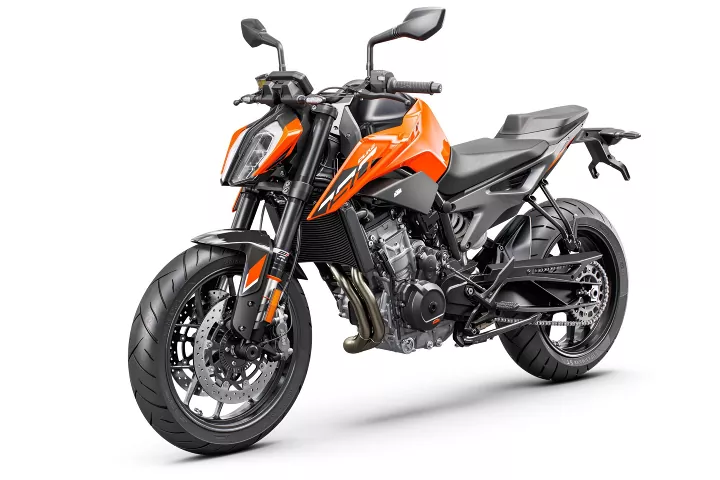
The 790 Duke, 790 Adventure, and 790 Adventure R from model years 2019 through 2021 carry the most documented reliability problems of any modern KTM street bike. The LC8c parallel-twin developed a well-known camshaft wear problem: intake cam lobes wore abnormally fast — some showing damage that looked like 200,000 miles of use at under 20,000 km — attributed to insufficient oiling at the camshaft (RevZilla, 2024; MCN, 2024).
By the time riders hear the rattle, the lobes are already damaged. KTM acknowledged 29 failures in the UK alone from a production run of roughly 55,000 bikes globally (MCN, 2024) and handled repairs on a “goodwill” case-by-case basis — a policy that left many owners fighting for warranty coverage rather than getting a straightforward recall fix. Reports from 890 Adventure owners through 2022 describe the same symptoms, and an Austrian engineering firm published images in 2024 of a 2023 890 engine showing excessive cam lobe wear (MCN, 2024). KTM issued a revised cylinder head part number in 2024, but that does nothing for bikes already in circulation.
Separately, 2019 KTM 790 Adventure and 790 Adventure R models were recalled under NHTSA 20V-198: the rear brake hose could fail under extreme braking from overheating, leaving only the front brake operational.
Before buying a used 790 or 890, pay a shop to pull the valve cover and inspect the cam lobes. Replacement of the head, cams, and followers runs $2,000–$3,500 in parts and labor — more if metal debris made it into the bottom end.
390 Duke (2013–2016): The First-Gen Growing Pains
The original 390 Duke launched globally in 2013 and arrived in the US in 2015. It was a genuinely exciting small bike, but first-generation examples carry a list of known weaknesses that KTM addressed in the 2017 redesign.
The most expensive issue is gearbox failure. A number of owners reported the gearbox failing outright, and with replacement costs that could approach the bike’s resale value, it’s a deal-breaker on an older, high-mileage example (Bennetts BikeSocial, 2024). KTM updated the gearbox design for the second-generation model.
Other recurring problems on 2013–2016 bikes include oil leaks at the rocker cover, a snatchy throttle response at low RPM that comes from the fuel injection calibration rather than wear, hot-start difficulties, and electrical issues with sensors and solenoids. The OEM chain also wore unusually fast, though that’s more a parts-quality issue than a mechanical defect. The 2017 refresh addressed the gearbox, smoothed out the fueling, and improved overall fit and finish.
For US buyers, the practical 390 Duke shopping window starts at 2017 and runs through 2023 with confidence. The 2024 brought a new 399cc engine — and immediately a recall.
1290 Super Duke R and Super Duke GT (2015–2018): Brake Master Cylinder Recall
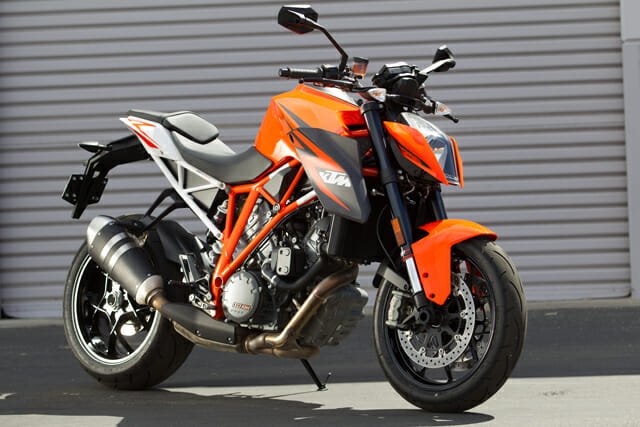
KTM issued NHTSA safety recall 18V033 covering 2015–2018 KTM 1290 Super Duke R and 2016–2018 KTM Super Duke GT motorcycles. The defect: the front brake master cylinder piston needed replacement due to a potential failure in safety-critical braking hardware.
On a bike producing 177 hp (claimed) with Brembo M50 calipers, any compromise to the front brake circuit is not a minor inconvenience. If you’re buying a used 1290 Super Duke R or GT from this era, verify the recall was completed through the dealer — a VIN check at NHTSA.gov will confirm it.
First-generation 1290 Super Duke R bikes from 2014–2016 also drew complaints about radiator seam splitting and base gasket oil leaks, though these are maintenance-manageable rather than catastrophic. The Gen 2 update in 2017 brought significant chassis and electronics improvements.
2024–2025 KTM 390 Platform: ECU Stalling Recall
KTM overhauled the 390 platform for 2024, bumping displacement to 399cc and raising horsepower to 45 hp with improved cooling and longer service intervals. The new engine is better in nearly every way — except that it launched with a software problem.
KTM North America filed NHTSA recall campaign 25V825 covering 6,546 motorcycles: 2024–2025 KTM 390 Duke, 2025 390 Adventure R, 2025 390 Adventure X, 2025 390 Enduro R, and 2025 390 SMC R, along with 2024 Husqvarna Vitpilen 401 and Svartpilen 401 (Rider Magazine, 2025). The ECU software defect causes the engine to stall at low RPM, particularly during deceleration. The fix is a complimentary ECU software update at any authorized KTM dealer — straightforward to resolve, but worth confirming before buying.
A separate e-throttle recall for 390 Adventure models built between late 2021 and early 2024 covered moisture intrusion into the throttle assembly causing sudden power loss. That recall replaced the physical throttle unit with a redesigned, better-sealed version (ADV Pulse, 2025).
The 2024 KTM Bankruptcy: What It Means for Parts and Dealer Support
This section matters for anyone buying any KTM — new or used — right now.
KTM’s parent company, Pierer Mobility AG, filed for restructuring under self-administration on November 29, 2024, with total debt of approximately €2.2–3 billion (Power Systems Research, 2025). The company halted production, laid off nearly 830 workers, and sat on an estimated 130,000–300,000 unsold bikes in warehouses globally.
Bajaj Auto stepped in as the primary rescue partner, and production partially restarted in March 2025. By mid-2026 KTM is operating under Bajaj leadership on a leaner footing, but supplier confidence remained fragile — vendors were demanding upfront payment before shipping components during the restructuring (ADV Pulse, 2025).
For used buyers, two concerns are practical. Parts availability for older models — especially anything pre-2018 — is less certain than it was two years ago. And the dealer network has contracted. Before buying, confirm your nearest authorized dealer is still operating. The 390-platform bikes built in India by Bajaj are less exposed to Austrian production disruptions than the 890, 1290, and off-road models assembled in Mattighofen.
The Best KTM Years to Buy
Once you clear the problem years, KTMs are rewarding bikes to own — provided you stay current on valve checks, use quality oil, and keep the chain tight.
390 Duke / RC 390 (2017–2023): The second-generation platform fixed the gearbox, smoothed the fueling, and added ABS as standard. Backed by Bajaj production, parts remain accessible. Avoid the 2024+ until the ECU recall is confirmed resolved on the specific VIN.
790 Duke (2022–2023): KTM revised the cylinder head part number in 2024, and 2022–2023 examples are reporting fewer cam complaints. Still get a pre-purchase valve inspection.
890 Adventure R (2021–2023): Same caveat as the 790 Duke — cam inspection before purchase is non-negotiable, but these are otherwise capable adventure bikes at reasonable used prices.
1290 Super Duke R Gen 2 and Gen 3 (2017–2023): After the brake recall resolution and the 2017 chassis refresh, the 1290 Super Duke R is a strong used buy. Verify the NHTSA 18V033 recall was completed on any 2015–2018 example. The Gen 3 (2019–2023) added Brembo Stylema brakes and improved WP suspension.
Frequently Asked Questions About KTM Years to Avoid
What is the most reliable KTM model to buy used?
The 390 Duke in model years 2017–2023 is the most reliable used KTM option for most riders. It’s produced in large volumes by Bajaj in India, parts are widely available, and the gearbox and fueling issues of the first-generation (2013–2016) bikes were corrected in the 2017 redesign. It’s not maintenance-free, but it’s the closest KTM gets to low-drama daily ownership.
Is the KTM 790 camshaft problem fixed on newer bikes?
KTM revised the cylinder head part number in 2024, which is widely believed to address the oiling insufficiency behind the cam wear. However, 2019–2021 bikes already in the used market still carry the original head design. If you’re buying a 790 or 890 from these years, budget for a cam inspection at the time of purchase — it’s a few hundred dollars versus a potential $2,000–$3,500 repair.
Does the KTM bankruptcy affect parts availability for my current bike?
It creates real uncertainty, particularly for pre-2018 Austrian-built models. Bajaj-produced bikes (390 platform) are less affected because that supply chain runs independently. For 690, 890, and 1290 owners, checking parts availability through your dealer before a service interval is a reasonable precaution. The restructuring under Bajaj is ongoing as of mid-2026.
Which KTM recalls should I check before buying a used bike?
Three are worth checking by VIN at NHTSA.gov before any used KTM purchase: NHTSA 18V033 (2015–2018 1290 Super Duke R/GT front brake master cylinder), NHTSA 20V-198 (2019–2020 790 Adventure rear brake hose), and NHTSA 25V825 (2024–2025 390 platform ECU stalling). All three are safety-related and should be confirmed completed before money changes hands.
Are KTMs reliable compared to Japanese bikes?
Maintained properly, modern KTMs can match Japanese bikes for total miles — but they demand more attention to get there. KTM recommends valve clearance checks every 9,400–15,000 miles depending on model, oil changes more frequently than most Japanese competitors specify, and the chain requires regular adjustment. Skip these intervals and reliability drops fast.