Honda CRF300L Rally Specs, Horsepower & Performance Review
TL;DR
- The 2026 CRF300L Rally runs a 286cc liquid-cooled single making 22.7 rear-wheel hp and 16.7 lb-ft of torque on an in-house dyno, well under Honda’s claimed 27 hp figure.
- Curb weight is 333 pounds with a full 3.4-gallon tank, and real-world top speed lands around 80 mph on pavement.
- Base MSRP for 2026 is $6,499, or $7,099 with Honda’s $600 destination charge.
- The 3.4-gallon tank is the largest in its class and delivers over 250 miles of range in Honda’s own testing.
- It’s built for new-to-intermediate riders who want a street-legal adventure bike that can handle a commute, a fire road, and a long weekend without punishing your wallet or your wrists.
What’s the Real Horsepower on the CRF300L Rally?
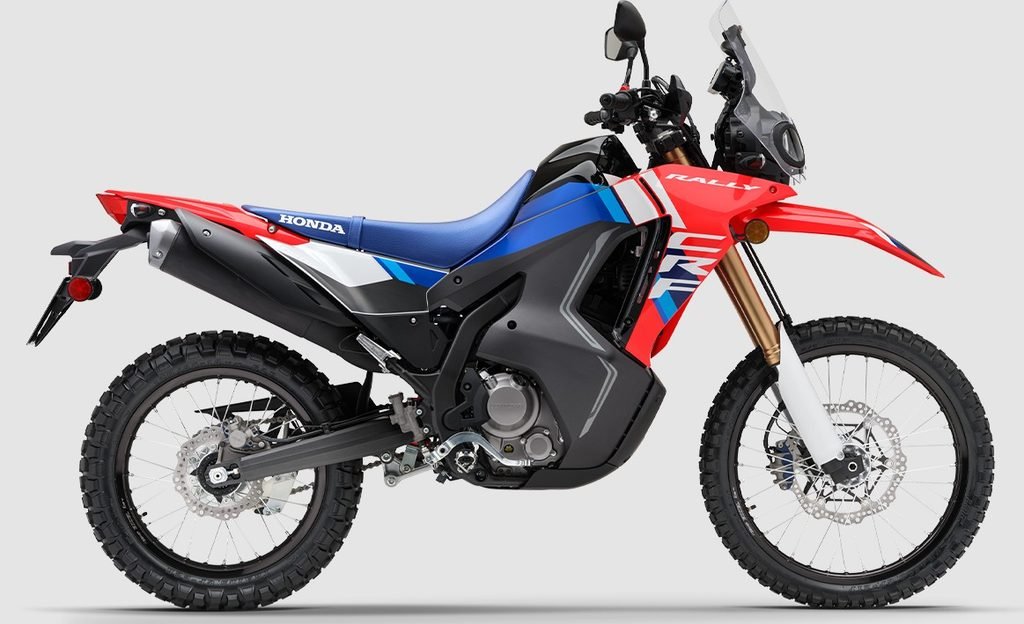
Honda claims 27 horsepower at 8,500 rpm for the CRF300L platform, but that number comes from the crank, not the rear wheel. When Dirt Rider ran the standard CRF300L (same 286cc engine as the Rally) on its in-house Dynojet 250i dynamometer, it recorded 22.7 hp at 8,500 rpm and 16.7 lb-ft of torque at 6,300 rpm (Dirt Rider, 2022).
That gap between claimed and rear-wheel output is normal. Drivetrain loss from the chain, sprockets, and clutch typically eats 10 to 15 percent of crank horsepower before it ever reaches the ground.
The 286cc DOHC four-valve single is bored and stroked at 76.0mm x 63.0mm with a 10.7:1 compression ratio, fed by a 38mm throttle body. That’s a mild compression ratio for a modern single, which is exactly the point. It runs happily on regular pump gas and doesn’t demand premium to avoid pinging.
Where this engine actually shines is down low. The bottom-end pull is noticeably stronger than the old CRF250L Rally it replaced, and you don’t have to wring the engine out to find usable power. That matters more than peak horsepower for a bike you’ll ride in first-gear technical sections one weekend and on the interstate on-ramp the next.
How Fast Is the CRF300L Rally? Top Speed and Acceleration
Real-world top speed on pavement sits around 80 mph, based on independent testing of the CRF300 platform (TopSpeed, 2022). That’s enough to keep pace with interstate traffic, though you’ll be running near the engine’s ceiling to get there, and a stiff headwind or a passenger on board will eat into that number fast.
Honda doesn’t publish factory 0-60 or quarter-mile figures for this bike, and no GPS-instrumented test data (the gold standard for acceleration numbers) currently exists for the Rally specifically.
The closest available figure comes from ProfessCars, a third-party estimation service that calculates acceleration from engine and chassis data rather than a physical test run. Their formula-derived estimate puts the CRF300 Rally at 7.5 seconds 0-60 mph and 16.3 seconds in the quarter mile (ProfessCars, via MotorBikeCatalog, 2021). Treat that as a ballpark, not a lab result.
For context, this isn’t a bike built to win stoplight drags. It’s a 333-pound machine with 22.7 rear-wheel horsepower, and the gearing favors low-speed control over top-end rush. Riders coming from a 600cc sportbike will find the pull leisurely; riders coming from a 125 will find it plenty.
What’s the Suspension and Handling Like?
The Rally runs a 43mm inverted Showa fork with 10.2 inches of travel up front and a Pro-Link single shock with matching 10.2 inches out back. Neither end is adjustable for compression or rebound, which keeps cost and complexity down but means the factory settings are what you get.
That soft, non-adjustable tune shows up in real-world reviews: bouncy, with noticeable fork dive under braking once the terrain gets rough. On graded dirt roads and pavement it’s plush and comfortable; push it hard over whoops or braking bumps and the limits show up quickly.
Ground clearance is 10.9 inches, and the bike rolls on a 21-inch front and 18-inch rear wheel, the standard dual-sport combination that opens up a wide range of tire choices, from street-biased rubber to full knobbies.
Braking comes from a single 296mm front disc with a twin-piston caliper and a 220mm rear disc, both with non-switchable ABS. The front brake draws praise as strong and progressive, which is part of why the soft fork feels even softer by comparison under hard braking.
How Far Will It Go on a Tank?
The 3.4-gallon tank is the largest in the CRF300 lineup and is built specifically for the Rally’s adventure-touring role. Honda’s own testing shows over 250 miles of range per tank.
Owner-logged data on Fuelly backs that up, with reported fuel economy commonly landing in the 65 to 90-plus mpg range depending on riding style and terrain mix (Fuelly, 2026).
That range comes from a combination of low weight, a small-displacement single, and fuel injection that keeps the mixture efficient across a wide rpm band. If you’re planning multi-day rides through areas with sparse gas stations, this tank size is one of the CRF300L Rally’s genuine advantages over lighter-tanked competitors in the same class.
2026 Honda CRF300L Rally Spec Sheet
| Spec | Value |
|---|---|
| Engine | 286cc liquid-cooled single, DOHC, 4-valve |
| Bore x Stroke | 76.0mm x 63.0mm |
| Compression Ratio | 10.7:1 |
| Claimed Horsepower | 27 hp @ 8,500 rpm (Honda claim) |
| Dyno-Tested Horsepower | 22.7 hp @ 8,500 rpm (rear wheel) |
| Dyno-Tested Torque | 16.7 lb-ft @ 6,300 rpm (rear wheel) |
| Transmission | 6-speed manual |
| Front Suspension | 43mm inverted Showa fork, 10.2 in. travel |
| Rear Suspension | Pro-Link single shock, 10.2 in. travel |
| Front / Rear Brake | 296mm disc / 220mm disc, ABS |
| Seat Height | 35.2 in. |
| Ground Clearance | 10.9 in. |
| Curb Weight | 333 lbs |
| Fuel Capacity | 3.4 gal |
| 2026 Base MSRP | $6,499 ($7,099 with destination) |
Source: Honda Powersports, 2026
Who Should Actually Buy This Bike?
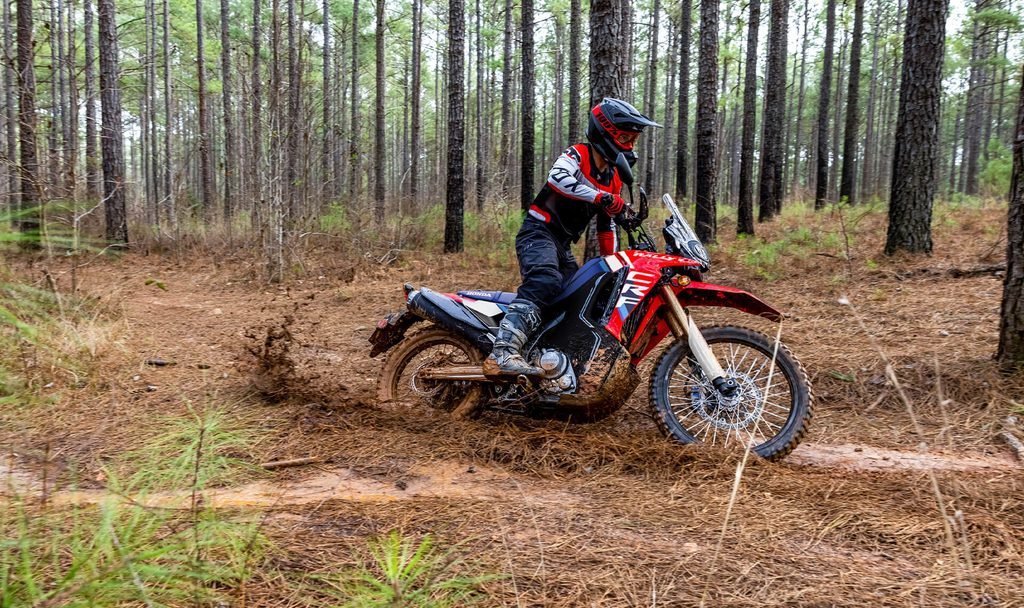
The CRF300L Rally is built for riders who want one motorcycle that does commuting, light off-road exploring, and the occasional multi-day trip without specializing hard in any one of those.
New riders benefit from the light clutch pull, manageable weight, and forgiving power delivery. Commuters get real fuel economy and a seat that isn’t a torture device on pavement. Weekend adventure riders get the tank range and wind protection the standard CRF300L doesn’t offer.
Where it falls short: experienced off-road riders will outgrow the suspension and power quickly, and anyone planning serious highway mileage will find the 80 mph ceiling limiting on faster interstates. This is a bike built for versatility at a low price point, not a specialist tool for any single job.
Frequently Asked Questions
How much horsepower does the Honda CRF300L Rally have?
Honda claims 27 horsepower at the crank. Independent dyno testing on the same 286cc engine measured 22.7 hp at the rear wheel, which is the more realistic number for real-world performance.
What is the top speed of the CRF300L Rally?
Real-world testing puts top speed around 80 mph on paved roads. You’ll be running near redline to hold that speed, so it’s not a comfortable cruising number for extended highway stretches.
How much does the 2026 Honda CRF300L Rally cost?
Base MSRP is $6,499, and with Honda’s standard $600 destination charge, total MSRP comes to $7,099. Actual out-the-door price will vary by dealer and state fees.
What’s the difference between the CRF300L and the CRF300L Rally?
Both share the same 286cc engine, frame, and suspension. The Rally adds a larger 3.4-gallon fuel tank (versus a smaller tank on the standard model), a windscreen, extended bodywork, and dual headlights, at a higher price and a heavier curb weight.
Is the CRF300L Rally good for a beginner rider?
Yes. The light clutch pull, manageable 333-pound weight, and predictable low-end power delivery make it approachable for new riders, though the suspension and power will feel limiting once you build real skill and want to ride faster or rougher terrain.
How much range does the CRF300L Rally get on a full tank?
Honda’s own testing shows over 250 miles per tank, and owner-reported data shows real-world fuel economy commonly in the 65 to 90-plus mpg range depending on riding conditions.