Honda Motorcycles Years to Avoid
TL;DR
- The 2002-2005 Honda VFR800 VTEC has a well-documented jerky VTEC engagement issue that Honda did not fix until the 2006 model year.
- Avoid the 2001-2004 GL1800 Gold Wing: Honda issued a safety recall for frame cracking at the lower cross member welds on those specific VINs.
- The 2008 CBR1000RR was recalled for a coolant hose clamp that could break at high RPM, spraying hot coolant onto the rider’s leg.
- The 2021 CBR1000RR-R Fireblade SP was recalled for an exhaust overheating issue that could melt the oil cooler pipe.
- Most Honda motorcycle problems are model-specific and generation-specific — the brand as a whole is among the most reliable in the industry.
Honda Motorcycles Years to Avoid: What the Data Actually Shows
Honda has one of the strongest reliability records in motorcycling. But “Honda is reliable” does not mean every model year of every motorcycle is equal. Some generations launched with real engineering problems — cracking frames, charging systems that cook themselves, VTEC calibration that made highway riding annoying, and cooling defects that triggered federal recalls. If you’re shopping used, knowing which specific years to skip will save you money and headaches.
This guide covers the models where year selection genuinely matters, based on NHTSA recall records, owner forum data, and published buying guides from Bennetts BikeSocial and MCN.
Quick Reference: Honda Years to Avoid by Model
| Model | Years to Avoid | Primary Issue |
|---|---|---|
| VFR800 Interceptor | 2002-2005 | Jerky VTEC engagement, wiring harness faults |
| GL1800 Gold Wing | 2001-2004 | Frame cracking at lower cross member welds |
| CBR1000RR (Fireblade) | 2008 | Coolant hose clamp recall (NHTSA R08) |
| CBR1000RR-R Fireblade SP | 2021 | Exhaust overheating, oil cooler pipe rupture |
| CBR600RR | 2003-2006 | Stator and regulator/rectifier burnout |
| Africa Twin CRF1000L | 2016-2017 | Rusty spokes, switch cluster faults |
| Shadow VT750 | Pre-2004 | Stator failure, charging system issues |
VFR800 Interceptor 2002-2005: The VTEC Hiccup That Took Four Years to Fix
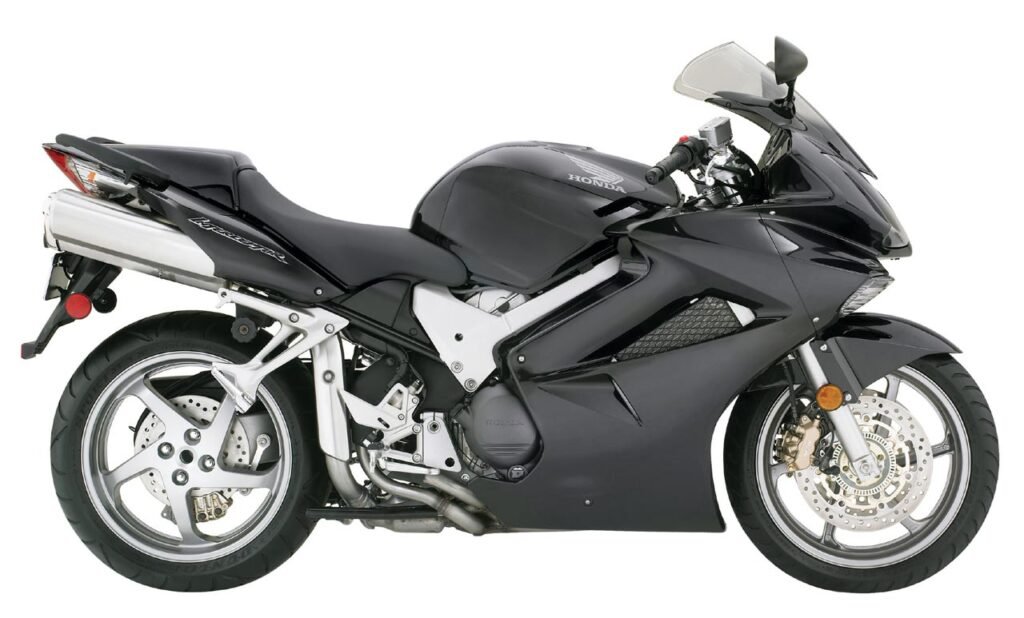
The 2002-2005 Honda VFR800 is the most widely flagged “year to avoid” Honda in the sport-touring segment. The VTEC variable valve system engaged at 6,800 RPM with a pronounced jerk that disrupted smooth throttle response, especially on the highway. Riders holding steady speed in fifth or sixth gear hit the VTEC transition like a mild punch from the engine — fine on a track, irritating in traffic (MCN, 2001).
Honda also issued recalls for 2002-2006 VFR800s: a seat rail that could crack under heavy loads (February 2004) and brake fluid leaks from the proportional control valve on CBS-equipped bikes (July 2005), per Honda UK recall records.
The fix arrived with the 2006 model year. Honda re-mapped the ECU to engage VTEC at 6,400 RPM and added logic that reads throttle position and gear to vary the transition character (Visordown, 2006). The result was dramatically smoother. Buy 2006 or later if you want this bike — you can tell them apart by the clear turn signal lenses; the 2002-2005 bikes have orange ones.
GL1800 Gold Wing 2001-2004: The Frame Crack Recall
The 2001-2004 GL1800 Gold Wing introduced a new aluminum frame — and it had a weld defect at the lower cross member that could crack under load. American Honda issued a safety recall covering 2002-2003 GL1800 and GL1800A motorcycles in a specific VIN range, with the fix being additional TIG welding at the lower cross arm-to-side rail junction, done free at dealerships (NHTSA, 2003). Honda marked repaired bikes with a round punch stamp on the VIN plate.
A separate brake recall hit a much broader range — model years 2001-2010 and 2012-2015 — for a rear brake master cylinder defect that could cause brake drag, heat buildup, and fire risk (NHTSA, 2015). Both recalls are free dealer repairs, but on older units you need to verify the work was actually completed. Pull the VIN on nhtsa.gov before signing anything.
The 2005-and-later GL1800 used a corrected frame design. For a used GL1800, the 2005-2010 range is the sweet spot: frame fixed, US production, and the major early-generation bugs resolved.
CBR1000RR 2008: The Coolant Hose Clamp Recall
The 2008 Honda CBR1000RR carries a specific NHTSA safety recall (R08) covering 12,894 units. The coolant hose clamp on the water pump cover could break under high-RPM vibration fatigue. When it failed, hot coolant could spray directly onto the rider’s left lower leg. Honda’s fix was a new clamp design installed free at dealerships, with the recall expected to begin by June 2009 (NHTSA, 2009).
If you’re buying a 2008 CBR1000RR, verify the recall was completed — it’s a free VIN lookup at nhtsa.gov. Most 2008 units have had this fixed by now, but a bike that sat in a collection or passed through multiple owners without a service record is worth double-checking. Beyond the recall, the 2008 CBR1000RR is a solid machine. It’s the recall itself that flags the year, not any systemic engine weakness.
The 2021 CBR1000RR-R Fireblade SP landed a different recall: the exhaust pipe could overheat when following a vehicle closely or riding in first gear above 5,000 RPM for extended periods, generating enough radiated heat to melt and rupture the oil cooler pipe (NHTSA, 2022). Honda’s fix was a new oil cooler pipe plus a heat guard between pipe and exhaust, installed free of charge. Dealers began the repair in mid-2022, and the heat guard became standard in new production from March 2022 onward.
CBR600RR Early Generation: Stator and Charging System Failures
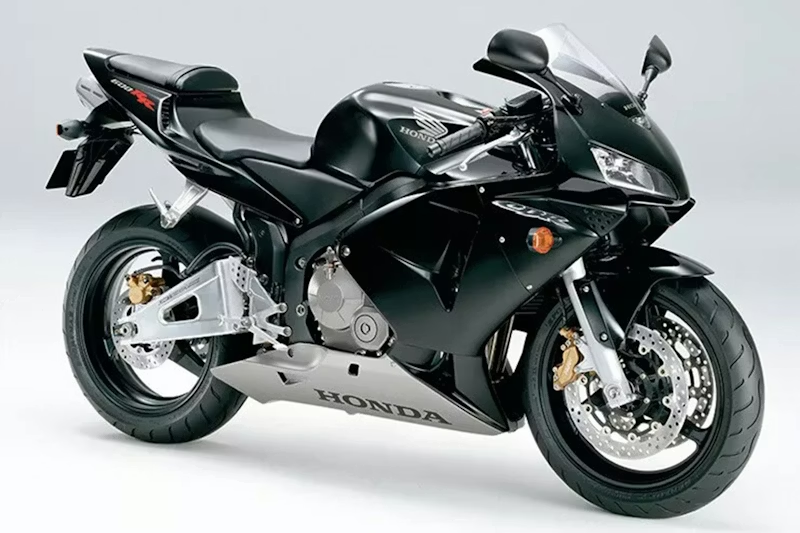
The first-generation CBR600RR (2003-2006) had a stator and regulator/rectifier problem that showed up across several Honda models of that era. The charging components ran hot, and the stock regulator/rectifier design burned out prematurely. Forum threads on 600rr.net document fuel pump relay issues on 2003-2004 bikes as well — intermittent no-prime on startup traced to a failing relay.
The cam chain tensioner (CCT) on these early bikes also wore faster than expected at high RPM. On 2003-2006 models with track miles, a cold-start rattle above 6,000 RPM warrants inspection before purchase.
The practical fix: swap the stock regulator/rectifier for a MOSFET-type unit, which runs cooler and charges more efficiently. The 2007 and later CBR600RR received charging system updates. Note that Honda issued a late 2024 fuel pump recall covering certain 2007, 2009-2017 CBR600RR units for defective impeller molding — check your VIN at nhtsa.gov regardless of year.
Africa Twin CRF1000L 2016-2017: Spoke Rust and Switch Clusters
The 2016-2017 Honda CRF1000L Africa Twin has two documented problems. First, the spoked wheels corrode quickly — the spokes on first-gen bikes discolor and rust noticeably faster than the rest of the motorcycle, even with anti-rust treatment. It’s a cosmetic issue but a persistent one that bothers owners who paid adventure-bike money for it (Bennetts BikeSocial, 2026).
Second, some 2016 models had faulty handlebar switch clusters that triggered DCT fault codes and headlight failures. Replacing the cluster resolved both. Fork seal premature failure was also reported on some 2016 units.
The 2018+ CRF1000L addressed the spoke issue and brought updated electronics. If you want a first-gen Africa Twin, a 2017 standard model with verified service history is the safer buy over a 2016.
Honda Shadow VT750 Pre-2004: Stator Failures
The Shadow VT750 built before 2004 had a recurring stator failure problem. The stock stator ran hot, the original regulator/rectifier design compounded it, and the result was charging system failures. Symptoms: a new battery that keeps dying, voltage below 12V at idle, intermittent starting issues.
The fix the Shadow community uses: a MOSFET-type regulator/rectifier ($110-$140 from ElectroSport or Rick’s Motorsport Electrical) paired with a replacement stator. Pre-2011 Shadows also use carbureted engines, so any used example that sat a season needs a carburetor clean before reliable starting returns (Motor & Wheels, 2024).
Honda Motorcycle Years Worth Buying: A Quick Reference
| Model | Sweet Spot Years | Reason |
|---|---|---|
| VFR800 Interceptor | 2006-2009 | Smooth VTEC mapping, ABS standard, wiring fixes |
| GL1800 Gold Wing | 2005-2010 | Corrected frame, US production, refined package |
| CBR1000RR | 2009-2016 | Post-recall, fuel-injected, stable generation |
| CBR600RR | 2007-2012 | Updated charging system, refined power delivery |
| Africa Twin CRF1000L | 2018-2019 | Updated electronics, Adventure Sports option |
| Shadow VT750 | 2011-2013 | Fuel injection replaces carbs, charging issues resolved |
Frequently Asked Questions About Honda Motorcycle Years to Avoid
Which Honda motorcycle model years have the most recalls?
The GL1800 Gold Wing has the broadest recall history by volume. The 2001-2004 models had a frame cracking recall, and a separate brake master cylinder recall covered 2001-2010 and 2012-2015 GL1800s for rear brake drag that could cause overheating and fire risk (NHTSA, 2015). The CBR1000RR and CBR600RR both appear in a 2024-2025 expanded fuel pump recall covering defective impeller molding across 2008-2017 and 2021 units.
Is the Honda VFR800 VTEC reliable after 2006?
Yes. The post-2006 VFR800 VTEC is one of the most reliable sport-tourers on the used market. The ECU re-map fixed the abrupt VTEC transition, Honda updated the wiring to address charging system faults, and the engine itself — when maintained with proper valve checks at 16,000 miles — routinely reaches very high mileage without major failures. Buy a 2006+ with a full service record and you’re getting one of the better used bikes in the segment.
Are early GL1800 Gold Wings safe to buy now?
A 2001-2004 GL1800 that has been through the NHTSA frame recall repair is considered structurally sound. Honda marked repaired bikes with a punch stamp on the VIN plate. Before buying any 2001-2004 Gold Wing, run the VIN at nhtsa.gov to confirm whether the recall was completed. For the rear brake master cylinder recall (which covers a much wider year range), the same VIN check applies. Buying from a dealer who can verify recall completion is the lowest-risk path.
What is the most reliable Honda motorcycle to buy used?
The Honda CB series — CB500F, CB500X, and CB650F in particular — consistently shows up among the cleanest used buys. These are fuel-injected, parallel-twin bikes with simple maintenance requirements, no VTEC complexity, and strong owner satisfaction across model years. The CB500X from 2016 onward is especially well-regarded as a low-drama, low-maintenance machine. For a bigger bike, the 2005-2010 GL1800 or a 2007+ CBR600RR are both strong choices.
Did Honda fix the CBR600RR oil starvation issue?
Honda issued a recall in late 2025 covering certain CBR600RR models for a cylinder bore manufacturing defect that could cause excessive oil consumption and risk of connecting rod bearing seizure from oil starvation (RideApart, 2026). Owner notification began in February 2026, with a second notice about the repair remedy expected around July 2026. Honda’s number for this recall is KT5. Affected owners should contact Honda customer service at 1-866-784-1870 or check nhtsa.gov using their VIN.