Yamaha Motorcycles Years to Avoid
TL;DR
- The 2015 YZF-R1 had a factory-defective second gear sprocket that could seize the transmission and lock the rear wheel — Yamaha issued a “no riding” ban and full recall (NHTSA 15V802000).
- The 2014-2015 FZ-09 and 2015-2017 FZ-09/FJ-09 both hit the NHTSA recall list for wiring and handlebar holder defects; unaddressed units are still out there.
- First-generation YZF-R6 models (1999-2003) had known gearbox roughness; the 2006 R6 had a documented oil starvation issue at idle.
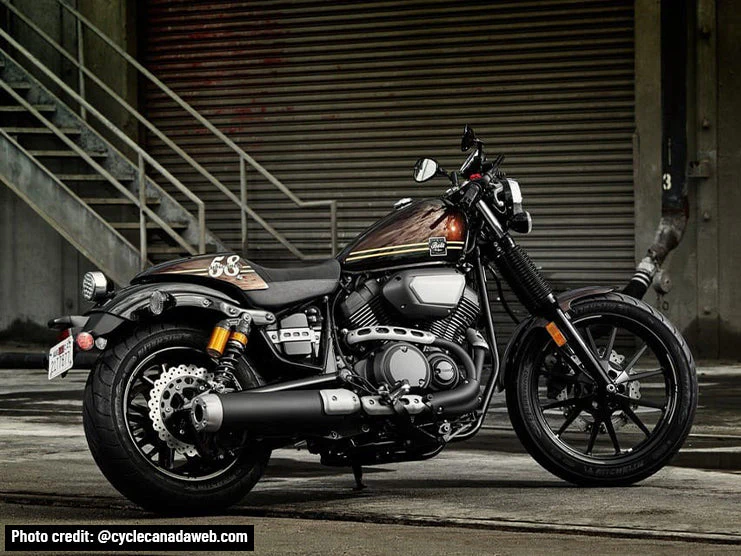
- The V-Star 650 and 1100 are generally solid — no widespread model-year disasters — but carburetor health, final drive spline grease, and cam chain tensioner condition matter more than year.
- For every model here, run a free VIN check at NHTSA.gov before buying any used Yamaha.
Why “Years to Avoid” Is a Different Question for Yamaha
Yamaha has one of the stronger long-term reliability records in the US motorcycle market. Most of its popular models — the MT-07, V-Star 650, R6 from 2008 onward — don’t have dramatic model-year disasters. The real “years to avoid” list for Yamaha is short, but the entries on it are serious.
There are two kinds of problems worth tracking: official NHTSA recalls (safety-critical, factory defects Yamaha itself acknowledged) and widely documented pattern failures specific to certain production years. This guide covers both. Every model-specific year mentioned below is tied to a named recall number, official reporting, or named publication documentation — not forum speculation.
| Model | Avoid These Years | Primary Issue |
|---|---|---|
| YZF-R1 | 2015 | Transmission seizure recall (NHTSA 15V802000) |
| YZF-R6 | 1999-2003, 2006-2007 | Gearbox roughness; oil starvation at idle |
| FZ-09 / MT-09 | 2014, 2015-2017 (unrecalled) | Headlight harness; handlebar holder recall |
| MT-07 / FZ-07 | 2014 (early), 2018 | Battery terminal fire risk; chain guard recall |
| V-Star 650 | None specific — inspect any year | Final drive splines, cam chain tensioner |
2015 YZF-R1: The One Year You Flat-Out Skip
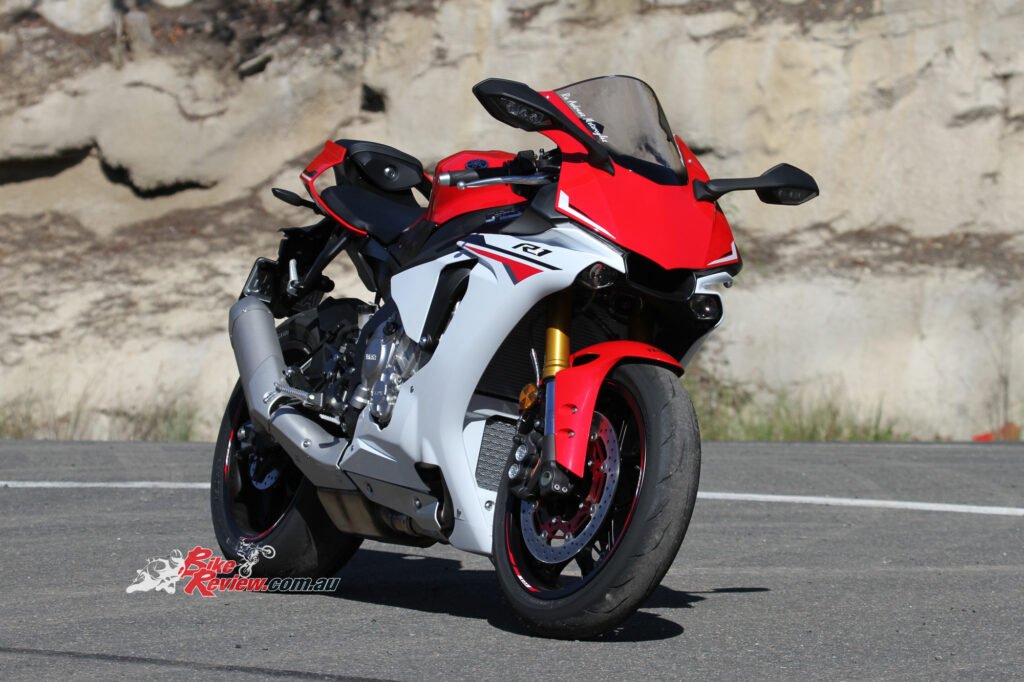
The 2015 R1 is the clearest avoid on this list. Yamaha recalled every single 2015 YZF-R1, YZF-R1C, YZF-R1M, and YZF-R1MC unit sold in the United States under NHTSA campaign 15V802000, affecting 2,921 bikes (Autoevolution, 2015). The defect: a second gear sprocket manufactured to the wrong specification that could bend and break under load, taking out third and fourth gear sprockets with it. If that happened, the transmission could seize and lock the rear wheel mid-ride. Yamaha issued a “no riding” ban — dealers couldn’t sell unrepaired units and owners were told to park it until the gearbox assembly was replaced.
The 2016 R1 received the corrected transmission from the factory. If you’re looking at a 2015 R1, confirm the gearbox repair was done: pull the VIN through NHTSA.gov and ask for the dealer repair invoice. No paperwork, no deal.
There was also a separate rear shock absorber recall the same year (NHTSA 15V546000) for a piston rod nut that could loosen and degrade handling. Two major safety recalls in a single model year on a brand-new platform says everything.
YZF-R6 1999-2003 and 2006-2007: Gearbox Feel and an Oiling Problem
The R6 is a long-lived model that got meaningfully better over its run. The 1999-2003 first-generation bikes had a known gearbox quirk: rough, notchy shifts from first to second were a common complaint. It wasn’t a catastrophic failure mode, but it points to a transmission that was already showing wear patterns on bikes with any real mileage. On a used example, you’ll feel it immediately on a test ride. If first-to-second is grinding or clunking, don’t assume it’s just a cold-gearbox thing — it’s likely wear that won’t improve.
The 2006 R6 had a more concerning issue. That model year had a documented oil starvation problem at idle, which could allow bearing surfaces to run with insufficient lubrication during low-RPM operation. Cycle World and multiple owner communities documented this in the 2006-2007 generation, and it wasn’t present once the 2008 redesign arrived (Cycle World, 2015). The stator and regulator-rectifier are also worth inspecting on any R6 from the early-2000s range — the charging system wiring between stator and voltage regulator was prone to melting or corroding on first-generation bikes, leaving you stranded when the battery stopped topping off.
The 2008-2016 R6 is the sweet spot for used buyers. The engine was refreshed, the oiling issue was resolved, and parts are cheap and widely available. Buy in that window, check second-gear engagement on a hard pull during the test ride, and inspect the fork seals — R6s get wheelied, and a blown seal is a sign the bike lived hard.
FZ-09 / MT-09 2014 and 2015-2017: Two Separate Recalls, Same Generation
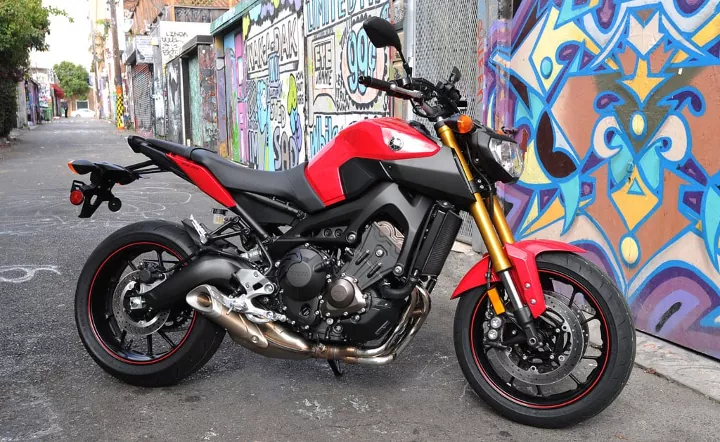
The FZ-09 arrived in 2014 and immediately went on the NHTSA recall list. The 2014 model had a headlight wiring harness too short for full handlebar lock. At full left or right turn, the harness could break or disconnect the headlight coupler, killing the headlight and reducing visibility (Cycle World, 2014; NHTSA campaign 14V550000). Yamaha’s fix was a sub-harness extension installed free at dealers.
That wasn’t the end of it. A second, larger recall followed in 2017 — this one covering 22,433 bikes across the 2015-2017 FZ-09, FJ-09, and XSR900 (NHTSA campaign 17V221000). A painting defect on the lower handlebar holder, combined with insufficient thread-locking compound, allowed the handlebar to loosen and potentially separate from the crown (Motorcyclist, 2017). Yamaha told owners to stop riding unrepaired bikes and dealers replaced the lower handlebar holder free of charge.
These recalls were addressed. The concern for used buyers is unverified repair history. Pull the VIN at NHTSA.gov and specifically check campaigns 14V550000 and 17V221000. A 2015-2017 FZ-09 that went through a dealer during that period should have the fix on record. One that went private-owner only for years might not.
Beyond the recalls, first-generation FZ-09 bikes (2014-2016) are known for an aggressive, snappy fuel map at partial throttle. RevZilla documented this in 2015, noting the stock fueling was “jerky” in city traffic and that Yamaha did release updated maps closer to the FJ-09 tune. If a 2014-2016 FZ-09 you’re considering still has the factory ECU and no flash, expect that behavior until you address it with a reflash or ECU tune.
MT-07 / FZ-07 2014 and 2018: Minor but Real Recalls
The MT-07 (sold as FZ-07 in the US through 2017) is one of the more reliable bikes in Yamaha’s modern lineup. It doesn’t have a catastrophic year like the 2015 R1. But two production years have documented recalls worth checking.
The 2014 US-market FZ-07 had early reports of battery terminal issues — specifically the positive lead being too short and rubbing under the seat, creating a fire risk from contact. Yamaha addressed this through the dealer network. The 2018 MT-07 had a separate, smaller recall (NHTSA 18V483000): chain guard mounting bolts that could loosen from vibration, allowing the guard to contact and break against the drive chain and fall onto the road (NHTSA, 2018). Yamaha replaced both bolts free of charge on 3,493 units.
Neither of these is a reason to avoid the MT-07 as a category — it’s a well-sorted platform. But if you’re buying a 2014 FZ-07 or 2018 MT-07, run the VIN and confirm these were handled. The 2015-2017 and 2019-onward MT-07 models are clean on the recall list and have a strong track record in the used market.
V-Star 650: No Disaster Years, But Know What to Inspect
The V-Star 650 (XVS650) ran from 1998 to the early 2010s and doesn’t have a specific model year that stands out as a lemon. It’s a carburetor-fed V-twin with shaft drive, and its recurring issues are maintenance-driven rather than factory defects tied to a production year.
The items that matter on any used V-Star 650, regardless of year: the final drive splines weren’t greased adequately from the factory and dry out over time. If previous owners didn’t regrease them during tire changes, the splines can strip — a repair that can run $700-$1,000 for a new final drive unit (BikerGuides, 2025). The cam chain tensioner can allow slack that causes hard starts and timing irregularities. And the dual Mikuni carburetors need to be clean and synchronized — a bike that sat over a winter without fuel stabilizer will have gummed jets.
Ask the seller when the carbs were last cleaned and whether the final drive splines have been serviced. A pre-purchase inspection by a mechanic who knows these bikes is worth more than the cost on a V-Star purchase.
What Makes a Yamaha Year Worth Buying
The years worth targeting on each model follow a pattern: second or third year of a generation, after factory issues are ironed out, before the bike has accumulated enough mileage to start wearing down consumables. For the R1, that’s 2016-2018 on the current-generation cross-plane engine. For the R6, 2008-2016. For the MT-09, 2017 onward for a cleaner recall history. For the MT-07, 2015-2017 and 2019 onward.
Yamaha tends to address problems through dealer updates rather than ignoring them, which means a recalled bike that went through a dealership is often fine. The risk is the private-sale bike with no service history. Run every VIN through NHTSA.gov. It takes two minutes and costs nothing.
Frequently Asked Questions About Yamaha Years to Avoid
What is the worst Yamaha motorcycle year to avoid?
The 2015 YZF-R1 is the clearest answer. Yamaha recalled every US-market unit due to a defective second gear sprocket that could seize the transmission and lock the rear wheel (NHTSA campaign 15V802000). Yamaha itself told owners to stop riding the bike until the repair was completed.
Is the Yamaha FZ-09 reliable overall despite the recalls?
Yes — once the two known recalls (headlight harness on 2014 units and handlebar holder on 2015-2017 units) were corrected at dealers, the FZ-09 and MT-09 platform is considered reliable. Check the VIN at NHTSA.gov to confirm both campaigns were closed on any specific bike before buying.
Are early Yamaha R6 models (1999-2003) worth buying used?
They’re usable but require thorough pre-purchase inspection. The gearbox is notchy on many first-gen bikes, and the charging system wiring is a known wear item. The 2008-2016 R6 is a much stronger used buy for the money.
Does the Yamaha MT-07 have serious reliability problems?
No. The MT-07 is one of the more reliable platforms in Yamaha’s modern lineup. The 2014 and 2018 model years have minor recalls on record, both corrected through dealers, but neither is an ongoing mechanical problem. Verify the VIN on those two years and you’re in good shape.
What should I always check when buying a used Yamaha?
Run the VIN through NHTSA.gov first — it’s free and takes two minutes. Then check service records for oil change intervals, valve clearance history (especially on R1 and R6 models), carburetor condition on older carb-fed bikes like the V-Star, and fork seal condition on any sport bike. Ask specifically whether any open recalls were completed.