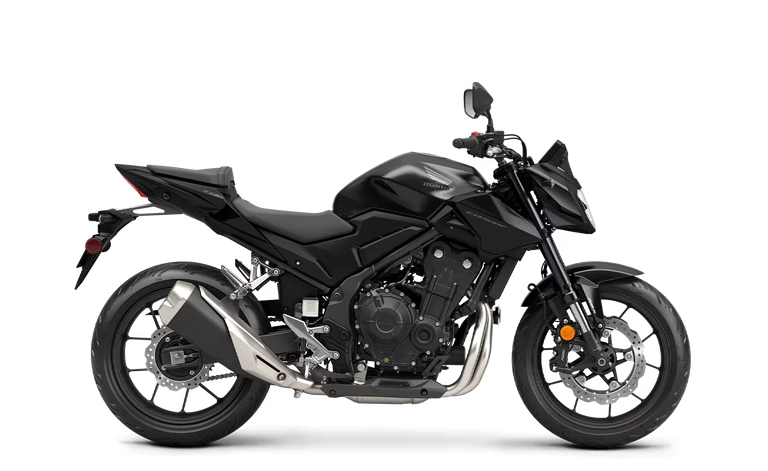
Honda Rebel 1100T Top Speed, 0-60 Time & Specs Review
TL;DR
- The Rebel 1100T’s 1084cc parallel-twin dyno’d at 78.9 hp and 66.0 lb-ft of torque on a Dynojet run.
- No independent GPS-instrumented top speed or 0-60 test exists for the 1100T as of this writing; published figures range from roughly 113 mph to 128 mph and 3.4 to 4.2 seconds depending on the source, and none of those sources have published their test method.
- Curb weight is 520 pounds with a full tank, seat height is 27.5 inches, and the manual starts at $10,799 MSRP before the $775 destination charge.
- The 1100T shares its engine and chassis with the standard Rebel 1100, adding a batwing fairing and 35 liters of lockable, color-matched hard saddlebags.
- It’s available with a six-speed manual or Honda’s DCT automatic, and both trims use the same 1084cc engine tuned for low-rpm torque rather than outright top-end speed.
Honda built the Rebel 1100T for riders who want cruiser looks with real touring range, not a bagger chasing a top-speed number. That shows up in how the bike is tuned: peak torque arrives at under 5,000 rpm, and the fairing and saddlebags add drag and weight that work against a fast top end.
If you’re cross-shopping this against a Sportster S or Indian Scout, the horsepower and torque figures below come from an actual dyno. The top speed and 0-60 numbers you’ll see floating around the internet don’t have that same backing, and you deserve to know that going in.
Honda Rebel 1100T Specs at a Glance
| Spec | Rebel 1100T (Manual) |
|---|---|
| Engine | 1084cc liquid-cooled parallel-twin, Unicam SOHC |
| Horsepower | 78.9 hp @ 7,220 rpm (dyno-tested) |
| Torque | 66.0 lb-ft @ 4,940 rpm (dyno-tested) |
| Transmission | 6-speed manual (DCT automatic optional) |
| Curb weight | 520 lbs |
| Seat height | 27.5 in |
| Fuel capacity | 3.6 gal |
| Front suspension | 43mm fork, 5.5 in travel |
| Brakes | Single 330mm front disc (radial 4-piston caliper), 256mm rear disc, ABS |
| MSRP | $10,799 (manual) / $11,499 (DCT), before $775 destination |
Source: Honda Powersports, 2025; Cycle World, 2025
How Much Horsepower Does the Rebel 1100T Make?
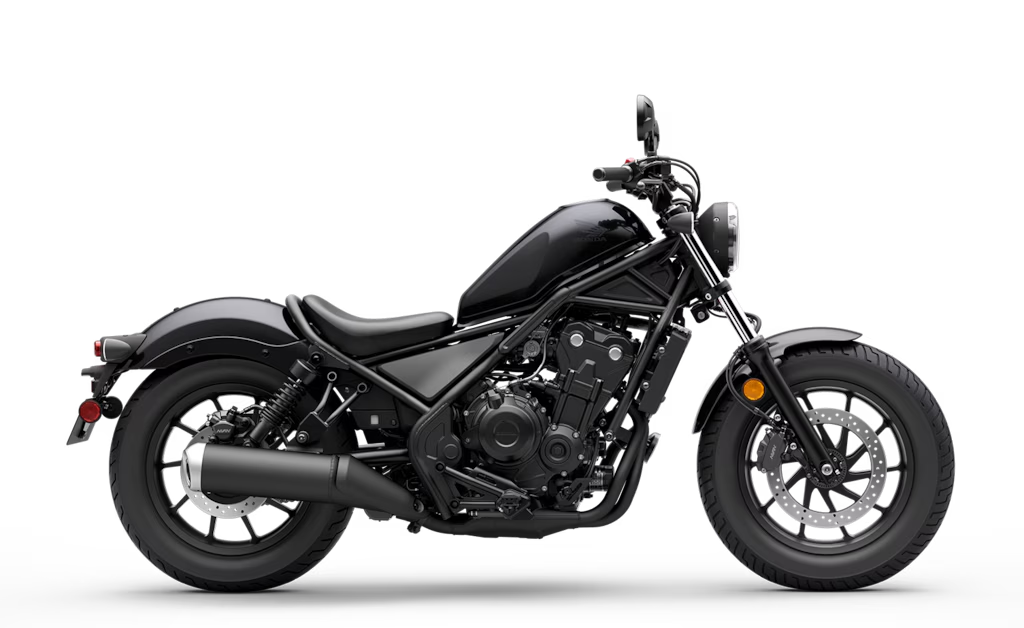
The Rebel 1100T makes 78.9 hp at 7,220 rpm and 66.0 lb-ft of torque at 4,940 rpm on Cycle World’s Dynojet dyno (Cycle World, 2025). That’s rear-wheel output, which typically runs 10-15% below a manufacturer’s claimed crank figure, so it lines up with Honda’s published spec sheet numbers for the platform.
For comparison, the same dyno pulled 93 hp and 114.8 lb-ft out of a Harley-Davidson Low Rider S, so the Honda gives up peak power but keeps a flatter, more usable torque curve lower in the rev range.
What’s the Rebel 1100T’s Actual Top Speed and 0-60 Time?
Honda doesn’t publish an official top speed or 0-60 figure for the Rebel 1100T, and no GPS-instrumented test from a source like MotoStatz currently exists for this specific model. That’s a real gap, not a minor one, given how often this bike gets shopped against the Sportster S and Scout on straight-line numbers.
What you’ll find online is a wide spread. TopSpeed lists 128 mph and a 3.4-second 0-60 for the standard Rebel 1100 without describing a test method.
ProfessCars’ formula-derived estimate, which is calculated from spec-sheet power and weight rather than measured on a track, puts 0-60 at 3.7 to 3.8 seconds. Other outlets land closer to 113-115 mph based on unspecified “independent tests.” None of these agree closely enough to treat as fact.
The honest answer: expect 0-60 in the mid-3-second range and a top speed somewhere in the 110-120 mph window based on the dyno-verified power output and the bike’s weight and aerodynamics, but treat any single decimal-point number you see quoted elsewhere with real skepticism until a GPS-instrumented test is published.
How Does the Rebel 1100T Handle With the Fairing and Saddlebags?
The 1100T handles like the standard Rebel 1100 with a bit more weight up front. Both bikes share the same 59.8-inch wheelbase, 28-degree rake, and 43mm fork, so the batwing fairing doesn’t change the geometry, just the mass you’re pushing through a corner. At 520 lbs curb weight, the T is about 22 lbs heavier than the standard Rebel 1100 DCT.
Low seat height (27.5 inches) and a low center of gravity, courtesy of Honda tucking the crankshaft close to the frame, make this a bike that’s easy to flat-foot at a stop even for shorter riders. The nitrogen-filled remote-reservoir rear shocks and custom spring rates give it a firmer, more controlled ride than a typical soft-sprung cruiser, which matters once you’ve loaded the saddlebags for a weekend trip.
Is the Rebel 1100T Comfortable for Long-Distance Rides?
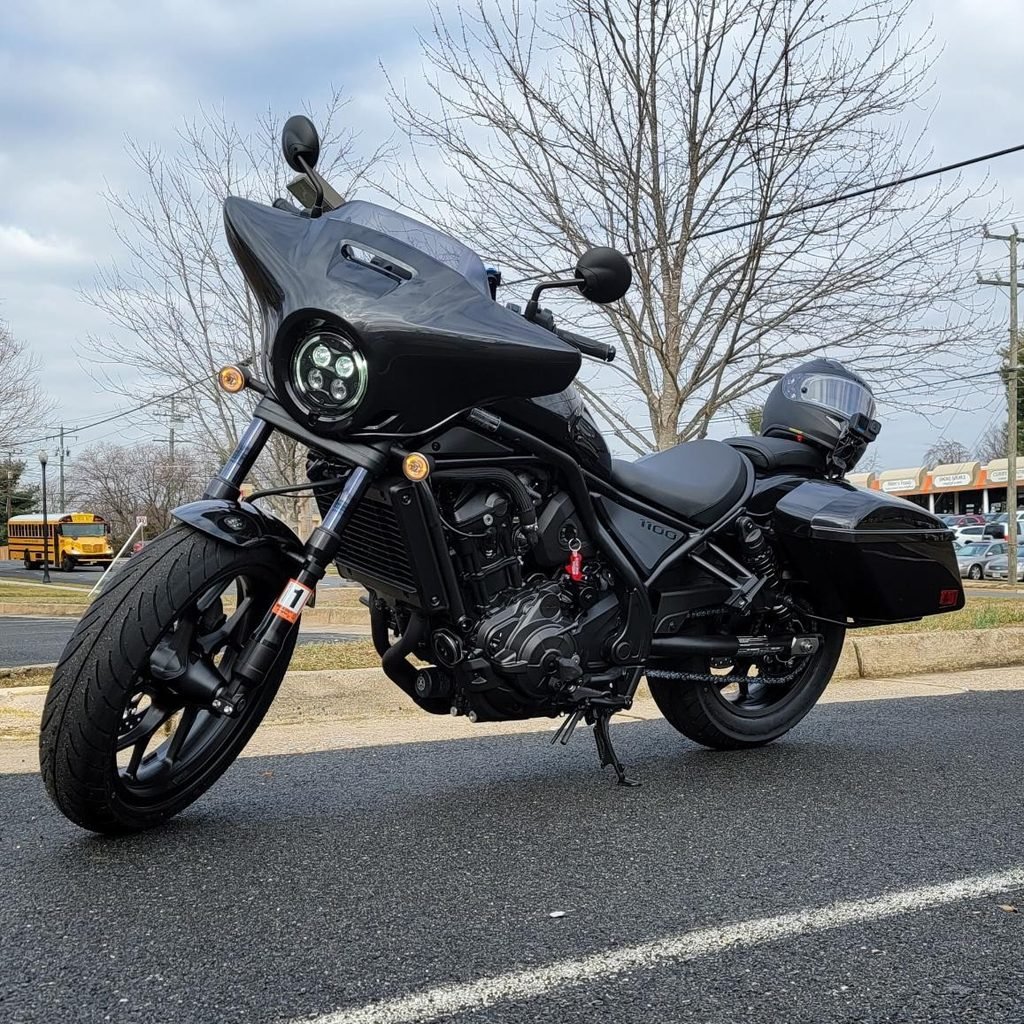
Yes, comfort is the whole point of the T variant. The 3.6-gallon tank and Cycle World’s real-world fuel economy figures for the standard Rebel 1100 platform put usable range in the 160-190 mile range between fill-ups, which is reasonable for a cruiser this size. The batwing fairing cuts wind blast at highway speed, and Honda added a redesigned, more supportive seat for 2025 specifically to address rider comfort on longer stints.
Cruise control comes standard, and the 5-inch TFT display shows gear position, fuel level, and riding mode at a glance so you’re not hunting through menus at 70 mph. The hard saddlebags hold a combined 35 liters, enough for a weekend’s worth of gear without strapping on a duffel.
Is the Honda Rebel 1100T Worth the Price?
At $10,799 for the manual and $11,499 for the DCT (before the $775 destination charge), the 1100T undercuts most factory-baggers with comparable displacement while adding hard luggage and weather protection Honda would otherwise sell as accessories.
Against a Harley-Davidson Low Rider ST or Indian Sport Chief, which both start well north of $18,000, the value gap is significant even accounting for the Honda’s smaller engine and lower peak power.
The tradeoff is straightforward: you’re getting a mid-displacement parallel-twin instead of a big V-twin, so this isn’t the bike for riders chasing maximum torque or a deep exhaust note. What you get instead is real Honda reliability, a manageable seat height, and a lighter overall package that’s easier to live with day to day.
Frequently Asked Questions
What is the top speed of the Honda Rebel 1100T?
There’s no official Honda figure or GPS-instrumented independent test for the 1100T’s top speed. Published estimates range from about 113 to 128 mph depending on the source, but none of them disclose a verified test method, so treat any specific number as an approximation.
How fast does the Rebel 1100T go 0-60?
Estimates cluster in the mid-3-second range, with a formula-derived calculation from ProfessCars putting it at 3.7-3.8 seconds. No GPS-verified timed test currently exists for this specific model, so this should be read as an estimate rather than a confirmed figure.
How much horsepower does the Honda Rebel 1100T have?
The 1100T produced 78.9 hp at 7,220 rpm on a Dynojet dyno, along with 66.0 lb-ft of torque at 4,940 rpm. That’s measured rear-wheel output, not a manufacturer claim.
What’s the difference between the Rebel 1100 and the Rebel 1100T?
The 1100T adds a handlebar-mounted batwing fairing and 35 liters of lockable hard saddlebags on top of the standard Rebel 1100’s engine and chassis. It’s about 22 lbs heavier as a result but offers meaningfully better wind protection and cargo capacity for touring.
Is the Honda Rebel 1100T a good beginner motorcycle?
The low 27.5-inch seat height and manageable 520-lb curb weight make it approachable, but the torquey 1084cc engine delivers real power that can catch a brand-new rider off guard. Riders with at least some time on a smaller-displacement bike will get the most out of it safely.