How Long are Motorcycle Helmets Good for
TL;DR
- Most motorcycle helmets are good for 5 years from the date of first use, or 7 years from the manufacture date – whichever comes first.
- The Snell Memorial Foundation and most major manufacturers, including Shoei and Arai, recommend the 5-year replacement interval.
- Heat, UV exposure, sweat, and petroleum-based cleaning products all accelerate internal shell degradation – even when a helmet looks fine from the outside.
- Any helmet that has been in a crash should be replaced immediately, regardless of visible damage.
- The manufacture date is stamped inside every DOT-certified helmet; check it before you ride.
The Short Answer: 5 Years from First Use, 7 from Manufacture
Most motorcycle helmets are good for 5 years from the date you first put them on, or 7 years from the manufacture date – whichever comes first. That’s the recommendation from the Snell Memorial Foundation, one of the two primary helmet safety certification bodies in the United States, and it’s echoed by Shoei, Arai, HJC, and Bell in their own owner documentation.
The 7-year manufacture date limit exists because helmet materials begin degrading from the moment they’re made, whether or not you’re wearing the helmet. A brand-new-looking helmet that’s been sitting in a garage for six years may already be compromised.
The 5-Year Rule: Where It Comes From and Why It Holds Up

The 5-year replacement recommendation traces back to research Snell conducted on the chemical and structural behavior of expanded polystyrene (EPS) foam – the energy-absorbing liner inside every modern helmet – and the outer shell materials used in production helmets. The findings: both degrade over time due to exposure to body oils, sweat, UV light, heat, and the solvents in some cleaning products.
The Snell Memorial Foundation first published this guidance in the 1990s and has maintained it through every subsequent standard update, including the current Snell 2020 standard. The European equivalent, ECE 22.06, doesn’t specify a hard expiration date but recommends retirement “when the helmet no longer meets its original standard of protection” – which in practice aligns with the same 5-year window.
Arai’s official documentation states: “We recommend replacing your helmet 5 years after the first use, and 7 years from the manufacture date.” Shoei says the same. These aren’t legal disclaimers – they reflect how the materials actually perform over time.
One important note: the 5-year clock starts on the date of first use, not the purchase date. A helmet that sat in a shop for two years before you bought it is already two years into its manufacture lifespan, even if your ownership is new.
What Actually Degrades Inside a Helmet Over Time
The outside of a helmet can look perfect while the protection inside is quietly failing. There are three main components that break down.
The EPS liner is the expanded polystyrene foam that does the actual crash energy management. It works by crushing on impact – a one-time, irreversible process. But even without a crash, EPS slowly hardens and becomes brittle from repeated compression during normal use (putting the helmet on and off), heat cycling (sitting in a hot garage or on a bike in summer sun), and absorption of sweat and body oils over thousands of hours of use.
The outer shell – whether polycarbonate, fiberglass composite, or carbon fiber – is bonded and shaped under specific conditions. UV exposure breaks down the resin systems in composite shells over time. Polycarbonate shells can become more brittle with age and UV damage, reducing their ability to flex and absorb impact before transferring force to the EPS liner.
The retention system – the chinstrap and D-ring or micro-ratchet buckle – is made of nylon webbing that fatigues with use and exposure. A worn strap that’s been soaked in sweat and dried out hundreds of times won’t hold the same tension as a new one. That matters because helmet retention is what keeps the shell on your head during a crash.
Signs Your Helmet Has Already Expired or Is Past Its Peak
Age alone isn’t always obvious. These are the signs that tell you a helmet is done before you check the date stamp.
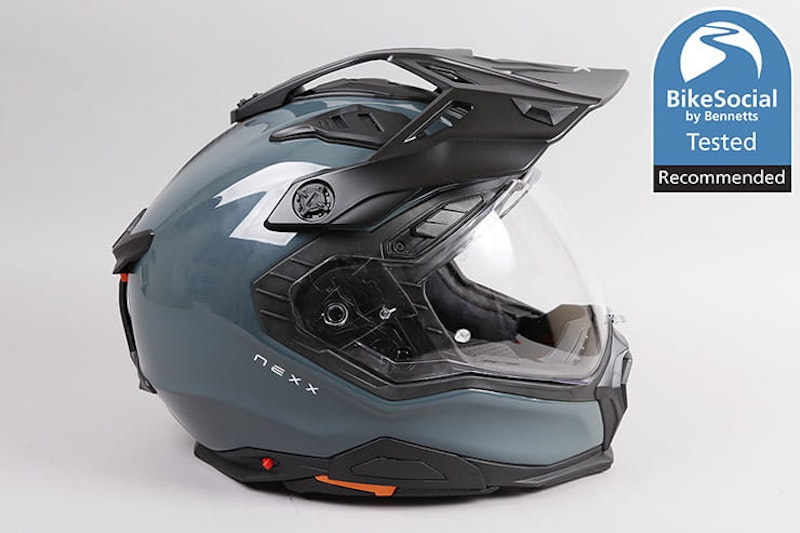
The EPS liner feels different when you press on it with your thumb – noticeably harder and less giving than it was new. The interior padding has permanently flattened and no longer holds its original fit. The chin strap webbing shows fraying, discoloration, or stiffness. The shell has visible crazing (tiny surface cracks in the clear coat or paint) from UV exposure.
The fit itself is a key indicator. A helmet that once fit snugly and now feels loose – without any weight loss on your part – has compressed padding that’s no longer doing its job.
Check the manufacture date. It’s printed on a sticker inside the helmet, typically on the chin strap or under the comfort liner. The format is usually a four-digit number showing week and year of manufacture – for example, “2419” means the 24th week of 2019. If that date is more than 7 years ago, the helmet is past its recommended service life regardless of how it looks.
The Crash Rule: Replace It Immediately, No Exceptions
Any helmet involved in a crash – drop from handlebar height included – should be replaced, even if there’s no visible damage to the shell. The EPS liner is designed to crush once. After impact, the foam is compressed and won’t absorb energy the same way in a second hit.
This is why Shoei, Arai, and Bell all include the same language in their documentation: replace after any impact. It’s also why the Snell Foundation offers a free inspection service if you mail in a crashed helmet – they can sometimes detect internal EPS compression that’s invisible on the outside.
A common mistake is dropping a helmet on concrete from workbench height and assuming it’s fine because there’s no scratch. A direct impact on a hard surface from that height can put enough force through the shell to partially compress the EPS. You won’t see it. The helmet won’t tell you. But the next time you need it to work, it may not.
If cost is the concern: a budget-level DOT/ECE certified helmet from Bell, HJC, or Scorpion in the $150-$250 range is safer than a premium helmet that’s been compromised. Protection is the job. An impacted helmet can’t do it.
How Storage and Use Habits Affect Helmet Lifespan
Two riders can buy the same helmet on the same day and see very different lifespans depending on how they treat it. The riders who extend helmet life do a few things consistently.
Store the helmet indoors, away from direct sunlight and heat. A helmet left on the seat of a blacked-out cruiser in a summer parking lot – where surface temperatures can exceed 140°F (60°C) – is aging faster than one stored in a bag on a cool shelf. Heat accelerates EPS degradation and resin breakdown in the outer shell.
Clean it with mild soap and water only. Petroleum-based products, ammonia, and most spray cleaners attack the polycarbonate and composite materials. A lot of riders use Pledge or armor-all type products on the shell – don’t. They look good short-term and cause damage long-term.
Don’t hang the helmet by the chin strap. That puts sustained tension on the retention webbing. Use a flat surface or a purpose-built helmet stand.
High-mileage daily commuters who wear a helmet 300+ days per year will see the interior padding compress and wear faster than weekend riders. That’s fine – it just means tracking wear honestly and not stretching the service life past what the condition justifies.
Helmet Lifespan by Shell Material
Not all helmets age at the same rate. Shell material is the main variable.
| Shell Material | Typical Lifespan | Notes |
|---|---|---|
| Polycarbonate | 3-5 years | More UV-sensitive; becomes brittle faster in high heat/sun environments |
| Fiberglass composite | 5 years | More stable than polycarbonate; resists UV better |
| Carbon fiber composite | 5 years | Similar to fiberglass; very stable but not immune to resin degradation |
| Multi-composite (fiberglass + Kevlar + carbon) | 5 years | Common in premium helmets; best long-term structural stability |
All of these follow the same 5-year use / 7-year manufacture guideline. Shell material affects how gracefully the helmet ages – not whether it ages.
Frequently Asked Questions About Motorcycle Helmet Expiration
How do I find the manufacture date on my motorcycle helmet?
The manufacture date is on a sticker inside the helmet – check the chin strap, under the comfort liner, or on the EPS liner itself. The format is typically a four-digit code showing the week and year of manufacture. “1222” means the 12th week of 2022. Some brands print the full date in plain text.
Can I use a motorcycle helmet that’s older than 5 years if it still looks good?
Looks don’t determine safety. The EPS liner and shell materials degrade chemically over time regardless of appearance. A helmet older than 5 years from first use may not perform to its original standard in a crash, even if the exterior is scratch-free and the padding still feels soft. The 5-year guideline exists precisely because the degradation isn’t visible.
Does an expensive helmet last longer than a cheap one?
Premium helmets from Shoei, Arai, and Schuberth use higher-quality shell materials and interior components that hold up better over the service life – but they’re still subject to the same 5-year replacement recommendation. A $900 Shoei RF-1400 doesn’t get 10 years just because of the price tag. Invest in quality for better fit, comfort, and aerodynamics, but replace on schedule regardless of cost.
Is a helmet stored in a box the same as a used one?
No – but it’s not immune. EPS and shell materials age from manufacture, not just from use. A helmet in a sealed box still ages; it just ages slower than one exposed to UV, heat, and sweat daily. The 7-year manufacture date limit applies to stored helmets. A brand-new helmet you bought today that was manufactured in 2018 is already approaching the end of its recommended service life.
Does the 5-year rule apply to all helmet certifications – DOT, Snell, and ECE?
The 5-year recommendation comes from Snell and is adopted by most manufacturers regardless of which certification their helmets carry. DOT itself (FMVSS 218) doesn’t specify a replacement interval. ECE 22.06 doesn’t either, though ECE-certified manufacturers typically follow the same manufacturer guidelines. Whether your helmet is DOT-only, DOT+Snell, or DOT+ECE, replace it within 5 years of first use.