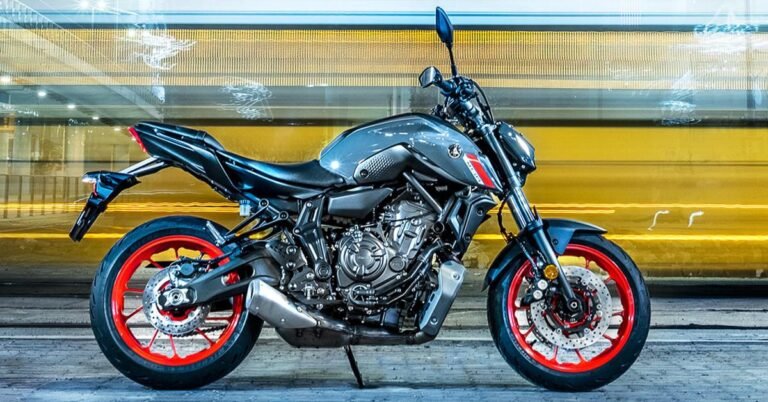
Yamaha MT-03 Top Speed, Specs & Review
TL;DR
- The Yamaha MT-03 reaches a GPS-verified top speed of 108 mph and sprints to 60 mph in 5.1 seconds.
- It runs a 321cc liquid-cooled parallel twin making 41.5 horsepower and 21 lb-ft of torque; MSRP is $4,999 .
- The 2025-2026 updates added a slip-and-assist clutch, a new LCD dash with Y-Connect app integration, and a USB-A charging port at no price increase.
- At 373 lbs wet and 30.7 inches of seat height, it’s one of the most accessible entry-level nakeds on the market.
- The MT-03 is the right bike for newer riders, urban commuters, and anyone who wants genuine MT-family DNA without the payment that comes with an MT-07 or MT-09.
Yamaha MT-03 Specs at a Glance
| Spec | Detail |
|---|---|
| Engine | 321cc liquid-cooled DOHC inline twin |
| Bore x Stroke | 68.0mm x 44.1mm |
| Compression Ratio | 11.2:1 |
| Peak Power | 41.5 hp @ 10,750 rpm (manufacturer claim) |
| Peak Torque | 21 lb-ft @ 9,000 rpm |
| Dyno-measured Power | 37 hp @ 10,590 rpm (Cycle World dyno) |
| Transmission | 6-speed with slip-and-assist clutch |
| Front Suspension | 37mm KYB inverted fork, 5.1 in travel |
| Rear Suspension | Single shock, 7-step preload adjustable, 4.9 in travel |
| Front Brake | 298mm single disc, ABS |
| Rear Brake | 220mm single disc, ABS |
| Tires | 110/70R17 front / 140/70R17 rear (Dunlop Sportmax GPR-300) |
| Seat Height | 30.7 in (780mm) |
| Wet Weight | 373 lb |
| Fuel Capacity | 3.7 gal |
| Fuel Economy | 62 mpg (estimated) |
| MSRP (2026) | $4,999 |
Engine and Power: What 321cc Feels Like on the Street
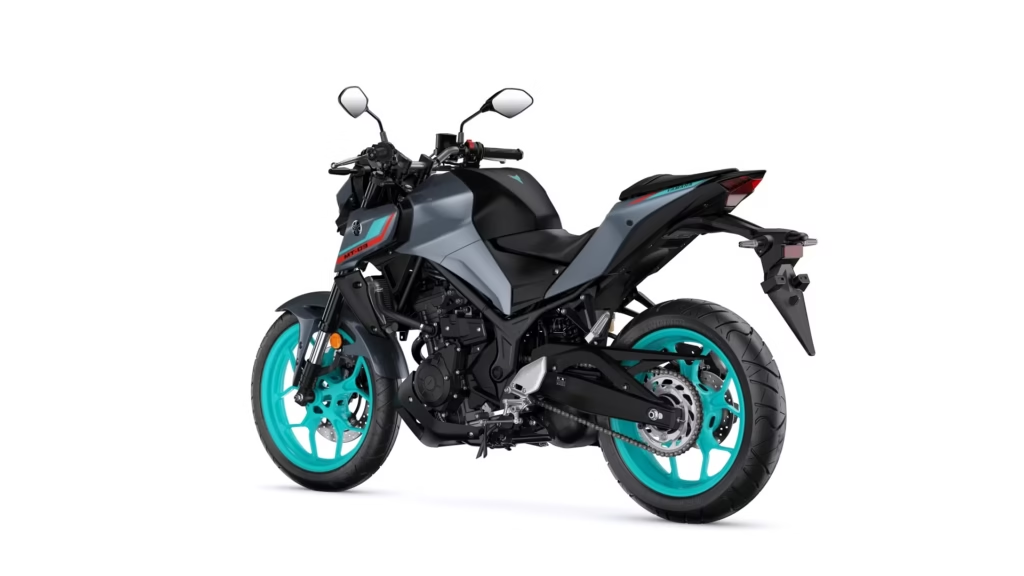
The MT-03’s 321cc parallel twin is the same unit powering the YZF-R3, and it’s a solid engine for the segment – just don’t expect it to feel that way below 6,000 rpm. Under that threshold, the motor is mild and cooperative. Crack it past 6,000 and it comes alive. Peak power arrives at 10,750 rpm, and the best riding happens in the upper third of the rev range.
Cycle World put an MT-03 on a dyno and measured 37 horsepower at 10,590 rpm – a 4.5 hp gap from Yamaha’s 41.5 hp claim, which is typical of the difference between crank and wheel figures (Cycle World, 2024). Torque sits at 21 lb-ft, peaking at 9,000 rpm. That’s not a lot of twist, but the engine revs freely and the power delivery is smooth – no sudden lurches, no nasty surprises mid-corner.
The 2025-2026 slip-and-assist clutch was a genuine improvement. “Assist” means lighter lever pull – useful in stop-and-go city traffic. “Slipper” means the rear wheel doesn’t lock up if you downshift too aggressively going into a corner. Both features lived only on much more expensive bikes a decade ago.
Fuel injection, an 11.2:1 compression ratio, and DOHC four-valve heads keep the engine current. It returns about 62 mpg (Yamaha Motorsports USA, 2026), and the 3.7-gallon tank gives a real-world range of around 200 miles between stops.
Yamaha MT-03 Top Speed and Acceleration Numbers
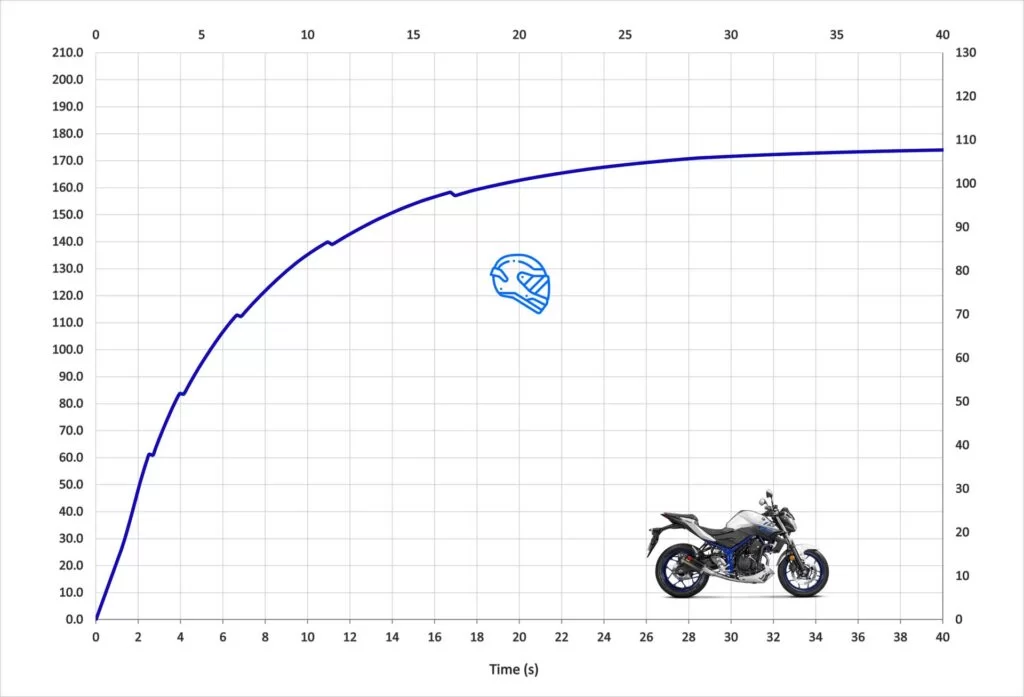
The Yamaha MT-03 top speed is 108 mph based on GPS-instrumented testing (MotoStatz, 2026). That’s the honest number – measured with GPS, not an optimistic speedometer. Some sources cite figures up to 112-115 mph, but those likely include speedometer error or ideal conditions with a lighter rider.
The 0-60 mph time is 5.1 seconds (MotoStatz, 2026). The quarter mile comes up in 14.05 seconds at a trap speed of 92 mph. Here’s how to get the best launch: hold the revs between 8,000 and 9,000 rpm and release the clutch firmly but not abruptly. Let it drop below 8,000 and the engine bogs. Rush it and you’ll add a full second to your time.
For context, that 0-60 number beats a Harley-Davidson Iron 883 (typically around 5.5 seconds) and sits in the same ballpark as much larger bikes that weigh considerably more. The MT-03 is quick because it’s light – 373 lbs wet with a small frontal area.
| Performance Metric | Result |
|---|---|
| Top Speed | 108 mph (GPS-verified, MotoStatz 2026) |
| 0-60 mph | 5.1 seconds (MotoStatz, 2026) |
| 0-100 km/h | 5.41 seconds (MotoStatz, 2026) |
| Quarter Mile | 14.05 sec @ 92 mph (MotoStatz, 2026) |
The naked bodywork costs you a few mph versus the faired R3. Strip away the windscreen and you’re fighting wind blast earlier – that aerodynamic penalty becomes noticeable above 80 mph but rarely matters on actual roads.
Chassis, Suspension, and Brakes: How It Handles
The MT-03’s suspension package is genuinely capable for an entry-level bike. Up front: a 37mm KYB inverted fork with 5.1 inches of travel. Inverted forks are stiffer under braking than conventional units – they don’t flex as much when you grab the front lever hard. Rear: a preload-adjustable single shock with 4.9 inches of travel and seven preload settings to dial in for solo or two-up riding.
Braking comes from a 298mm front disc with ABS and a 220mm rear disc with ABS. Both ends standard – not an option, not an upgrade. At this price point, that matters.
The tires are Dunlop Sportmax GPR-300s on 17-inch cast aluminum wheels (Ultimate Motorcycling, 2025). The GPR-300 is a sport-touring compound – not a sticky track tire, but far better than the budget rubber on some competitors in this price bracket. They handle spirited canyon riding and wet-weather commuting without drama. Expect to replace them around 8,000-10,000 miles.
The steel diamond frame sits on a 54.3-inch wheelbase with 25 degrees of rake and 3.7 inches of trail. That geometry gives the MT-03 its responsive, flickable feel – it turns in quickly without getting nervous at highway speeds.
Ergonomics, Features, and Daily Livability
Seat height is 30.7 inches (780mm), which puts it within reach for riders around 5’6″ and taller without tip-toeing. The 373 lb wet weight makes it easy to maneuver in parking lots. Both numbers matter to newer or returning riders, and the MT-03 is genuinely good on both counts.
The riding position is upright with a slight forward lean – comfortable for city riding and 90-minute highway stints before you want a break. The wide handlebar gives direct, communicative steering without cramping your wrists.
The 2025 update brought a new LCD instrument cluster connected to your phone via the free Y-Connect app (Yamaha Motorsports USA, 2026). The dash shows call, text, and email notifications – useful if you’re using the MT-03 as a daily commuter. There’s also a USB-A port for phone charging. It’s not a TFT color display, but at $4,999 a clear LCD with app connectivity is the right call over a premium screen that would drive the price up.
Three color options for 2026: Team Yamaha Blue, Ice Storm, and Matte Stealth Black.
One honest drawback: the engine’s modest output means anyone who’s ridden a Z400 or KTM 390 Duke will feel the displacement difference. The MT-03 doesn’t pretend to be something it isn’t – it’s a 321cc learner-friendly naked, not a middleweight. The mechanicals have also gone largely unchanged since 2016; Yamaha’s 2025 updates were welcome, but the core engine architecture is long in the tooth compared to some freshly engineered competitors (Top Speed, 2024).
Who Should Buy the Yamaha MT-03
The MT-03 is the right motorcycle for three types of riders. First, new riders who want a real naked sportbike – not a 125 that tops out at 65 mph – but who aren’t ready to manage 75 horsepower yet. Second, urban commuters who need something lightweight, fuel-efficient at 62 mpg, and narrow enough for city traffic without wrestling a 500 lb machine. Third, experienced riders who want a low-stress second bike for short trips, track days with displacement limits, or simply a motorcycle they don’t have to baby.
At $4,999, it’s one of the most competitive prices in the segment. The Honda CB300R runs around $5,149 and makes comparable power. The Kawasaki Z400 – with its 399cc engine and 49 hp – costs more and is meaningfully faster; if you want that performance, spend the extra money. If you want proven reliability, a recognizable badge, and a bike you can grow with over several seasons, the MT-03 makes sense.
Frequently Asked Questions About the Yamaha MT-03
What is the top speed of the Yamaha MT-03?
The Yamaha MT-03 reaches a GPS-verified top speed of 108 mph under test conditions (MotoStatz, 2026). Some sources report figures up to 112 mph, likely reflecting speedometer error or ideal conditions with a lighter rider. Yamaha does not publish a top speed figure for the MT-03.
How fast does the Yamaha MT-03 go from 0 to 60?
The MT-03 hits 60 mph from a standing start in 5.1 seconds (MotoStatz, 2026). That’s competitive for a sub-350cc motorcycle. Best launches come from holding revs between 8,000 and 9,000 rpm and releasing the clutch firmly but progressively – rushing the drop bogs the engine and costs you time.
What engine does the Yamaha MT-03 have?
The MT-03 uses a 321cc liquid-cooled DOHC parallel twin with fuel injection and four valves per cylinder – the same engine as the YZF-R3. Yamaha rates it at 41.5 hp and 21 lb-ft of torque. A Cycle World dyno pull measured 37 hp at the rear wheel (Cycle World, 2024), a normal figure accounting for drivetrain losses.
Is the Yamaha MT-03 a good beginner bike?
Yes, for most definitions of the word. The 30.7-inch seat height, 373 lb wet weight, smooth power delivery, and standard dual-channel ABS make it genuinely manageable for newer riders. The 108 mph top speed and 5.1-second 0-60 time also mean you won’t feel like you’ve outgrown it after one season – there’s enough performance here to stay engaged for two or three years of riding.
How much does the Yamaha MT-03 cost in 2026?
The 2026 Yamaha MT-03 has an MSRP of $4,999 (Yamaha Motorsports USA, 2026). That figure doesn’t include destination charges, taxes, or dealer prep fees. Expect an out-the-door price in the $5,400-$5,800 range depending on your state and dealer.