How Much Do Harley-Davidsons Weigh? (2026 Model Guide)
TL;DR
- Harley-Davidson weights run from 502 lbs (Sportster S) to nearly 900 lbs (Street Glide Limited), in running order.
- Sport and Softail models sit in the 500-700 lb range; Grand American Touring baggers run 800-900+ lbs.
- “Weight, in running order” means full fuel, oil, and fluids, ready to ride, with no rider or gear added.
- A heavier Harley isn’t automatically harder to ride once it’s moving; low-speed handling is where weight actually bites.
- New riders and shorter riders generally do better starting on something under 700 lbs wet.
There’s no single answer to “how much does a Harley weigh” because Harley doesn’t build one bike. It builds a lineup that spans a 502 lb sport cruiser and a nearly 900 lb touring rig with a full fairing and hard bags.
The number you want depends entirely on which model you’re asking about, so here’s the real spread across six current bikes, straight from Harley-Davidson’s own spec sheets.
Harley-Davidson Weight by Model (2026 Lineup)
Every figure below is the manufacturer’s “Weight, In Running Order” spec, meaning the bike is fully fueled and ready to ride, no rider or luggage included.
| Model | Weight, In Running Order | Category |
|---|---|---|
| Sportster S | 502 lb. | Sport |
| Street Bob | 646 lb. | Softail cruiser |
| Fat Boy | 694 lb. | Softail cruiser |
| Street Glide | 811 lb. | Touring bagger |
| Road Glide | 838 lb. | Touring bagger |
| Street Glide Limited | 893 lb. | Touring flagship |
That’s a 391 lb difference between the lightest and heaviest bike on this list. Ride one right after the other and it feels like two different vehicle classes, because in a lot of ways, they are.
Why Do Harley Weights Vary So Much?
credit: https://autotul.com/
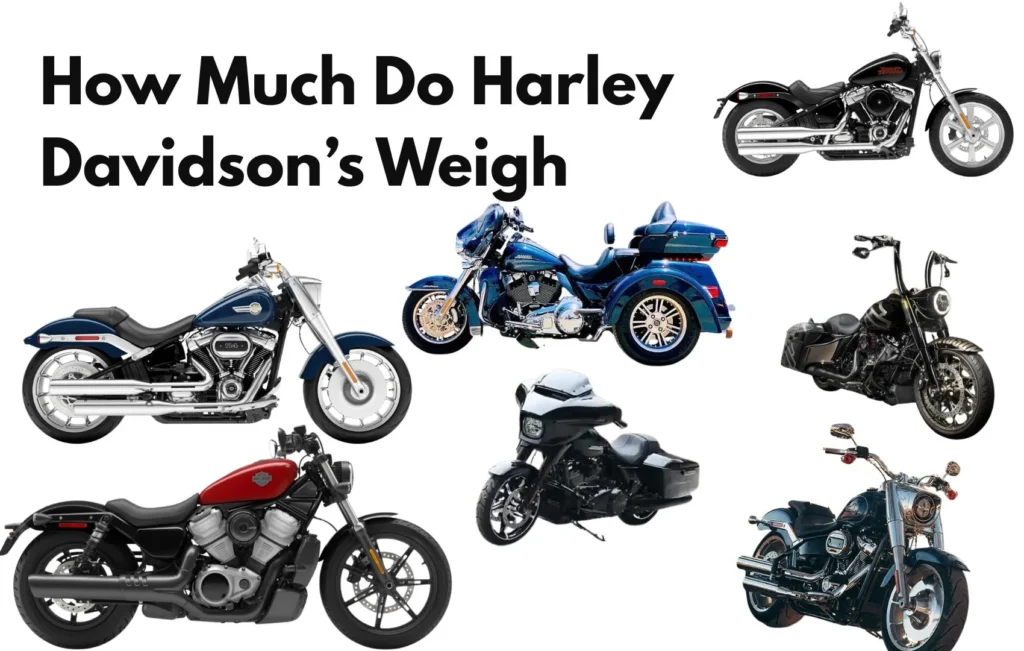
The short answer is frame, fairing, and fuel tank size. A Sportster S runs a compact 3.1-gallon tank and no bodywork beyond the tank and fenders, while a Street Glide Limited carries a 6-gallon tank, a full batwing fairing, hard saddlebags, and a Tour-Pak trunk bolted to the back.
Engine size plays a smaller role than most riders assume. The Street Bob and Fat Boy both run the same 117 cubic inch Milwaukee-Eight, yet the Fat Boy weighs 48 lbs more because of its wider tires, cast Lakester wheels, and heavier front-end styling.
Touring bikes add another chunk of weight in infotainment hardware, speakers, and passenger comfort features like heated seats and grips.
Suspension and frame construction matter too. Softail models use a hidden monoshock rear end that keeps things relatively light, while Touring-family bikes use a full double-cradle frame built to carry two riders and luggage over long distances without flexing.
Dry Weight vs. Wet Weight vs. Curb Weight
The number that matters is “weight, in running order,” which is what Harley-Davidson publishes for its current lineup. This is the bike with a full tank of gas, all fluids topped off, and ready to start, but with no rider or aftermarket accessories added.
You’ll still see “dry weight” thrown around in older listings and forum posts. Dry weight strips out fuel, oil, and other fluids, so it reads lighter than what you’ll actually feel throwing a leg over the bike.
On a Touring model with a 6-gallon tank, that gap between dry and wet can run 35-40 lbs once you account for gas alone.
Curb weight and running-order weight are effectively the same thing on a Harley spec sheet: full fluids, full tank, no rider.
If you’re comparing a used bike listing to a current Harley-Davidson spec page, check which number the seller is quoting, because a private listing using dry weight will always look lighter than the manufacturer’s running-order figure for the same bike.
What Weight Actually Means for Handling
A heavier Harley isn’t harder to ride at speed. Once you’re rolling above 15-20 mph, a Street Glide Limited feels planted and stable specifically because of its weight; that mass is what keeps a touring bike from getting pushed around by crosswinds or semi-truck wake on the highway.
Weight becomes a factor at a dead stop or in a parking lot. Backing an 893 lb bike out of a downhill parking spot, or catching it if it starts to tip at a stoplight, takes real upper-body strength and, more importantly, technique. This is where a lot of new riders get caught off guard buying a Touring bike as a first Harley.
Seat height compounds the issue. A bike can weigh less on paper and still feel harder to manage if the seat height doesn’t let you get both feet flat on the ground.
The Sportster S has a 28.9-inch laden seat height despite weighing only 502 lbs, so it’s not automatically the easiest bike in the lineup for a shorter rider.
Lightest vs. Heaviest: Sportster S vs. Street Glide Limited
credit: https://www.nicecnc.com/
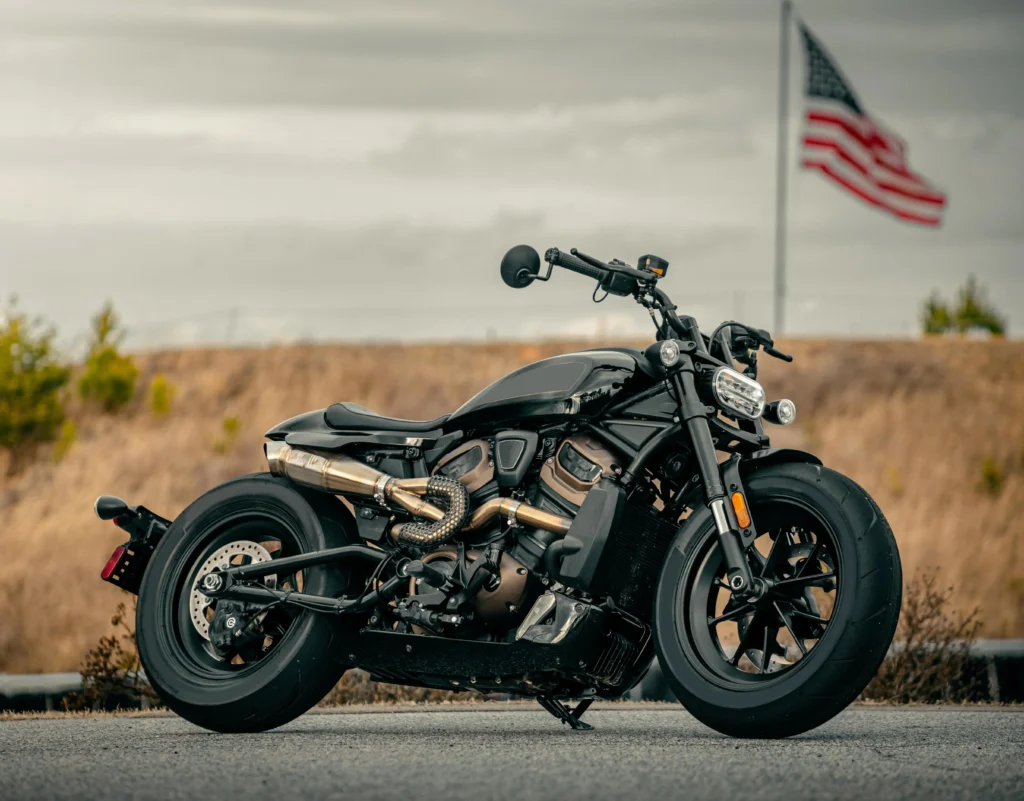
The Sportster S and Street Glide Limited sit at opposite ends of the current lineup, and riding them back to back makes the 391 lb gap obvious in about five minutes.
The Sportster S changes direction with almost no effort. Tip it into a corner and it responds instantly, which is exactly what you’d expect from a 502 lb bike with a 121-horsepower Revolution Max engine.
It’s the closest thing in Harley’s current lineup to a naked sport bike, and low-speed maneuvering, U-turns, and filtering through parking lots all feel closer to riding a mid-size standard than a cruiser.
The Street Glide Limited moves differently by design. At 893 lbs with a full fairing and Tour-Pak, it takes a deliberate push to change lanes or lean into a corner, but that same mass is what makes it comfortable at 75 mph on a six-hour interstate run. Neither bike is “better”; they’re built for different jobs, and the weight is a direct result of what each one is asked to do.
Choosing a Harley Based on Your Experience and Build
If you’re newer to riding or on the shorter side, a bike under 700 lbs wet, like the Street Bob or Fat Boy, gives you real Harley presence without the low-speed handling challenges of a full touring rig. Both let you build confidence with the weight and clutch feel before stepping up.
If you’ve got touring miles in mind, whether that’s weekend trips or cross-country runs, the extra weight of a Street Glide or Road Glide comes with real payoff: better wind protection, more stable highway manners, and enough chassis mass to carry a passenger and luggage without feeling unsettled.
Riders coming from a smaller sport bike or standard motorcycle often gravitate toward the Sportster S specifically because it doesn’t ask them to relearn how a motorcycle handles. It’s a Harley in name and V-twin character, but the weight and handling stay closer to what they’re used to.
Frequently Asked Questions
What is the lightest Harley-Davidson you can buy new?
The Sportster S is the lightest model in Harley’s current lineup at 502 lbs in running order. It’s built on the Revolution Max platform, which uses the engine itself as a stressed frame member to cut weight.
What is the heaviest Harley-Davidson?
Among the models covered here, the Street Glide Limited is heaviest at 893 lbs in running order. Harley’s Trike models, like the Street Glide 3 Limited, weigh more still due to the three-wheel chassis and rear suspension.
Is a 700 lb motorcycle too heavy for a beginner?
It depends more on your strength, balance, and seat height fit than the number itself. A 700 lb bike with a low seat height that lets you plant both feet is often more manageable for a new rider than a lighter bike that only lets you get one foot down.
Does a heavier Harley mean worse gas mileage?
Generally yes, though the difference isn’t as large as the weight gap suggests. The 502 lb Sportster S is EPA-estimated at 49 mpg, while the 811 lb Street Glide comes in around 44 mpg. Engine tuning and aerodynamics affect mileage as much as raw weight does.
How much does weight affect a Harley’s stopping distance?
Heavier bikes need more distance to stop, all else being equal, which is why Touring models use larger front rotors and standard cornering ABS. Properly maintained brakes and correct tire pressure matter more day-to-day than the weight difference between models.


