Who Owns Harley-Davidson? Ownership Explained (2026)
TL;DR
- Harley-Davidson isn’t owned by one person or a parent company. It’s a publicly traded corporation on the NYSE under the ticker HOG.
- The Vanguard Group, BlackRock, and H Partners Management are consistently the largest institutional shareholders, though exact percentages shift every quarter.
- Company insiders and executives hold a small slice of shares, and the rest trades freely among retail and institutional investors.
- Artie Starrs is President and CEO, reporting to a board of directors elected by shareholders.
- Harley-Davidson has been publicly traded since its 1986 IPO and has never gone back to private or family ownership since.
Who Owns Harley-Davidson Stock Today?
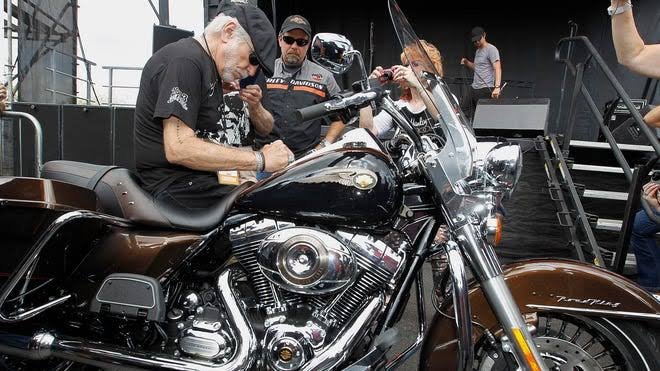
No single company or billionaire owns Harley-Davidson. It’s a publicly traded corporation, and its shares are split among thousands of institutional funds, individual investors, and company insiders who buy and sell on the open market every day.
The stock trades on the New York Stock Exchange under the ticker HOG, a name that’s stuck around since the “hog” nickname bikers gave the brand decades before Wall Street got involved.
Institutional investors, meaning mutual funds, pension funds, and asset managers, hold the bulk of the float. Across recent 13F filings, the same handful of firms keep showing up at the top:
| Institutional Holder | Type |
|---|---|
| The Vanguard Group | Index fund manager |
| BlackRock | Index fund manager |
| H Partners Management | Hedge fund |
| Dimensional Fund Advisors | Asset manager |
| Beutel, Goodman & Company | Asset manager |
Vanguard and BlackRock hold their positions mostly because HOG sits inside broad market index funds that millions of people own through 401(k)s and retirement accounts, not because either firm is making an active bet on the brand. H Partners Management is the exception. It’s a hedge fund that’s taken a more active, hands-on posture toward Harley’s board and strategy in recent years.
Exact ownership percentages move every quarter as funds rebalance, so treat any single number as a snapshot rather than a fixed fact. What’s stayed consistent is the top three names.
Retail investors, meaning individual people buying shares through a regular brokerage account, hold a comparatively small slice. Insiders, including current executives and board members, own an even smaller percentage on paper.
That’s normal for a company this size. Insider ownership tends to shrink as a public company matures, since founders and early leadership cash out or get replaced by professional management who receive stock as compensation rather than buying large blocks outright.
None of this means Harley-Davidson is unstable or in play for a takeover. A wide, diversified shareholder base is typical for any large-cap NYSE stock.
If you’re trying to gauge whether a single fund could push through a hostile change, look at combined top-ten ownership rather than any single name. When the top holders collectively control roughly half the float, no individual shareholder can force a decision alone.
Is Harley-Davidson a Publicly Traded Company?
Yes. Harley-Davidson has been a public company since its 1986 initial public offering, and it’s remained independent ever since. There’s no parent company sitting above Harley-Davidson, Inc.
Harley-Davidson, Inc. is itself the holding company for the whole operation. It oversees three segments: Harley-Davidson Motor Company (the bikes, parts, and apparel business), LiveWire (the electric motorcycle spinoff), and Harley-Davidson Financial Services (the arm that finances your loan when you walk out of the dealership with a new Road Glide).
That structure matters for buyers and riders because it means decisions about pricing, dealer support, and warranty coverage all flow through one accountable corporate entity rather than a maze of licensing deals.
Shares outstanding sit around 100 million, and the stock has traded in a wide range over the past year, reflecting the same demand swings and tariff pressure that have hit the broader powersports market.
Who Runs Harley-Davidson If No One Person Owns It?
Shareholders own the company, but they don’t run daily operations. That job belongs to the executive team, led by President and CEO Artie Starrs, who reports to a board of directors that shareholders elect.
The board’s job is to set long-term strategy, oversee management performance, and vote on major decisions like executive pay and big capital moves. Board members are legally required to act in shareholders’ collective interest, not their own.
This split between ownership and control is standard for any large public company. Vanguard and BlackRock, despite holding some of the largest blocks of stock, rarely push for operational changes.
They vote on proposals and board elections but mostly stay passive. Activist holders like H Partners Management are the ones more likely to press for specific changes in direction.
Has Harley-Davidson Ever Been Privately Owned?
credit: https://soundharley.com/
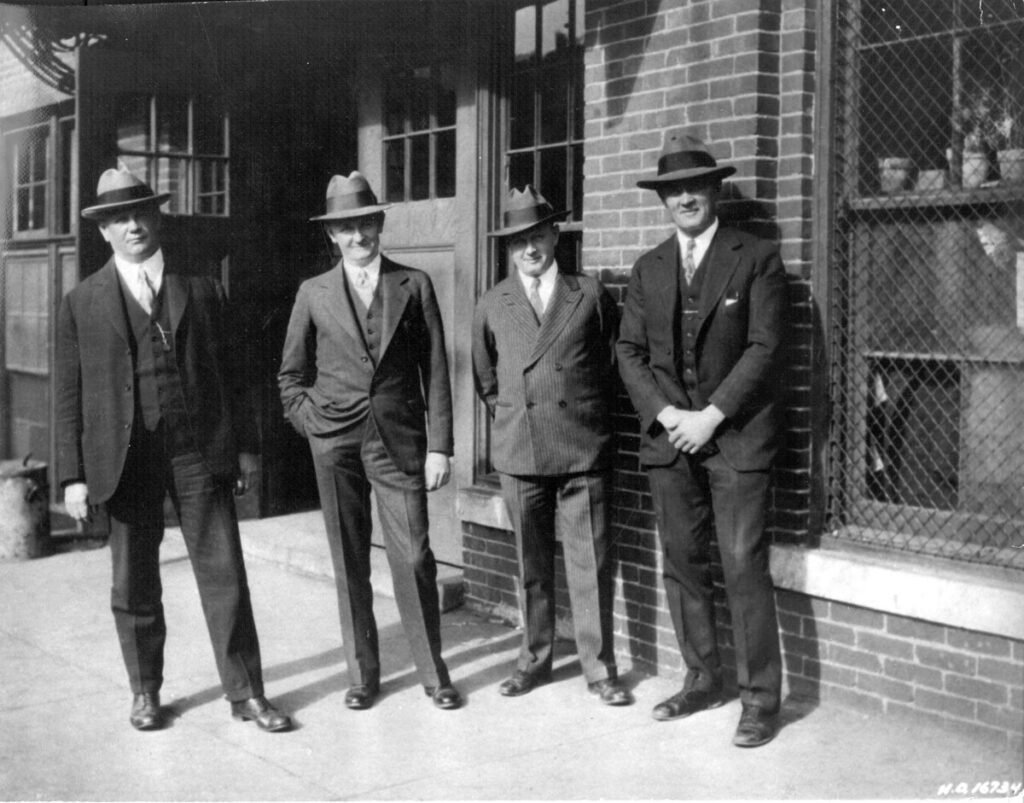
Yes, twice. Harley-Davidson started as a private, family-founded company in 1903 in Milwaukee, built by William Harley and the Davidson brothers. It stayed privately held for decades before going public for the first time.
The most dramatic ownership shift came in 1969, when AMF (American Machine and Foundry) bought Harley-Davidson outright. Quality slipped badly during that period, and it’s a big reason older riders still bring up “AMF years” as shorthand for Harley’s roughest era.
In 1981, a group of thirteen Harley-Davidson executives bought the company back from AMF in a leveraged buyout, taking it private again. That management-led buyout is what set up the turnaround that led to the 1986 public offering, and the company has stayed publicly traded ever since.
The buyout team’s rallying cry was “The Eagle Soars Alone,” and it wasn’t just marketing. Those thirteen executives, led by Vaughn Beals, took on serious debt to make the deal happen and spent the early 1980s rebuilding manufacturing quality from the ground up, borrowing production techniques from Japanese competitors they’d been losing ground to for years.
That quality turnaround is the actual reason Harley survived to go public again in 1986. Without it, there wouldn’t have been a company worth listing. It’s also why longtime riders treat “AMF era” and “post-buyout” as two genuinely different eras of build quality when they’re shopping for a used bike from that period.
Does Harley-Davidson’s Ownership Structure Affect Riders and Buyers?
Yes, indirectly, mostly through how the company allocates capital. Public companies answer to quarterly earnings, and that pressure shapes decisions riders eventually feel, like which model lines get investment, how fast new platforms come to market, and how aggressively the company prices bikes during soft demand.
The 2020s stretch is a good example. Harley-Davidson has leaned harder into its core touring and cruiser lineup while pulling back on some smaller-displacement experiments, a shift management has tied directly to where profit margins and loyal-buyer demand actually sit.
That’s the kind of strategic pivot a board and activist shareholders like H Partners Management can push for when a public company’s stock underperforms.
The financing side matters too. Harley-Davidson Financial Services, the arm that writes most dealer floorplan loans and a big share of retail motorcycle loans, is part of the same public company.
Its lending standards and rates aren’t set by a separate bank; they’re set by the same corporate parent whose stock price you can watch tick on any given afternoon.
LiveWire is the other piece of this. Harley spun its electric motorcycle brand into its own separately traded public company in 2022, but Harley-Davidson, Inc. kept the controlling stake and still consolidates LiveWire’s financial results.
That structure lets LiveWire raise its own capital while Harley keeps steering its direction, similar to how some car makers have spun off EV divisions without fully letting go.
Frequently Asked Questions About Harley-Davidson Ownership
Does one person or family still own Harley-Davidson?
No. The founding Harley and Davidson families sold their remaining ownership decades ago. Today’s shareholders are a mix of institutional funds, individual investors, and company insiders, with no single controlling owner.
Is Harley-Davidson owned by a foreign company?
No. Harley-Davidson, Inc. is an independent, US-based public company headquartered in Milwaukee, Wisconsin. Some of its institutional shareholders are international funds, but that’s normal for any large NYSE-listed stock and doesn’t amount to foreign ownership or control.
What does the HOG ticker symbol mean?
HOG is simply Harley-Davidson’s stock ticker on the NYSE. It’s a nod to the “hog” nickname riders had already given the brand long before the company went public in 1986.
Does Vanguard or BlackRock control Harley-Davidson’s decisions?
Not really. Both firms hold large positions mainly because HOG is part of broad index funds, and they typically vote passively on shareholder matters rather than pushing for operational changes. Day-to-day and strategic decisions run through the CEO and board.
Can I buy stock in Harley-Davidson?
Yes. Anyone with a standard brokerage account can buy shares of HOG on the NYSE, the same way you’d buy stock in any other public company. Buying shares makes you a partial owner, but it doesn’t come with any say in day-to-day operations, dealer decisions, or product direction.