Kawasaki Z1100 SE Top Speed, 0-60 & Specs Review
TL;DR
- The Kawasaki Z1100 SE is estimated to top out around 150-155 mph and hit 0-60 mph in roughly 2.8-3.2 seconds, based on third-party estimates and its predecessor’s tested numbers.
- Kawasaki has not published an official top speed or 0-60 figure for this model.
- The engine is a liquid-cooled 1,099cc inline-four making a claimed 134 hp at 9,000 rpm and 83.3 lb-ft of torque at 7,600 rpm.
- Curb weight is 487.3 lb, and MSRP starts at $14,999 plus an $840 destination charge.
- The SE trim adds Brembo M4.32 monobloc calipers and an Öhlins S46 rear shock over the base Z1100.
What’s the Kawasaki Z1100 SE’s Top Speed?
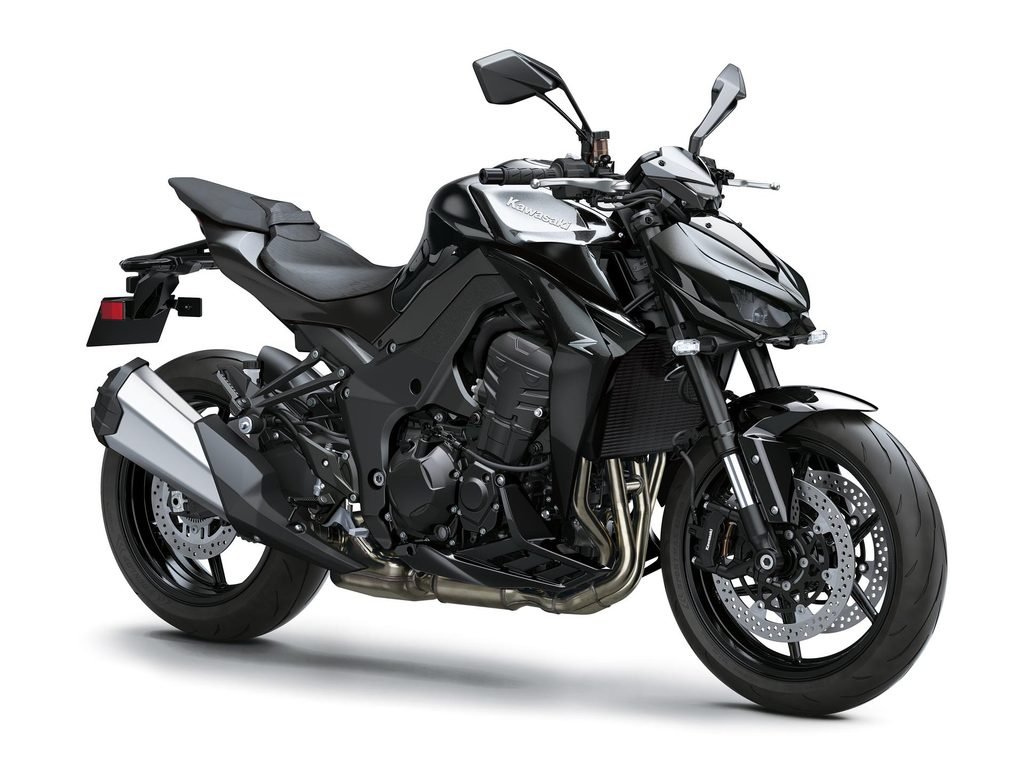
Kawasaki hasn’t published an official top speed for the Z1100 SE, and no major test outlet has released a verified figure yet. Based on the bike’s 134 hp claimed output and the tested top speed of its direct predecessor, a reasonable estimate lands around 150-155 mph.
The old Z1000, which shared a similar power-to-weight profile before the Z1100’s displacement bump, was independently tested at 147 mph (Cycle World, 2014). The Z1100 SE carries roughly the same 134 hp peak but slightly more midrange torque and a taller top gear, so a modest bump over that tested number is plausible. Treat any specific figure you see online, including ours, as an estimate until a magazine runs the bike on a closed course with a radar gun.
How Fast Is the Z1100 SE from 0-60 mph?
No verified 0-60 time for the Z1100 SE has been published by a credible test outlet as of this writing. A third-party estimate from AccelerationTimes (2026) puts it at 3.2 seconds, though that figure comes without disclosed testing methodology or a named tester, so treat it as a rough estimate rather than a lab-verified number.
For context, that same outgoing Z1000, with comparable horsepower and a lighter curb weight, ran 0-60 mph in 2.5 seconds in the Cycle World test cited above. Given the Z1100 SE weighs more at 487.3 lb wet, a 0-60 time in the 2.8 to 3.2 second range is a fair working estimate until independent testing confirms it.
What Engine Powers the Z1100 SE?
The Z1100 SE runs a liquid-cooled, DOHC, 16-valve inline-four displacing 1,099cc, with a 77.0mm bore and 59.0mm stroke and an 11.8:1 compression ratio (Kawasaki, 2026). Peak output is a claimed 134 hp at 9,000 rpm and 83.3 lb-ft of torque at 7,600 rpm.
That’s an evolution of the old Z1000’s 1,043cc motor, not a clean-sheet design. Kawasaki bumped displacement, revised the cam profiles and intake ports, and leaned the tune toward stronger midrange pull rather than chasing a higher peak horsepower number. Power routes through a six-speed gearbox with a standard up-and-down quickshifter and an assist-and-slipper clutch, then out to a sealed chain final drive.
What Sets the SE Trim Apart from the Base Z1100?
The SE trim upgrades the suspension and brakes over the standard Z1100, while both bikes share the same engine and chassis. The SE gets an Öhlins S46 gas-charged rear shock with remote spring preload adjustability, versus a Kawasaki-branded shock on the base model.
Up front, the SE swaps in radial-mount Brembo M4.32 monobloc calipers biting dual 300mm discs, where the base bike runs Kawasaki-branded calipers on the same disc size. The front fork itself is shared between both trims, a 41mm inverted telescopic unit with adjustable compression, rebound, and preload, so the SE’s real upgrade is at the rear shock and the brake calipers rather than the whole suspension package.
The SE also ships exclusively in a two-tone gray colorway with gold fork legs and green wheel graphics, while the standard Z1100 comes in black. In the UK market, that upgrade runs about £1,600 more than the base bike (MCN, 2026).
For a rider who spends time on backroads or does the occasional track day, the better damping control from the Öhlins shock and the stronger initial bite from the Brembo calipers are worth feeling before writing off the price gap. For someone who mostly commutes or rides highway miles, the base Z1100’s hardware is unlikely to feel like a real shortfall.
How Does the Z1100 SE Compare to the Old Z1000?
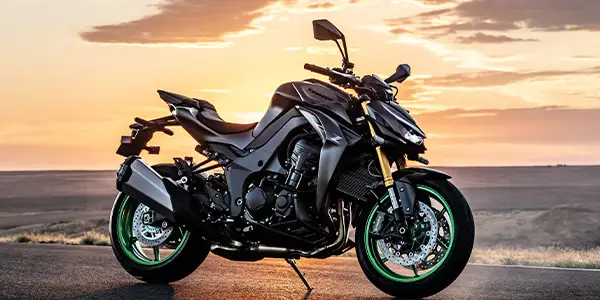
The Z1100 SE replaces the Z1000, which Kawasaki discontinued from its lineup after 2020. It carries a larger, torquier engine and a full modern electronics package the old bike never had.
Displacement grew from 1,043cc to 1,099cc, and torque climbed from a claimed 81.9 lb-ft to 83.3 lb-ft, while peak horsepower dropped slightly from 140 hp to 134 hp (Bennetts BikeSocial, 2026).
That trade is intentional. Kawasaki revised the cam profiles and intake ports to build a fatter midrange rather than chase a bigger peak number, so the engine pulls harder from around 2,000 rpm without needing to be revved out to make useful power.
The bigger addition is electronics. A six-axis IMU now manages lean-sensitive traction control, cornering ABS, and power modes, none of which the Z1000 had.
The Z1100 SE also picks up a 5-inch color TFT display with smartphone connectivity and turn-by-turn navigation, replacing the old bike’s basic LCD dash, plus a standard quickshifter and electronic cruise control that were absent or optional on the outgoing model. Riders coming off a Z1000 will notice the extra weight most in slow-speed maneuvering, since curb weight rose alongside the added hardware.
Kawasaki Z1100 SE Specs
| Spec | Kawasaki Z1100 SE |
|---|---|
| Engine | Liquid-cooled inline-four, DOHC, 16-valve |
| Displacement | 1,099cc |
| Horsepower | 134 hp @ 9,000 rpm (claimed) |
| Torque | 83.3 lb-ft @ 7,600 rpm (claimed) |
| Top speed | ~150-155 mph (estimated, unverified) |
| 0-60 mph | ~2.8-3.2 sec (estimated, unverified) |
| Transmission | 6-speed, quickshifter standard |
| Front brakes | Dual 300mm discs, Brembo M4.32 monobloc calipers |
| Rear shock | Öhlins S46, remote preload adjustable |
| Seat height | 32.1 in |
| Curb weight | 487.3 lb |
| Fuel capacity | 4.5 gal |
| MSRP | $14,999 + $840 destination |
Source: Kawasaki, 2026 (official spec sheet), except where marked estimated.
Frequently Asked Questions
Does the Kawasaki Z1100 SE have a published top speed?
No. Kawasaki does not list an official top speed on its spec sheet, and no major test publication has released a verified figure. Estimates based on the bike’s power output and its predecessor’s tested numbers put it around 150-155 mph.
How much does the Kawasaki Z1100 SE weigh?
The Z1100 SE has a curb weight of 487.3 lb, which includes a full tank of fuel and tool kit. Estimated dry weight is 443.2 lb, per the official Kawasaki spec sheet cited earlier.
What’s the difference between the Z1100 and Z1100 SE?
The SE adds an Öhlins S46 rear shock and radial-mount Brembo M4.32 front calipers over the base Z1100’s Kawasaki-branded suspension and brakes. Both trims share the same 1,099cc engine, frame, and electronics package.
How much horsepower does the Z1100 SE make?
Kawasaki claims 134 hp at 9,000 rpm and 83.3 lb-ft of torque at 7,600 rpm from the 1,099cc inline-four, measured to the ISO 4106 standard.
What is the Kawasaki Z1100 SE’s price?
The Z1100 SE starts at $14,999 MSRP in the US, plus an $840 destination charge that dealers may adjust.