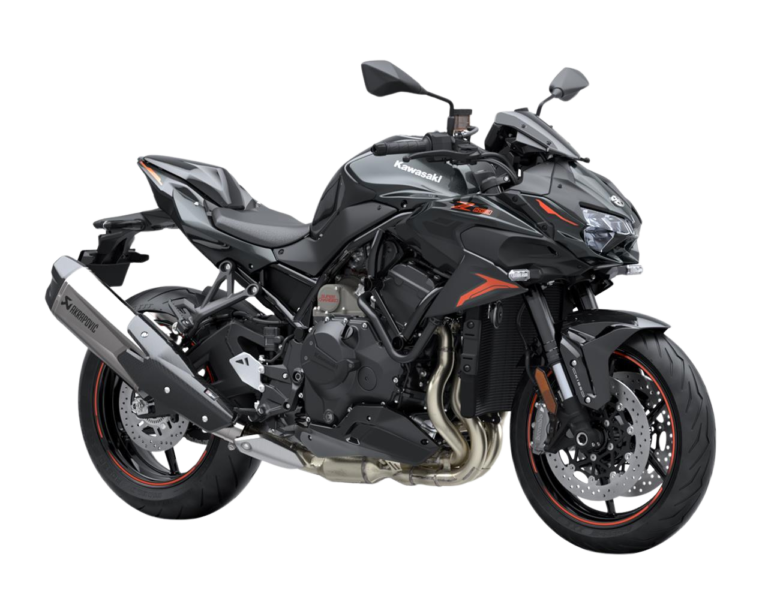
Kawasaki Z500 Top Speed, 0-60 Time & Specs Review
TL;DR
- The Kawasaki Z500 (2024-2026) has a top speed of roughly 115-118 mph and a 0-60 mph time of about 4.0 seconds.
- Its 451cc parallel-twin makes 51 hp at 10,000 rpm and 31.7 lb-ft of torque at 7,500 rpm.
- Curb weight is 366 lb, with a 30.9-inch seat height that keeps it approachable for shorter and newer riders.
- MSRP starts at $5,599 for 2024 and 2025, rising to $5,699 for 2026.
- It’s an A2-license-friendly naked bike built for commuting and city riding, not highway blasting or track days.
How Fast Is the Kawasaki Z500’s Top Speed?
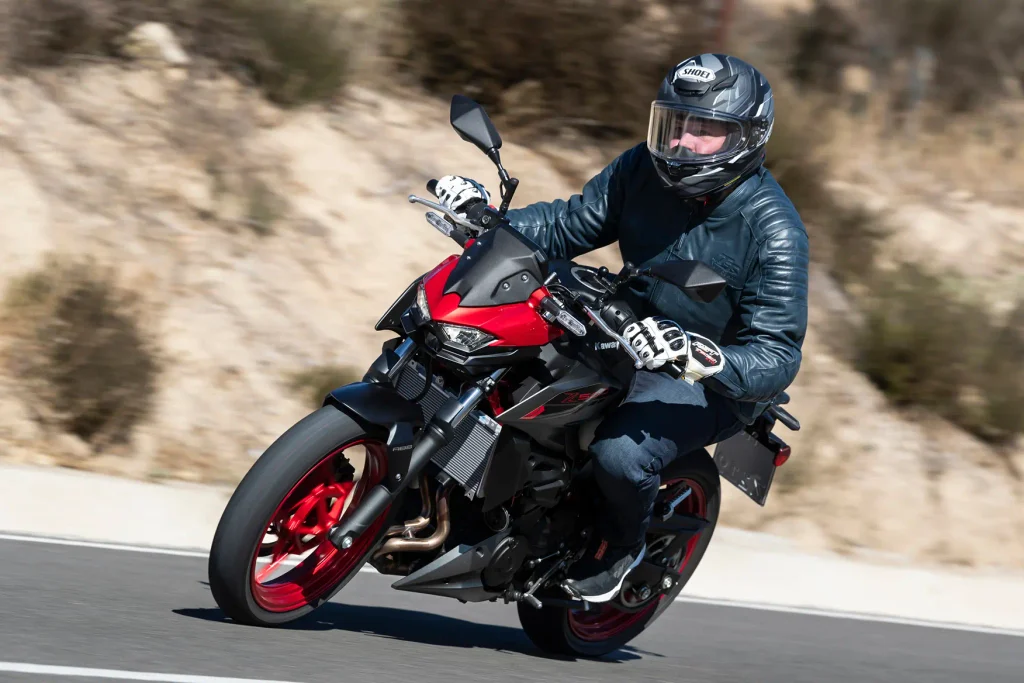
The Z500’s top speed sits around 115-118 mph in stock trim. Cycle World clocked the mechanically identical Ninja 500 (same 451cc engine, same gearing) at approximately 118 mph, and the naked Z500 loses a couple mph to wind resistance since it has no fairing (SlashGear, 2024).
That number puts it well ahead of most 300cc learner bikes but behind 650cc twins like the Ninja 650, which tops out closer to 130 mph. You won’t hold triple digits for long on the Z500 either. Cycle News testers found it settles into a comfortable 70 mph cruise in sixth gear with a noticeable buzz through the pegs and bars past 6,500 rpm (Cycle News, 2024).
Reaching that top end also depends on rider weight, wind, and how tucked in you are. A 200-pound rider sitting upright will see a lower number than Cycle World’s test rider did. Don’t expect to hit 118 mph riding two-up with a passenger and luggage either.
What Is the Z500’s 0-60 mph Time?
The Z500 hits 60 mph in approximately 4.0 seconds from a standing start. That figure comes from testing on the Ninja 500, which shares the Z500’s engine, six-speed gearbox, and near-identical curb weight.
That’s quick for a 451cc commuter but not neck-snapping. For comparison, Kawasaki’s own Ninja 650 does the same sprint in about 3.5 seconds thanks to its larger 649cc parallel-twin.
The Z500 gets to 60 mph fast enough to merge onto a highway on-ramp with confidence, which was a specific design goal Kawasaki mentioned when the bike replaced the Z400.
Riders coming from a 300 or moved up from a 125 will notice the extra torque immediately off the line. The slipper and assist clutch also means you can bang through gears quickly during a hard launch without worrying about rear-wheel hop on a botched downshift.
Kawasaki Z500 Full Spec Sheet
| Spec | 2024-2026 Z500 |
|---|---|
| Engine | 451cc parallel-twin, DOHC, liquid-cooled |
| Bore x stroke | 70.0mm x 58.6mm |
| Compression ratio | 11.3:1 |
| Horsepower | 51.0 hp @ 10,000 rpm |
| Torque | 31.7 lb-ft @ 7,500 rpm |
| Transmission | 6-speed, chain final drive |
| Front brake | Single 310mm disc, 2-piston caliper, ABS |
| Rear brake | Single 220mm disc, 1-piston caliper, ABS |
| Seat height | 30.9 in |
| Curb weight | 366.0 lb |
| Fuel capacity | 3.7 gal |
| Wheelbase | 54.1 in |
Source: Kawasaki official spec sheet (Kawasaki, 2025). Figures apply to the 2024-2026 model years, which carry the same engine and chassis specs.
What Powers the Z500 and How Does It Deliver Power?
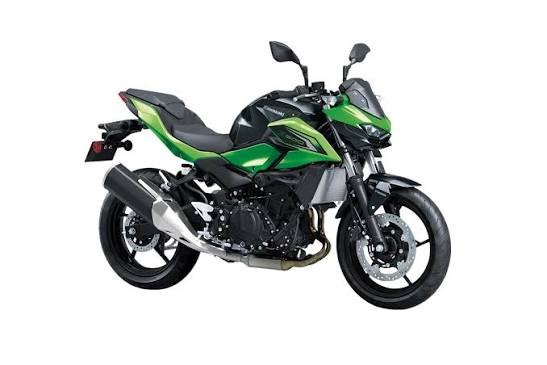
The Z500 runs a 451cc parallel-twin borrowed straight from the Ninja 500, Eliminator cruiser, and the Ninja 7/Z7 hybrids. It makes its 51 hp at a fairly high 10,000 rpm, but the real story is the torque curve: 31.7 lb-ft peaks at just 7,500 rpm, a solid 7 lb-ft jump over the outgoing Z400.
Kawasaki got there by stroking the engine from 51.8mm to 58.6mm while keeping the same 70.0mm bore, plus a larger airbox for better breathing. The result is a bike that pulls hard from low rpm without demanding constant redline shifts, which matters if you’re still learning to read a tachometer.
Power delivery is linear with no explosive midrange hit. That predictability is a feature, not a limitation, for new riders building throttle control. Experienced riders coming from bigger bikes may find it needs more revs to feel lively in tight canyon roads.
How Does the Z500 Handle Around Town and on Twisty Roads?
The Z500 handles light and flickable thanks to its 366-pound curb weight and short 54.1-inch wheelbase. That combination, paired with a trellis frame borrowed in concept from the Ninja H2, makes it easy to flick through stop-and-go traffic or a set of switchbacks without feeling nervous.
The 30.9-inch seat height is on the lower side for a naked bike, which helps shorter riders get both feet flat at stops. An Ergo-Fit accessory seat raises that by about 30mm if you want more legroom instead.
Suspension is basic but adequate: a non-adjustable 41mm fork up front and a preload-adjustable shock out back. Don’t expect track-day damping, but for commuting and weekend backroad rides, it does the job without complaint.
What Does the Z500 Cost and Who Should Buy One?
The 2024 and 2025 Z500 ABS starts at $5,599 MSRP, with the 2026 model bumped to $5,699. SE trim levels with upgraded TFT displays and premium colorways run higher, typically adding $700-$1,000 to the base price depending on model year and dealer.
This bike is built for new riders finishing their license, commuters who want a light and cheap-to-run naked bike, and A2-license riders in markets with power restrictions. If you’re chasing 130+ mph top speeds or want a bike that rewards aggressive canyon carving, look at the Ninja 650 or Z650 instead.
Frequently Asked Questions About the Kawasaki Z500
Is the Kawasaki Z500 fast enough for the highway?
Yes. With a 115-118 mph top speed and enough midrange torque to merge confidently, the Z500 handles highway on-ramps and sustained 70 mph cruising without strain. Longer high-speed stretches introduce vibration through the pegs and bars past 6,500 rpm.
Is the Z500 the same as the Z400?
No, though it replaces it. The Z500 uses a larger, stroked 451cc engine shared with the Ninja 500 and Eliminator, producing 51 hp versus the Z400’s 43 hp claimed output.
Does the Z500 have ABS?
Yes, ABS comes standard on all Z500 trims sold in the US, paired with a single front disc and single rear disc setup.
How much does a Kawasaki Z500 weigh?
The Z500 has a curb weight of 366.0 pounds, which includes a full tank of fuel and factory tool kit.
Can a new rider handle the Z500?
Yes. The linear power delivery, low 30.9-inch seat height, and light 366-pound curb weight make it approachable for riders just off their license, while the assist and slipper clutch reduces the chance of stalling or rear-wheel hop.