Indian Motorcycles Years to Avoid
TL;DR
- The 2014 model year is the one to be most cautious about — first-year production issues from Polaris included drive belt pulley defects, leather fade problems, and a fire-risk ECM recall affecting 18,367 bikes.
- The 2015-2017 Roadmaster had a trunk wiring harness defect that could keep brake lights permanently illuminated, a safety issue that prompted a recall of 7,392 units (NHTSA 18V055000).
- All 2014-2019 Chief, Chieftain, Roadmaster, and Springfield models with the Thunderstroke 111 were hit by a gear position switch recall covering 52,745 bikes — the switch could oxidize and falsely show neutral while in gear.
- The 2019-2020 and 2022 FTR 1200 had a coolant junction recall: hot coolant could spray onto the rear tire or the rider.
- The safest used Indian buys are 2017+ Scouts, 2020+ Chiefs, and 2020+ Challengers — post-recall, refined, and well-supported.
Polaris relaunched Indian Motorcycle in 2013 and hit the ground running — but like any brand reborn after a decade-plus dormancy, the early bikes carried growing pains. The Indian Motorcycles years to avoid cluster around first-year production (2014), specific platform defects on the 2015-2017 Roadmaster, and the early FTR 1200 launch years. Most issues were fixed under recall, and post-2020 Indians are well-sorted machines. On the used market, though, an unresolved recall on a $15,000 bike is your problem — so know which years need vetting before you write a check.
Indian Motorcycles Years to Avoid at a Glance
| Model Year(s) | Models Affected | Primary Issue | NHTSA / Recall ID |
|---|---|---|---|
| 2014 | Chief, Chieftain, Roadmaster | Drive belt pulley defect, ECM fire risk | NHTSA 16V446000 |
| 2014-2016 | Chief Classic, Vintage, Chieftain, Roadmaster | ECM misfire / exhaust fire risk | NHTSA 16V446000 |
| 2014-2019 | Chief, Chieftain, Roadmaster, Springfield | Gear position switch oxidation (52,745 units) | NHTSA 19V776000 |
| 2014-2020 | Heavyweight air-cooled models | VCM headlight loss (28,689 units) | NHTSA 22V635 |
| 2015-2017 | Roadmaster | Trunk wiring harness / brake light fault | NHTSA 18V055000 |
| 2019-2020, 2022 | FTR 1200, FTR 1200 S, FTR 1200 Rally | Coolant junction leak (6,315 units) | Indian I-22-04 |
Why 2014 Is the Riskiest Year to Buy Used
The 2014 model year is the first one that matters for any Indian buyer, and it carries the most first-generation risk. Polaris officially relaunched the brand at Sturgis in August 2013 with the 2014 Chief lineup, and the early production bikes came with a short list of documented problems that owners still encounter on the used market today.
The most immediately annoying was the drive belt pulley. Polaris originally installed pulleys with vertical walls, which caused a persistent squeaking under load — not a mechanical failure, but the kind of noise that makes every ride feel like something is about to go wrong. Indian redesigned the part with v-cut grooves and the noise went away, but plenty of unmodified 2014s are still out there. Ask any seller specifically whether the pulley was updated.
Then there is the ECM misfire issue. In 2016, Indian issued a recall (NHTSA 16V446000) covering 18,367 motorcycles from model years 2014-2016 — Chief Classic, Dark Horse, Vintage, Chieftain, Roadmaster, and Chieftain Dark Horse — for a defect where an engine misfire could push unburned fuel into the exhaust, raising exhaust temperatures to fire-risk levels. The fix was an ECM software update. If you are shopping a 2014-2016 Chief or Chieftain, confirm with the dealer or through Indian’s VIN lookup that this update was completed.
Leather fading on 2014 models was also a widely reported cosmetic complaint. Indian initially fitted the bikes with genuine leather that was not adequately treated for outdoor exposure, and many 2014s came back with noticeably faded saddles within the first riding season.
The 2014-2019 Gear Position Switch: A 52,745-Bike Problem
This one cuts across six model years and is the widest-reach recall Indian has issued on the modern-era heavyweight lineup. In late 2019, Indian confirmed (NHTSA 19V776000) that the gear position switch on Thunderstroke 111-equipped Chief, Chieftain, Roadmaster, and Springfield models from 2014 through 2019 was prone to contact oxidation. When that oxidation built up, the switch could falsely report neutral on the instrument cluster when the bike was actually in gear.
The safety risk is real and specific: a rider who sees “N” on the display and releases the clutch expecting to roll freely could instead lurch forward. Indian issued a stop-sale and instructed dealers to clean and inspect switches at no cost, with a permanent replacement part available by spring 2020. The recall covered 52,745 motorcycles.
If you are buying any 2014-2019 Chief, Chieftain, Roadmaster, or Springfield, pull up the VIN at NHTSA’s recall search or Indian’s own recall page and confirm this switch was replaced — not just inspected and cleaned. Cleaned contacts can re-oxidize; the replacement part is the real fix.
The 2015-2017 Roadmaster Wiring Harness Recall
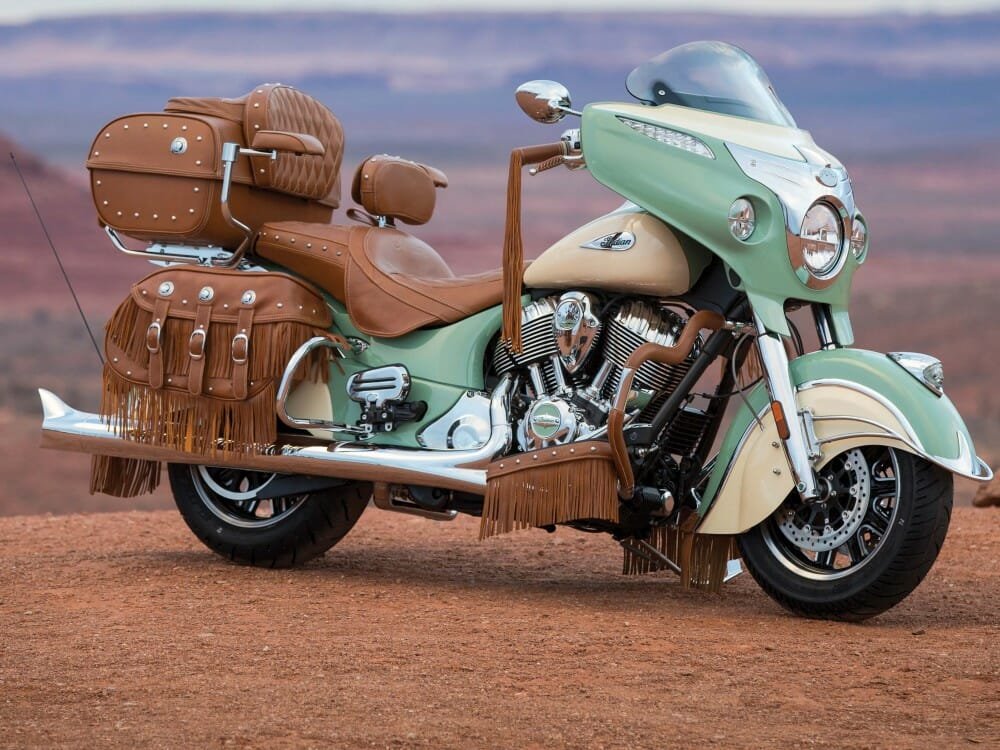
The Roadmaster is Indian’s top-shelf touring machine, and the 2015-2017 versions had a specific electrical defect that affected 7,392 bikes (NHTSA 18V055000). The trunk jumper wiring harness was manufactured without silicone plugs in the unused connector ports. Water could work its way in, and when it did, it could cause the brake light to stay on permanently — even with no brake applied.
This matters more than it sounds. A brake light that never goes off tells every driver behind you nothing. The warning signal becomes noise and following drivers stop reacting to it. Indian’s fix was a new harness with sealing plugs installed at no cost. The recall campaign launched in January 2018.
On any pre-owned 2015-2017 Roadmaster, confirm the trunk wiring harness was replaced under recall. Check the service history; if there is no paperwork and the seller cannot verify it with a dealer, treat it as unresolved.
The 2014-2020 VCM Headlight Recall: 28,689 Bikes
Indian first flagged a Vehicle Control Module connection problem in 2019, then expanded the campaign in 2022 (NHTSA 22V635) to cover 28,689 halogen-equipped heavyweight air-cooled bikes produced through July 2022. Every major model was touched: Chief, Chieftain, Springfield, Roadmaster, and their variants.
The defect is an oxidation layer on Pin 11 of the center VCM connector. When that contact degrades, the bike loses all forward lighting — headlight and driving lights — without warning. Indian confirmed 247 damage reports during its investigation. The fix is an electrical connector replacement, free of charge at any dealer.
Any 2014-2020 halogen-equipped heavyweight Indian should show this recall as completed. Bikes retrofitted from the factory with LED lighting are not affected. Check it by VIN before you buy.
The 2019-2020 FTR 1200 Coolant Junction Failure
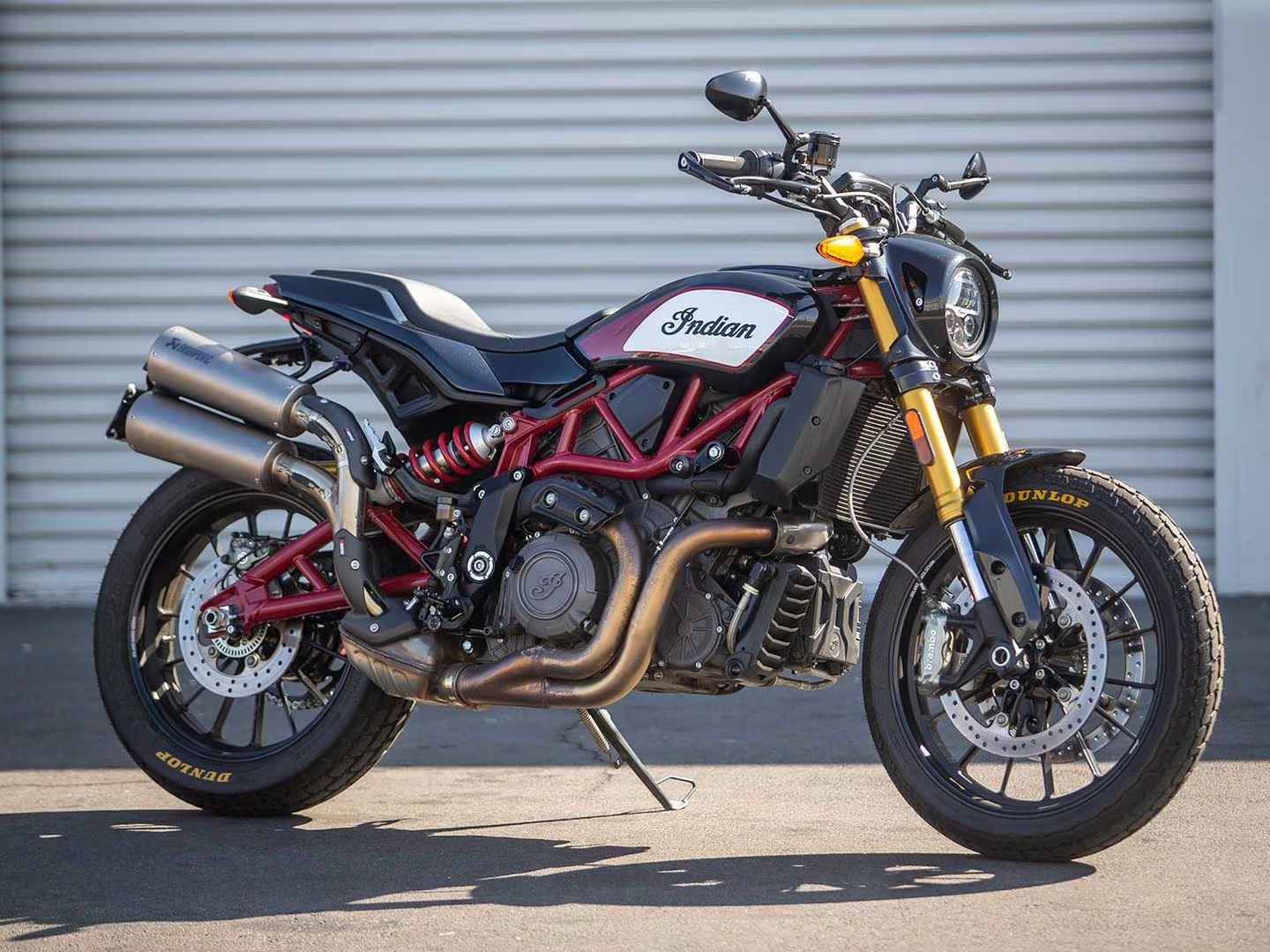
The FTR 1200 launched in 2019 as Indian’s flat-track-inspired sport bike, and model years 2019, 2020, and 2022 carried a coolant junction defect that triggered a global recall in August 2022 (Indian I-22-04, approximately 6,315 motorcycles). The junction could fail at operating temperature, spraying hot coolant onto the rear tire or the rider.
Hot coolant on a rear tire behaves like riding over a patch of motor oil — traction disappears without warning. Indian documented 64 owner-submitted leak reports, including four cases where coolant hit the rider directly (Ride Apart, 2022). No crashes were officially linked to the defect.
The remedy is a revised coolant junction with tighter material tolerances. Confirm it has been replaced before riding any 2019, 2020, or 2022 FTR 1200 off the lot.
Which Indian Motorcycle Years Are Worth Buying Used
The years to avoid tell you where the problems were. The flip side is that once those issues were resolved — through recalls, ECM updates, and second- and third-generation engineering refinements — Indian’s product line became genuinely solid.
| Model | Recommended Used Year Range | Why |
|---|---|---|
| Scout / Scout Bobber | 2017 and newer | Post-ECM updates, well-sorted engine, owners reporting 60,000+ miles without major issues |
| Chief / Chief Vintage | 2020 and newer | Post gear-switch recall, updated Thunderstroke 116 on some trims |
| Chieftain / Springfield | 2020 and newer | All major Thunderstroke recalls resolved by model year |
| Challenger | 2021 and newer | PowerPlus 108 liquid-cooled engine, strong reliability track record at launch |
| FTR 1200 | 2023 and newer | Post-coolant junction recall redesign; confirmed corrected part from production |
The Scout platform has earned a genuine reputation for durability. Owners regularly report 60,000 to 77,000 miles on 2016 and 2017 models with nothing more than routine consumables — oil, tires, clutch cable at high mileage (Indian Motorcycle Forum, 2024). The Thunderstroke engines, once past the early recall periods, are not known for catastrophic failures. Post-2020 Indians on the PowerPlus platform represent the best long-term value in Indian’s used lineup.
Frequently Asked Questions About Indian Motorcycle Years to Avoid
What is the worst year for Indian Motorcycles?
The 2014 model year is the most problematic for used buyers. It was the first model year under Polaris’s ownership, and first-year production brought multiple documented issues: the drive belt pulley squeak from a design flaw, a fire-risk ECM recall covering 18,367 bikes, and cosmetic problems with leather fading. These issues are fixable, but a 2014 with no documented service history is a gamble.
Are 2014-2019 Indian Motorcycles safe to buy used?
They can be, provided you verify that all outstanding recalls have been completed. The gear position switch recall (NHTSA 19V776000) affected 52,745 bikes across that six-year window, and the VCM headlight recall (NHTSA 22V635) added another 28,689 units. Run the VIN through the NHTSA recall database and Indian’s own VIN checker at indianmotorcycle.com before committing to any purchase in that range.
Did Polaris fix Indian’s early reliability problems?
Yes, and the trajectory is clear. The 2014-2016 bikes had the most documented issues; each successive generation addressed them. By 2020, the major Thunderstroke recalls had been completed across the fleet, and the launch of the PowerPlus engine in the Challenger brought a new platform with a cleaner reliability record. Post-2020 Indians are among the better-sorted American cruisers on the market.
Is the Indian Scout reliable for high mileage?
The Scout platform has a strong reliability record. Owners regularly report 60,000 to 77,000 miles on 2015-2019 models with only routine maintenance — oil, tires, clutch cable, and battery. The engine does not have the widespread recall history of the Thunderstroke-equipped heavyweights. The one thing every Scout year shares is a starter wire oil seepage tendency, which is minor and manageable.
How do I check if a used Indian has open recalls?
Go to nhtsa.gov/recalls and enter the 17-digit VIN, or use Indian Motorcycle’s own recall search at indianmotorcycle.com. Both are free and return results within seconds. Do this before any test ride or purchase negotiation — not after. A bike with an unresolved safety recall is the seller’s disclosed problem; make sure it becomes their cost to fix, not yours.