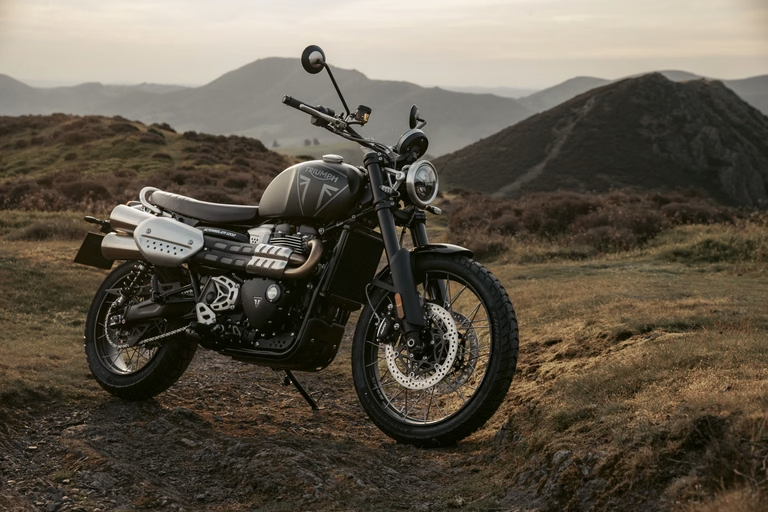
Triumph Speed Twin 1200 RS Top Speed, Specs & Review
TL;DR
- Top speed is a manufacturer-claimed 137 mph (220 km/h); no independent instrumented test has been published yet
- The 1200cc parallel twin makes 103.5 hp at 7,750 rpm and 83 lb-ft at 4,250 rpm
- US pricing starts at $17,195, and the bike ships with Öhlins rear shocks, Brembo Stylema calipers, and a standard up/down quickshifter
- Wet weight is 476 lb with a 31.9-inch seat height, so it’s not a small bike despite the classic styling
- The RS is built for riders who want Bonneville looks with genuinely sporty chassis hardware underneath
What’s the Triumph Speed Twin 1200 RS’s Top Speed?
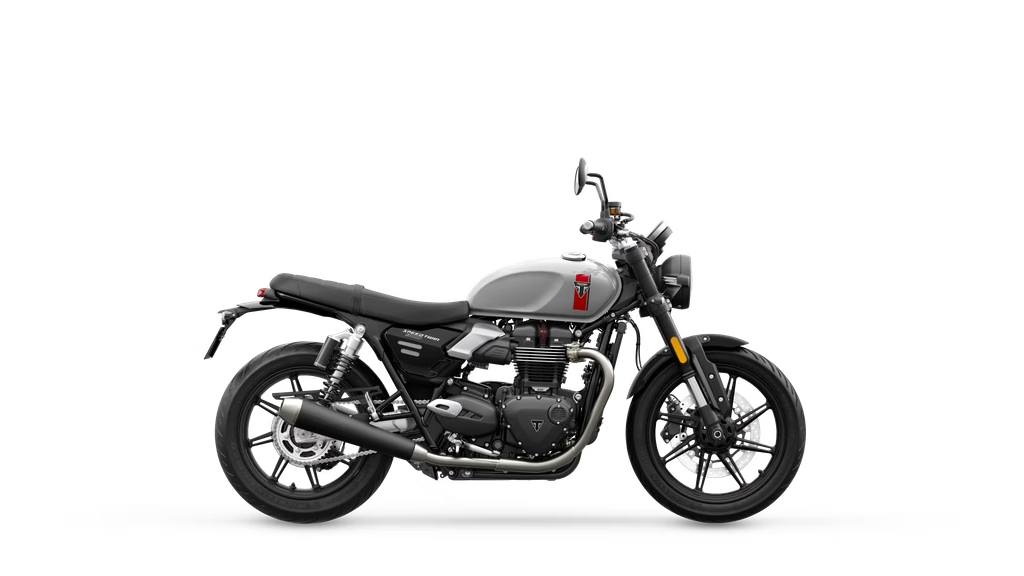
The Speed Twin 1200 RS has a manufacturer-claimed top speed of 137 mph (220 km/h), per Australian Motorcycle News’ 2025 road test (AMCN, 2025). That figure comes from Triumph, not an independent GPS-timed run, and no outlet has published instrumented top speed or quarter-mile data for this bike yet. This article will be updated once a named publication or MotoStatz runs a timed test.
That’s worth sitting with for a second. A lot of spec pages will hand you a top speed number like it’s gospel. This one isn’t. It’s a claimed figure, and claimed figures tend to run a few mph optimistic once you factor in rider position, wind, and a full tank versus a test-track pass. Treat 137 mph as a ballpark, not a guarantee.
For context, that number is entirely plausible for a 103.5 hp parallel twin pushing a naked-bike windscreen through the air. The old air-cooled Bonnevilles topped out closer to 110-115 mph. The Speed Twin 1200 RS, with its taller gearing and more power, comfortably clears that.
How Fast Does the Speed Twin 1200 RS Accelerate?
There’s no published 0-60 mph or quarter-mile time for the Speed Twin 1200 RS as of this writing. Neither MotoStatz nor the major test outlets (Cycle World, MCN, Bennetts BikeSocial) have run instrumented acceleration testing on this specific model yet.
Here’s what we can say with confidence: the engine pulls hard from 4,000-6,000 rpm, and short-shifting is genuinely rewarding rather than something you do out of necessity.
Given the power-to-weight ratio (roughly 218 lb per hp at 476 lb wet weight), a reasonable estimate would put 0-60 mph somewhere in the low-to-mid 3-second range, in the same neighborhood as comparable 1200cc parallel twins like the old Speed Twin 1200 and the Indian FTR 1200. That’s an estimate based on comparable bikes, not a tested figure for this model.
Engine and Performance Specs
The Speed Twin 1200 RS runs the same core engine as the base Speed Twin 1200: a liquid-cooled, SOHC, 270-degree crank parallel twin. What’s changed for 2025 is a retune to meet Euro 5b emissions rules, which actually bumped output rather than choking it. Peak power climbed 5 hp over the outgoing model, landing at 103.5 hp.
| Spec | Detail |
|---|---|
| Engine | Liquid-cooled, SOHC, 270° crank parallel twin |
| Displacement | 1200 cc |
| Bore x stroke | 97.6mm x 80mm |
| Compression | 12.1:1 |
| Max power | 103.5 hp @ 7,750 rpm |
| Max torque | 83 lb-ft @ 4,250 rpm |
| Fueling | Multipoint EFI, ride-by-wire, 2 rider modes standard |
| Clutch | Wet, multi-plate, slip and assist |
| Gearbox | 6-speed, Triumph Shift Assist (bidirectional quickshifter) standard |
| Final drive | X-ring chain |
Source: Triumph Motorcycles official specification page, 2025
Torque peaks low at 4,250 rpm and stays flat most of the way to redline, which is the real story with this engine. You’re not chasing peak power at 7,750 rpm to have fun on it.
Roll on the throttle anywhere from 3,000 rpm up and the bike just goes. That’s the classic parallel-twin character Triumph’s Bonneville platform has always leaned on, just with more of it than the old air-cooled bikes ever had.
The Shift Assist quickshifter is a genuine upgrade over the base Speed Twin 1200, which doesn’t get one due to footpeg-clearance packaging. If clutchless shifting matters to you, that alone might be worth the price jump to the RS.
Chassis and Suspension: What Actually Separates the RS from the Base Model
The RS trades the base Speed Twin 1200’s Marzocchi rear shocks for fully adjustable Öhlins piggyback units, and pairs them with Brembo Stylema radial calipers instead of the base bike’s lower-spec setup. This is the real difference between the two trims, not just paint and gold accents.
Up front, both bikes get 43mm Marzocchi USD forks, but the RS’s are fully adjustable for preload, compression, and rebound. The base model’s are not. At the rear, the RS runs twin Öhlins RSUs with external reservoirs, adjustable across all three parameters, giving 123mm of wheel travel.
| Spec | Detail |
|---|---|
| Front suspension | 43mm USD Marzocchi forks, fully adjustable, 120mm travel |
| Rear suspension | Twin Öhlins RSUs, external reservoir, fully adjustable, 123mm travel |
| Front brakes | Dual 320mm discs, Brembo Stylema M4.30 radial calipers, OCABS |
| Rear brakes | Single 220mm disc, Nissin 2-piston floating caliper, OCABS |
| Wheels | Cast aluminum, 7-spoke, 17-inch front and rear |
| Front tire | 120/70 R17 Metzeler Racetec RR K3 |
| Rear tire | 160/60 R17 Metzeler Racetec RR K3 |
Source: Triumph Motorcycles official specification page, 2025
A back-to-back test of both trims found the base model’s fork and brakes start to show their limits once you push the pace, while the RS holds that composure further into the corner (Cycle News, 2025). If you plan to ride aggressively or spend time in the canyons, that’s a real, measurable difference, not marketing fluff.
Weight, Seat Height, and Everyday Ergonomics
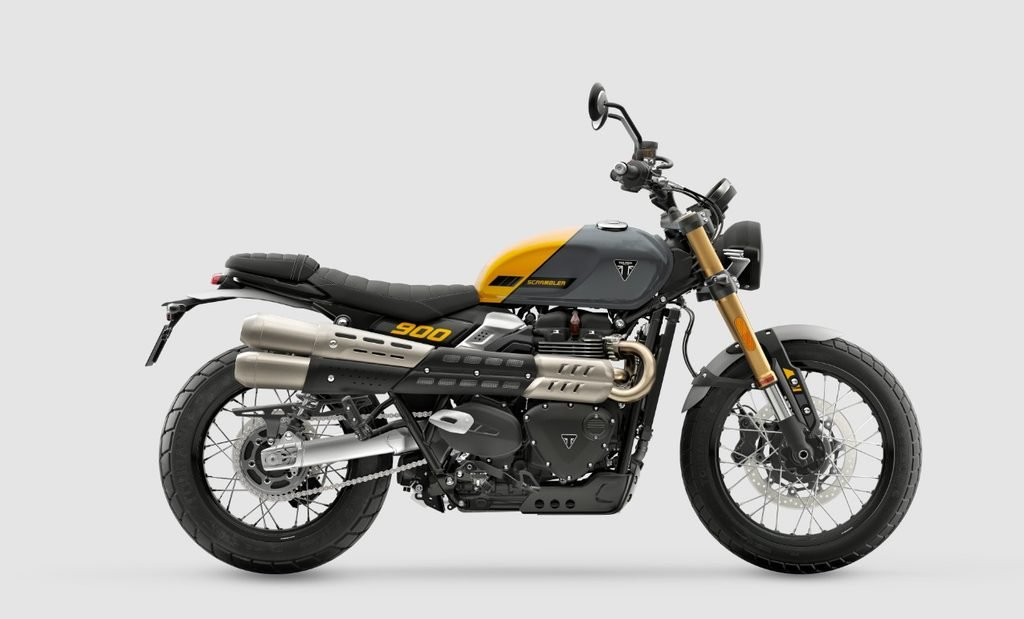
The Speed Twin 1200 RS weighs 476 lb wet and has a 31.9-inch seat height, numbers that put it solidly in mid-size naked roadster territory rather than the lightweight class. Riders under 5’6″ should sit on one before buying; the seat height combined with the RS’s forward-set, rear-set footpeg riding position isn’t the friendliest setup for shorter inseams.
| Spec | Detail |
|---|---|
| Wet weight | 476 lb |
| Seat height | 31.9 in (810mm) |
| Wheelbase | 55.7 in (1414mm) |
| Rake | 22.6° |
| Trail | 3.62 in (92mm) |
| Fuel capacity | 3.8 US gal (14.5L) |
| Handlebar width | 31.2 in (792mm) |
Source: Triumph Motorcycles official specification page, 2025
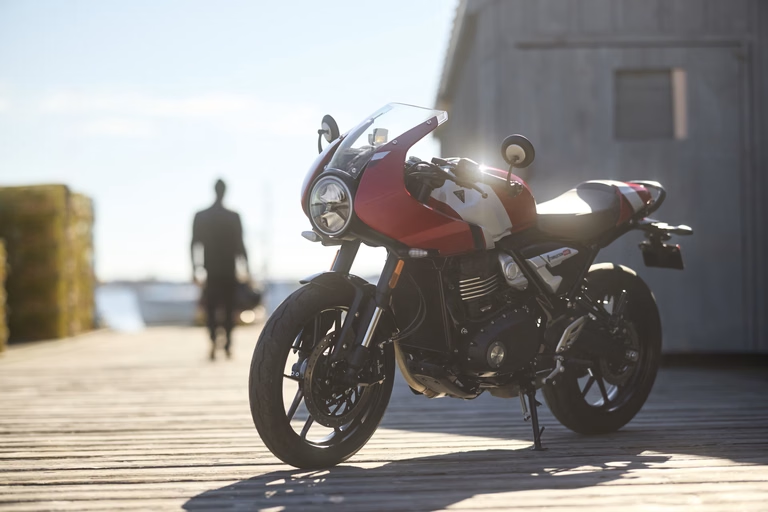
The RS’s riding position is noticeably sportier than the base Speed Twin 1200: bars are higher and further forward, footpegs are rear-set. Riders coming from the base bike or an old Bonneville T120 will feel more weight on their wrists and more bend in the knees. It’s still nowhere near as extreme as a Thruxton RS cafe racer crouch, but it’s a real step toward sport-touring ergonomics rather than upright cruiser comfort (MotoFoMo, 2026).
Fuel range works out to roughly 150-155 miles per tank based on a real-world consumption figure of 5.5 L/100km, which is reasonable for a bike this size but not exceptional.
Price and What You Get for the Money
The Speed Twin 1200 RS starts at $17,195 in the US, a roughly $2,000-3,000 premium over the base Speed Twin 1200 depending on the model year and configuration. For that money you get the Öhlins rear shocks, adjustable Marzocchi forks, Brembo Stylema brakes, standard quickshifter, and a Sport ride mode the base bike doesn’t offer.
Whether that premium is worth it comes down to how you ride. If you’re commuting and doing the occasional weekend backroad, the base Speed Twin 1200 covers that just fine and saves real money. If you’re regularly pushing into aggressive lean angles, hard braking zones, or track days, the RS’s suspension and brake upgrades will actually get used, not just admired in the driveway.
Frequently Asked Questions
What is the top speed of the Triumph Speed Twin 1200 RS?
Triumph’s claimed top speed is 137 mph (220 km/h). No independent instrumented test has been published for this model yet, so treat that number as a manufacturer figure rather than a verified one.
How much horsepower does the Speed Twin 1200 RS have?
It makes 103.5 hp at 7,750 rpm and 83 lb-ft of torque at 4,250 rpm from its 1200cc parallel twin, per Triumph’s official specifications.
What’s the difference between the Speed Twin 1200 and the Speed Twin 1200 RS?
The RS gets fully adjustable Öhlins rear shocks and Marzocchi forks versus the base model’s non-adjustable units, Brembo Stylema brake calipers, a standard quickshifter, and an extra Sport ride mode. The engine, frame, and most dimensions are shared between both.
How much does the Triumph Speed Twin 1200 RS weigh?
It has a wet weight of 476 lb, which includes a full tank of fuel and all fluids.
Is the Speed Twin 1200 RS good for beginners?
It’s not the ideal first bike. At 103.5 hp and 476 lb, with a firm, sport-oriented chassis, it rewards riders who already have some seat time and want to push it. New riders would be better served by the base Speed Twin 1200 or something smaller, then stepping up once they’ve got a season or two of miles behind them.
Does the Speed Twin 1200 RS come with a quickshifter?
Yes, Triumph Shift Assist is standard on the RS and allows clutchless up and down shifts. It’s not available on the base Speed Twin 1200 due to footpeg packaging constraints.