Triumph Trident 800 Top Speed, Specs & Review
TL;DR
- The Trident 800 is estimated to top out around 130-135 mph based on its power-to-weight ratio; no instrumented test has been published yet (as of September 2026)
- It makes a claimed 113 hp at 10,750 rpm and 61.9 lb-ft of torque at 8,500 rpm from an all-new 798cc inline triple
- Fully fueled weight is 436.5 lbs, and US pricing starts at $9,995
- It slots between the Trident 660 and the discontinued Street Triple 765 R, sharing its engine with the Tiger Sport 800
- Seat height is 31.9 inches, which keeps it approachable for shorter riders despite the power bump
What’s the Triumph Trident 800’s Top Speed?
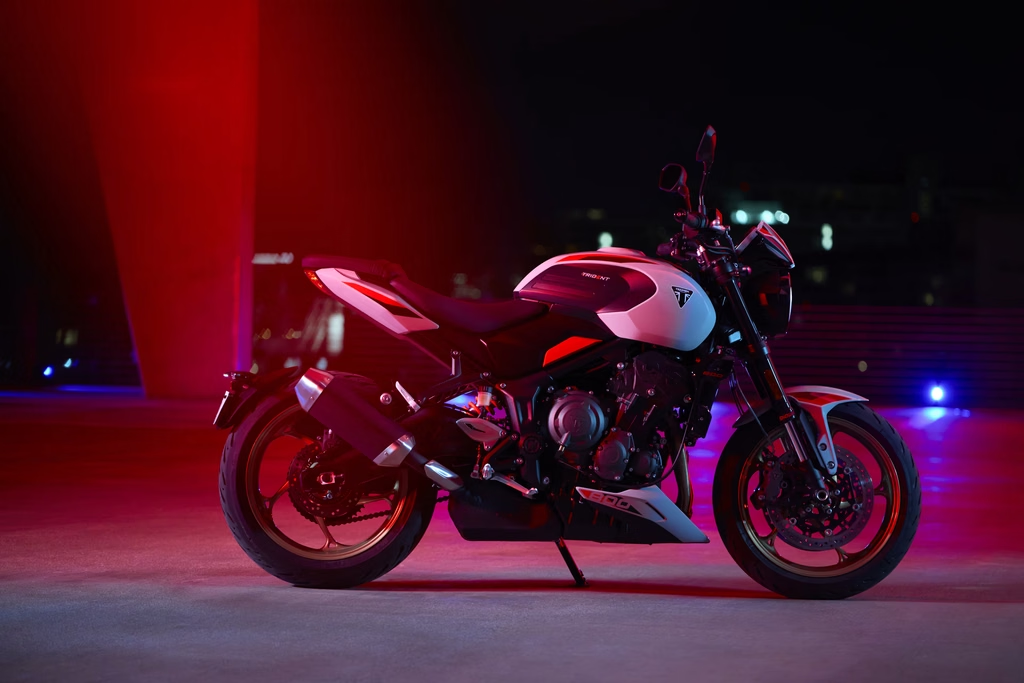
There’s no instrumented top speed test published yet for the Trident 800, so any number you see right now is an estimate, not a measured fact. Based on the bike’s power-to-weight ratio and the drag profile of a naked roadster, a realistic range is 130-135 mph.
That estimate leans on comparable middleweight triples like the Yamaha MT-09 and Kawasaki Z900, both of which post verified top speeds in the high 120s to low 130s with similar horsepower and a similar upright riding position.
Once Cycle World, MCN, or another named publication runs a timed test, this section will get updated with the real figure. Until then, treat 130-135 mph as an educated guess, not a spec sheet number.
How Fast Is the Trident 800 from 0-60?
No independently verified 0-60 time exists yet either. Given the Trident 800’s 113 claimed horsepower and 436.5-lb wet weight, a power-to-weight ratio that beats most 600cc sportbikes of a decade ago, a 0-60 time in the low-to-mid 3-second range is a reasonable estimate.
The 798cc triple hits peak torque at 8,500 rpm, which is high enough in the rev range that launches will depend heavily on clutch feel and how aggressively you’re willing to slip it.
Triumph’s standard Slip & Assist clutch and traction control should make that easier to manage than on a bike without electronic aids. Again, this is an estimate pending a real test-strip number.
What Engine Powers the Trident 800?
The Trident 800 runs an all-new 798cc, liquid-cooled inline triple with 12 valves and triple throttle bodies, one per cylinder instead of the single throttle body setup on the outgoing Trident 660 (Triumph Motorcycles, 2026).
This is the same engine architecture that debuted in the Tiger Sport 800, tuned slightly differently for the naked roadster application.
Peak output is 113 hp at 10,750 rpm and 61.9 lb-ft of torque at 8,500 rpm, with an 11,500 rpm redline. Power goes through a six-speed gearbox to a chain final drive, and Triumph’s bi-directional quickshifter comes standard, so clutchless upshifts and downshifts are part of the package from the factory.
The bore and stroke, 78mm x 55.7mm, share the 78mm bore of the 765cc Street Triple engine but with a longer stroke for more midrange torque.
What Does the Trident 800 Weigh and How Tall Is the Seat?
Fully fueled, the Trident 800 weighs 436.5 lbs, about 17.5 lbs more than the Trident 660 it’s built alongside. Seat height comes in at 31.9 inches, just 0.2 inches taller than the 660’s seat.
That combination, moderate weight and an accessible seat height, is what makes the Trident 800 workable for riders stepping up from a smaller bike without feeling intimidated.
The tubular steel perimeter frame is closely related to the Trident 660’s chassis, though the rear section is widened to fit the bigger airbox and individual throttle bodies. Wheelbase is 55.2 inches with a 24.5-degree rake and 4.3 inches of trail, numbers that lean toward stable and easygoing rather than razor-sharp.
What Suspension and Brakes Does the Trident 800 Use?
Up front, the Trident 800 gets a 41mm Showa inverted fork adjustable for both compression and rebound damping, with 4.72 inches of travel. The rear shock, also Showa, adjusts for rebound damping and preload via a remote adjuster, offering 5.1 inches of travel.
Braking comes from dual J.Juan four-piston radial calipers biting 310mm front discs, with a single J.Juan piston caliper and 220mm disc out back, both backed by cornering ABS.
Several first-ride reviews flagged the front brake’s initial bite as soft compared to the Street Triple RS, though stopping power itself was rated as adequate for the bike’s performance level. Tires are Michelin Road 5s in a 120/70R17 front and 180/55R17 rear.
How Does the Trident 800 Compare on Price?
At $9,995, the Trident 800 undercuts several of its closest rivals while matching or beating their power figures. It lines up against the Kawasaki Z900 ABS at $9,999, the Yamaha MT-09 at $10,899, and Honda’s CB750 Hornet, all bikes that trade blows in the 90-110 hp naked-roadster class.
That pricing also does something else: it replaces the Street Triple 765 R in Triumph’s lineup at $1,000 less than that bike cost. The Trident 800 doesn’t match the 765 R’s peak power, giving up about 5 hp, but it closes most of the gap while adding a more relaxed, road-focused riding position.
For a rider cross-shopping the class, the Trident 800 earns its spot by combining near-Street Triple performance with genuinely competitive pricing rather than winning outright on any single spec.
Who Should Buy the Trident 800?
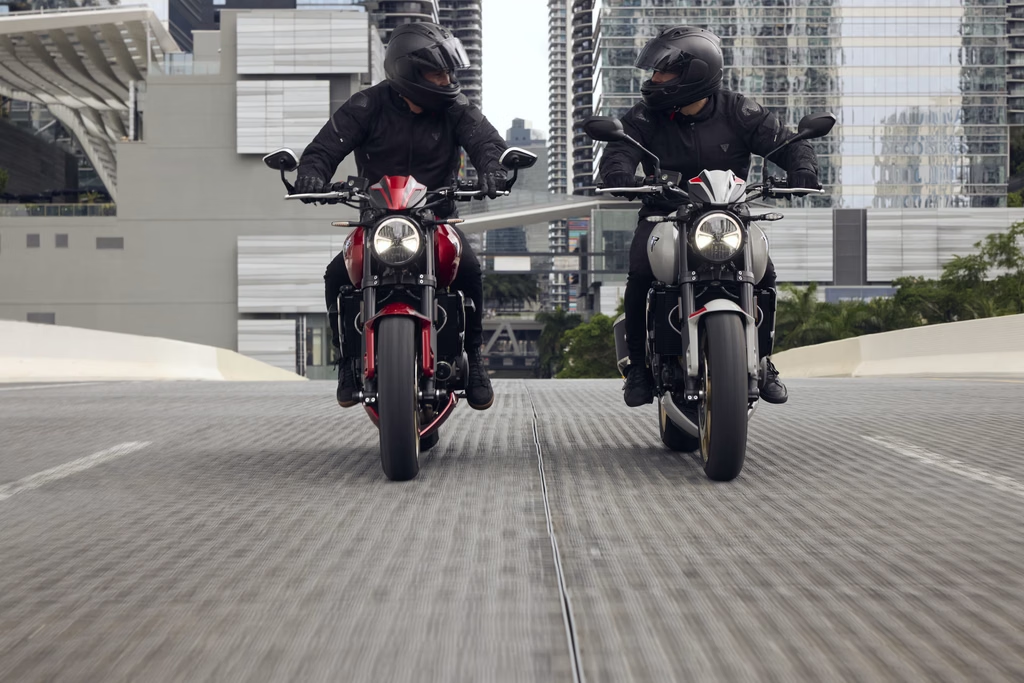
The Trident 800 works best for riders who’ve outgrown an entry-level bike and want real midrange punch without stepping up to a full-on sportbike riding position.
Its upright ergonomics, wide handlebars, and 31.9-inch seat height make it comfortable for commuting and weekend backroad rides alike, while the 113-hp triple has enough top-end to satisfy someone who wants a bike that can still surprise them on a mountain road.
It’s less suited to committed track riders, since the RideApart and Visordown first-ride reviews both noted the standard suspension setup is tuned soft for street comfort rather than aggressive cornering loads. Riders chasing a sharper, more focused chassis should look at the Street Triple 765 RS instead.
For everyday street riding, commuting, and the occasional spirited weekend ride, though, the Trident 800 hits a sweet spot between the mellow Trident 660 and the far pricier Street Triple range.
Full Spec Table
| Spec | Triumph Trident 800 |
|---|---|
| Price (US) | $9,995 |
| Engine | 798cc liquid-cooled inline triple, 12-valve |
| Horsepower | 113 hp @ 10,750 rpm (claimed) |
| Torque | 61.9 lb-ft @ 8,500 rpm (claimed) |
| Transmission | 6-speed, chain final drive |
| Frame | Tubular steel perimeter |
| Front suspension | 41mm Showa inverted fork, adjustable compression/rebound |
| Rear suspension | Showa shock, adjustable rebound and preload |
| Front brake | Dual 4-piston J.Juan calipers, 310mm discs, cornering ABS |
| Seat height | 31.9 in |
| Wheelbase | 55.2 in |
| Fuel capacity | 3.7 gal |
| Claimed weight | 436.5 lbs (wet) |
Source: Triumph Motorcycles, 2026
Frequently Asked Questions
What is the Triumph Trident 800’s top speed?
No instrumented test has been published yet. Based on comparable middleweight naked bikes with similar power-to-weight ratios, an estimated range is 130-135 mph. This will be updated once a named publication runs a timed test.
How much horsepower does the Trident 800 have?
Triumph claims 113 hp at 10,750 rpm and 61.9 lb-ft of torque at 8,500 rpm from its 798cc inline triple.
How much does the Trident 800 weigh?
The Trident 800 weighs 436.5 lbs fully fueled, according to Triumph’s published specifications.
Is the Trident 800 good for new riders?
It’s usable for confident beginners thanks to its 31.9-inch seat height, standard traction control, and three ride modes including a Rain mode that softens throttle response. That said, 113 hp is a substantial jump from a typical first bike, so riders brand new to motorcycling may want to start on something smaller and work up to it.
What’s the difference between the Trident 660 and Trident 800?
The 800 uses a larger 798cc triple with triple throttle bodies instead of the 660’s single throttle body setup, making significantly more power. It also gets upgraded Showa suspension, stronger four-piston front brakes, and weighs about 17.5 lbs more.