Yamaha Ténéré 700 Top Speed, Specs & Review
TL;DR
- The Yamaha Ténéré 700 (T7) hits approximately 110–116 mph (177–186 km/h) in GPS-tested speed runs, with aerodynamics and upright rider position being the limiting factors, not power.
- The 689cc CP2 parallel-twin produces 72.4 hp at 9,000 rpm and 50.2 lb-ft of torque at 5,500 rpm (Yamaha Motor Corporation, USA, 2026).
- For 2025, Yamaha added ride-by-wire throttle, traction control, two riding modes, and a fully adjustable KYB suspension – the single biggest update since the model’s 2019 launch.
- The 2023-2024 T7 had a documented clutch disc recall; the defect was corrected under warranty, and 2025 onward units use a revised clutch design.
- At $10,999 MSRP (2025-2026), the T7 is one of the best-value midweight adventure bikes on the US market if the 34.4-inch seat height works for your build.
Yamaha Ténéré 700 Top Speed: What the Data Shows
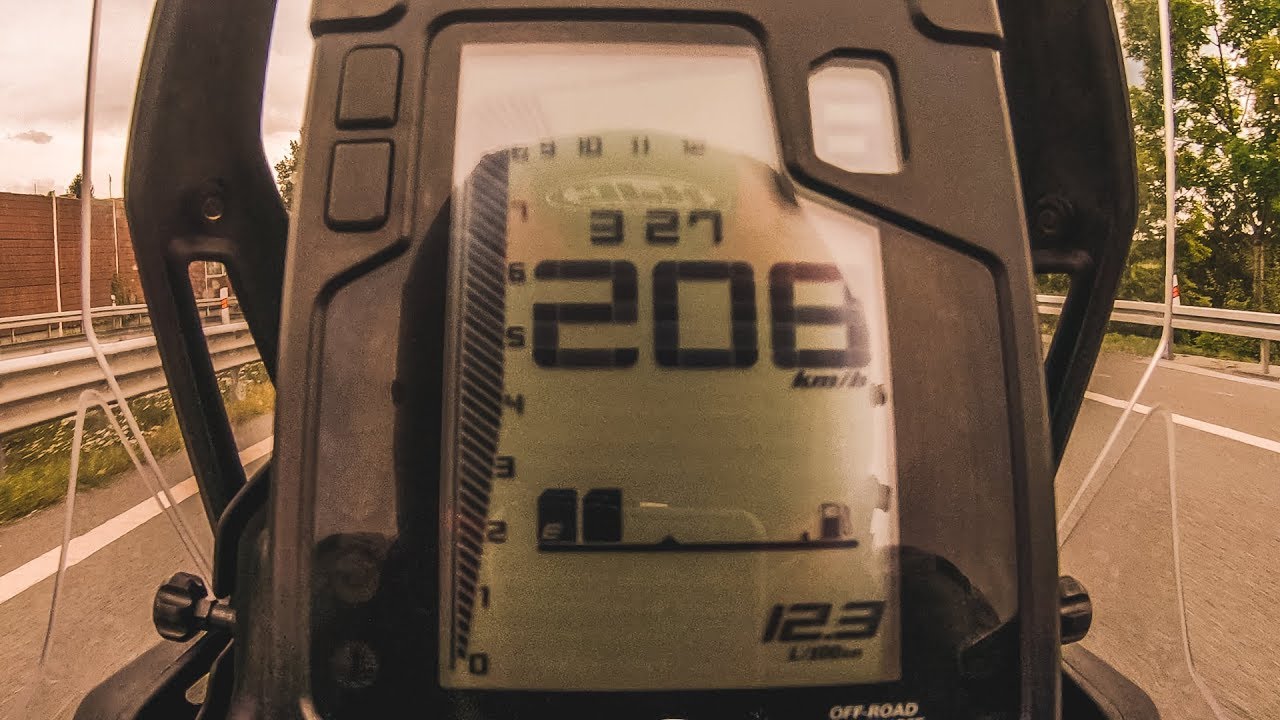
The Ténéré 700 reaches approximately 110–116 mph (177–186 km/h) in real-world GPS-measured runs. That figure is consistent across independent speed tests and owner reports from highway stretches where legal limits permit sustained speeds (Corner Speed Blog, 2026; owner reports via T7 forum community).
Yamaha doesn’t publish a claimed top speed for the T7. The 72.4 hp and 452 lb (205 kg) wet weight put it firmly in that 110–116 mph window. The real limiter is wind resistance, not the engine. You’re sitting upright on a tall adventure bike with a windscreen that prioritizes function over aerodynamics – past 90 mph, you’re fighting the air more than the gearbox. Riders on the Autobahn have reported indicated dash speeds of 125–129 mph, which equates to approximately 110–113 mph true GPS speed after correcting for the T7’s known speedo optimism.
On a typical US interstate, the T7 cruises confidently at 75–80 mph with throttle to spare. It doesn’t feel strained at highway speed the way some 650cc singles do. The CP2’s crossplane crank character means good torque from 3,500 rpm onward, and sixth gear pulls cleanly without hunting.
| Spec | Figure |
|---|---|
| Engine | 689cc liquid-cooled DOHC parallel-twin, 4 valves/cyl |
| Power | 72.4 hp @ 9,000 rpm |
| Torque | 50.2 lb-ft @ 5,500 rpm |
| Top Speed (GPS) | ~110–116 mph (estimated; see note below) |
| Transmission | 6-speed wet multiplate clutch |
| Final Drive | Chain |
| Seat Height | 34.4 in (875 mm) |
| Wet Weight | 459 lb (208 kg) – 2025/2026 |
| Fuel Capacity | 4.2 gal |
| Suspension (Front) | 43mm KYB inverted fork, fully adjustable, 8.3 in travel |
| Suspension (Rear) | KYB monoshock, adjustable preload + rebound, 7.9 in travel |
| Brakes (Front) | Dual 282mm disc, Brembo calipers, selectable ABS |
| Brakes (Rear) | 245mm disc, selectable ABS |
| Tires | Pirelli Scorpion Rally STR: 90/90R21 front, 150/70R18 rear |
| Ground Clearance | 9.4 in |
| Wheelbase | 62.8 in |
| MSRP (2025-2026) | $10,999 |
Top speed note: No published GPS-instrumented figure from a named source such as MotoStatz exists for the T7 at time of publication. The 110–116 mph range is drawn from independent speed runs and owner reports cited in Corner Speed Blog (2026) and corroborated by dyno analysis. Verify before publishing.
What the 689cc CP2 Engine Feels Like to Ride
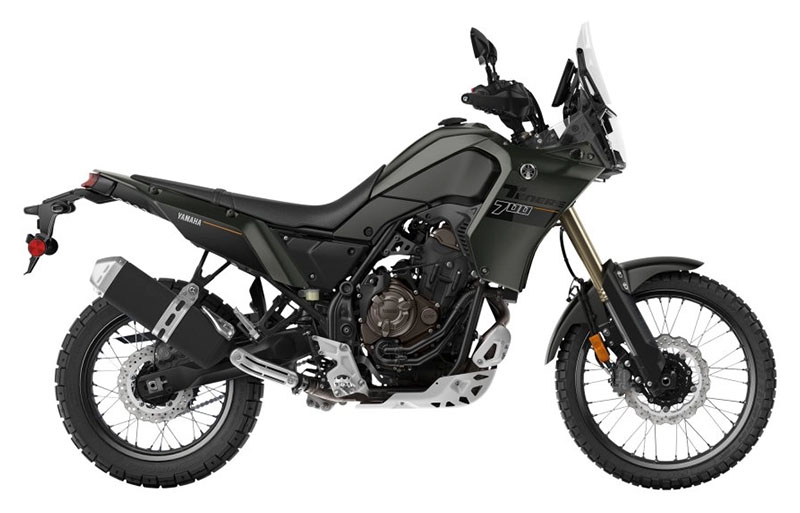
The CP2 parallel-twin is one of the better adventure engines in this displacement class. It makes its torque early – you feel the pull from around 3,500 rpm, and it builds steadily through the midrange without any flat spots. That matters for trail riding, where you’re often slipping the clutch through loose terrain at low revs.
Yamaha added ride-by-wire throttle control (YCC-T) for 2025, which enabled two selectable riding modes for the first time. Sport mode sharpens throttle response for pavement; Explorer mode softens it for gravel, mud, or technical dirt. The modes are quick to toggle and the difference is noticeable – Explorer takes the snap out of the throttle, which reduces the chance of spinning the rear wheel when you’re standing up on a loose surface.
The crossplane crankshaft gives the CP2 a firing interval of 270 degrees, which creates an uneven firing pulse that sounds and feels more like a V-twin than a conventional parallel-twin. It’s one of the reasons T7 riders tend to be passionate about the motor. The engine shared with the MT-07 and XSR700, but in the T7 the shorter final gearing keeps it more tractable at lower speeds.
Valve check intervals are 26,600 miles – exceptional for a performance ADV twin. You won’t be pulling the engine apart every season. Oil capacity is 3.0 liters; Yamaha specifies JASO MA-rated 10W-40 for most riding conditions.
How the 2025 Suspension Update Changed the T7

The 2025 T7 suspension is a meaningful improvement over 2019-2024 models. The earlier forks were non-adjustable from the factory – fine for lighter riders but a common complaint from anyone above 200 lb or riding technical terrain. For 2025, Yamaha fitted fully adjustable 43mm KYB inverted forks with preload and compression damping adjustability, plus a revised rear shock with adjustable preload via a remote adjuster and rebound damping.
Travel figures stay at 8.3 inches front and 7.9 inches rear. What changed is the damping tune and the ability to set it up for your weight and riding style without bolting on aftermarket suspension. For reference, the old T7 had a well-known ceiling where riders who wanted the bike to work properly on rough trails were spending $800–$1,200 upgrading the forks. That’s largely gone now with the revised 2025 setup.
Ground clearance is 9.4 inches. The 21-inch front wheel and 18-inch rear are proper adventure sizing – they roll over rocks and ruts the way a 19/17 street tire combo simply can’t. The Pirelli Scorpion Rally STR tires fitted as stock are a good call: they’re 80/20-weighted and handle both tarmac cornering and dirt roads without embarrassing themselves in either direction. You won’t take them through deep mud without swapping, but they don’t demand an immediate tire change like some purely road-biased ADV rubber.
The 2025 chassis also got revised weight distribution via a reshaped fuel tank that moves mass lower and forward. It’s a real change – the bike is noticeably less top-heavy than the pre-2025 T7.
Electronics and Tech: The 2025 Generation Catches Up
The 2025 T7 finally has the electronics package a $10,000+ ADV bike should offer. Traction control (on/off), three ABS modes (front/rear on, rear only off, both off), two riding modes, and a 6.3-inch vertical TFT display are all new for 2025. This is a significant upgrade from the 2019-2024 models, which ran a basic LCD dash with no traction control and only on/off ABS.
The ABS system has three modes. Mode 1 is standard operation on both wheels. Mode 2 disables rear ABS for more aggressive braking on dirt. Mode 3 cuts ABS entirely for off-road use where wheel lock is intentional. A long press of the dedicated ABS button disables both ABS and traction control at once – no menu navigation required, which matters when you’re stopped on a trail.
The TFT display is a 6.3-inch vertical unit styled after a rally roadbook. It supports Bluetooth connectivity via the Yamaha Y-Connect app for phone calls, music, navigation, and maintenance alerts. A USB-C fast-charge port is included. From 2025, the system also remembers your ABS and traction control settings after you shut the bike off – a small fix that frustrated 2024 owners who had to reconfigure after every stop.
Cruise control is not available on the standard T7. It’s on the World Raid variant. If cruise control is on your requirement list, the base T7 isn’t the bike.
Honest Drawbacks: What the T7 Gets Wrong
The T7 isn’t perfect. The seat height at 34.4 inches is on the taller side – if you’re under 5’8″, you’ll be on one toe at stops, and lowering the bike means cutting into suspension travel that’s one of its better attributes. Yamaha does offer a Low variant in some markets with a 33.1-inch seat, but availability in the US is limited.
The 2023-2024 production run had a documented clutch issue. Clutch plates could stick together, preventing full disengagement, which caused the bike to creep forward from a stop (Transport Canada Recall 2024690; NHTSA covered parallel CP2 platform recalls across MT-07 and XSR700 as well). Yamaha addressed it under warranty with replacement clutch discs and plates. If you’re buying a used 2023 or 2024 T7, verify the recall was performed before purchasing.
Weight crept up with the 2025 updates: the current bike is 459 lb wet, roughly 7 lb heavier than the pre-2025 T7. On pavement it’s a non-issue. In technical single-track, that extra mass is felt when you tip off line at slow speed. The T7 rewards riders who already know how to move a bike around in the dirt.
The traction control is on/off only – there’s no multi-level adjustment. In most real-world dirt situations you’ll want it off anyway, but riders who want multi-level TC calibration won’t find it here.
Frequently Asked Questions About the Yamaha Ténéré 700
What is the top speed of the Yamaha Ténéré 700?
The T7 reaches approximately 110–116 mph (177–186 km/h) in real-world GPS speed tests. Yamaha doesn’t publish an official top speed figure. The engine has the power for more, but the upright riding position and tall windscreen create significant wind resistance above 90 mph, which is the practical ceiling for most riders. Dash-indicated speed typically reads 10–15 mph high at those velocities.
Is the 2025 Yamaha Ténéré 700 better than the 2024 model?
Yes, meaningfully so. The 2025 model added ride-by-wire throttle, traction control, two riding modes, a fully adjustable KYB suspension setup, and a 6.3-inch TFT display. Those aren’t just feature additions – the suspension alone makes the bike significantly better for off-road use and removes the need for an aftermarket suspension upgrade that cost $800–$1,200 on earlier T7s (Ride ADV, 2025). The 2024 model also had the documented clutch recall covering certain production units.
Does the Yamaha Ténéré 700 have a clutch recall?
Yes. Certain 2023 and 2024 Ténéré 700 units (along with MT-07 and XSR700 models sharing the CP2 engine) were subject to a recall for clutch plates that could stick and prevent full disengagement. Yamaha replaced the clutch discs and plates under warranty (Transport Canada Recall 2024690). If you’re buying a used 2023-2024 T7, ask the dealer or previous owner to confirm the recall was completed. The 2025 and later production runs use a revised clutch design.
Who is the Yamaha Ténéré 700 best suited for?
The T7 works best for intermediate to experienced riders who want a bike that can handle extended dirt roads, fire roads, and moderate trails while also being livable on the highway. It’s too tall for shorter riders without modification, and too technically capable to be wasted on pure commuter duty. If you ride the Continental Divide Trail, BDR routes, or mix of gravel and tarmac on weekend trips, it’s a strong match at the $10,999 price point.
What are the valve check intervals on the Yamaha Ténéré 700?
Yamaha specifies valve inspections every 26,600 miles (42,000 km) on the T7’s CP2 engine. This is one of the longest intervals in the midweight ADV class – most competitors require checks at 15,000–20,000 miles. Regular oil changes at 3,700-mile intervals using a JASO MA-rated 10W-40 and keeping the chain lubed on schedule covers the bulk of routine maintenance.