Yamaha Tracer 9 Top Speed, Specs & Review
TL;DR
- The 2026 Yamaha Tracer 9 has a GPS-verified top speed of 133 mph — limited by aerodynamic drag rather than engine output.
- The 890cc CP3 triple produces 117 hp at 10,000 rpm and 68.6 lb-ft at 7,000 rpm; a Cycle World Dynojet run on the 2024 GT+ recorded 105.8 hp at the rear wheel.
- 0-60 mph takes 3.64 seconds GPS-measured; the quarter-mile falls at 11.49 seconds at 118 mph.
- US-market 2026 MSRP is $12,599, including hard cases as standard equipment.
- The Tracer 9 is the sport-touring pick for riders who want MT-09 engine character without the windblast penalty on long days in the saddle.
Where the Tracer 9 Sits in the Yamaha Lineup
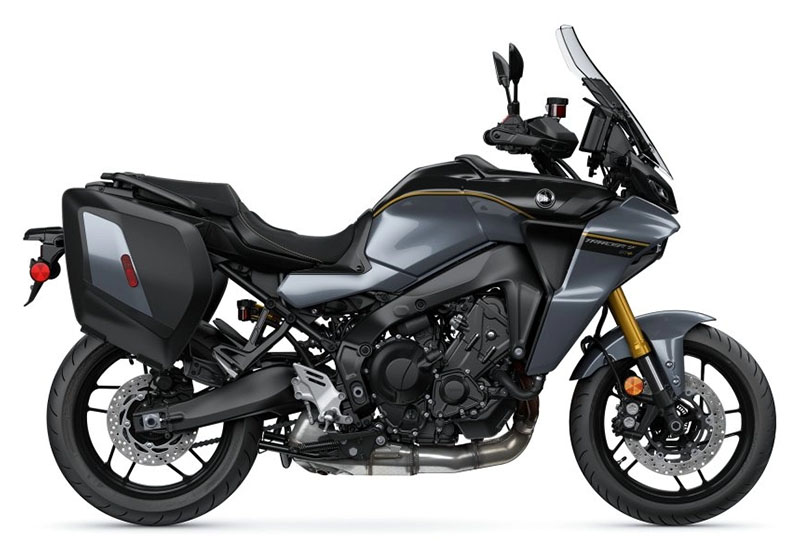
The Tracer 9 is Yamaha’s mid-displacement sport-tourer, built around the same 890cc CP3 triple-cylinder engine found in the MT-09, XSR900, and YZF-R9. It sits above the Ténéré 700 in the touring category and well below the FJR1300ES in terms of long-haul comfort and price.
For 2026, the US market receives the standard Tracer 9 — not the European GT or GT+ variants. Yamaha bundles hard cases as standard on US models to compensate, which makes the $12,599 asking price competitive against the dressed-up versions sold elsewhere at significantly higher cost.
2026 Yamaha Tracer 9 Full Specs
| Specification | Detail |
|---|---|
| Engine | 890cc liquid-cooled DOHC inline-3, 4 valves/cylinder |
| Bore x Stroke | 78.0mm x 62.1mm |
| Compression Ratio | 11.5:1 |
| Claimed Power | 117 hp @ 10,000 rpm |
| Claimed Torque | 68.6 lb-ft @ 7,000 rpm |
| Rear-Wheel Power (dyno) | 105.8 hp (Cycle World Dynojet, 2024 GT+) |
| Fuel Delivery | Fuel injection with YCC-T |
| Transmission | 6-speed, assist & slipper clutch |
| Final Drive | Chain |
| Front Suspension | KYB 41mm inverted fork, 5.1 in travel |
| Rear Suspension | KYB single shock, 5.2 in travel |
| Front Brakes | Dual 298mm disc, ABS |
| Rear Brake | 267mm disc, ABS |
| Front Tire | 120/70ZR17 Bridgestone Battlax T32 |
| Rear Tire | 180/55ZR17 Bridgestone Battlax T32 |
| Seat Height | 33.3 in (low) / 33.9 in (high) |
| Wet Weight | 483 lb |
| Fuel Capacity | 5.0 gal |
| Fuel Economy | 48 mpg (estimated, Yamaha) |
| Wheelbase | 59.1 in |
| US MSRP (2026) | $12,599 |
Yamaha Tracer 9 Top Speed: What the Numbers Actually Mean

The GPS-verified top speed of the Yamaha Tracer 9 GT is 133 mph, recorded by MotoStatz during a standing-mile run in 2026. The speedometer reads around 140 mph at that point, which is normal — odometer error on most bikes runs 4-8% optimistic. Treat any claimed top speed based on the speedo alone with skepticism.
That 133 mph figure is not a reflection of power. The CP3 engine has enough output to push past that in a more aerodynamic package. The limiting factor is frontal area: the wide mirrors, upright screen, and tall riding position create drag that grows exponentially above 120 mph. MotoStatz noted that the final 10 mph took a disproportionate amount of road to accumulate.
The more useful real-world figure is 0-100 mph in 7.35 seconds. That puts the Tracer 9 in serious company for a 483-lb sport-tourer. At 70 mph, the tach sits around 4,700 rpm in sixth — the engine is barely working. A short blip of throttle pulls to 100 mph without a downshift.
Performance Summary Table
| Metric | Result |
|---|---|
| Top Speed (GPS) | 133 mph |
| 0-60 mph | 3.64 sec |
| 0-100 mph | 7.35 sec |
| Quarter Mile | 11.49 sec @ 118 mph |
| 60-120 mph | 8.25 sec |
| Rear-Wheel HP | 105.8 hp |
CP3 Engine: What 890cc Feels Like When You Ride It
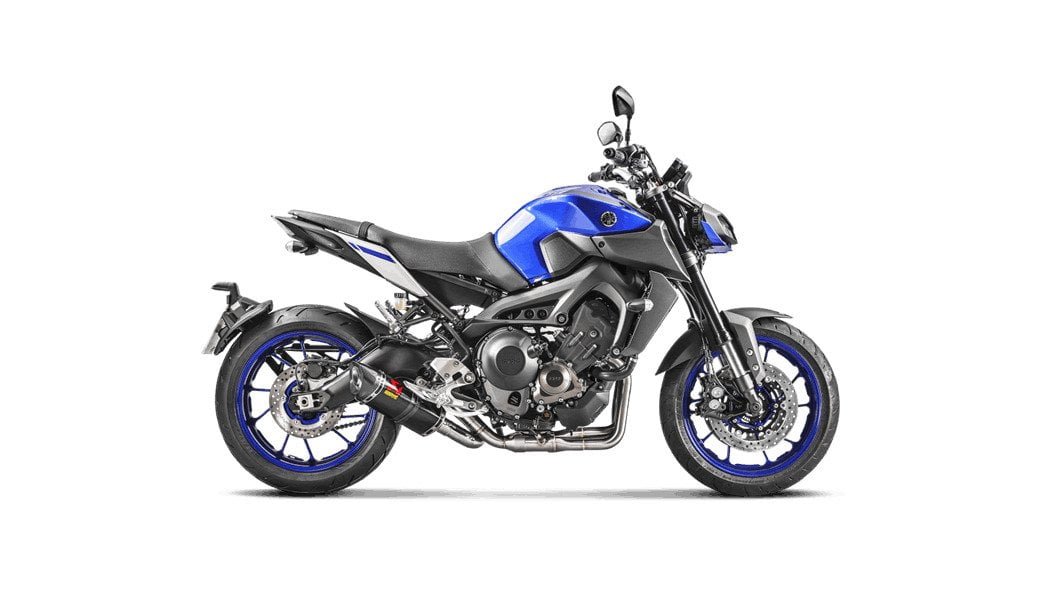
The 890cc CP3 triple is one of the better-developed engines in the middleweight class. It delivers more than 50 lb-ft of torque from as low as 3,000 rpm (MotoStatz, 2026), which means you’re rarely hunting for a lower gear on the road. The powerband stays useful and linear all the way to the 10,500 rpm redline, with a noticeable surge in the midrange that keeps things interesting.
On the Tracer 9 specifically, the character is calmer than on the MT-09. The extra 44 lb of bike mass and the taller wind protection damp out the manic edge, but the performance is still there when you want it. Hairpin exits in second gear are genuinely satisfying.
Fueling in stock trim is clean across all riding modes. The Sport mode sharpens throttle response noticeably. Rain mode softens it enough for wet roads without making the bike feel sluggish. The two custom modes let you build exactly the map you want for your conditions.
One practical note: at 70 mph in 6th gear, the engine turns around 4,700 rpm. Highway cruising is unhurried and smooth. That said, the stock exhaust note through the CP3 triple still delivers the signature crackling three-cylinder sound, especially on deceleration.
Chassis and Handling: Sportbike Roots in a Touring Package
The Tracer 9 uses a Deltabox aluminum frame derived from Yamaha’s sportbike platform. The geometry is mild — 24.4-degree rake and 4.2 inches of trail — which translates to responsive but stable cornering. It doesn’t flick through direction changes the way an MT-09 does, but for a 483-lb loaded tourer, it moves well.
The KYB 41mm inverted fork and rear monoshock are non-adjustable on the standard US Tracer 9. They work well for a rider of average weight on typical road surfaces. If you’re heavy, or if you ride two-up with luggage regularly, the rear in particular can feel soft under load. Preload adjustment and stiffer spring rates from the aftermarket address this; Ohlins and KYB both offer replacement shock options.
Ground clearance sits at 5.3 inches. The Bridgestone Battlax T32 tires fitted from the factory are a sensible sport-touring choice — good wet grip, reasonable mileage, and enough cornering confidence for spirited riding. They’re not track tires and aren’t meant to be.
The Brembo-adjacent dual 298mm front disc setup provides strong stopping power with good lever feel. ABS is always on, with no provision to disable it — acceptable for a sport-tourer built around road use.
Electronics and Features Worth Knowing
The 2026 US Tracer 9 carries a practical electronics package without the full suite of the European GT+ models. What you get: traction control with adjustable sensitivity, three preset ride modes (Sport, Street, Rain) plus two custom slots, cornering ABS, a 7-inch TFT color display, and Bluetooth connectivity for the Yamaha MyRide app.
The quickshifter/slipper clutch combination works well for clutchless upshifts. Downshifts without the clutch feel slightly clunky; a light blip on the throttle when downshifting manually makes the transition cleaner.
The Garmin Motorize navigation integration pairs through the MyRide app. Garmin’s app locks out search functionality while the bike is in motion — you can only navigate to pre-saved destinations once rolling (Rider Magazine, 2024). This is a real usability limitation for riders who like to search for fuel or lodging on the go. A phone mount remains the more practical navigation solution for many riders.
The hard cases that come standard on US models are a genuine win. They’re waterproof, hold a full-face helmet each, and lock with the ignition key.
Who Should Buy the Tracer 9 (And Who Shouldn’t)
The Tracer 9 earns its keep for riders doing regular mixed-use miles: commuting through the week, two-hour blasts on weekends, and occasional overnighters. The engine is entertaining enough to stay engaged in the twisties, the seat and wind protection are tolerable for 300-mile days, and the $12,599 starting price undercuts most of the class.
The seat height of 33.3-33.9 inches will be a dealbreaker for shorter riders. There’s no lowering link available from Yamaha directly for the 2026 US model; aftermarket options exist, but they’re an added cost and may affect suspension geometry.
Riders who need to cover 500+ miles regularly or who will be riding two-up with loaded luggage consistently may find the standard suspension wanting. Those riders should budget for an aftermarket rear shock — add roughly $400-900 depending on brand.
Frequently Asked Questions
What is the top speed of the Yamaha Tracer 9?
The GPS-verified top speed of the Yamaha Tracer 9 GT is 133 mph, recorded by MotoStatz in 2026. The speedometer reads approximately 140 mph at that point due to the typical 4-8% optimistic odometer error built into most motorcycles. Top speed is limited primarily by aerodynamic drag, not power output.
How fast is the Yamaha Tracer 9 from 0 to 60?
The Tracer 9 GT runs 0-60 mph in 3.64 seconds (MotoStatz, 2026), using GPS measurement from a standing start. The quarter-mile takes 11.49 seconds at a terminal speed of 118 mph. These are real-world figures from a production bike with full touring equipment — not stripped-down test conditions.
What engine does the Yamaha Tracer 9 use?
The Tracer 9 uses Yamaha’s CP3 890cc liquid-cooled inline-three-cylinder engine, the same unit found in the MT-09, XSR900, and YZF-R9. It produces 117 hp at 10,000 rpm and 68.6 lb-ft of torque at 7,000 rpm per Yamaha’s claims. A Cycle World Dynojet test on the 2024 GT+ variant recorded 105.8 hp at the rear wheel.
Does the 2026 Yamaha Tracer 9 come with hard cases in the US?
Yes. Yamaha includes hard cases as standard equipment on the US-market 2026 Tracer 9 to offset the absence of the higher-spec GT and GT+ variants that European buyers receive. The cases are waterproof and lock with the ignition key.
What are the known weaknesses of the Yamaha Tracer 9?
The non-adjustable KYB suspension on the standard US model can feel soft under heavy rider/passenger/luggage loads. The seat height at 33.3-33.9 inches is tall for shorter riders. The Garmin Motorize navigation integration locks out search functions while the bike is moving, making it less useful than a standalone GPS or phone mount for riders who navigate on the fly (Rider Magazine, 2024). These are calibration and feature issues, not mechanical reliability concerns.