BMW S1000RR Top Speed, Specs & Review
TL;DR
- The 2025 BMW S1000RR is a 999 cc inline-four superbike producing 205 hp at 13,000 rpm with a claimed top speed of 186 mph (300 km/h).
- BMW kept the engine unchanged for 2025 but added revised aerodynamics generating 50.9 lb of downforce at 186 mph, up 13.2 lb over the prior setup.
- Real-world 0-60 mph runs approximately 3.1 seconds; independent testing puts the quarter mile at 10.12 seconds at a 156 mph trap speed.
- US MSRP starts at $29,665 for the base model; the M Package adds carbon wheels, M Sport seat, and M Motorsport graphics.
- Best suited to experienced riders who want a road-legal track weapon with daily-usable electronics.
2025 BMW S1000RR Full Specifications
The 2025 S1000RR carries over its 999 cc water/oil-cooled inline-four, now Euro5+ compliant. BMW’s ShiftCam variable intake camshaft technology remains standard, giving the engine a broader powerband than a conventional fixed-cam design.
| Specification | Detail |
|---|---|
| Engine | 999 cc inline-four, DOHC, 16-valve, BMW ShiftCam |
| Bore x Stroke | 80 mm x 49.7 mm |
| Compression Ratio | 13.5:1 |
| Peak Power | 205 hp (153 kW) @ 13,000 rpm |
| Peak Torque | 83 lb-ft (113 Nm) @ 11,000 rpm |
| Transmission | 6-speed, bi-directional quickshifter standard |
| Frame | Aluminum bridge-type, engine as stressed member |
| Front Suspension | 45 mm inverted fork, fully adjustable |
| Rear Suspension | Aluminum swingarm, full-floater pro monoshock |
| Front Brakes | Dual 320 mm discs, Brembo radial 4-piston calipers |
| Rear Brake | 220 mm disc, 2-piston caliper |
| Tires | 120/70 ZR17 front / 190/55 ZR17 rear (Michelin) |
| Seat Height | 832 mm (32.7 in) |
| Wet Weight | 197 kg (434 lb) |
| Fuel Capacity | 17 L (4.5 US gal) |
| US MSRP (2025) | $29,665 (base) |
BMW S1000RR Top Speed: What It Actually Does
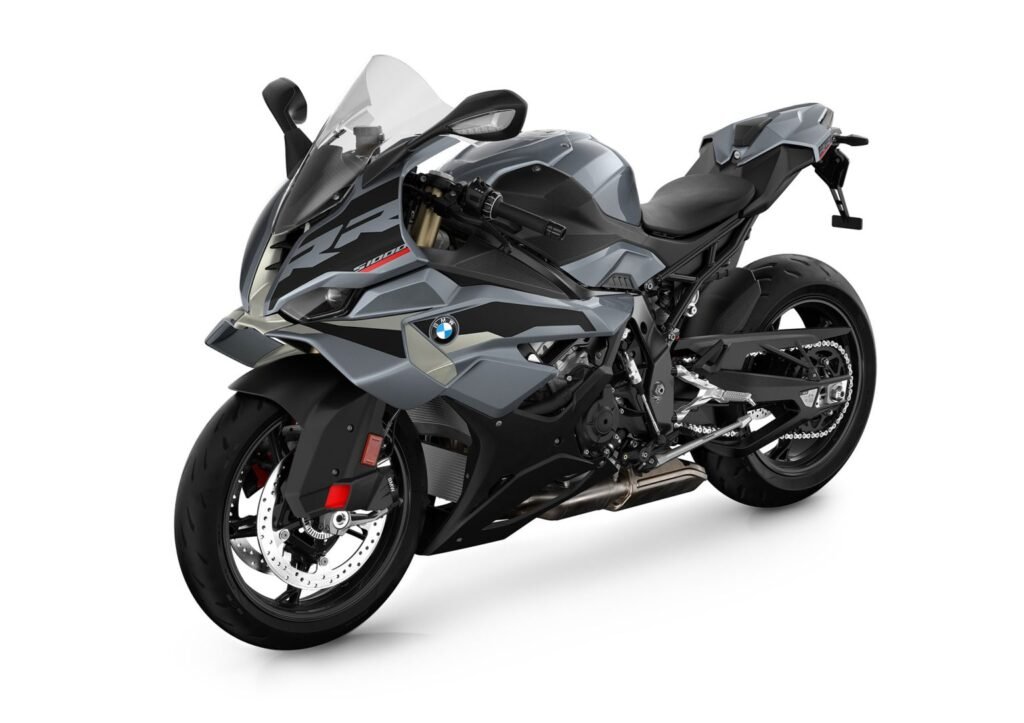
The S1000RR’s electronically governed top speed is 186 mph (300 km/h). A fully modified 2025 example running Akrapovic titanium headers, a high-flow air filter, and a BT Moto Stage 2 flash hit 194 mph on GPS – which tells you the engine has more in it when the limiter gets out of the way (BT Moto, 2024).
For stock use, 186 mph happens only on a closed track with a solid tuck. On the highway, the bike loafs in top gear below 4,000 rpm at legal speeds. The 2025 aero revision makes those speeds more manageable: redesigned winglets push 50.9 lb of downforce at 186 mph, and new brake cooling ducts in the front fender cut brake fade at high-speed corners.
BMW S1000RR Acceleration: 0-60 and Quarter Mile
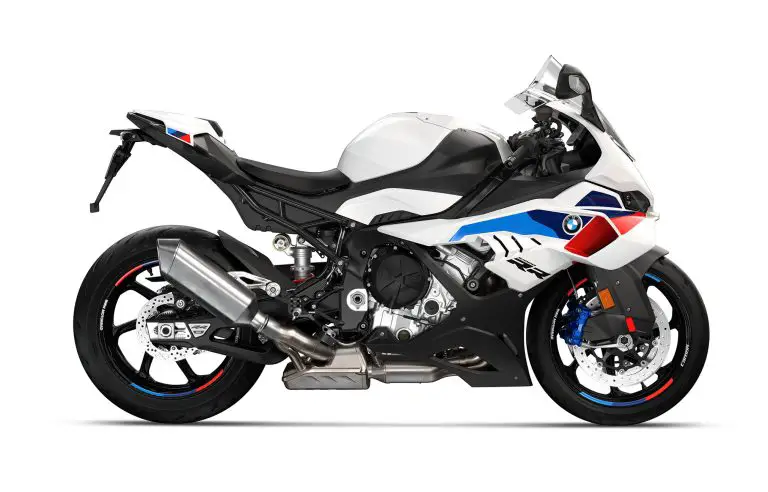
The S1000RR runs 0-60 mph in approximately 3.1 seconds under real-world test conditions. Getting into the 2-second range is theoretically possible with perfect launch control execution, but consistently doing it on the street is more about rider skill than horsepower.
Even with launch control active, wheelies remain a problem past 60 mph while still in first gear – 205 hp through a 190/55 rear tire doesn’t leave much margin. The bike needs a shift to second to complete the 0-100 mph run, which it does in roughly 5.5 seconds (MotoStatz, 2024).
| Benchmark | Result |
|---|---|
| 0-60 mph | ~3.1 sec (independently tested) |
| 0-100 mph | ~5.5 sec |
| Quarter mile | 10.12 sec @ 156 mph trap |
| 0-200 km/h | ~6.55 sec |
| Top speed (governed) | 186 mph (300 km/h) |
BMW does not publish official 0-60 or quarter mile figures. Times above are from MotoStatz independent testing.
Engine and Chassis: ShiftCam in Practice
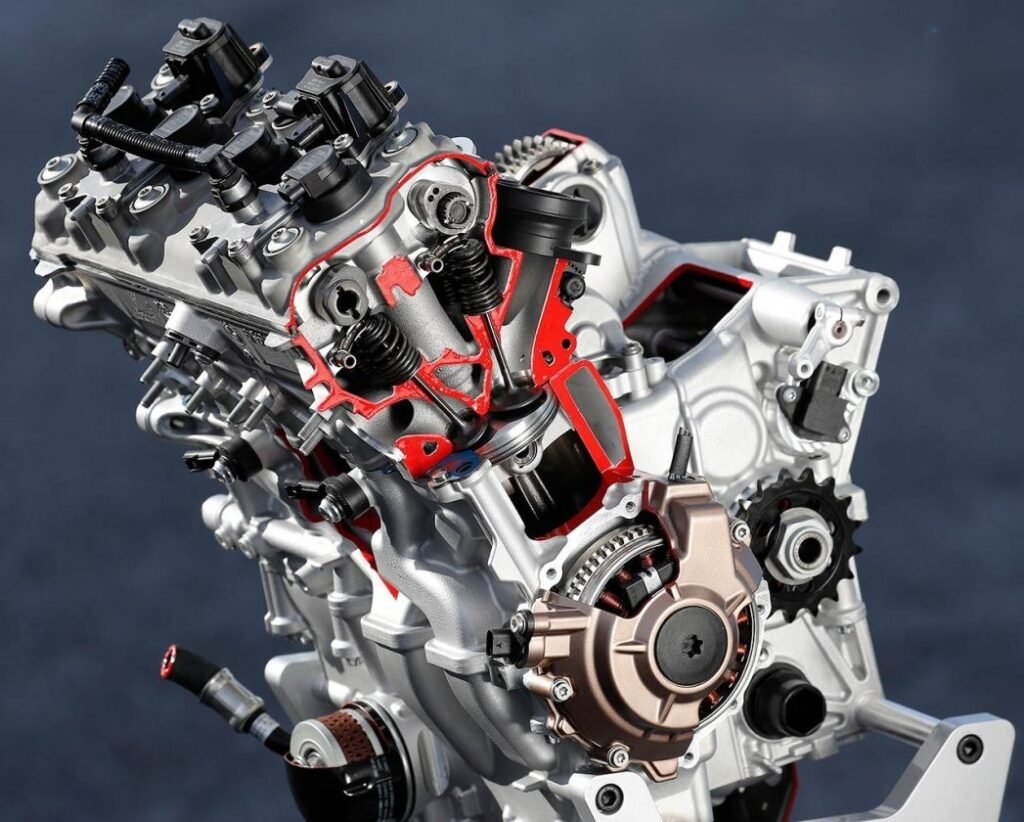
ShiftCam adjusts the intake cam profile based on engine speed. Below roughly 9,000 rpm, a milder profile delivers tractable torque. Above that, it switches to the aggressive profile and the pull becomes genuinely alarming. It’s why this engine doesn’t feel like a one-trick top-end screamer on city streets.
The aluminum bridge-type frame uses the engine as a structural member, contributing to overall stiffness without adding weight. Geometry runs at 23.9 degrees of rake with 95.9 mm of trail – quick-turning without feeling nervous at speed. The fully adjustable Brembo setup bites hard; new riders regularly overcook their first corner on unfamiliar track sessions before calibrating to it.
2025 Electronics: What’s New and What’s Standard
Riding Modes Pro is now standard equipment, which adds a steering angle sensor enabling Brake Slide Assist and Slide/Slip Control – both previously optional. DTC settings 2 and 3 are calibrated for track use on slicks.
Standard rider aids: Dynamic Traction Control, Cornering ABS Pro, wheelie control, launch control, engine brake function, Drag Torque Control (MSR), and the M Quick-Action throttle adapted from the M1000RR. The bi-directional quickshifter handles clutchless upshifts and downshifts cleanly at speed.
Who Should Buy the BMW S1000RR
The S1000RR works well for three types of buyers: the road/track crossover rider who wants one machine for both, the experienced sport tourer – MCN documented it surviving a multi-country tour (MCN, 2026) – and the outright performance buyer who wants the most capable liter-class machine and can use it.
It’s a poor fit for shorter riders under 5’6″ who’ll struggle with the 832 mm seat, new riders who lack the throttle feel to manage 205 hp cleanly, and anyone whose primary use is stop-and-go commuting. Fuel range is roughly 100 miles in mixed riding – plan stops accordingly.
Strengths and Limitations
The ShiftCam engine is the real differentiator. It makes this bike more manageable than the power numbers alone suggest. The electronics suite is among the best in class, the 2025 aero upgrade is functionally meaningful, and the Brembo calipers deliver track-grade stopping. The aftermarket is deep: Akrapovic, Ohlins, and Brembo upgrade kits are all well-documented.
The limitations are real. At $29,665 base, track optimization still costs more – M Carbon wheels are an extra line item even on the M Package. Fuel range is short. Low-speed handling is genuinely awkward; limited steering lock turns parking lot U-turns into a production. The seat is acceptable for sport riding, not for all-day touring.
Frequently Asked Questions About the BMW S1000RR
What is the top speed of the 2025 BMW S1000RR?
BMW limits the S1000RR to 186 mph (300 km/h) electronically. A modified 2025 example recorded 194 mph on GPS after a Stage 2 tune with Akrapovic headers and a high-flow air filter, but stock bikes are capped at 186 mph.
How fast is the BMW S1000RR from 0 to 60 mph?
Independent testing puts 0-60 mph at approximately 3.1 seconds. Consistently going under 3 seconds requires near-perfect launch conditions and an experienced rider. BMW publishes no official figure.
What engine does the 2025 BMW S1000RR use?
A 999 cc water/oil-cooled DOHC inline-four with BMW ShiftCam variable intake cam technology. Output is 205 hp at 13,000 rpm and 83 lb-ft of torque at 11,000 rpm. The engine is Euro5+ compliant for 2025.
How much does the 2025 BMW S1000RR cost in the US?
The base price is $29,665 MSRP. The M Package (M Carbon or M Forged wheels, M Sport seat, M Motorsport graphics), Dynamic Package (DDC, heated grips, cruise control), and Race Package are available additions.
Is the BMW S1000RR good for new riders?
No. The S1000RR is not appropriate for new riders. The power output, aggressive ergonomics, and track-focused throttle response require an experienced foundation in high-performance riding before this machine is safe or enjoyable.
What does BMW ShiftCam do on the S1000RR?
ShiftCam switches the intake camshaft between two profiles. A milder profile below roughly 9,000 rpm delivers usable torque for street riding; an aggressive profile above that threshold unlocks peak power. The result is a broader, more tractable powerband than a fixed-cam 999 cc four typically offers.
Key Takeaways
- The 2025 BMW S1000RR produces 205 hp from a 999 cc ShiftCam inline-four, governed to 186 mph.
- Real-world 0-60 mph is approximately 3.1 seconds; quarter mile is 10.12 seconds at 156 mph trap speed.
- New for 2025: revised aerodynamics with 50.9 lb downforce at speed, Brake Slide Assist, Slide/Slip Control, and Euro5+ compliance.
- US base MSRP is $29,665; M, Dynamic, and Race packages are the main upgrades.
- Appropriate for experienced riders; not for beginners.
- ShiftCam’s dual cam profile makes 205 hp more manageable on the road than the number alone implies.