Honda CBR300R Specs, Top Speed, Acceleration, Performance & Review
TL;DR
- The Honda CBR300R is a 286cc single-cylinder sportbike sold in the USA from 2015 to 2018, priced new from around $4,499.
- Top speed is approximately 95-100 mph under real-world conditions; Honda does not publish an official figure.
- It makes roughly 30 horsepower and weighs 357 lbs wet, making it one of the lightest full-fairing sportbikes in its class.
- It’s a solid first sportbike for new riders and a practical urban commuter, but it runs out of road quickly on highways for taller or heavier riders.
- Used examples sell for $2,500-$4,000 depending on condition and mileage.
Full Spec Sheet: Honda CBR300R at a Glance
| Spec | Detail |
|---|---|
| Engine | 286cc, single-cylinder, DOHC, liquid-cooled |
| Bore x Stroke | 76.0 mm x 63.1 mm |
| Compression Ratio | 10.7:1 |
| Claimed Power | ~30 hp @ 8,500 rpm |
| Claimed Torque | ~19.4 lb-ft @ 7,000 rpm |
| Transmission | 6-speed |
| Final Drive | Chain (DID or RK equivalent OEM spec) |
| Wet Weight | 357 lbs (162 kg) |
| Seat Height | 30.7 inches |
| Fuel Capacity | 3.4 gallons |
| Front Suspension | 41mm telescopic fork, non-adjustable |
| Rear Suspension | Pro-Link single shock, preload adjustable |
| Front Brake | Single 296mm disc, two-piston caliper |
| Rear Brake | Single 220mm disc |
| ABS | Optional on ABS variant (CBR300R ABS) |
| Wheelbase | 53.7 inches |
| MSRP (new, 2015-2018) | $4,499 / $4,699 (ABS) |
What the CBR300R Actually Is (And Who It’s Built For)
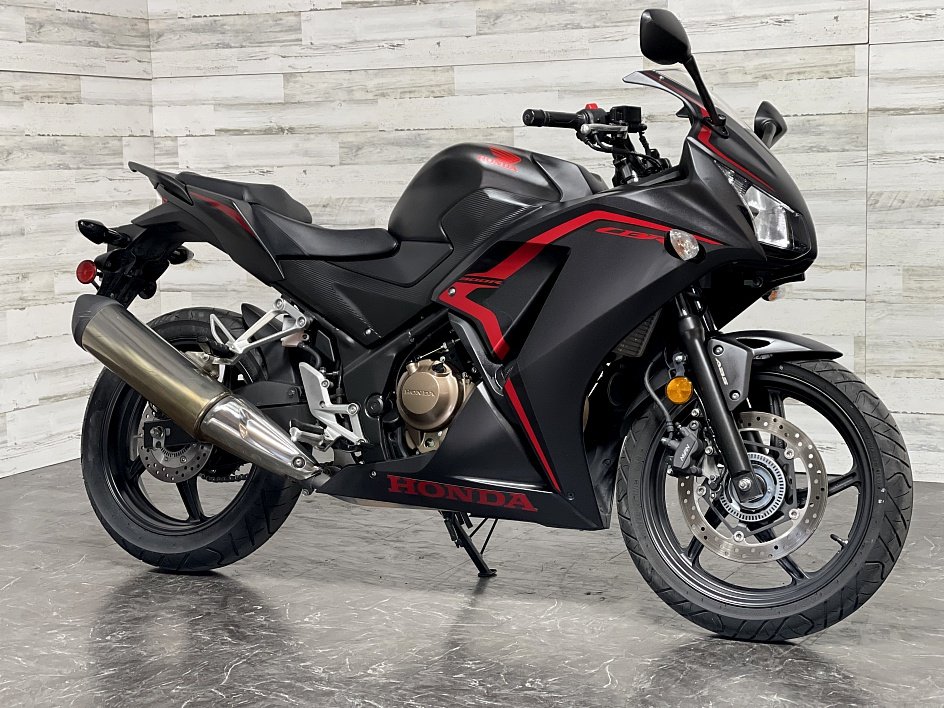
The CBR300R is a beginner-to-intermediate sportbike, full stop. Honda built it as a step up from the CBR250R, adding displacement and sportier ergonomics while keeping the entry-level price and forgiving power delivery intact.
It replaced the CBR250R in the USA lineup in 2015. The chassis is purpose-built for this displacement class, not a shrunken middleweight. That distinction matters: the bike feels balanced at its size, not compromised.
Riders who get the most out of it are new license holders transitioning from an MSF-course mentality, urban commuters who want something that looks like a sportbike without big-bike running costs, and smaller-framed riders who find 400cc and above physically awkward.
Honda CBR300R Top Speed and Acceleration: Real Numbers
Honda does not publish an official top speed for the CBR300R. Real-world testing by riders on YouTube and in magazine dyno sessions (Cycle World, 2015-2016) puts the practical top speed at 95-100 mph on flat ground with a rider in the 160-180 lb range in a tuck.
Heavier riders or headwinds push that number down closer to 90 mph.
0-60 mph is in the 6.5-7.5 second range by community testing; no verified independent lab figure exists as of this writing. For reference, the Kawasaki Ninja 300 runs a similar 0-60 in the same window, and the Yamaha R3 (321cc, parallel twin) edges it with a slight power advantage.
The single-cylinder engine pulls smoothly to about 7,000 rpm, then comes alive up to its 10,500 rpm redline. It’s not fast by any objective measure, but it’s accessible fast, meaning a new rider can use all of it without getting into trouble.
How the CBR300R Rides: Chassis, Handling, and Suspension

The chassis is where this bike earns its keep. At 357 lbs wet and with a 30.7-inch seat height, it’s approachable for riders 5’4″ and taller without being cramped.
Steering is light and direct. The 41mm non-adjustable forks handle urban imperfections without drama, though they go soft quickly if you’re pushing hard into corners on a track or canyon road. The rear preload is adjustable, which helps heavier riders dial out some of the softness.
Braking is adequate for the power on offer. The front 296mm single disc and two-piston caliper stops the bike cleanly in normal riding. It’s not a Brembo M50 setup, obviously, but it matches the performance level of the engine. The optional ABS variant is worth the $200 premium for new riders.
One honest limitation: the suspension is not upgradeable in any meaningful cost-effective way. If you want better damping, you’re looking at aftermarket springs and oil viscosity changes, which runs $150-$300 at a shop. That’s worth doing if you plan to keep the bike long-term.
CBR300R vs. The Competition: Where It Fits in 2026
| Bike | Engine | Power | Wet Weight | Seat Height | New Price (when available) |
|---|---|---|---|---|---|
| Honda CBR300R (2015-2018) | 286cc single | ~30 hp | 357 lbs | 30.7 in | $4,499 (discontinued) |
| Kawasaki Ninja 300 (2013-2017) | 296cc parallel twin | ~39 hp | 374 lbs | 30.9 in | ~$4,999 (discontinued) |
| Yamaha YZF-R3 (2015+) | 321cc parallel twin | ~41 hp | 368 lbs | 30.7 in | ~$5,299 |
| KTM RC 390 (2022+) | 373cc single | ~43 hp | 366 lbs | 32.5 in | ~$5,999 |
The CBR300R is the lightest and cheapest option at purchase, but it gives up 9-13 horsepower to the Ninja 300 and R3. On the street below 60 mph, that gap is invisible. Above 75 mph on open roads, you feel it.
Verdict: Buy the CBR300R if you’re primarily riding in city traffic, you want the lowest total cost of entry, or you’re a smaller rider. Buy the R3 or Ninja 300 if you plan on any significant highway or mountain riding.
Honest Pros and Cons
Pros
- Lowest wet weight in class makes it genuinely easy to handle at low speeds and in parking lots
- Honda reliability: the engine will outlast your interest in the bike if you change the oil (Honda recommends 10W-30 JASO MA2, every 8,000 km or 12 months)
- ABS variant available from factory – rare at this price point when new
- Parts and service are available anywhere Honda dealers exist
Cons
- Single-cylinder means more vibration above 7,500 rpm than twin-cylinder competitors; you’ll feel it in your hands on long rides
- Suspension is non-adjustable up front; a 200-lb rider will notice the softness immediately
- Discontinued in the USA after 2018, so you’re buying used; finding OEM fairings after a drop is harder than it used to be
- The 3.4-gallon tank gives roughly 150-170 miles per fill at mixed riding – fine for commuting, tight for day trips
Maintenance Schedule and Running Costs
The CBR300R is cheap to run. Here’s what to budget for:
| Service Item | Interval | Estimated Cost (shop) |
|---|---|---|
| Engine oil + filter | Every 8,000 km / 12 months | $50-$80 |
| Air filter | Every 20,000 km or as needed | $25-$40 |
| Spark plug (NGK CR9EH-9) | Every 32,000 km | $10-$20 |
| Chain clean/lube | Every 1,000 km or after rain | DIY: $10-$15 |
| Chain replacement | Every 20,000-25,000 km | $100-$150 (DID or RK chain) |
| Valve clearance check | Every 32,000 km | $150-$250 at shop |
| Tires (OEM spec: 110/70-17 front, 140/70-17 rear) | Every 10,000-15,000 km depending on brand | $200-$350 mounted |
Michelin Pilot Street and Dunlop GPR-300 are common OEM-replacement choices that improve feel over the stock rubber without adding cost.
Frequently Asked Questions About the Honda CBR300R
What is the Honda CBR300R’s top speed?
Real-world top speed is approximately 95-100 mph on flat ground with an average-weight rider in a tuck. Honda does not publish an official top speed figure. Headwinds, heavier riders, or worn tires reduce that number noticeably.
Is the Honda CBR300R good for beginners?
Yes, it’s one of the better beginner sportbikes for riders who want full-fairing styling. The low seat height, light weight, and smooth power delivery make it forgiving. The lack of highway confidence at sustained speeds above 80 mph is the main limitation to grow out of.
What year did Honda stop making the CBR300R?
Honda sold the CBR300R in the USA from 2015 through 2018. It was not replaced by a direct successor in the American market. The CBR500R sits above it in Honda’s current lineup.
How does the CBR300R compare to the Yamaha R3?
The R3 has a 321cc parallel twin, produces around 41 hp vs. the CBR300R’s 30 hp, and handles highway speeds more comfortably. The CBR300R is lighter (357 lbs vs. 368 lbs) and was cheaper new. For purely urban riding, the difference is minimal. For anything involving sustained speeds over 70 mph, the R3 is the more capable machine.
What oil does the Honda CBR300R take?
Honda specifies 10W-30 JASO MA2 four-stroke motorcycle oil. Motul 5100, Castrol Power 1, and Mobil 1 Racing 4T are all commonly used and compatible. Change interval is every 8,000 km or 12 months, whichever comes first.
Is the ABS version worth buying?
Yes. The ABS variant cost $200 more new and regularly commands a small premium used. For a new rider, ABS on a light single-cylinder bike is straightforward insurance against a panic-brake moment on wet pavement. It’s worth the extra spend when the used price difference is small.
Key Takeaways
- The CBR300R is a 286cc single making ~30 hp; real-world top speed is 95-100 mph
- It’s the lightest bike in its class at 357 lbs wet and one of the most manageable for new riders
- The twin-cylinder Kawasaki Ninja 300 and Yamaha R3 produce more power; the CBR300R wins on weight and simplicity
- Running costs are low: oil, chain, tires, and an occasional plug are the bulk of the maintenance budget
- Buy it for city riding and early-skill development; move to a 400-500cc parallel twin when highway riding becomes a regular need